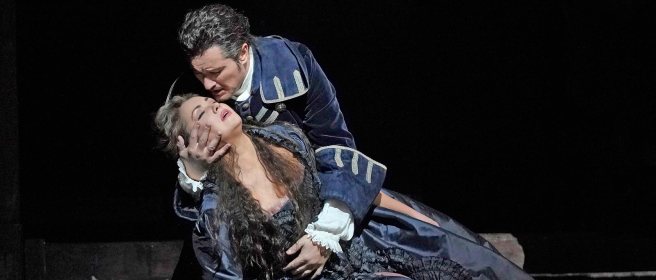
This weekend to an unknown (to us) Met opera at Vue cinema in Plymouth. The thing about this particular opera for us was that there were absolutely no tunes or melodies throughout. Everything seemed like speech that was sung in one plane as it were. Yes, the singing yet again was admirable and amazing in its power and intensity, but the plot was light and, as I say, no tunes to be hummed on the way home. Not at all memorable. The divas get huge praise in the press however.
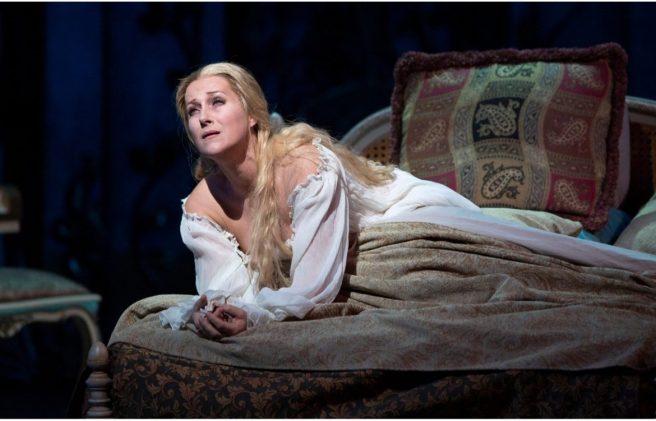
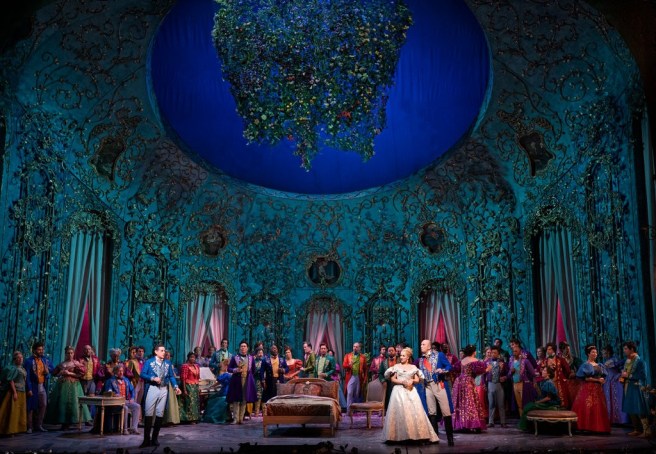
Adriana Lecouvreur unfolds in Paris in 1730. The setting reflects a nostalgia for the Rococo era that swept over Europe and the Americas around the turn of the last century when Cilea was composing, evident in other operas (for instance, Puccini’s Manon Lescaut) and in architecture.
ACT I
Paris, 1730. Backstage at the Comédie-Française, the director Michonnet and the company prepare for performance, in which both Adriana Lecouvreur and her rival, Mademoiselle Duclos, will appear. The Prince of Bouillon and the Abbé de Chazeuil enter, looking for Duclos, who is the prince’s mistress. They encounter Adriana and compliment her, but she says that she is merely the servant of the creative spirit (“Io son l’umile ancella”). The Prince hears that Duclos is writing a letter to someone and arranges to have it intercepted. Left alone with Adriana, Michonnet confesses his love to her, only to be told that she is in love with Maurizio, whom she believes to be an officer in the service of the Count of Saxony. Maurizio enters, declaring his love for Adriana (“La dolcissima effigie”), and the two arrange to meet after the performance. Adriana gives him a bouquet of violets as a pledge of her love. During the performance, the prince intercepts the letter from Duclos, in which she asks for a meeting with Maurizio, who is in fact the Count of Saxony himself. He is to meet her later that evening at the villa where the prince has installed her. Determined to expose his seemingly unfaithful mistress, the prince arranges a party at the villa for this same night. Unknown to him, Duclos has written the letter on behalf of the Princess of Bouillon who was having an affair with Maurizio. Maurizio, receiving the letter, decides to meet the princess who has helped him pursue his political ambitions. He sends a note to Adriana to cancel their appointment. Adriana is upset, but when the prince invites her to the party and tells her that the Prince of Saxony will be one of the guests, she accepts in the hope of furthering her lover’s career.
ACT II
The princess anxiously awaits Maurizio at the villa (“Acerba voluttà”). When he appears she notices the violets and immediately suspects another woman but he quickly claims they are a gift for her. Grateful for her help at court, he reluctantly admits that he no longer loves her (“L’anima ho stanca”). The princess hides when her husband and the Abbé suddenly arrive, congratulating Maurizio on his latest conquest, who they think is Duclos. Adriana appears. She is astounded to learn that the Count of Saxony is Maurizio himself but forgives his deception. When Michonnet enters looking for Duclos, Adriana assumes that Maurizio has come to the villa for a secret rendezvous with her. He assures her that the woman hiding next door is not Duclos. His meeting with her, he says, was purely political and they must arrange for her escape. Trusting him, Adriana agrees. In the ensuing confusion, neither Adriana nor the princess recognize each other, but by the few words that are spoken each woman realizes that the other is in love with Maurizio. Adriana is determined to discover the identity of her rival, but the princess escapes, dropping a bracelet that Michonnet picks up and hands to Adriana.
ACT III
As preparations are under way for a party at her palace, the princess wonders who her rival might be. Guests arrive, among them Michonnet and Adriana. The princess recognizes Adriana’s voice as that of the woman who helped her escape. Her suspicions are confirmed when she pretends Maurizio has been wounded in a duel and Adriana almost faints. She recovers quickly, however, when Maurizio enters uninjured and entertains the guests with tales of his military exploits (“Il russo Mencikoff”). During the performance of a ballet, the princess and Adriana confront each other, in growing recognition that they are rivals. The princess mentions the violets, and Adriana in turn produces the bracelet, which the prince identifies as his wife’s. To distract attention, the princess suggests that Adriana should recite a monologue. Adriana chooses a passage from Racine’s Phèdre, in which the heroine denounces sinners and adulterous women, and aims her performance directly at the princess. The princess is determined to have her revenge.
ACT IV
Adriana has retired from the stage, devastated by the loss of Maurizio. Members of her theater company visit her on her birthday, bringing presents and trying to persuade her to return. Adriana is especially moved by Michonnet’s gift: the jewellery she had once pawned to secure Maurizio’s release from prison. A box is delivered, labeled “from Maurizio.” When Adriana opens it, she finds the faded bouquet of violets she had once given him and understands it as a sign that their love is at an end (“Poveri fiori”). She kisses the flowers, then throws them into the fire. Moments later, Maurizio arrives, summoned by Michonnet. He apologizes and asks Adriana to marry him. She joyfully accepts but suddenly turns pale. Michonnet and Maurizio realize that the violets were sent by the princess and had been poisoned by her. Adriana dies in Maurizio’s arms (“Ecco la luce”).
Before going to Vue we had a bit of time to kill so, for a coffee and exploration, we drove to the Royal William Yard which we had not visited before. It was a revelation………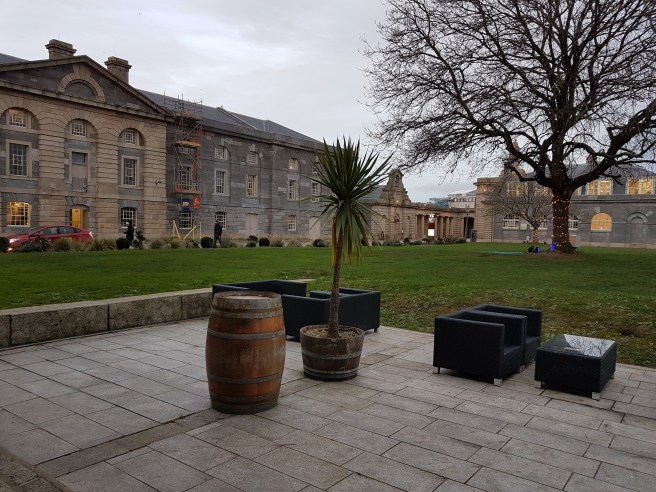 …………..an historic piece of Plymouth restored with sensitivity but very grand. Constructed between 1825 and 1831, Royal William Yard is in fact considered to be one of the most important groups of historic military buildings in Britain and the largest collection of Grade I Listed military buildings in Europe. Pretty impressive credentials.
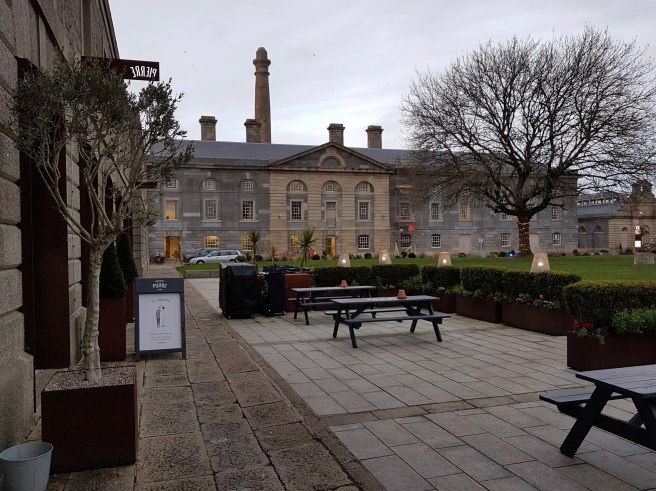 Described as the grandest of the royal victualling yards, ‘in its externally largely unaltered state it remains today one of the most magnificent industrial monuments in the country’. Released by the MOD as recently as 1992, Urban Splash have transformed the buildings into mixed-use restaurants, shops and flats, and it is all pretty special, although you do get the impression that it is not as well-visited as it ought to be.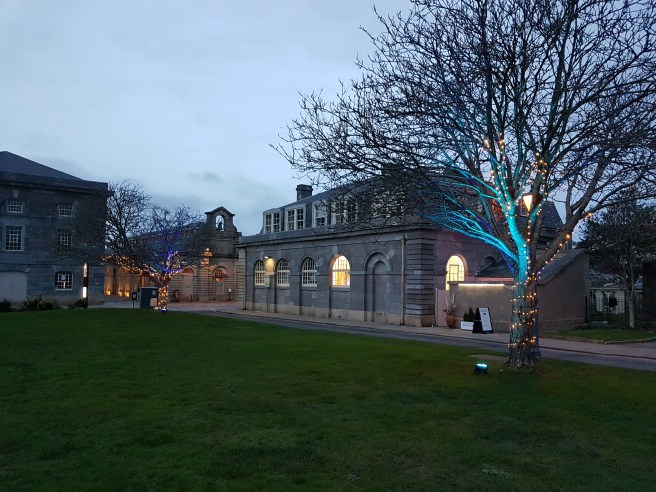
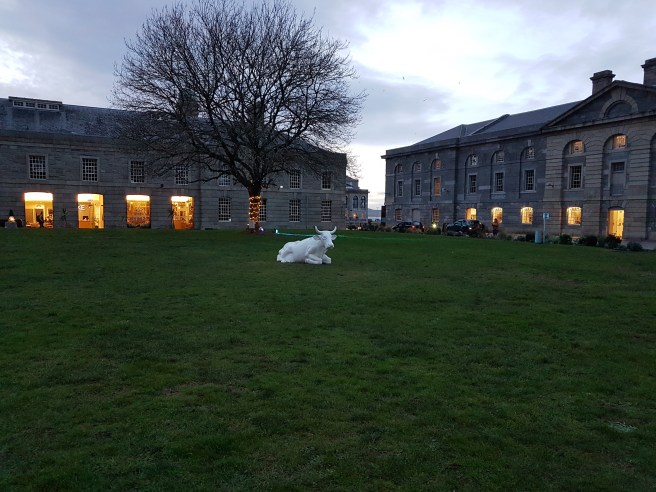

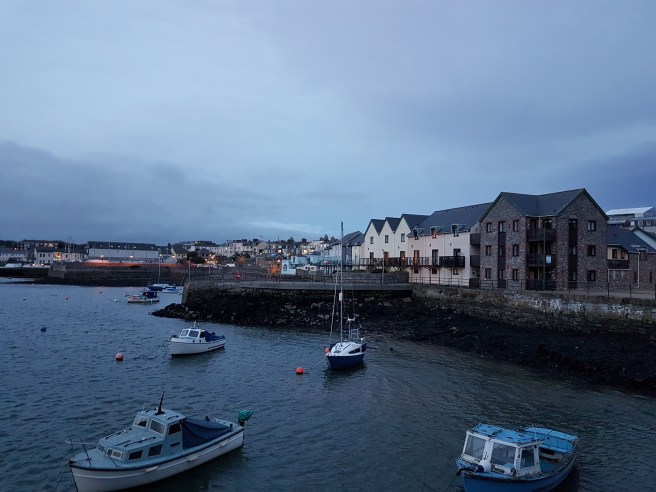
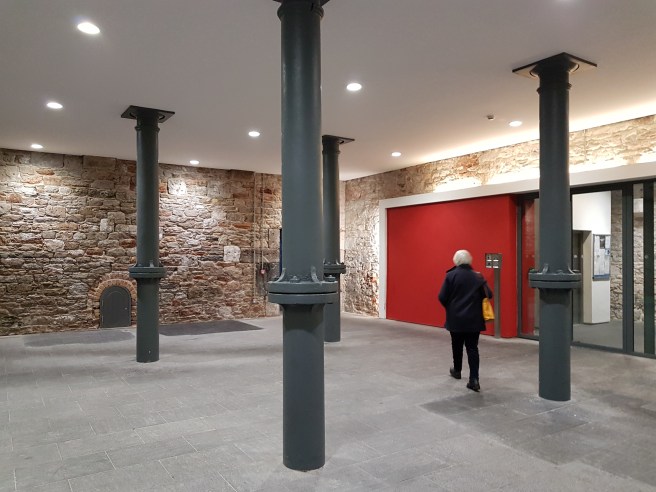
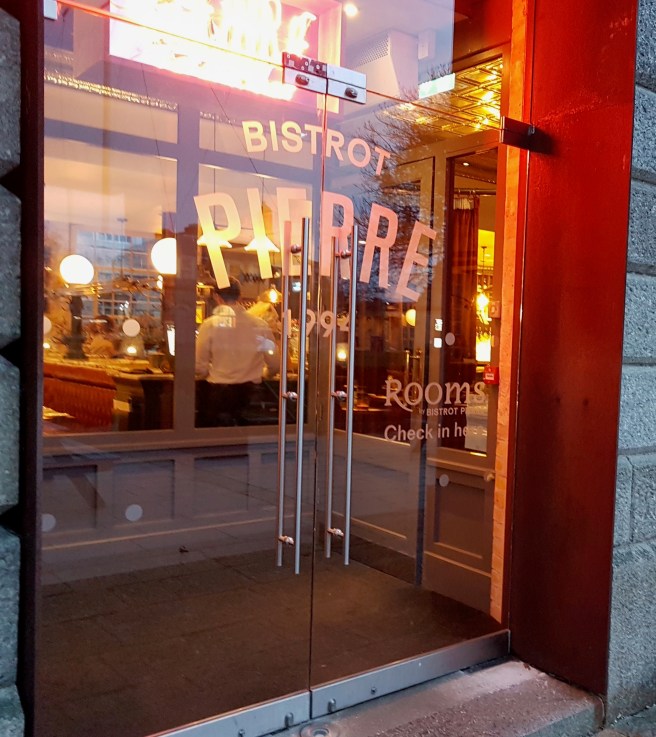
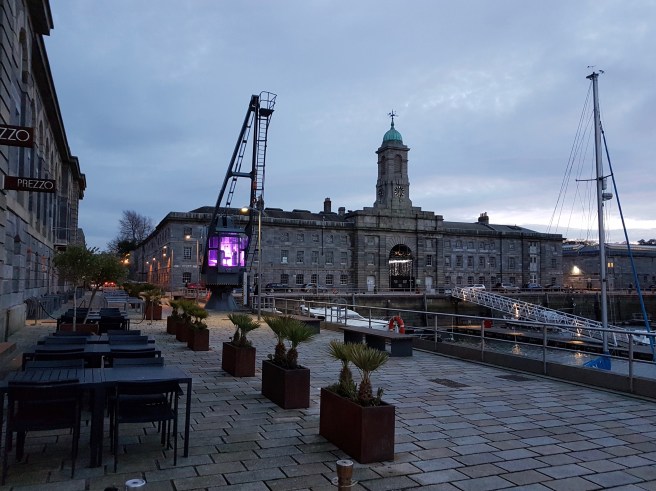 Bistrot Pierre where we had our coffee was pretty good too, an excellent looking menu, and they have just opened two of the buildings across the square as hotel rooms. They look swish.
 Yesterday back to Vue Plymouth this time to see the film ‘Stan and Ollie’. Steve Coogan as Stan and John C. Reilly as Ollie were absolutely brilliant and with oodles of preparation took to their parts with perfection. ‘Stan & Ollie’ tells the story of how Laurel and Hardy, with their golden age long behind them, embark upon a tour of the music halls of Britain and Ireland in 1953.
Despite the stresses of the tour, past resentments coming back to light, and Hardy’s failing health, the show must go on: in the end, their love of performing – and of each other – ensures that they secure their place in the hearts of the public. It’s about love, passion and comedy. You come out of the cinema just loving their humour but at the same time feeling for them….when up becomes down it’s tragic to see. For once all the five star reviews are thoroughly deserved. If you get chance, watch it…….
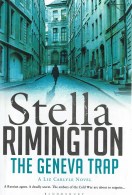 Stella Rimington makes use of all her history and knowledge as Director General of MI5 in her series of novels about her alter ego Liz Carlyle. I hadn’t read one of her novels for some time but having picked up this at a good price it was to be my bedtime reading for some nights. However ‘The Geneva Trap’ was so good that I couldn’t resist delving into it during the daytime too. It was a great read from beginning to end. Basic outline of the plot from Bloomsbury (terrific publisher)….’Geneva, 2012. When a Russian intelligence officer approaches MI5 with vital information about the imminent cyber-sabotage of an Anglo-American Defence programme, he refuses to talk to anyone but Liz Carlyle. But who is he, and what is his connection to the British agent?
 Yesterday we went to Vue Plymouth to see the latest Scandi-Noir film – ‘The Girl In The Spider’s Web’. Now I have read the book (an unfinished script by Stieg Larsson) which I enjoyed, but the reviews of the film were what you call mixed, so I wasn’t anticipating a great afternoon. However I really enjoyed our outing to the cinema (so much more of an experience than sitting at home watching on a small screen, as I have said many a time). And the lead was just great. We had seen both Swedish and American versions of ‘The Girl With The Dragon Tattoo’, both with good lead actresses, but the Swedish version infinitely superior, so I was really apprehensive about seeing Claire Foy (recently, I hear, good as Queen Elizabeth II / Princess Elizabeth) in the demanding role. I regarded her as a somewhat conservative actor. She was absolutely marvellous here. The film itself was a bit James Bond-like with massive action, chases, gadgetry and all the rest, the plot obviously implausible. But that mattered not at all. You sank yourself into the adventure and went along with it. The only annoying thing? Film scheduled for 1.15pm, didn’t actually start until 1.50pm after all the adverts and previews. Far too long.
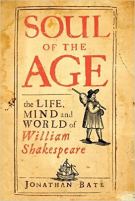 Bate, subtitles ‘the Life, Mind and World of William Shakespeare’. An incredible piece of work, almost a lifetime’s work you would say (except that Jonathan is still young). David Crystal concludes ‘completely fresh and full of surprises…’. It is certainly that. And Simon Russell Beale..’bursting with new idea and crafty analysis…’. I just wonder whether Jonathan is at times, quite often in fact, too clever by half. His knowledge is certainly immense. From the early stages when he talks of Lear’s fantastic garland
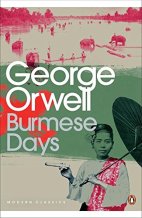 This book has been at the back of my mind for some reason, so I dug it out for a re-read after, what, 40 years or more. It is one of George Orwell’s most powerful and best novels. Let’s get it clear, I am one of those currently politically-incorrect people who believe the British Empire did far more good in the world than critics (who tend to concentrate on single events or themes) would have you believe. And in any case, as a historian, I would argue that it is absolutely impossible to set huge infrastructure improvements, educational and civilising influences, the keeping of the peace world-wide for long periods, etc etc against slavery in the early stages of the Empire, and various unjustifiable (in today’s terms) massacres and ill-treatment of subject nations. The Empire was of its time. It was what it was. However this novel by Orwell is a very, very powerful rebuke to people like me and an antidote to any positive reading of the ‘benefits’ of Empire. I was surprised to find out that this was Orwell’s first novel. It certainly doesn’t read like a first. Basically it tells the tale of a minor English player in Burma in the waning days of the Empire, how he lives and loves, how he reacts unsuccessfully to the embittered views of other members of the Club in the little town in Burma where the story is set. The story doesn’t have a happy ending, and the protagonist’s life and death are perhaps a metaphor for Empire itself. It is based actually on Orwell’s own experiences, he spent five years from 1922 to 1927 as a police officer in the Indian Imperial Police force in Burma. In a letter from 1946, Orwell said “I dare say it’s unfair in some ways and inaccurate in some details, but much of it is simply reporting what I have seen”. It was dynamite in its day and only published in the States at first, and it’s not hard to see why. In my opinion a great read.
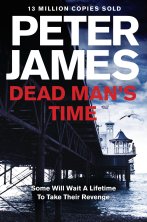 signed hardback ‘Dead Man’s Time’ for £6, not bad. It has been my bedtime reading. As always Peter has interesting characters including his protagonist DS Grace. But all the major and minor actors are well-drawn. And as always there is a slightly unusual story line. In this case a 95 year old wanting revenge for something that happened in his childhood, and revenge for the recent torture and murder of his elder sister. The plot is interesting and takes lots of turns. Brighton doesn’t feature quite as much as in some of his novels…a shame as I like a strong ‘Place’ element. But with the plot capturing you and lots of small chapters (ideal for bedtime reading) what’s not to like. Procedure, one assumes, is exemplary as Peter has intimate access to lots and lots of Police folk in Brighton and he makes full use of his detailed knowledge of how the Police work. All in all another thoroughly enjoyable novel by one of the creme de la creme in Crime writers.
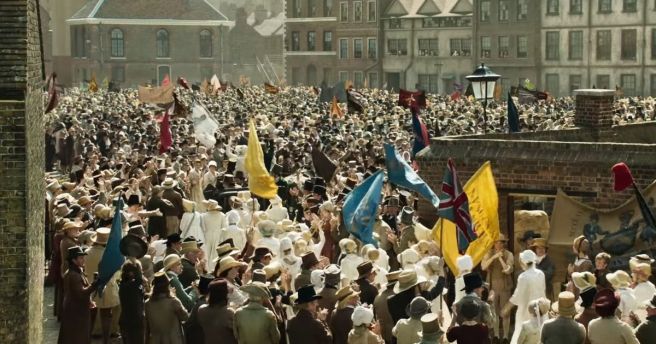 We saw recently the Mike Leigh film ‘Peterloo’. Maxine Peak, one of my favourite actresses, is one of the main characters. A review I had read in The Times had slated it, mainly it seems on the grounds that there was too much dialogue in meetings etc and not enough action. How feeble critics are. What a world we live in where there has to be movement and action all the time! It was quite long at two and a half hours but I didn’t notice this ……unlike The Times critic I was absorbed. What it is about is the background to, and the events of, the Peterloo ‘massacre’ in 1819. The Guardian precises it nicely…’ On 16 August 1819, at what we would now call a pro-democracy demonstration in St Peter’s Field, Manchester, an excitable band of cavalry and yeomanry – whose commander had airily absented himself for a day at the races – charged with sabres drawn into a crowd of 60,000 unarmed people, many of whom were unable to escape the enclosed space. The troops killed 18 and injured hundreds more……It was Britain’s 19th-century mix of Sharpeville and Hillsborough. The government was entirely delighted with the result, and not displeased with the nickname “Peterloo”, as it felt like a rerun of its victory over Napoleon, the creature of something it continued to fear intensely: the French Revolution.’ But the thing is, it was in many ways a victory for democracy – for never again would any Government allow such dramatic military actions to be taken against people expressing their free will in a public meeting. And eventually the Great Reform Act and Anti-Corn Laws legislation would be passed. It also led The Times to take up, to some degree, the whole issue of Reform, and almost directly led to the founding of The Manchester Guardian ( a great newspaper, sadly since its move to London a shadow of its former self). So a film on very important issues with some relevance to today and a topic ‘Peterloo’ which is hardly on the syllabus in schools. Mike Leigh himself has said children should be taught about Peterloo. “They will know about 1066 and Magna Carta and Henry VIII and his six wives and they may be told about the French revolution and the battle of Waterloo … [The massacre] was a major, major event which resonated down the 19th century into the 20th century in the context of democracy and suffrage.” Manchester Histories, a charity, is leading the campaign for Peterloo to be taught in all schools. What I didn’t like about the film (this and many others!) was how unrealistic the settings and stages were. It’s all very well finding a great location but covering the streets with sand of all things in order to hide yellow parking lines just doesn’t cut the mustard. The same with the characters. The poor of Manchester were atrociously dirty and smelly. It’s no use just dressing them up in costumes Hollywood-style. And everywhere was so clean. In reality you couldn’t see a hand in front of you because of the smoke and the smog. All wrong, wrong wrong……..
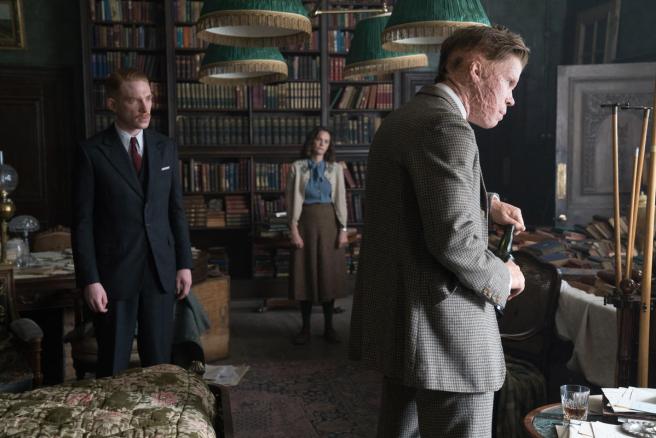 We hadn’t been to the cinema for a while, so having read the excellent book by Sarah Waters, set in Warwickshire where we lived for some time, a trip to Vue in Plymouth was looked forward to by us both. We went by bus and with time to spare had time to visit Waterstones in order to but the latest Cormoran Strike novel Lethal White which I am already enjoying. Then we walked the mile or so to the cinema and saw parts of Plymouth which were new to us, especially interesting being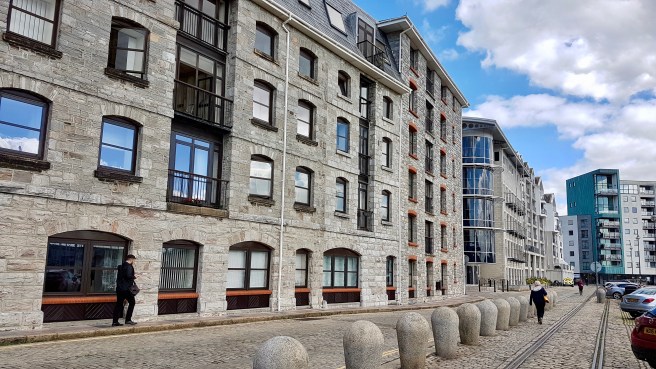

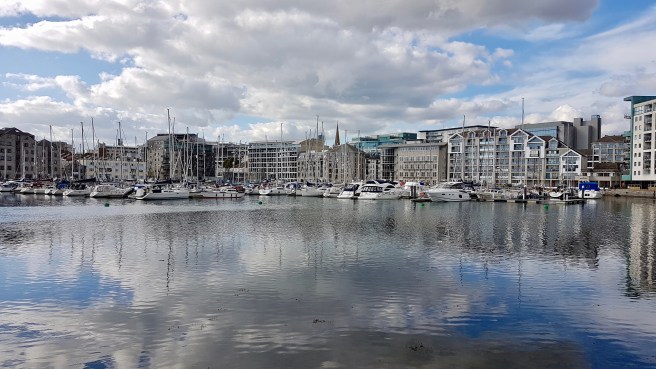
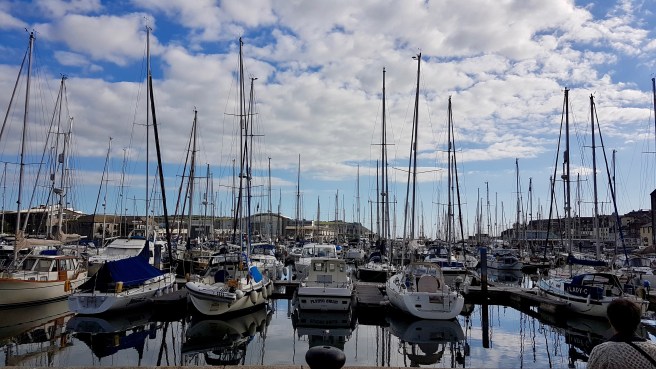 And the harbour is still home to several big trawlers which is encouraging. Anyway the film…….. both F. and I enjoyed it very much. Whilst it does make a lot of the class system in late 40’s Britain, it is at heart a ghost story.
 Enjoying Cornwall...