 Another slow-burn Brunetti novel whose main elements are the setting – Venice, and Brunetti himself and his relationships with colleagues and family. The plot or plots take second place. A corrupt pharmacist, an entangled female doctor, and possible murder – all a bit humdrum. But how I like following Brunetti around Venice and seeing how his personal ups and downs work out. Quite a lot of philosophy in this one too, and moral dilemmas to make us think. And at the end of it all not a happy ending. I just love it…..Donna Leon is an excellent writer and certainly gets right beneath the skin of Italy and Italians, allowing us to understand things like the North-South divide, the irritation at tourists, and much else.
 Now, we are off to Manchester for 5 days (it’s where I come from), to see whether this might be a place for our next house. Cornwall v Manchester – sounds like there is only one winner, but I’m not so sure. What Manchester has got (apart from some rain…..actually less rain than Plymouth over the year), is culture….restaurants, bars, cinemas, theatre, music, museums, football (ManCity my team is the best in the world right now according to some authorities, and probably the best that there has been in the Premier League era), and loads of visible and easily accessible History. We were last up there for the Commonwealth Games and it had much improved from my youth. My thinking is that it will have improved another several notches, from what I read. Anyhow, as always, before going anywhere I have done lots of research and dug out three or four books in particular. Charles Nevin’s ‘Lancashire’ is the pick of the bunch, a book that I simply couldn’t put down despite having read it at least twice before. It is so so funny, so enlightening, so full of mischief, and gets right to the heart of what it means to be a Lancastrian. And, for me, it is so nostalgic. Nevin talks of places I know, football line-ups which take me back 50 years, and big names of Rugby League I had forgotten all about but which I can picture in full 3D colour or should that be Black and White. But don’t let that put you off. Nevin is everywhere – from listening in to old ladies on the bus, to discussing Shakespeare’s Lancashire period with eminent historians, to some of the higher reaches of philosophy, taking us on a journey at break-neck speed through everything Lancashire. Have you heard of Donizetti’s opera ‘Emilia Di Liverpool’? No neither had I! Think Southport has a touch of Paris about it – particularly in the tree-lined Lord Street? Think again. Haussmann modelled his new Paris on Southport (probably). Why, Balzac of all people has a character in his ‘Le Lys Dans La Valle’ tell her seducer that Lancashire is ‘the county where women die of love’!! Thus the subtitle of this splendid book. I could go on, almost indefinitely, about why Lancashire is the best place to live, and Nevin certainly does go on, but let me leave you with this quote from Abraham Lincoln – talking of the Lancashire cotton workers’ solidarity with his North in the Civil War, and support for the abolition of slavery, whilst most of them were absolutely destitute – because of this support (cotton could no longer be got from the South to keep the mills running)….Lincoln called this ‘an instance of sublime Christian heroism which has not been surpassed in any age or in any country’. Well!! I am proud.
 On now to my factual books each telling me about Manchester in very different ways. The modern Pevsner’s architectural guides are usually rather good, and in fact in my opinion a lot better than the originals which, although a massive and unparalleled achievement, are dry as dust. ‘Manchester’ by Clare Hartwell is much more contemporary. It discusses all the major buildings in Manchester at the date of publication. As this was 2002 it shows the real drawback of this type of book…..so much has happened since which isn’t covered. Still, an excellent introduction.
‘Manchester Compendium’ is different again. It is basically a street-by-street history of  the city. So we are taken on walks through the centre and its most important suburbs. And interesting walks they are too. Glinert is a great guide. All human life is here, as the old News of the World used to say. Everything from the history of the buildings themselves, the people, their culture, it is a real mish-mash of often quirky stuff which is very engaging indeed. I learned a lot about my city that I didn’t know.
 ‘Manchester The Hidden History’ is a more conventional history but based mainly on the more recent archaeological surveys. and with all the new building that has been going on in the last 30 or so years there have been more than a few of those. More for the serious historian (as I sometimes imagine myself!). Can’t wait to get there.
 reading History books of all kinds ever since. It is high on my list of most intense personal pleasures. Now here is a book which has taken me two or three months to read with lots of concentrated effort, but which has been a joy from start to finish. Not only was it sheer pleasure, but I learned something new on virtually every page. It is deeply researched, masterful in its breadth, written with a loving hand, entertaining, full of surprises, and comprehensively covers English history from around 600 AD up to the Cameron government. All the time it is drawing conclusions and comparisons and linkages across the ages which show we are in the hands of a master. And, really, really important for me as a historian, it is not politically correct. How wonderful and surprising is that in this age of ours where we are not allowed to celebrate, for instance, the pluses of Empire as well as the minuses, where we are not allowed to judge actions in their own context instead of imposing our own standards. I can do no better than quote an equally enthusiastic reviewer in that left-wing rag The Observer……
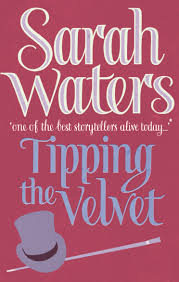 ‘Absolutely filthy’ was how screenwriter Andrew Davies, (well-known to Frances as a customer of hers at Kenilworth Books) described his adaptation of Sarah Waters’ Victorian lesbian romp ‘Tipping The Velvet’. “What’s it about?” …..’people sometimes asked me’, says Sarah Waters herself ‘when they had heard I’d written a novel – and I always had to brace myself, slightly, to answer. There was the awkwardness of explaining the rather risque title. There was the fact that I outed myself the moment I began to reveal the plot. And then there was the plot itself – because, oh dear, how lurid it sounded, how improbable, above all how niche, the tale of a Victorian oyster girl who loses her heart to a male impersonator, becomes her partner in bed and on the music hall stage, and then, cruelly abandoned, has a spell as a cross-dressed Piccadilly prostitute and the sexual plaything of a rich older woman before finding true love and redemption with an East End socialist.’
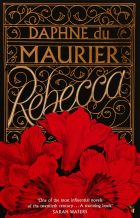 Having recently walked past Menabilly, the house where Daphne Du Maurier was a tenant and which she restored, I thought it was about time I read ‘Rebecca’. The front cover of my copy quoted Sarah Waters ‘One of the most influential novels of the twentieth century….A stunning book’ – sentiments which I can understand, but don’t entirely agree with. Despite my 69 years of reading, amazingly I didn’t even know the plot line. I have to say I really enjoyed it. Du Maurier is a romantic novelist in the best sense of that term, not at all soppy, and she knows how to build and maintain a story. But this story is not a romance …it has rather darker themes. “It’s a bit on the gloomy side,” she told her publisher, Victor Gollancz. The idea for the book had emerged out of her own jealousy about the woman to whom her husband, Tommy “Boy” Browning, had briefly been engaged. She had looked at their love letters, and the big elegant “R” with which Jan Ricardo signed her name had made her painfully aware of her own shortcomings as a woman and a wife. On such foundations the tale is told. Well worth the read, I do enjoy Du Maurier as a writer.
 Enjoying Cornwall...