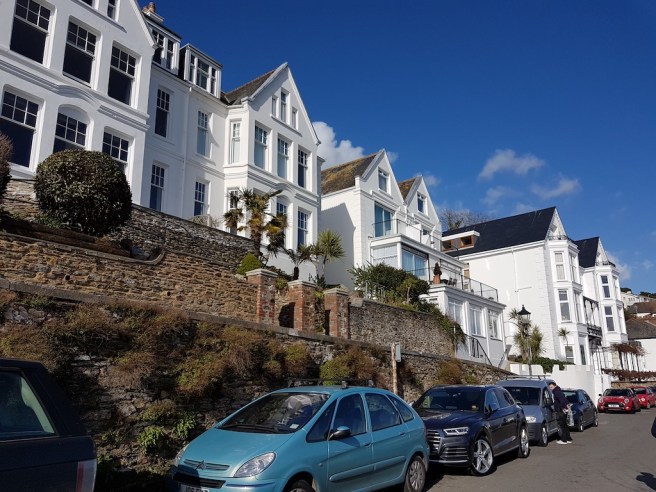
 Yet another trip to the tip and another trip to Fowey as a reward. Parking free at this time of year. Great. Some Edwardian houses we hadn’t really noticed before gleaming in the bright sunshine on this February day. Fairly quiet although half-term, and a pleasure to wander around the streets.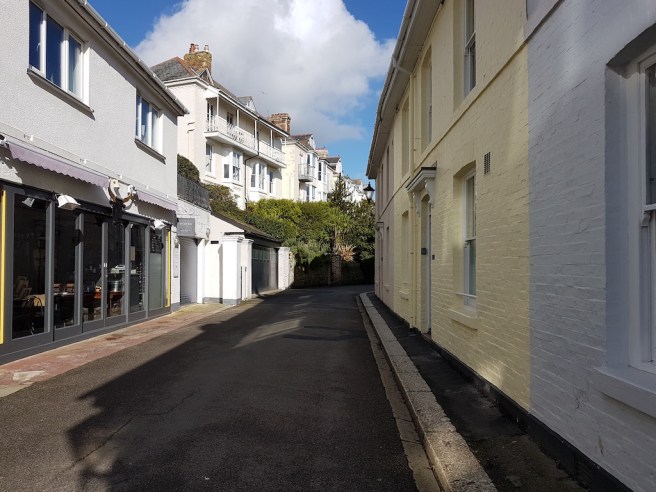
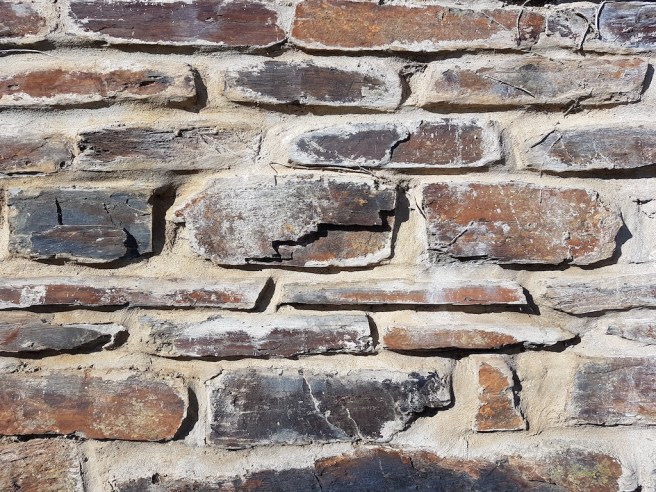
 I thought I would use this trip to take some shots of the typically Cornish surfaces, and doorways. Interesting I think.


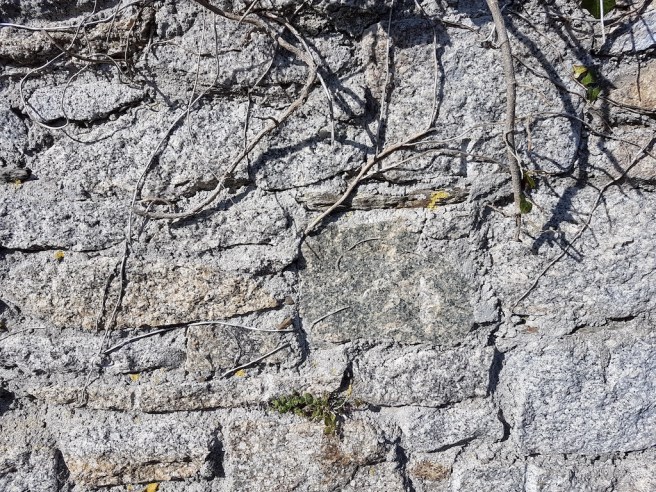
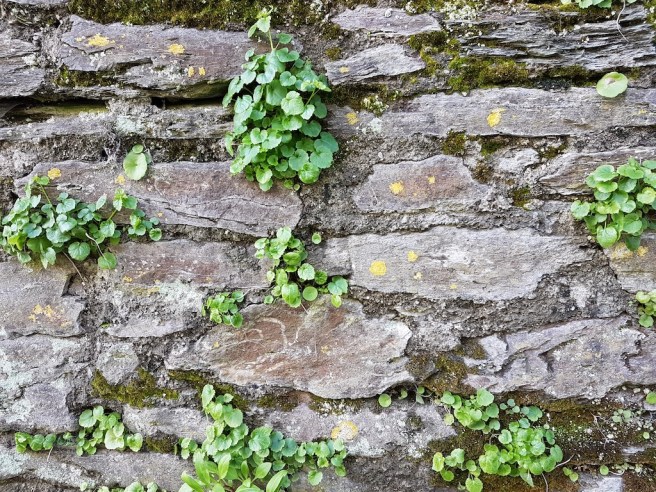
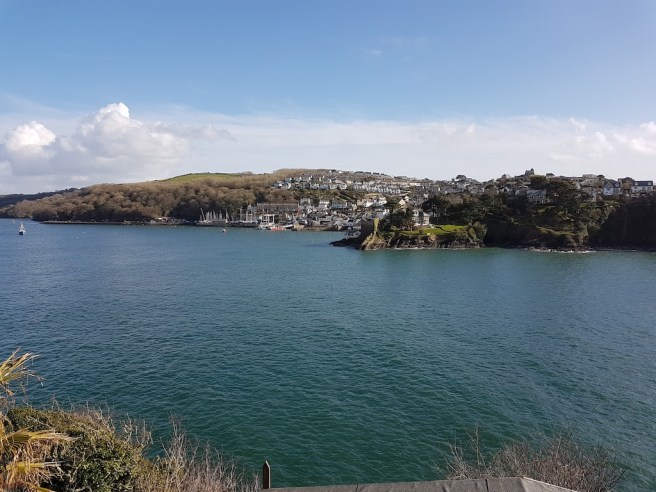
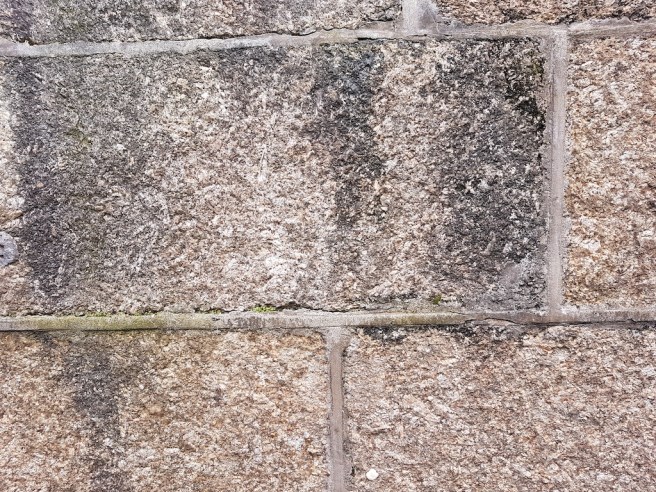 This time we wandered down through town to the Bodinnick ferry with a view across to Daphne Du Maurier’s house Ferryside.
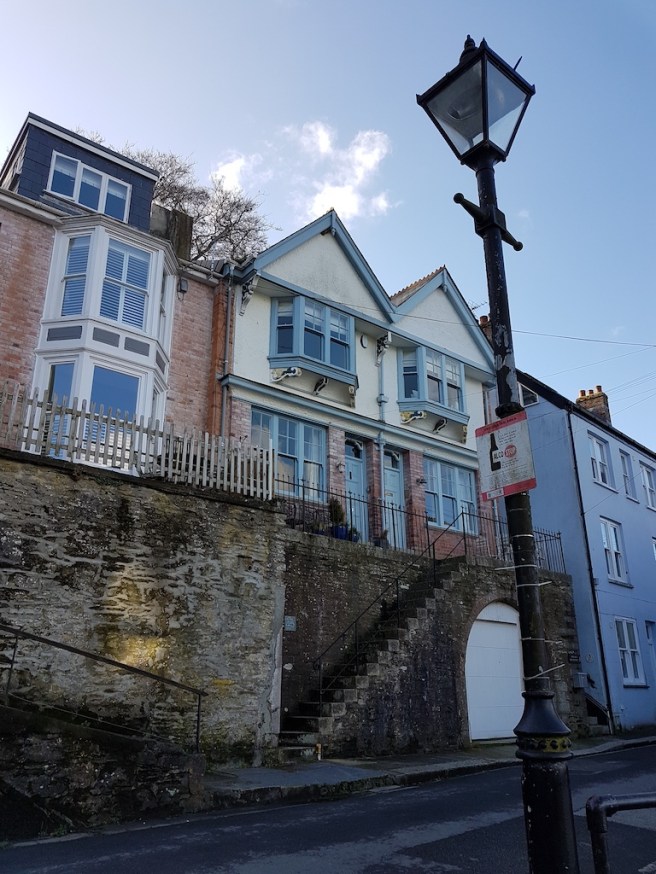
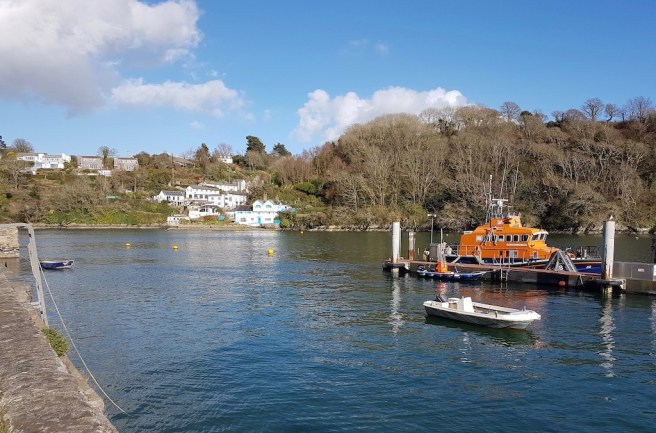 Liveable houses down here too!
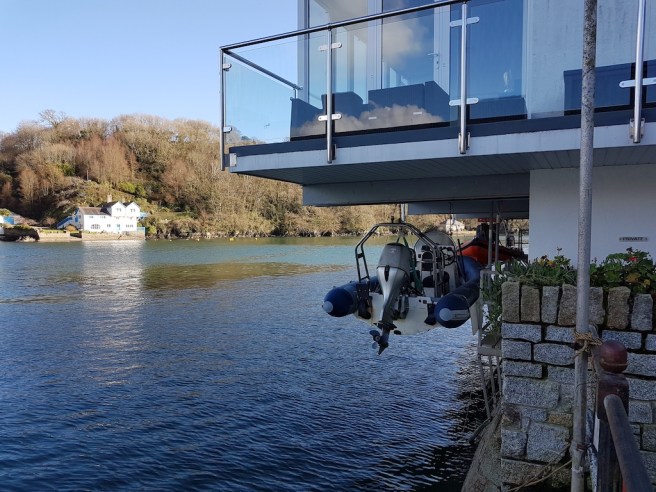
 I liked the idea of having my boat slung under the house ready for action and a quick get-away! Good view of Ferryside on the opposite bank….
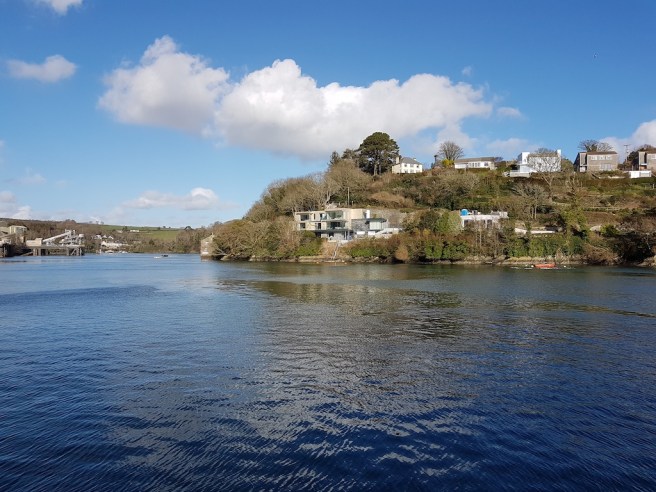
 This shot shows that Fowey and environs isn’t all about pretty houses and views…you can just see the china clay works downriver……
 The statue at the ferry terminus is rather good…
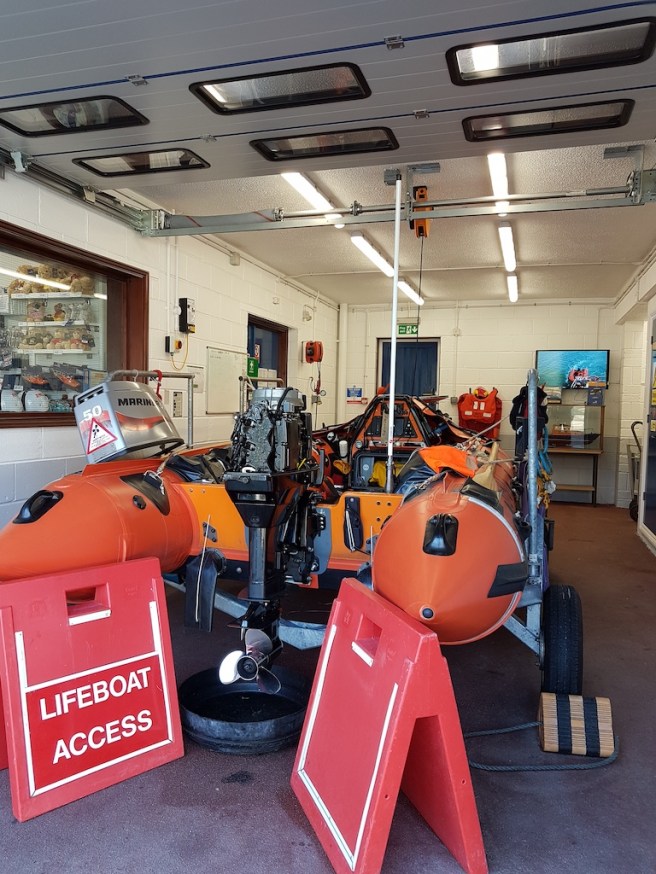
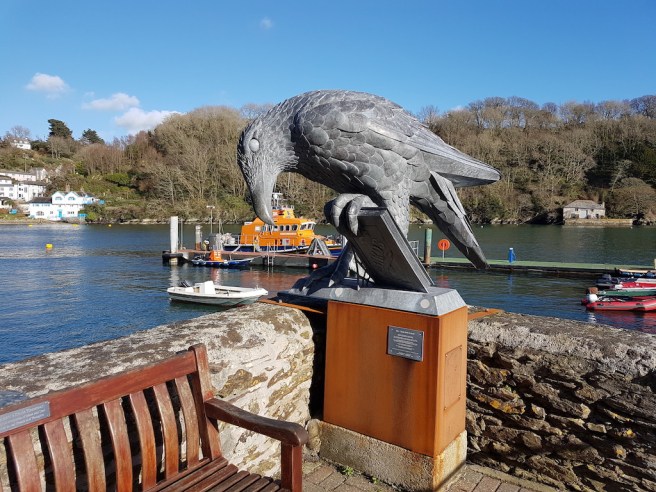 and always interesting to look inside the RNLI station….we donated.
 You are nearly always guaranteed a good view with a pint in Fowey….here from The King of Prussia……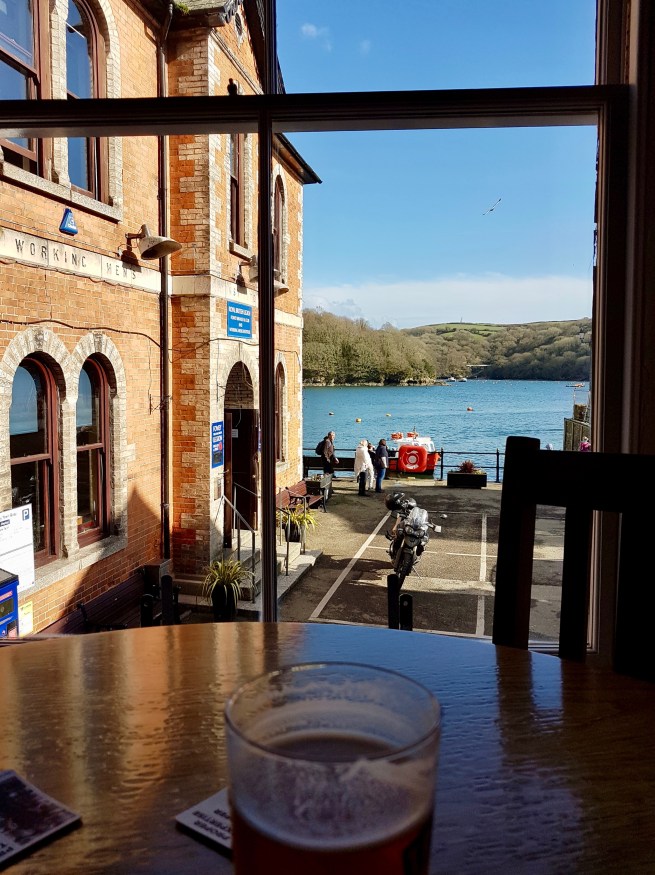
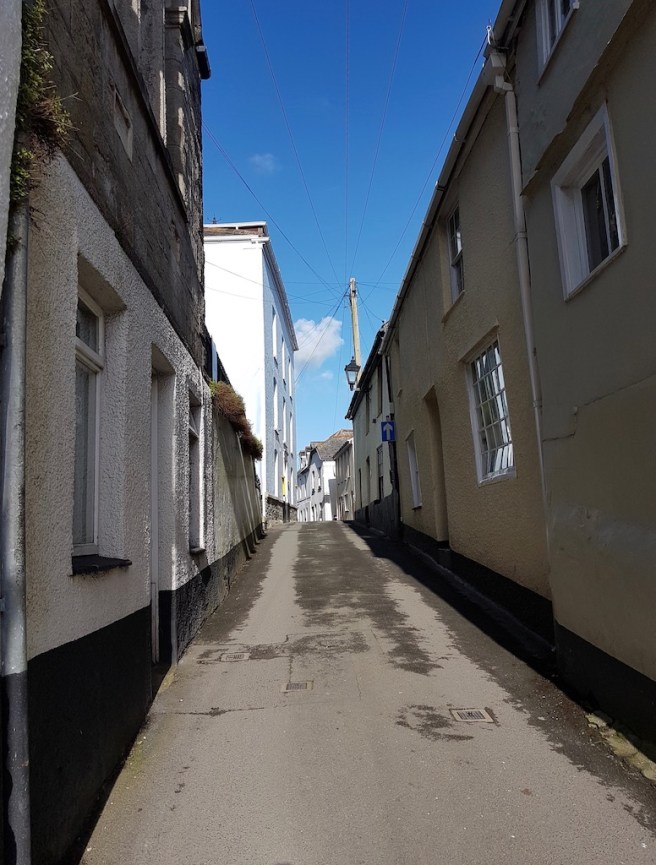 Now for some doors…..and door-knockers….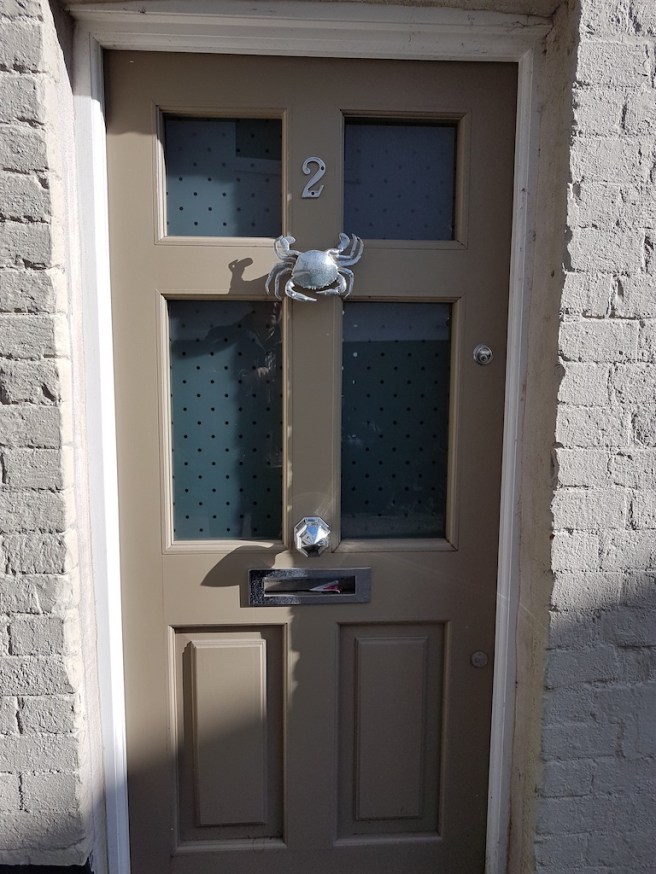
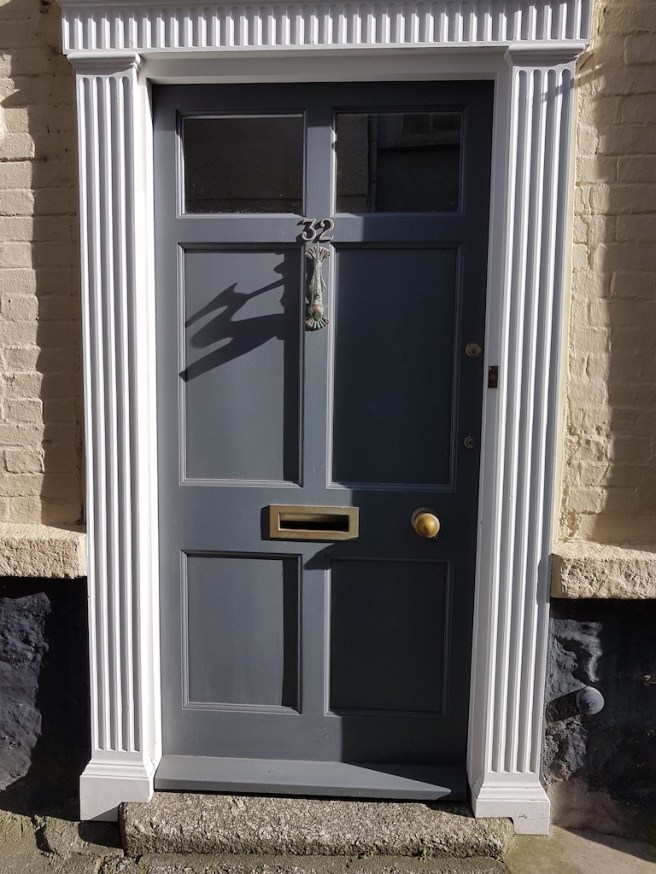
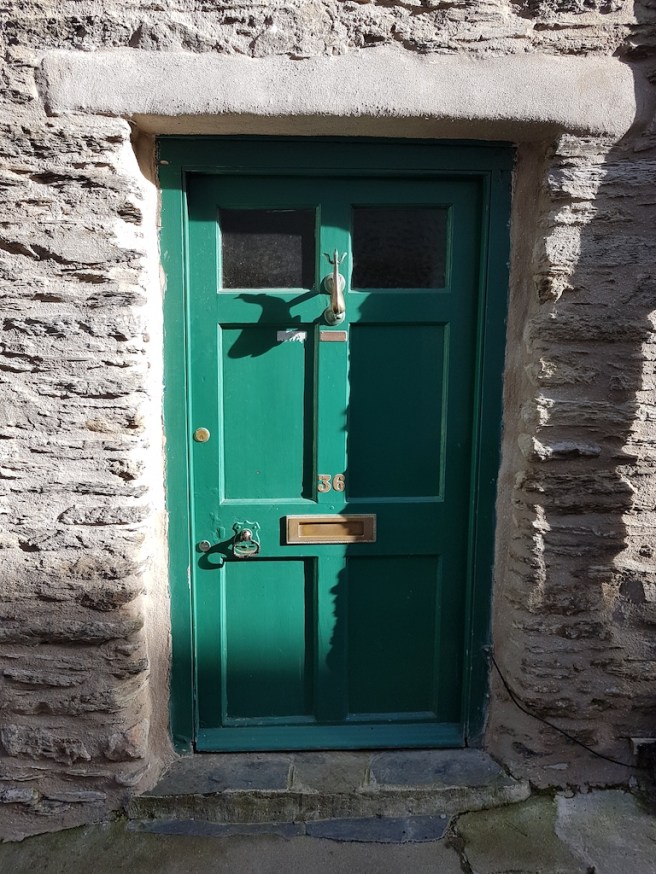
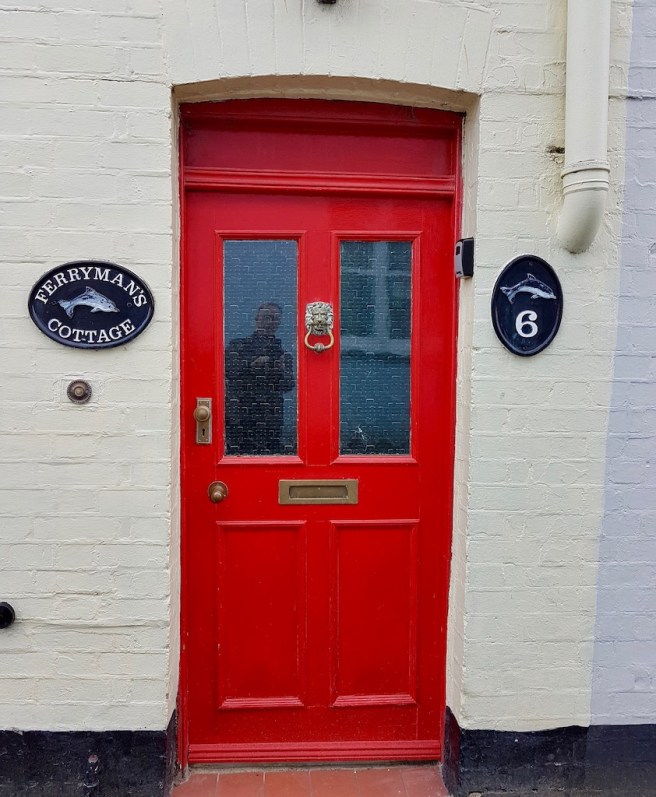
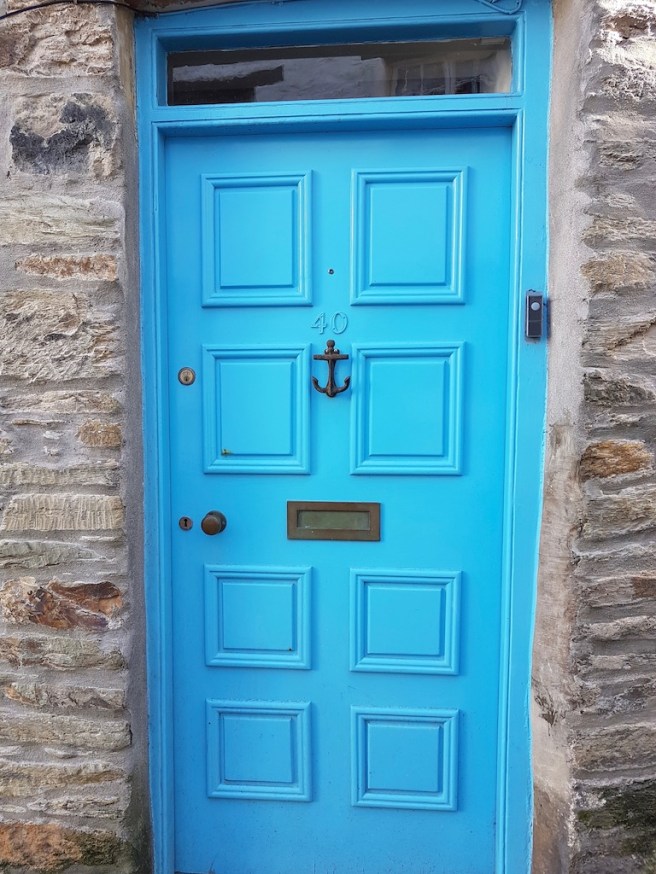
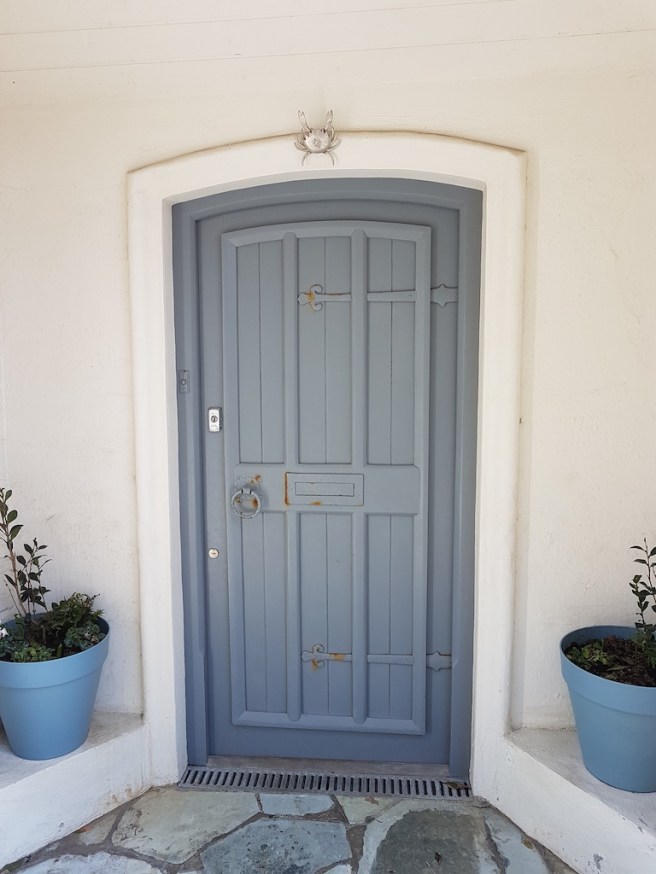
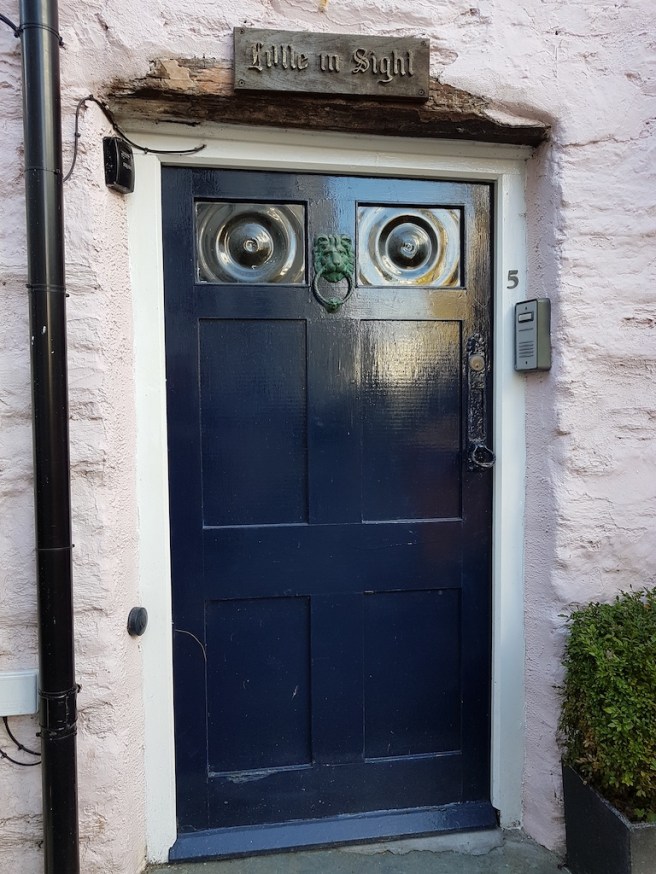
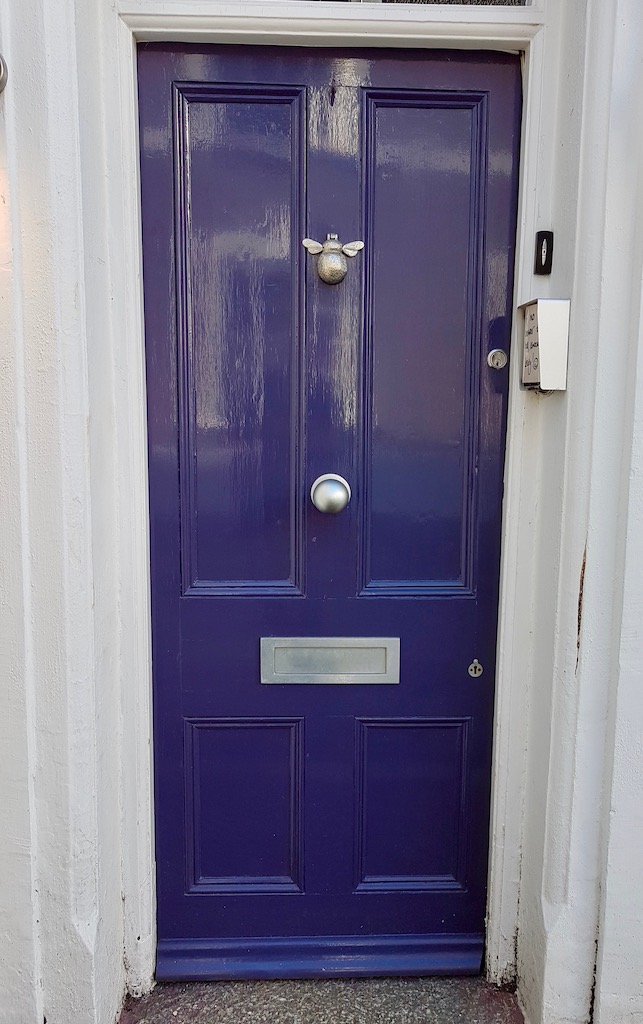 Then on the way back I noticed the old house of Q, or Sir Arthur Thomas Quiller-Couch, with its plaque.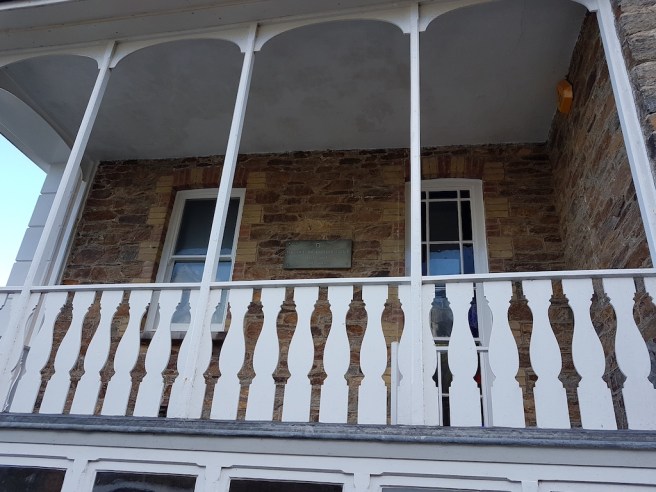
Heaving spent a little time as a journalist in London he returned to Cornwall in 1891, and settled in Fowey. In addition to publishing a series of critical articles, he completed Robert Louis Stevenson’s unfinished novel, “St Ives”. He was also known as a writer of excellent verse and a compiler of poetic works, most notably the “Oxford Book of English Verse, 1250-1900”, which appeared in 1900. This book is often quoted by John Mortimer’s “Rumpole of the Bailey”. Quiller-Couch was an active worker in local politics for the Liberal party. He was also Commodore of the Royal Fowey Yacht Club from 1911 until his death. He was knighted in 1910 and received a professorship of English at Cambridge in 1912. He retained this post for the remainder of his life. He later became Chair of English at the university and oversaw the beginnings of the English Faculty there. Many of Quiller-Couch’s fictional works have been long neglected but contain a wealth of Cornish folk lore. He was a noted literary critic, and published several volumes of criticism. He died in 1944, leaving his autobiography, “Memories and Opinions”, unfinished. This was published the following year. His novel, “Castle Dor” was also unfinished on Quiller-Couch’s death, and his daughter asked her friend Daphne du Maurier to complete this version of Tristan and Isolde, set in 19th century Cornwall.
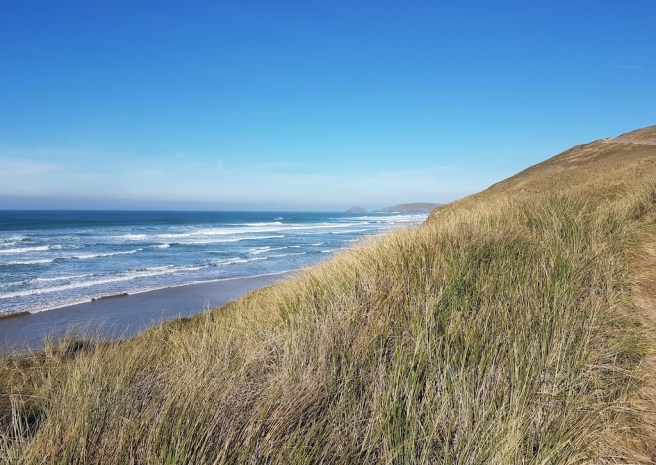
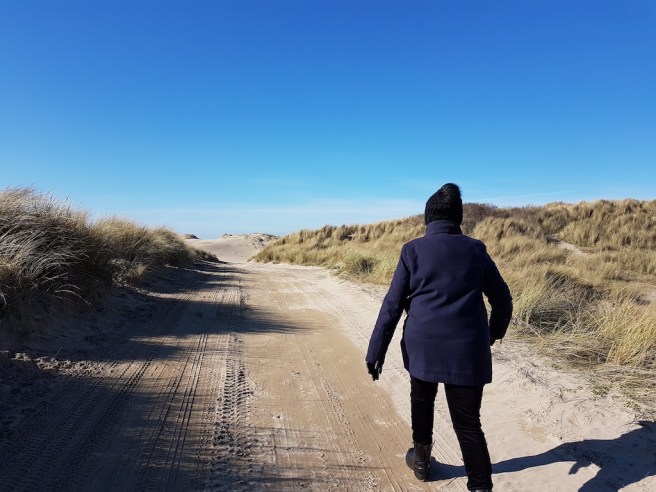 We were trying to find the beach we had visited when first in Cornwall that has a small boardwalk and freshwater pond in the dunes. We thought it might be Perranporth so that is where we headed. We were wrong. Perranporth is the beach with a good bar/restaurant right on the beach and ‘unofficial’ nude bathing at the far end. What a lovely February day, and no Photoshop here!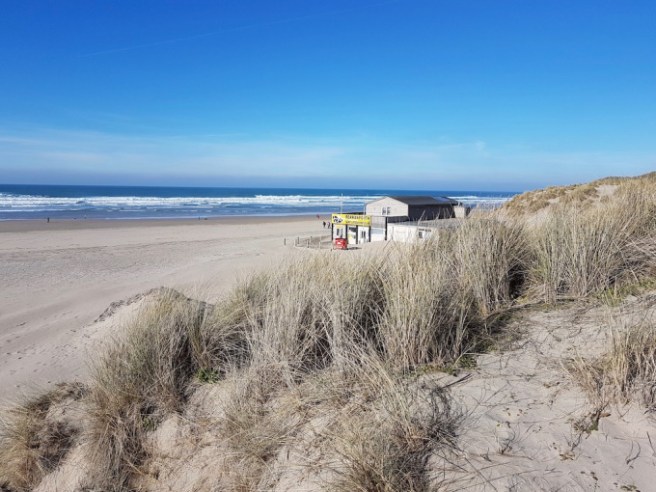

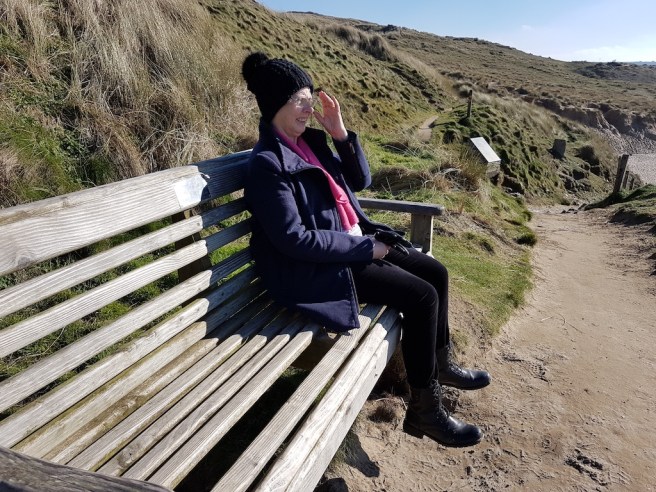
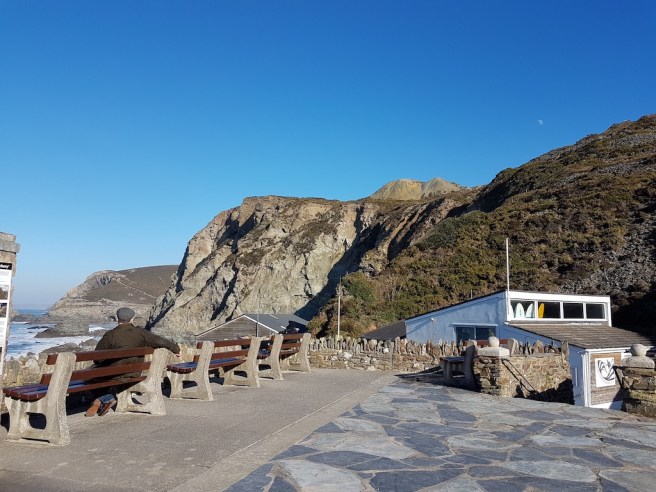
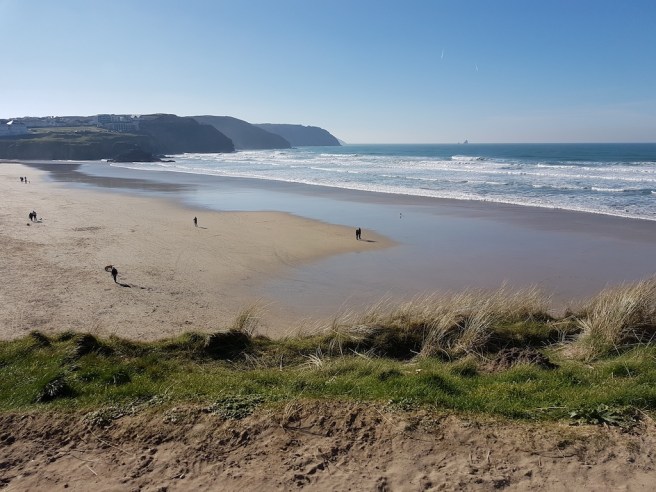 At the far end, having encountered no nudes unfortunately, we climbed up the Coast Path to a viewing point. The bench was obviously constructed for Giants as you can see!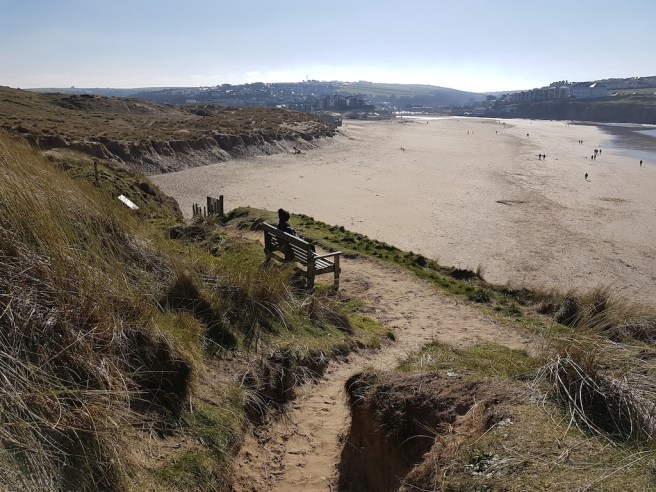
 Next to
 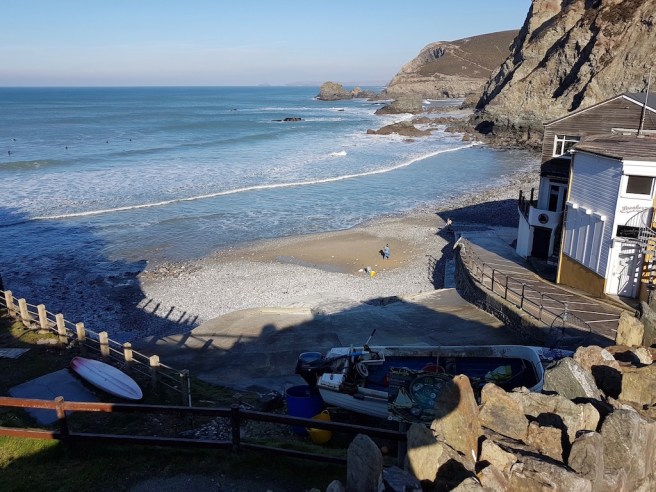 Most of the Cove is designated as an SSI because of the interesting geology and exposed lodes, and the village of St Agnes just above here was famous for its high quality tin….the last mine closing in 1941. There were outcrops of pure tin on the beach itself which were worked at low tide, others running under the sea, and more in the cliff face. Some of the spoil is still visible on the cliff top…….This little cove in its time was a real hive of industrial activity with hammer mills, loading of ships and much else apart from the mines themselves. However over a period of almost 400 years five attempts were made at constructing a harbour…all failed due to the rough seas. Huge granite slabs just washed away. On of the attempts was by Winstanley of Eddystone lighthouse fame.
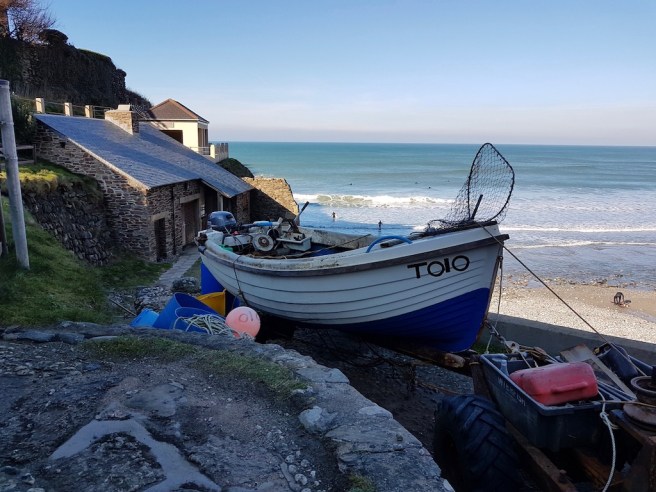
 Trevaunce was also a fishery and the odd fishing boat remains as a reminder of the past…
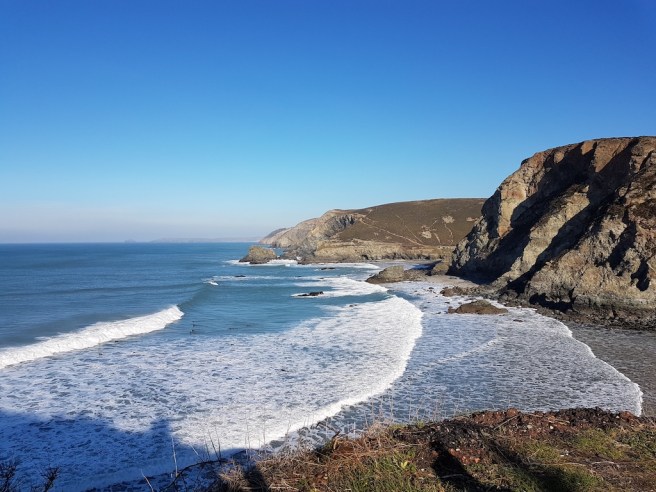
 We climbed the cliffs and sat on the lowest bench I have come across (Guinness Book of Records?) to watch the surfers at play.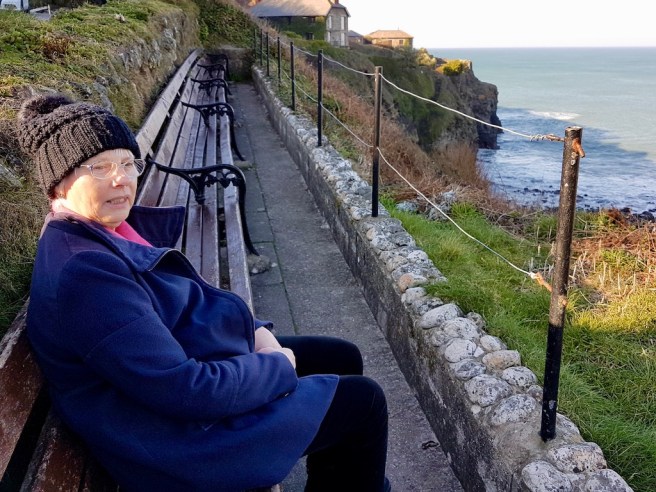
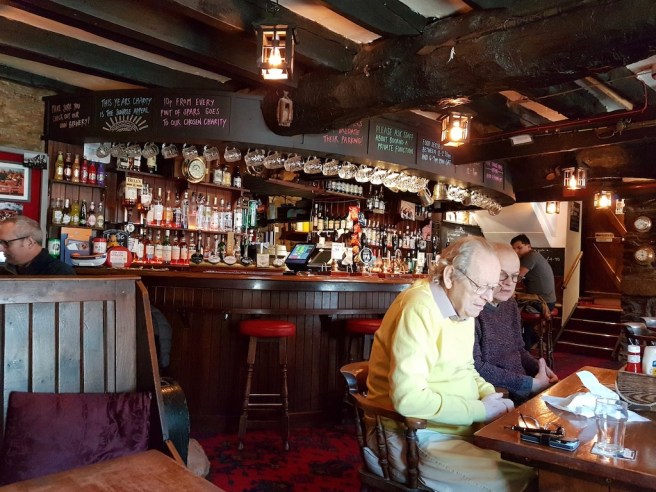
 We then adjourned to the Driftwood Spars pub and brewery for a pint. The name stems from the huge beams (or spars) that comprise its structure, salvaged from shipwrecks along the coast and utilised for the building in the 1650s. The pub began life as a tin mining warehouse and has since been a chandlery, sail making loft and fish cellar, before it was eventually converted into a hotel and bar in the early 1900s.
 Suitably refreshed off we went to have one more try at finding the elusive beach of memory. Success at last, it was Holywell Bay, just as charming as we remembered!…..with its freshwater pool and river…
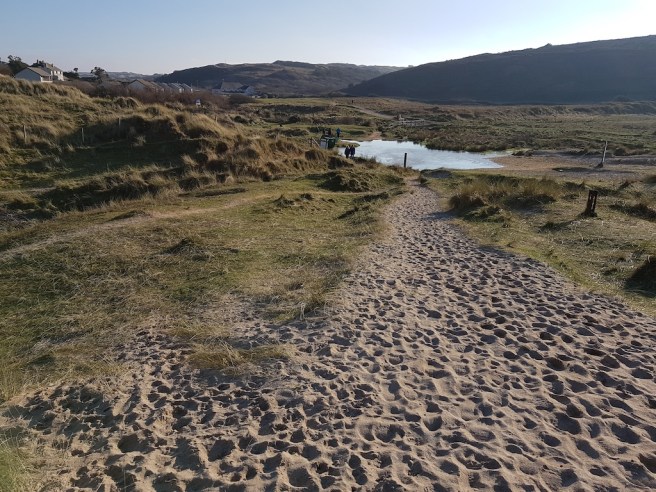 nice little boardwalk….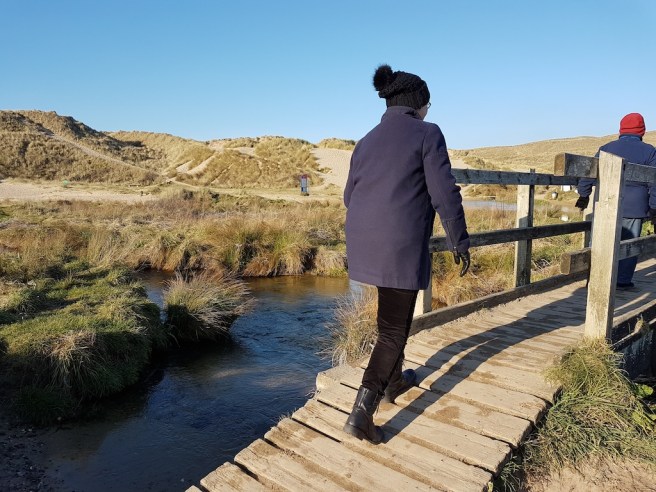
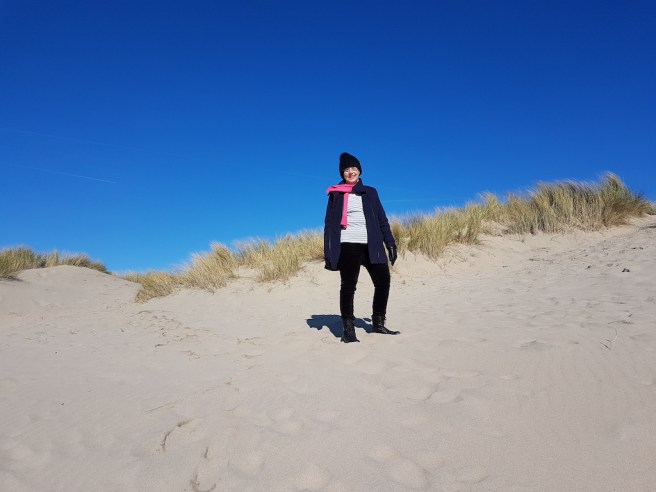
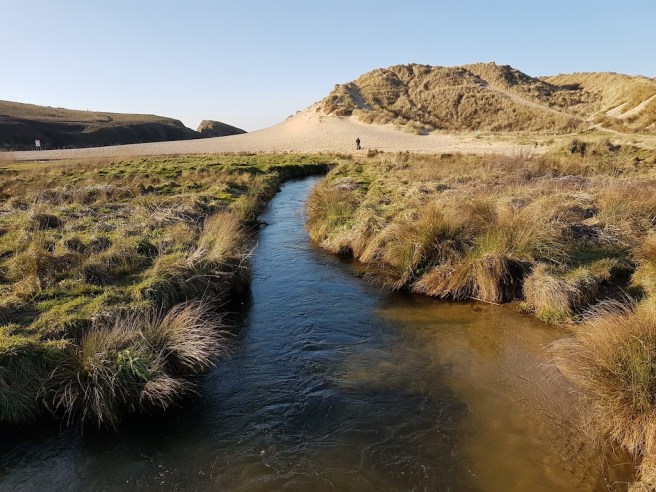 and beautiful dunes…..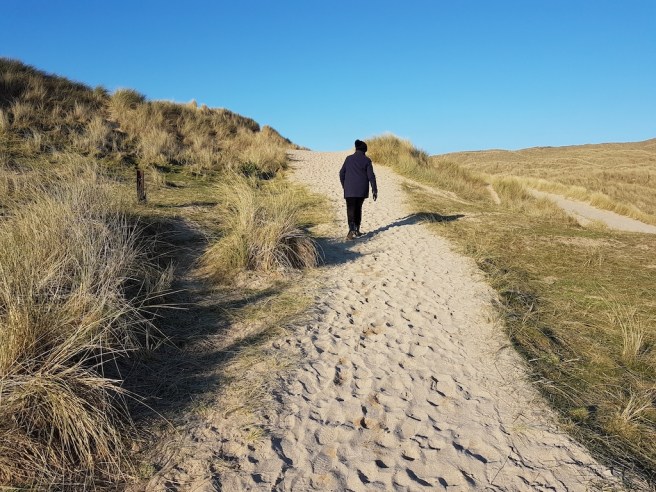
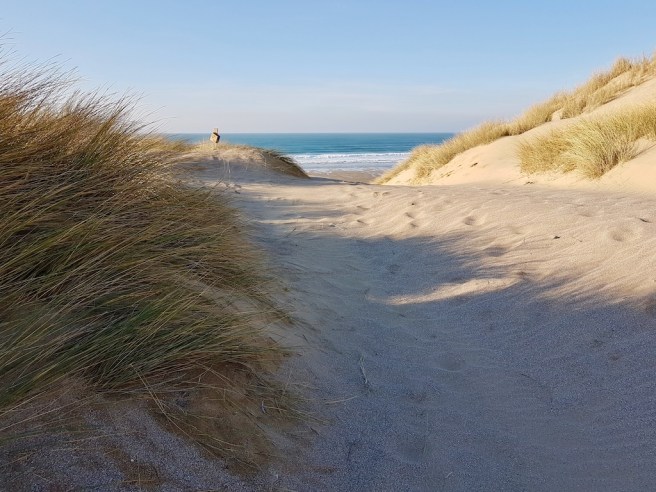 The beach was pretty fantastic too…..
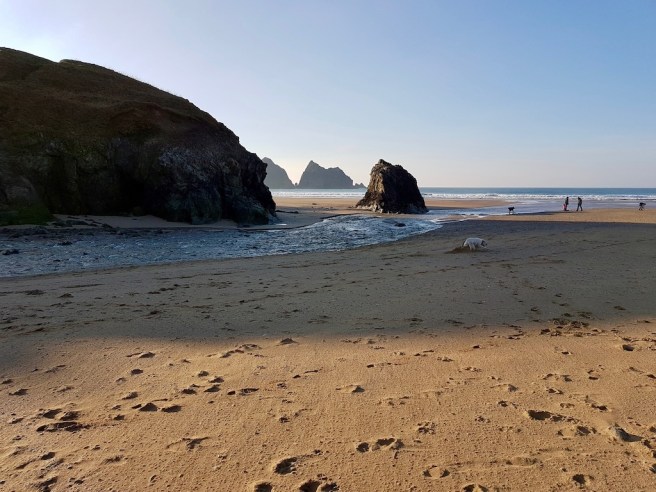 A lovely day by the seaside full of interest, and only 50 minutes away by car. Marvellous.
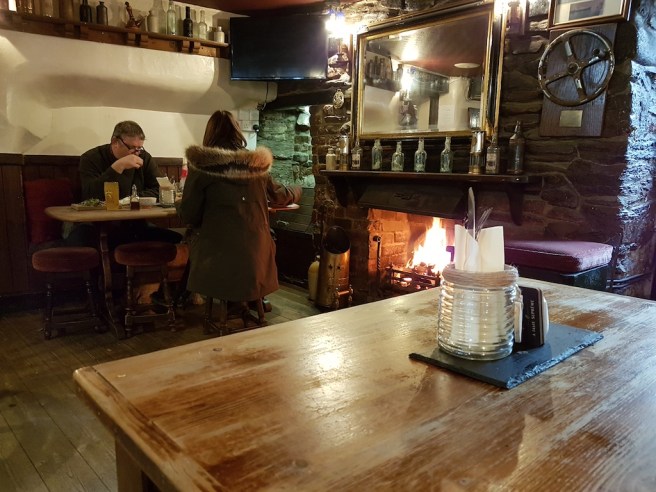
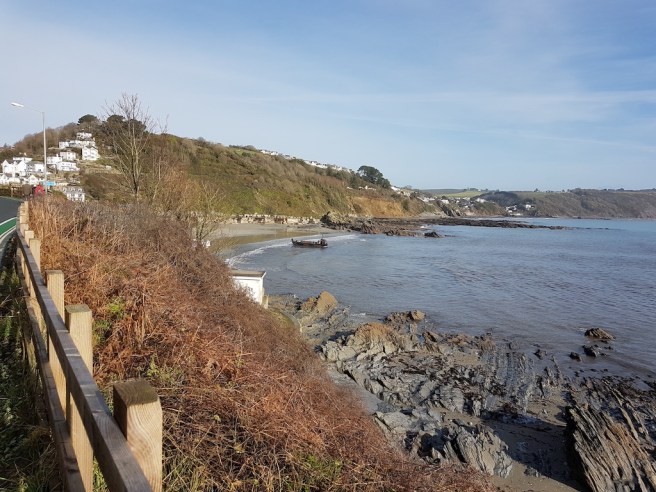 On our regular walk in Looe we saw a landing craft hover in the retreating sea outside Looe (the tide was almost at its lowest), and then make up its mind and beach. We have absolutely no idea what all this was about, but it did attract attention! Having then to take some garden rubbish to the tip we used the opportunity of going on a bit further to Fowey one of my all-time favourite places. We had lunch and a pint at the Ship Inn which we had never been in before – a traditional pub with roaring fire – perfect on a cold day.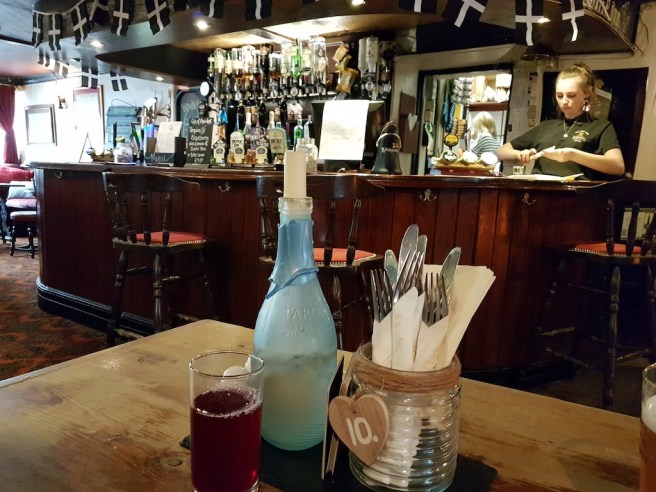
 After a nice stroll through town we climbed the steps to the hotel now renamed as
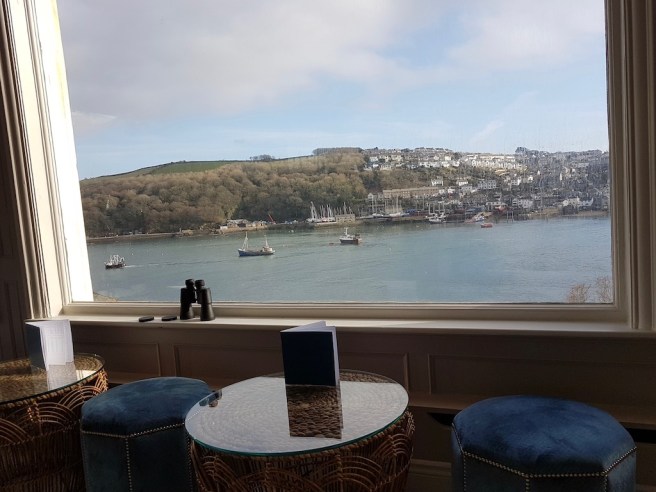
 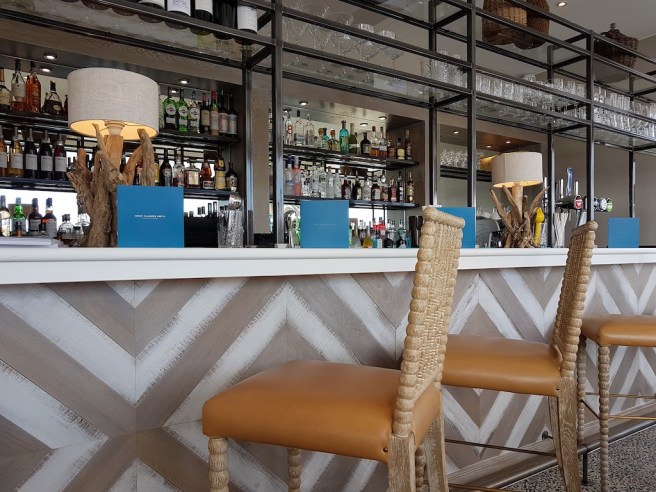 and great views from where we were sitting in the bar\lounge…..
 they seem to have copied the ‘wellies’ idea from Olga Polizzi’s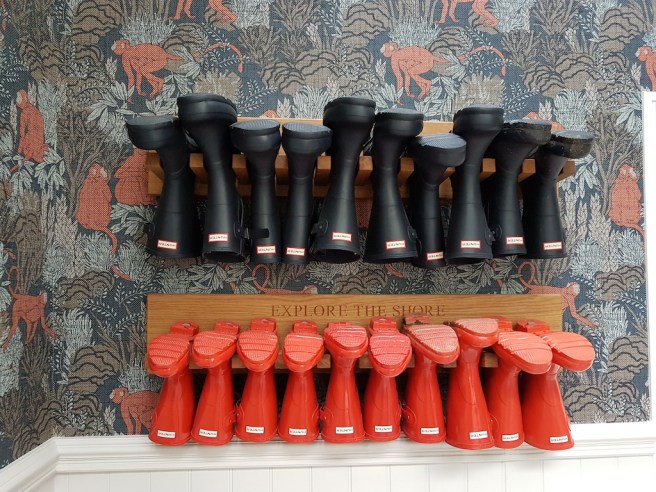
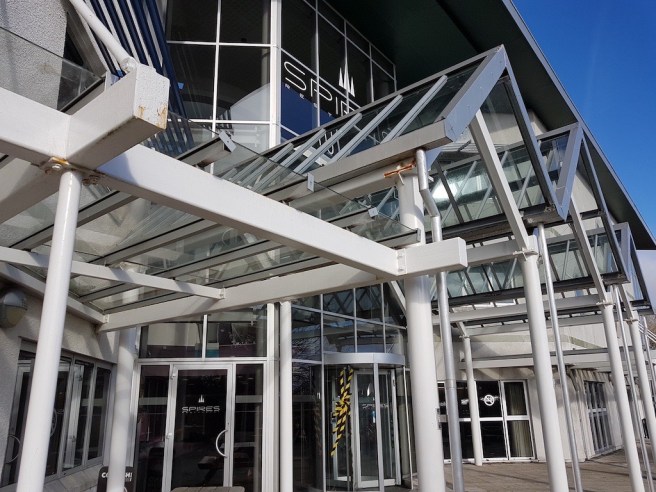 Having raved about the Truro and Penwith College restaurant in Penzance – Senara – we thought we would try their sister operation in Truro. “It’s run entirely by our Professional Cookery and Professional Food and Beverage students, who gain valuable experience whilst working towards their qualifications.” Three courses for £10…..you can’t go wrong. Here’s their sample lunch menu…
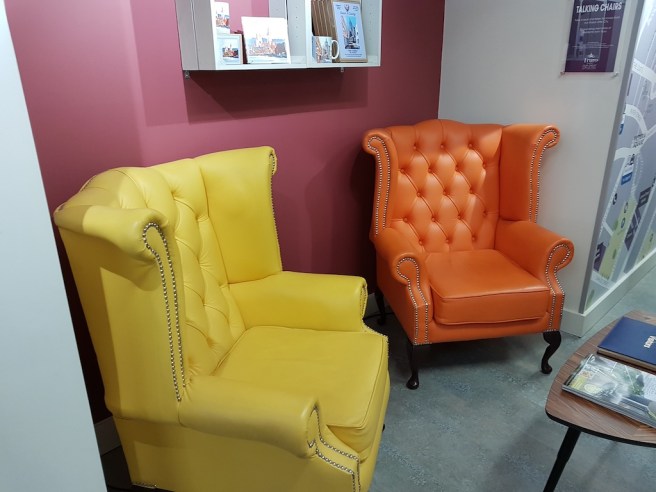
 but right opposite is the new TI which is really really good. here is a little seating area just as you enter…..very jolly!
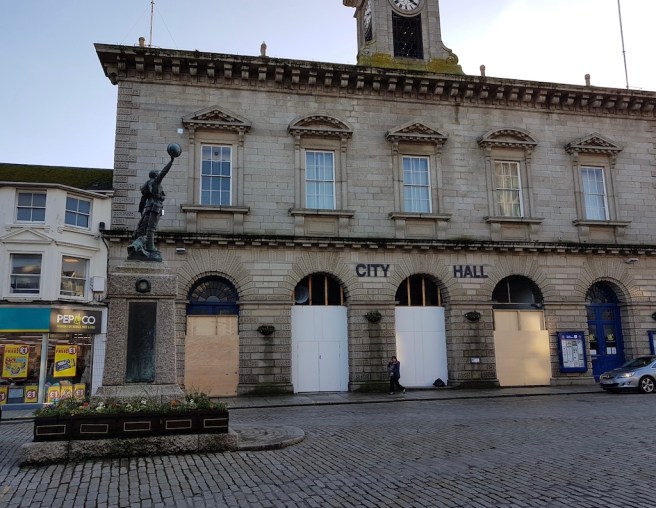
 Just to the left is the old ‘Coinage Hall’ so-called because of Truro’s past status as a Stannery. The current building is Victorian.
  Granite cobbles and kerbstones impart a lot of character as does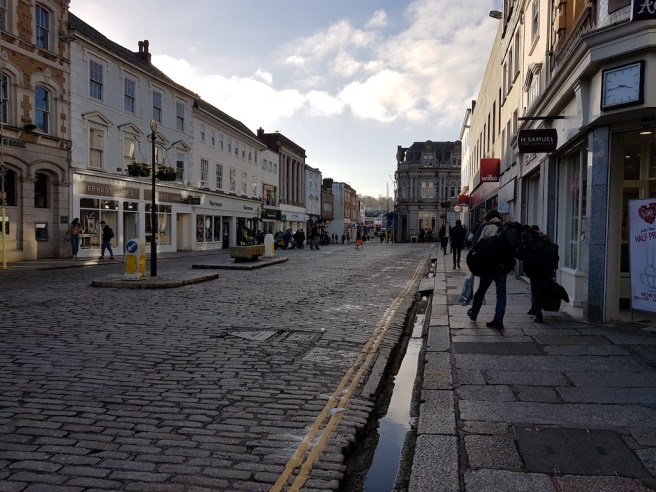
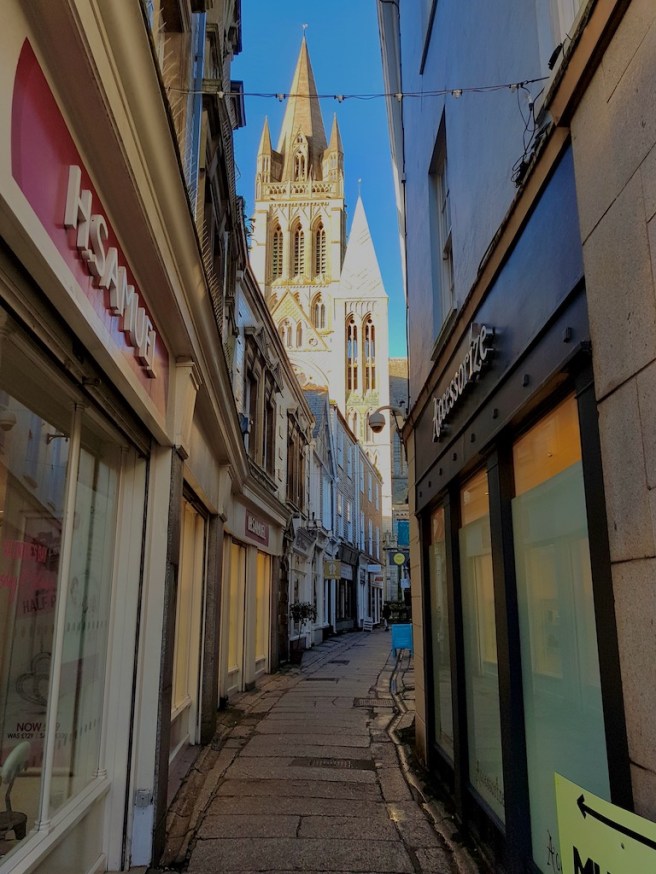
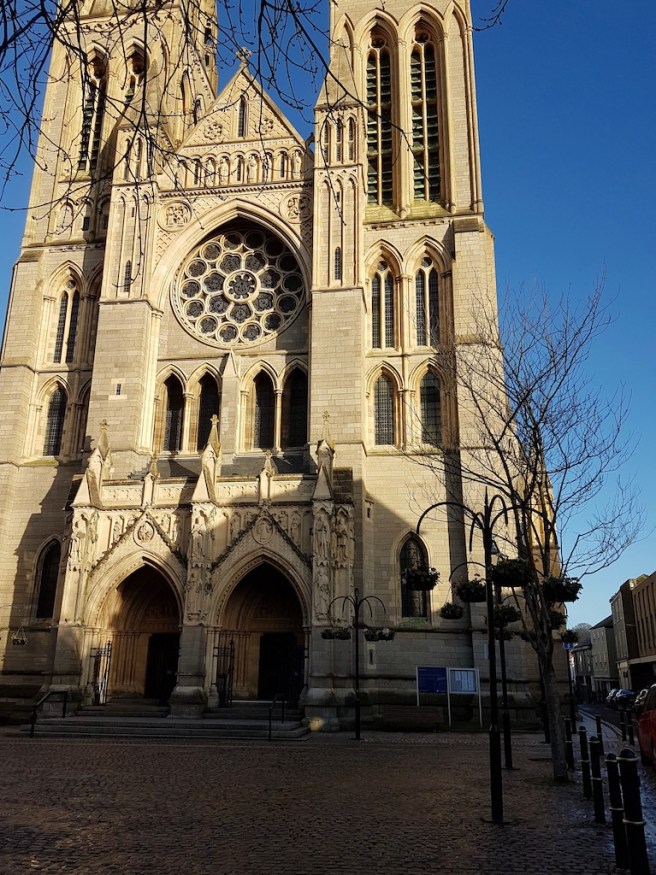
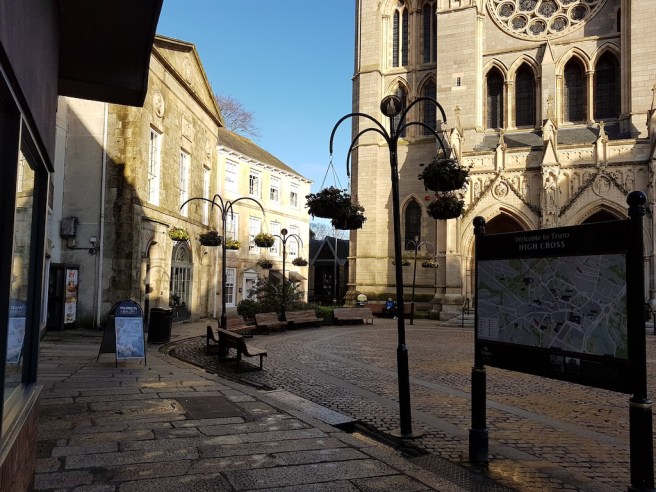
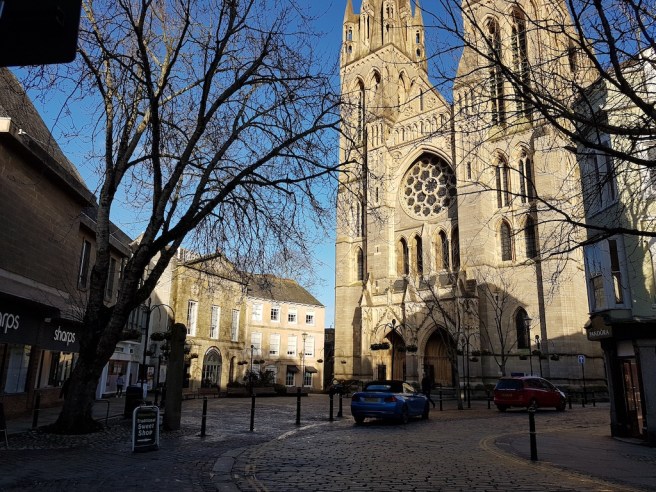 Truro is less than an hour by car for us so a great place to visit. The weather hasn’t all been blue skies as these recent pics of our garden show….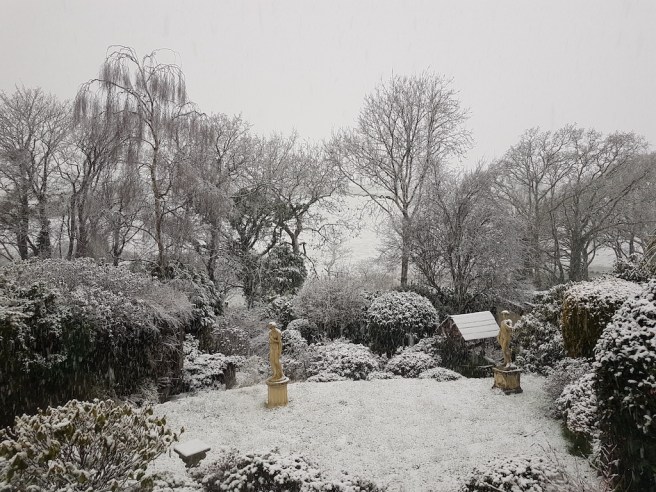
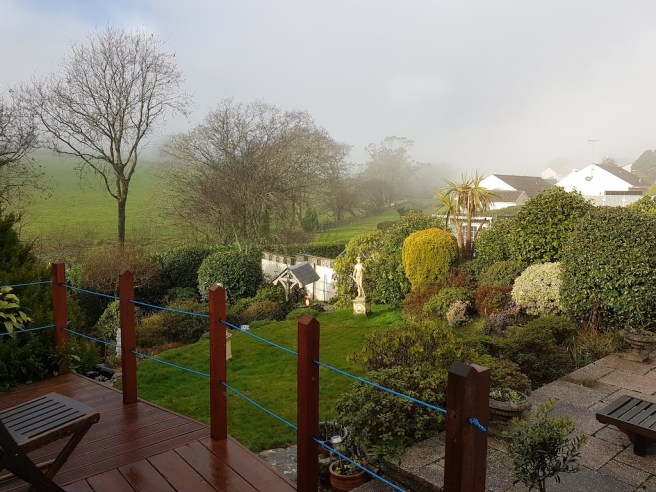
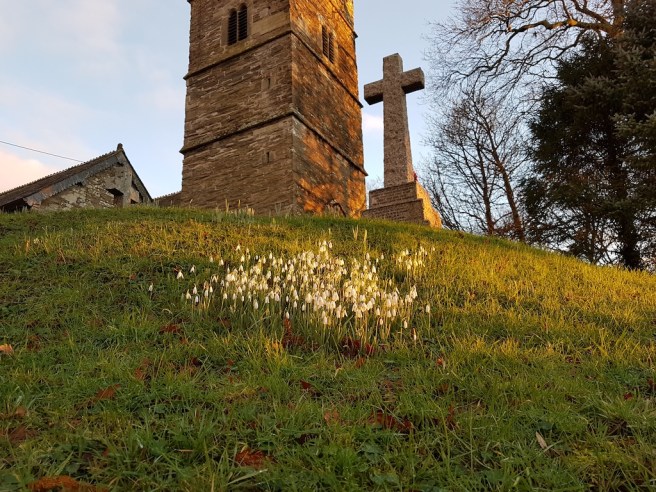
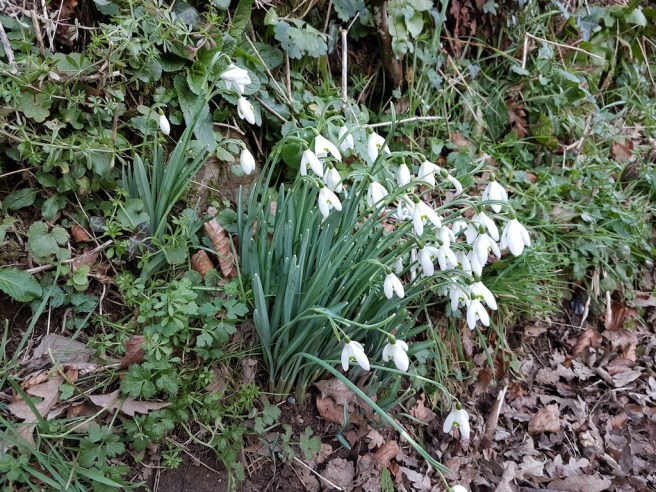
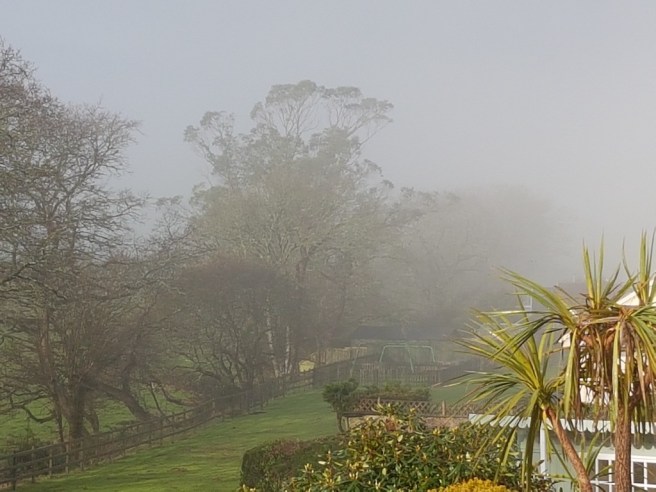 but we like our walk along the local lanes whatever the weather, particularly just now when the wildflowers are starting to appear in the Cornish hedges….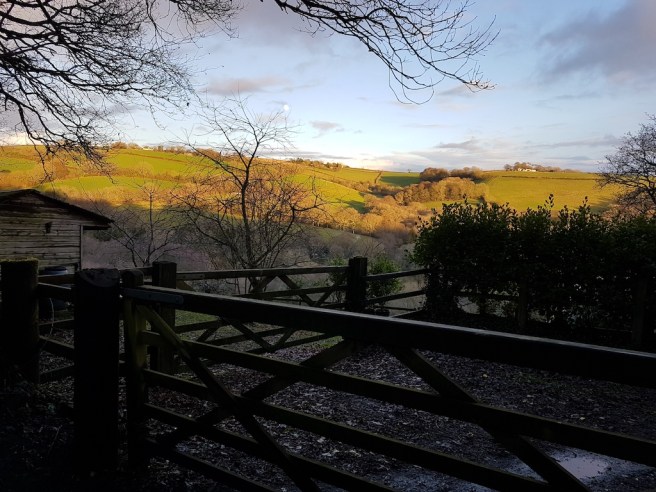
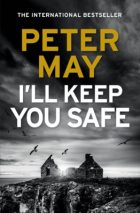 Another of F.’s books, I just got in first again. Peter May is a Crime writer, but for the greater part of this book I wondered where this was going in terms of a Crime plot. It seemed more ‘Welcome to the island of Harris – we’ll tell you some things you didn’t know about this special place’. Well it certainly is special. But I couldn’t help thinking all along that my son had spent a week there with his school pal who comes from Harris and he has always said ‘Never again’. What a dispiriting place it seems. So, the plot. The two protagonists own a company that makes an upmarket alternative to Harris Tweed, one of them is blown up by a car bomb in Paris. There is a desultory search for the perpetrators. Some off-beam characters are drawn as possible suspects and then, right at the end, and as obvious as obvious can be, the partner turns out not to have been blown up after all. Weak. I would say so. I was thoroughly disappointed at the end and rather glad to get onto something else.
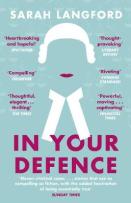 night, that you don’t want to put down, you don’t want to end, and which teaches you so much you didn’t know. Whilst it was her love of words that inspired her to take up the law, Sarah took an unprivileged, unconventional route that however stood her in good stead and made her determined to succeed in what is still a profession full of privilege and some bias against women. However this story is not about her it is very much about her clients, and in particular 11 clients in 11 different cases which she outlines in some detail. Each case starts with the location of the trial (changed along with personal details to protect clients’ anonymity) and a tiny note on the law involved in the particular case. These get your mind racing before you know anything about the case. Sarah then takes us through each story from start to finish. All of the cases are to do with Family or Criminal Law. And wow how you get involved. Of course her job is to represent clients whether she believes them innocent or guilty, and to us looking in from the outside, this in itself poses incredible moral dilemmas. But, as she says herself, “Life is not binary,” “There is very rarely a situation where there is no other version of the story.” Intricate points of Law are explained in notes at the end of the book. The cases range from a woman charged with conspiracy after a burglary, and a young man accused of assaulting three police officers during an arrest that leaves him with cuts and bruises on his hand, ribs and head to a child whose views are, unusually, taken into account in deciding which of his divorced parents he should live with. You come away feeling battered, hugely impressed with the Judges and Barristers involved, and scandalised by how little someone like Sarah is rewarded for the efforts she puts in. A thrilling book.
 Enjoying Cornwall...