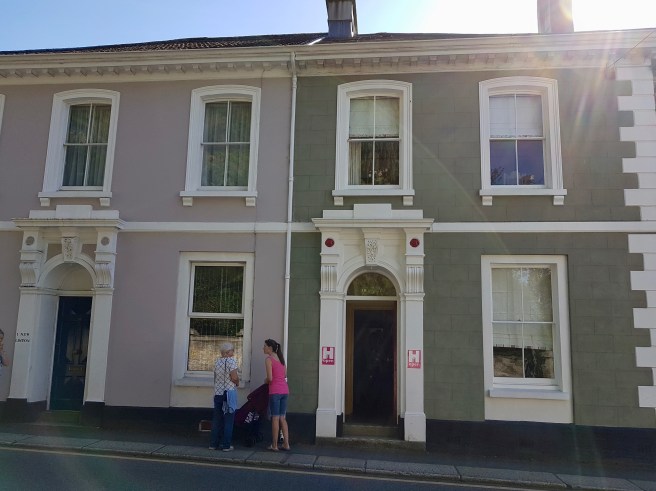
 We only discovered the Heritage Open Day was happening in Liskeard for two days by chance on the internet. We missed the first day. After parking the car on our walk into town we came to the first of the buildings we visited – a private house called Tregantle. What an eye opener this was. We had passed it many times, without a thought really, other than that it was quite a nice frontage. Stepping inside the owner had taken the trouble to do a tremendous amount of research about its history and its design by the famous Liskeard architect Henry Rice. Henry Rice started out as a land surveyor and architect who went on to transform Liskeard. He had a strong social conscience and made frequent sanitary inspections of the densely populated and poverty-stricken courts where the poor lived. His findings were recorded in his ‘Nuisance’ notebooks, which make fascinating, if sometimes gruesome, reading. As a result the corporation made him Inspector of Nuisances. He also brought piped water and sewers to the town.
Born in Kenwyn parish, Rice was a farmer’s son and staunch Methodist who lived the whole of his adult life in Liskeard. Over 100 of his buildings, mostly in the Classical style, survive, including a large number of terraces built along the roads into the town.
 This is the front room as is. The owner had bought the house with all the ‘improvements’ you would expect from the early 70’s – artex ceilings, ripped out fireplaces, everywhere painted magnolia etc etc. Over a period of time, and particularly when she had retired from teaching, she gradually transformed the house reinstalling original Victorian fireplaces and reinstating appropriate colour schemes and trying to preserve every detail from the original designs. A true labour of love. I didn’t like to take photos as we were really guests in her house…..
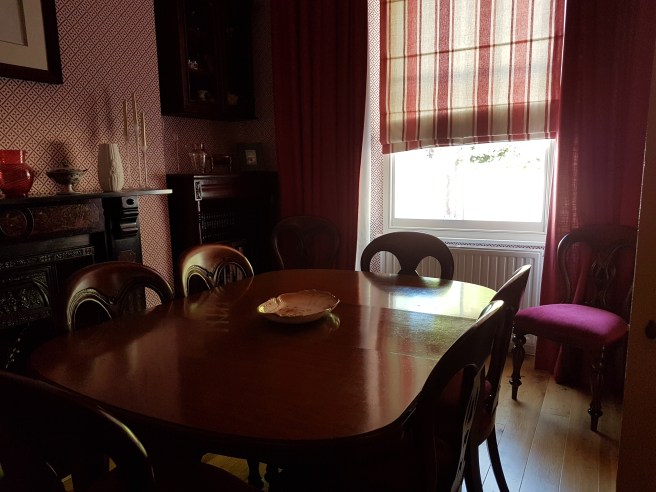 but this is one of the two staircases….
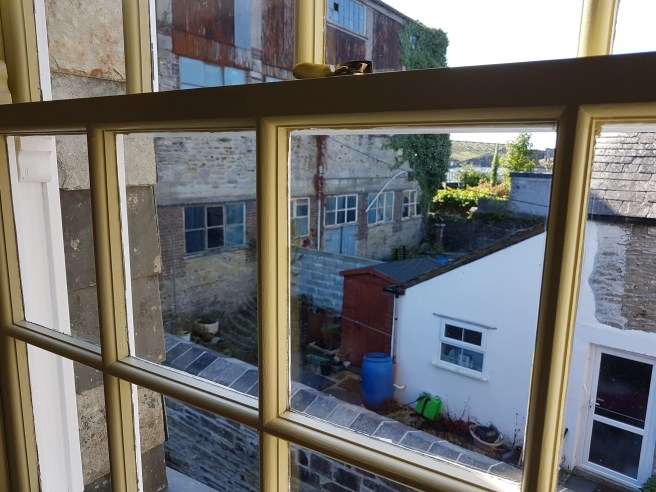
 and this picture shows industrial use right outside the rear of the property. And this is still in use as a glass making premises……The Glassworks address is actually Pavlova Mill. The mill dates back to the 19th century where it was used as a tannery making gloves. There is very little history on Pavlova Mill but it is said to have been named after the Russian Ballerina, Anna Pavlova, one of the finest classical ballet dancers in history! The tannery is said to have made gloves exclusively for the dancer, whether or not this is true, the mill has taken her name. Interesting!
 Next stop was the Weslyan Methodist Church which we had often admired from outside. The original chapel burnt down and was financed and rebuilt largely as now within a two year period. They didn’t mess about did they the Victorians? Inside a volunteer showed us around and pointed out the original and rough wooden stool used by John Wesley when he preached in Cornwall.
 The building was designed for 300 worshippers….
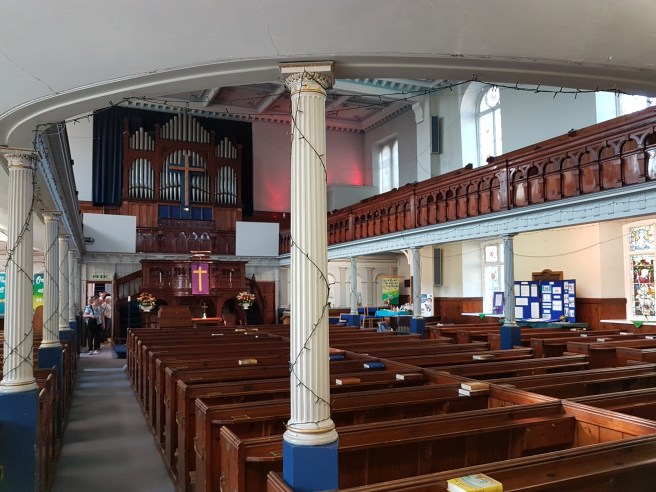 and the plaster ceiling is impressive. Henry Rice designed an extension a little later.
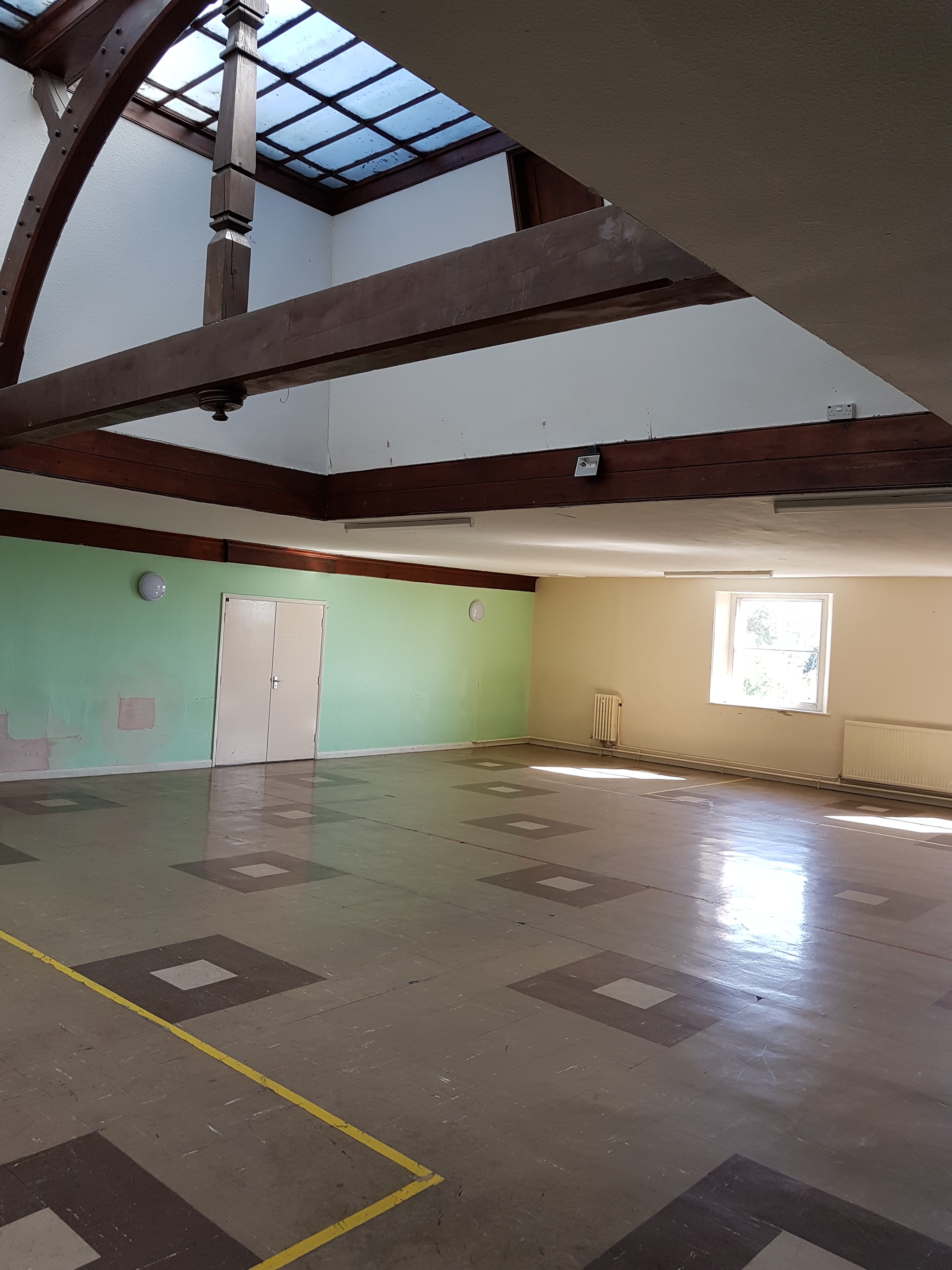
 And the church became a very prominent organisation within Liskeard. Upstairs to one side this enormous hall was used for teaching. Indeed in the Second World War teaching still took place in the church’s cellars! Average congregation these days is about 30.
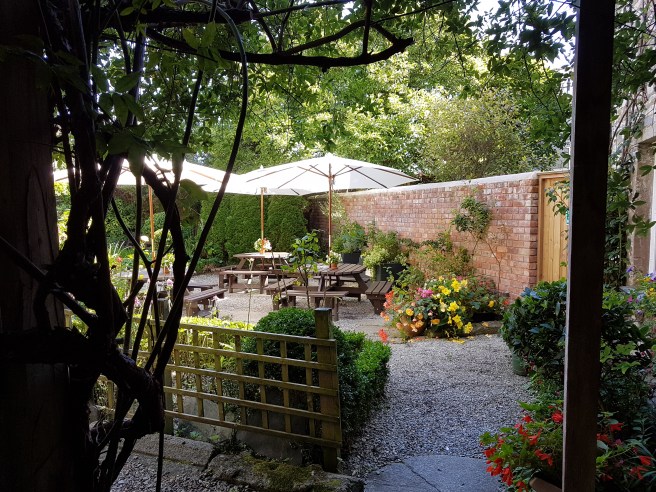
 On our way past Stuart House a late medieval house where King Charles stayed in the Civil War. F. showed me the garden which I hadn’t’t seen before, but which is very inviting for tea and cake.
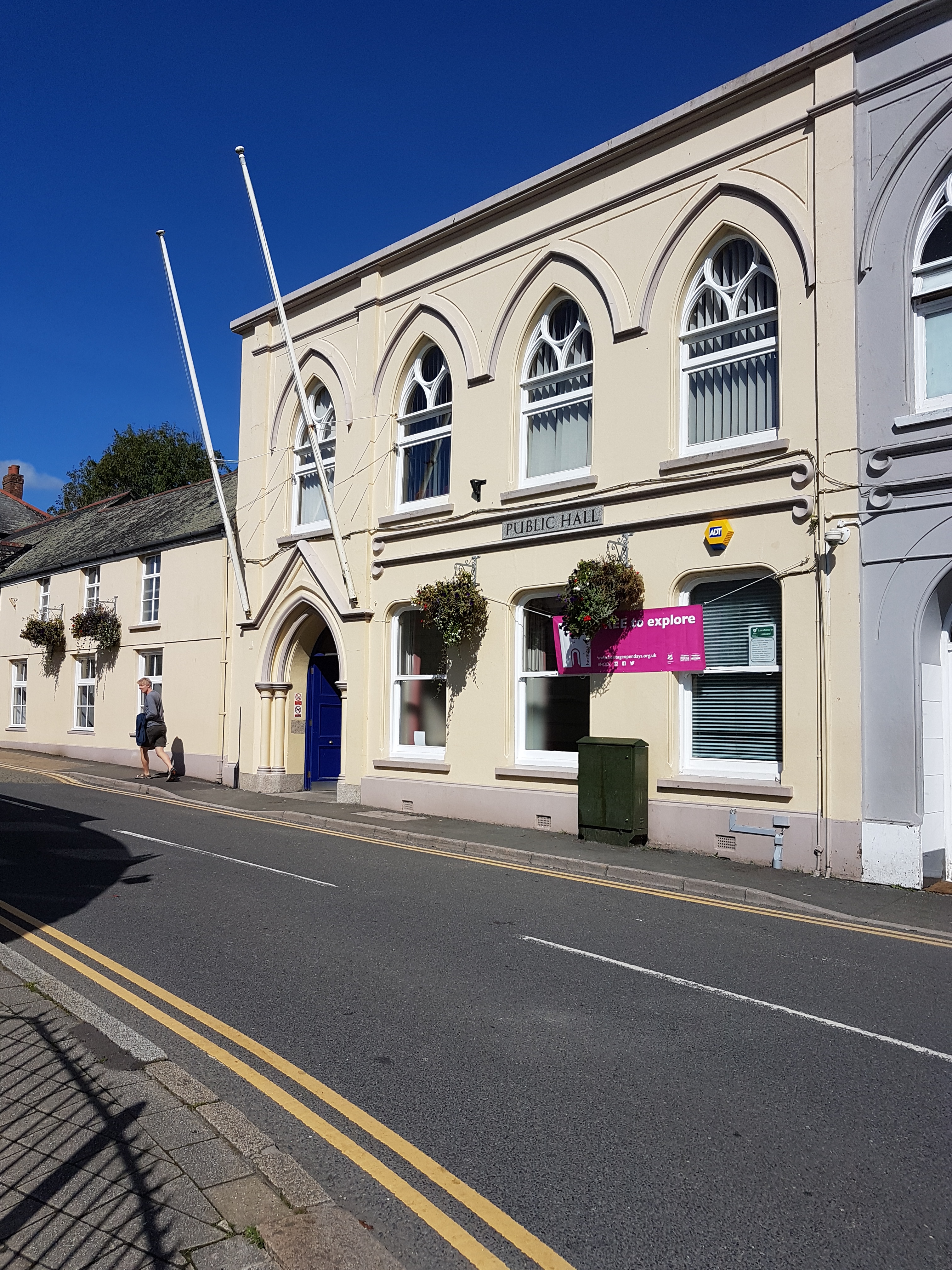
 The Mayor’s Parlour and Civic Chamber were supposed to be open, but weren’t…….
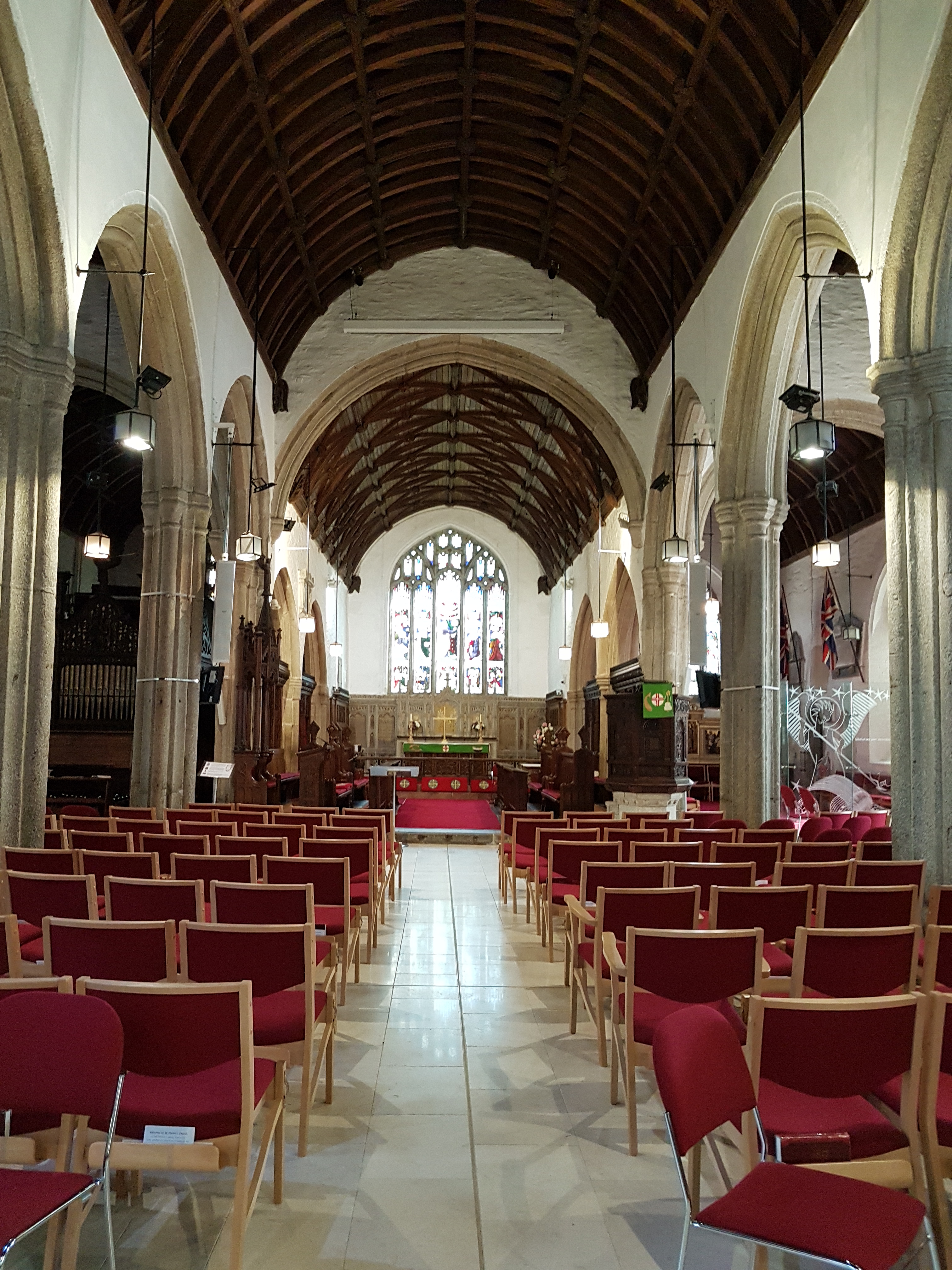
 So off we went to St Martin’s Church unvisited before. It includes some Norman fragments, but is mostly 15th century. The South Chapel dates from 1428, the south chancel aisle from 1430, and additions to the north side from 1477. The tower was repaired in 1675, but was largely rebuilt between 1898 and 1902 at a cost of £6,400 (equivalent to £682,500 in 2018) by John Sampson of Liskeard. And the main point in coming today was to climb the tower.
 First we both had a go at bell ringing – unsuccessfully. It is much harder to get the knack than I thought.
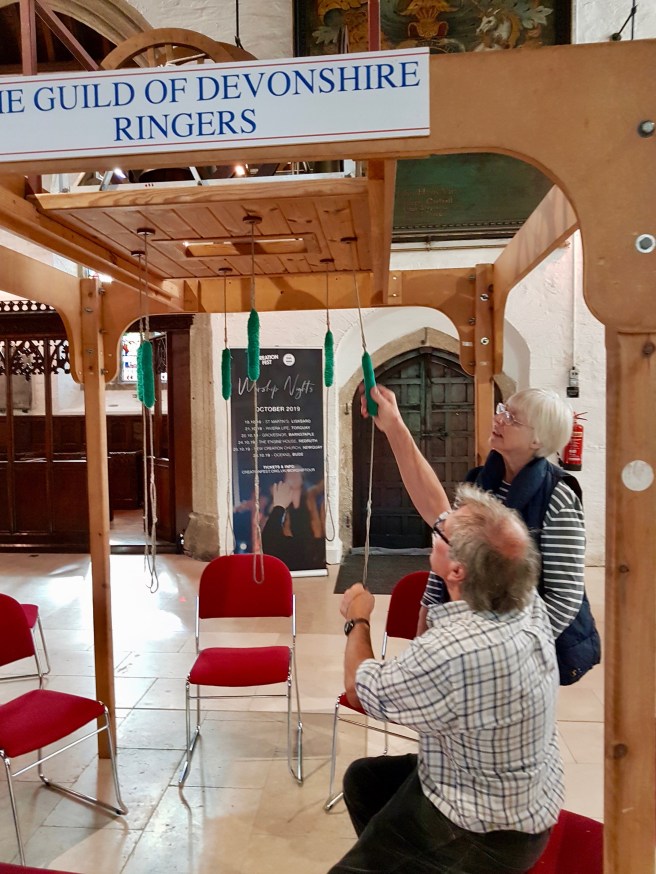 Then whilst F. had a coffee I climbed the tower. First we went to the bell ringers’ domain where they entertained us to a number of peals. Very interesting.
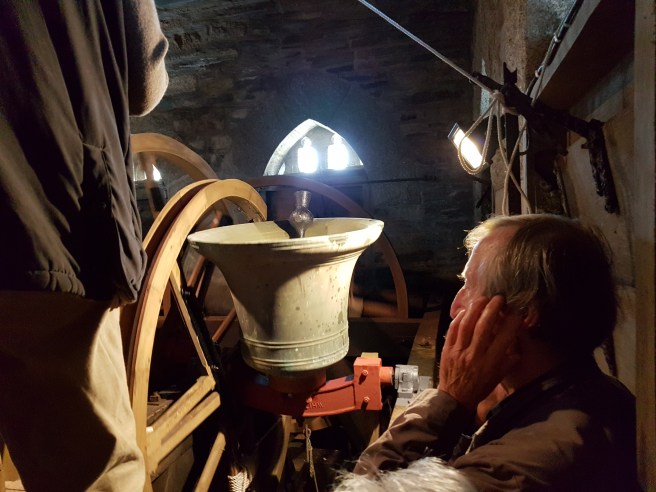
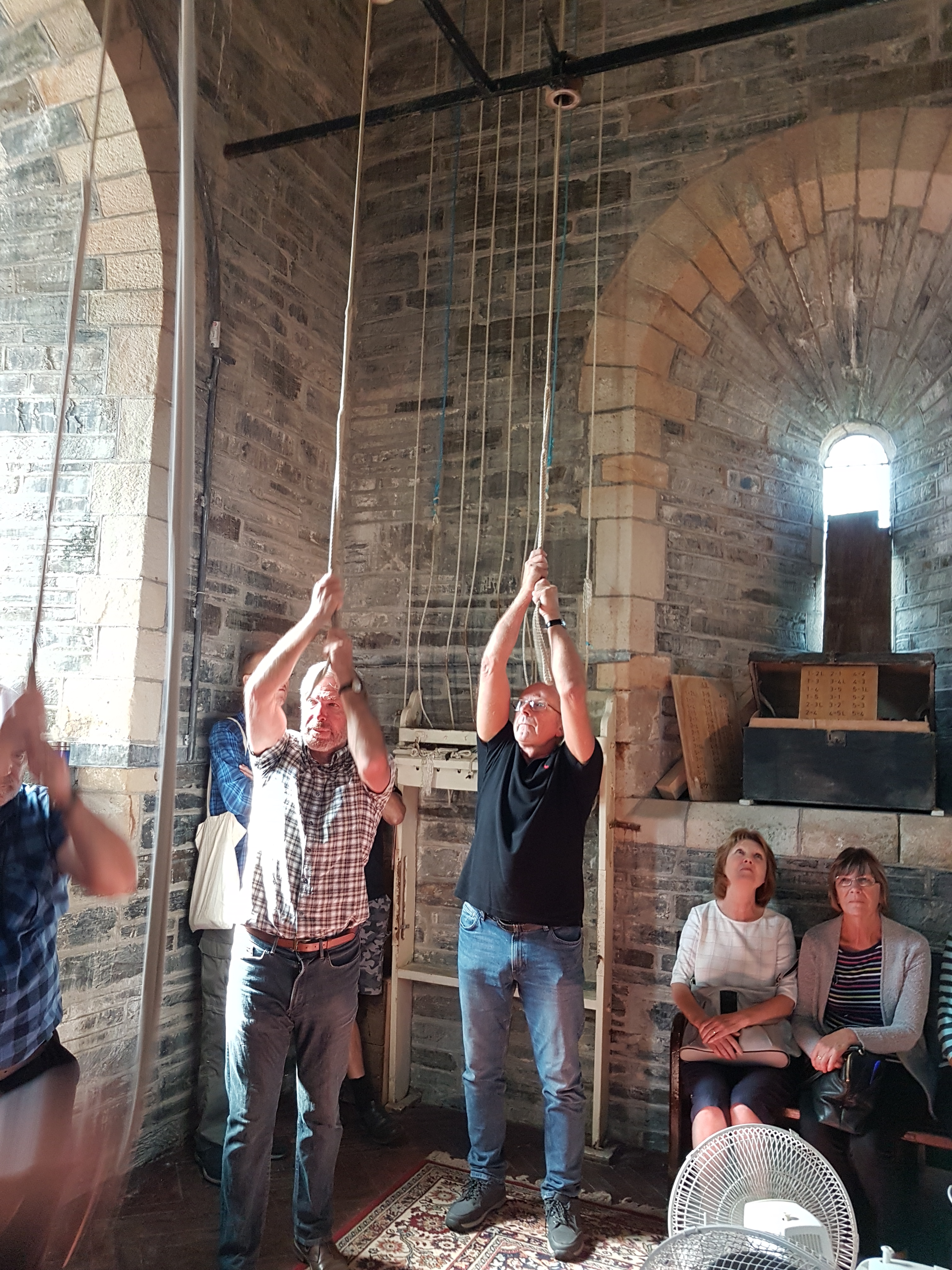 Then, having been issued with ear plugs, we went up to the bell chamber, whilst the performance continued. Hands over ears were necessary as well as plugs!
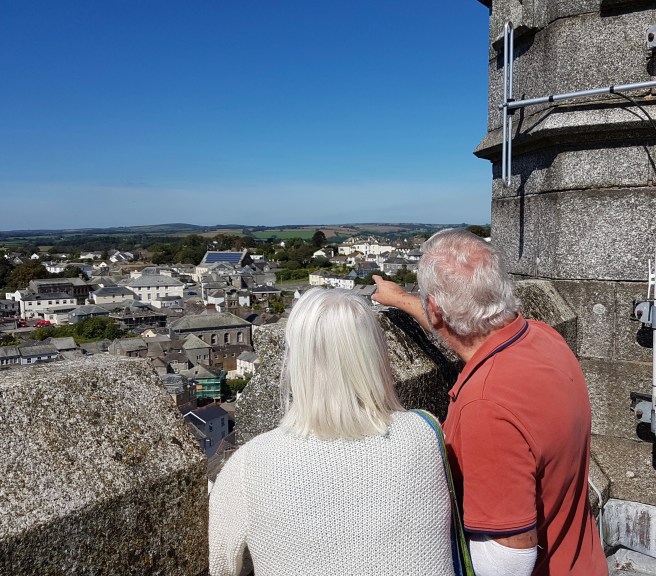
 Partially deaf now, we ascended more steps to the top where we had the great privilege of seeing Liskeard and its surrounds from a viewpoint normally out of bounds……the day was fine and picture taking conditions good….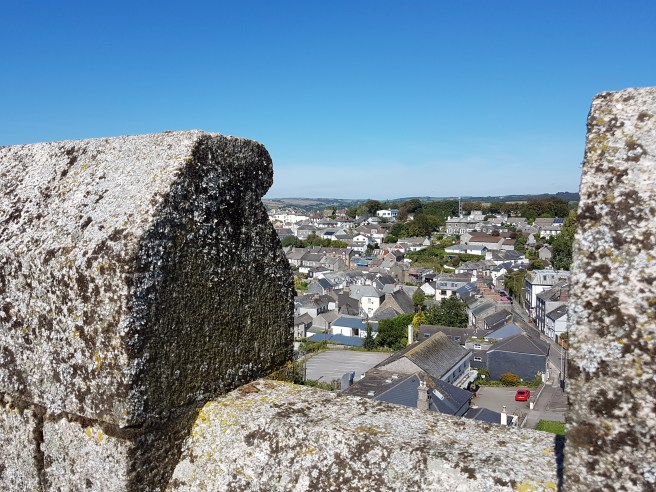
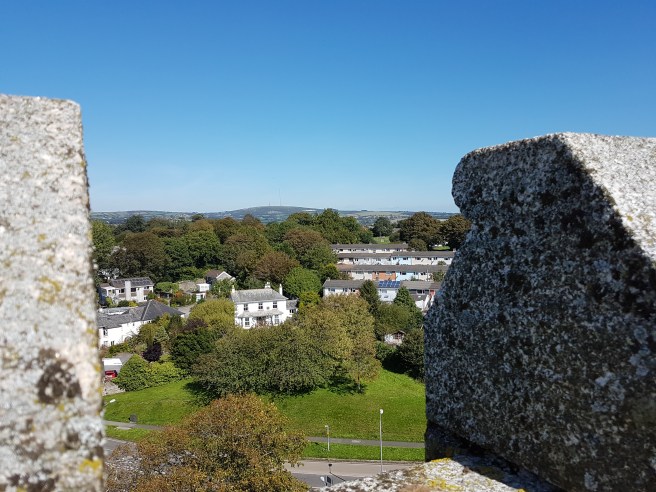
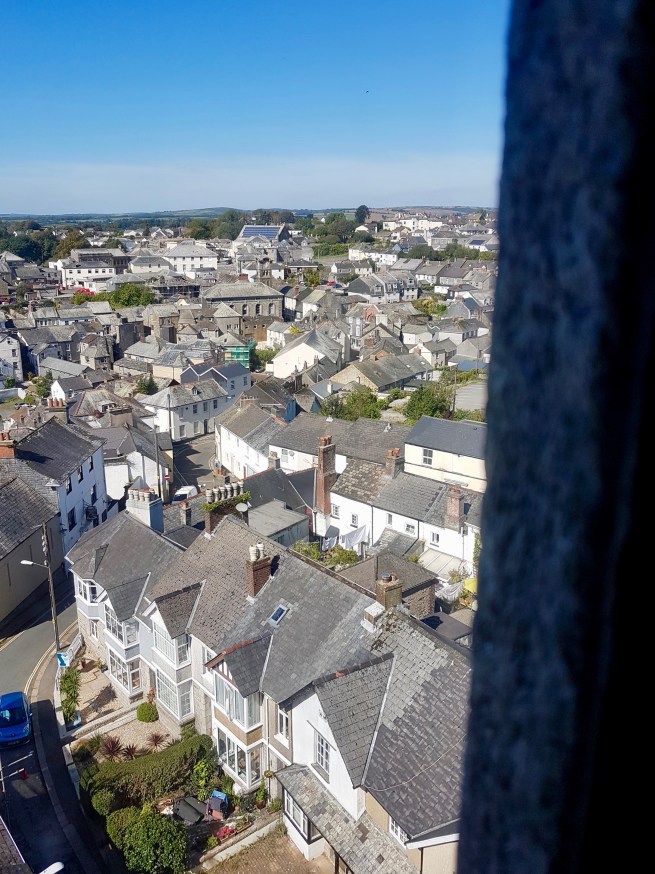
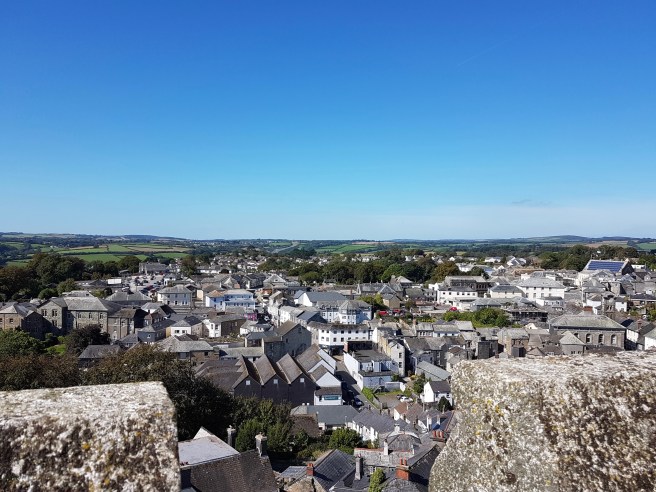 It was good to see the uniform nature of the roofs nearly all with Delabole slates. This common pattern of roofing does add immeasurably to the character of any historic town.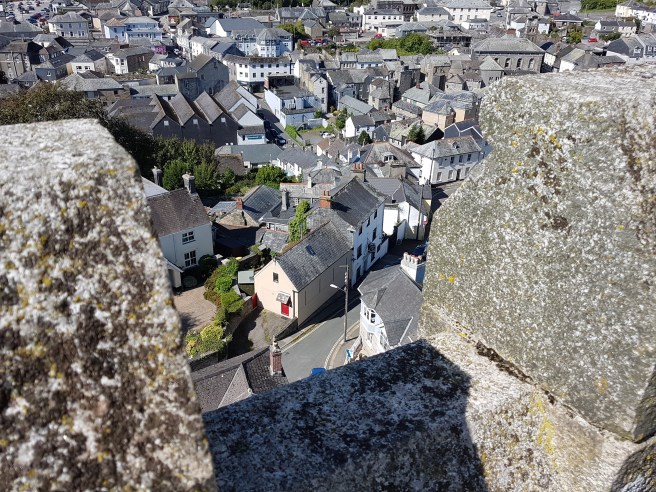
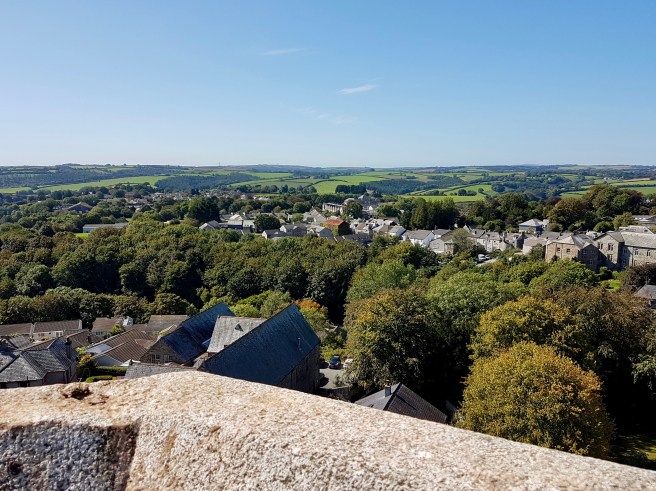
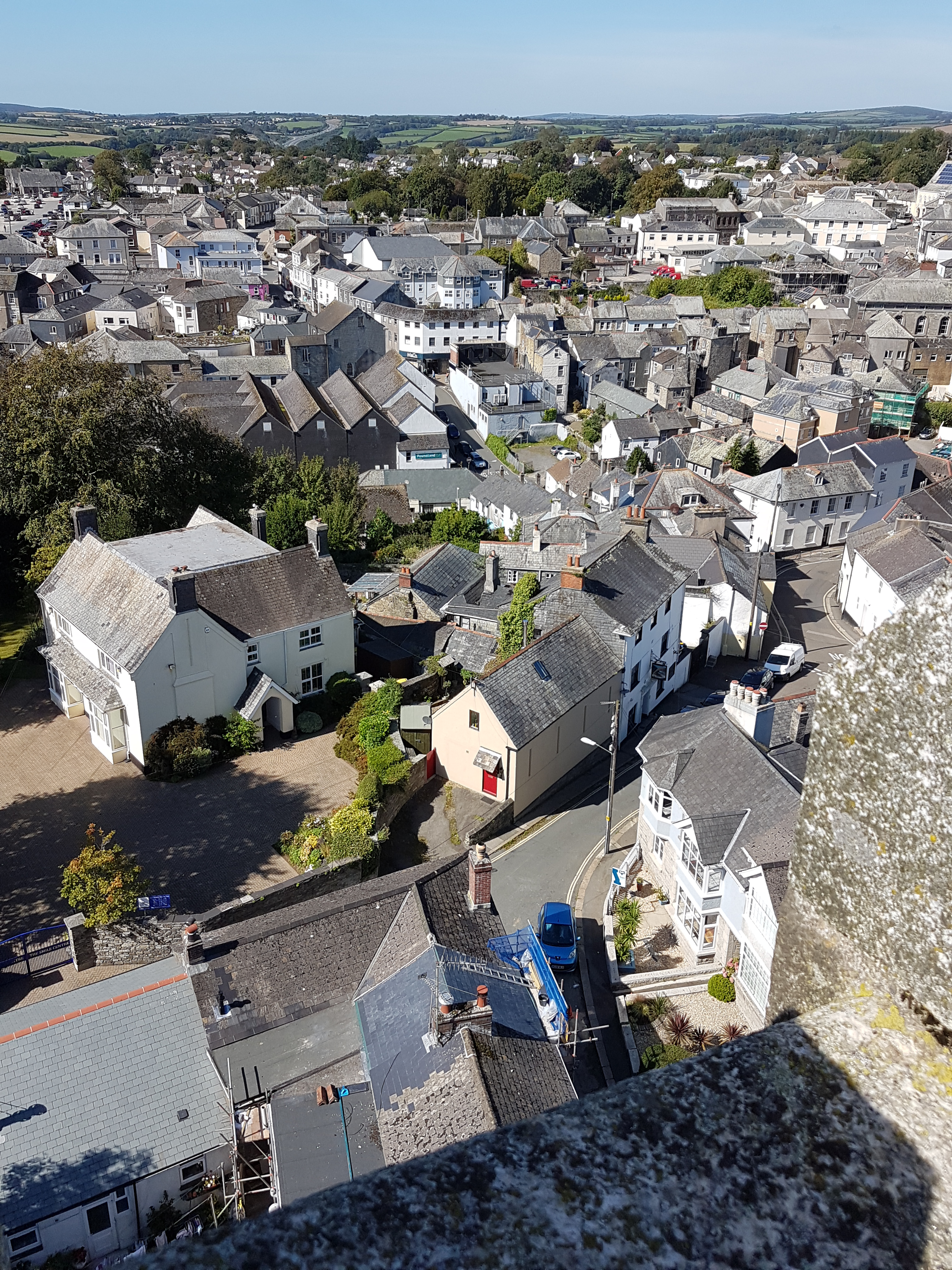 Time for one more photo out of one of the niche windows on the way down….
 Walking around the outside of the church we saw it from angles unfamiliar to us…..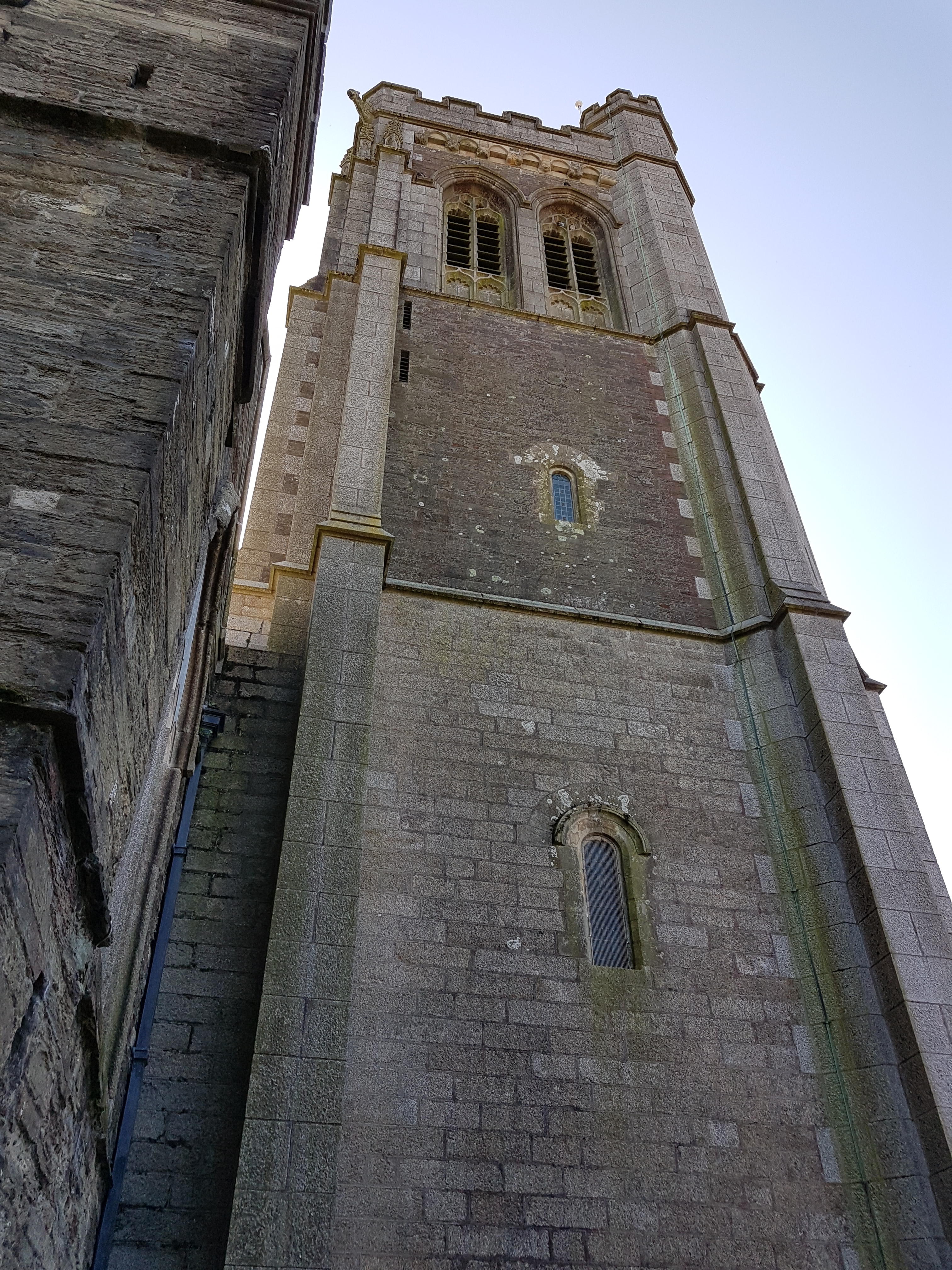
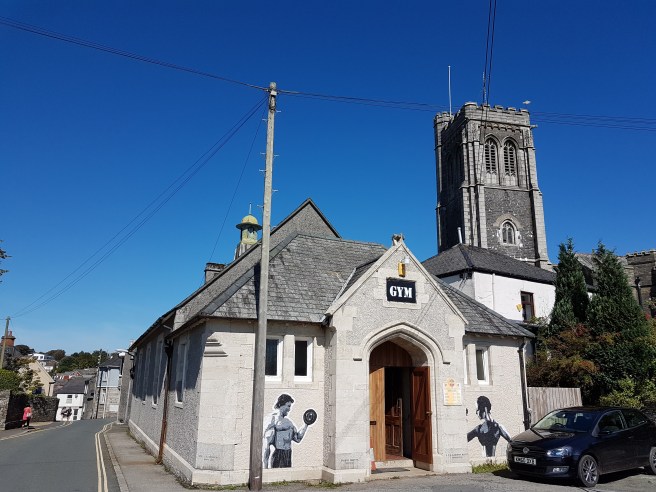 ………and descended into town past some very nice rows of cottages. A very instructive two or three hours which made us much more appreciative of the buildings and community of Liskeard.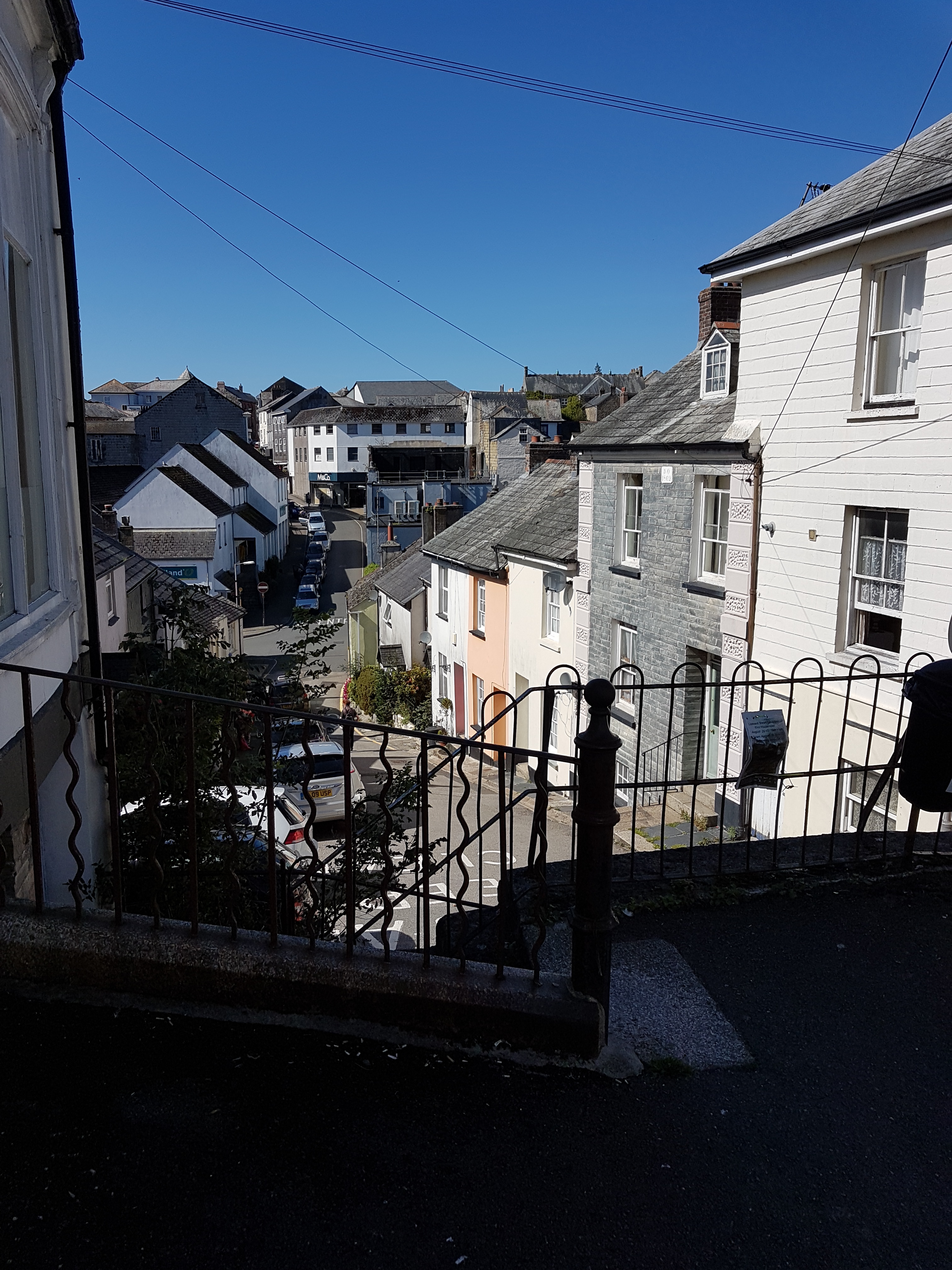
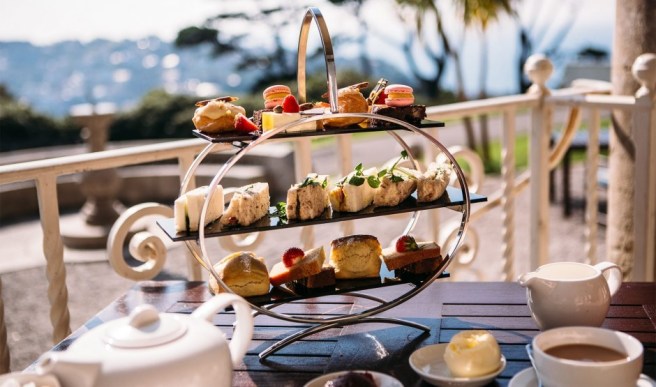 As part of our Christmas present from Katherine, we had a voucher for afternoon tea at the Fowey Hall Hotel. We had visited once before and came away extremely disgruntled with atrocious service. This time the service was impeccable.
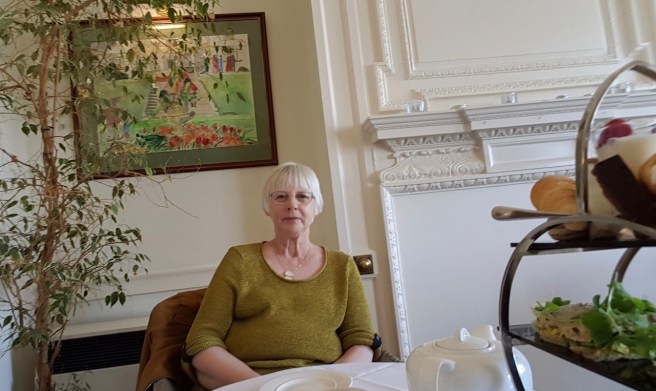 The tea was lovely, the weather great, and the setting and views tremendous.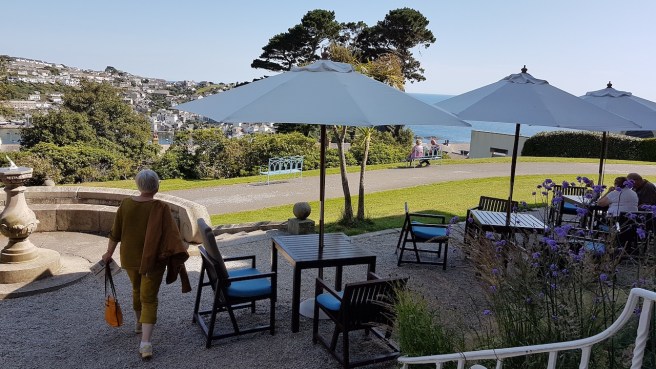
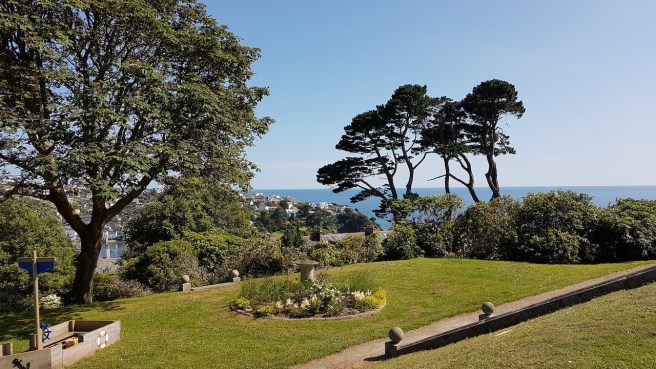
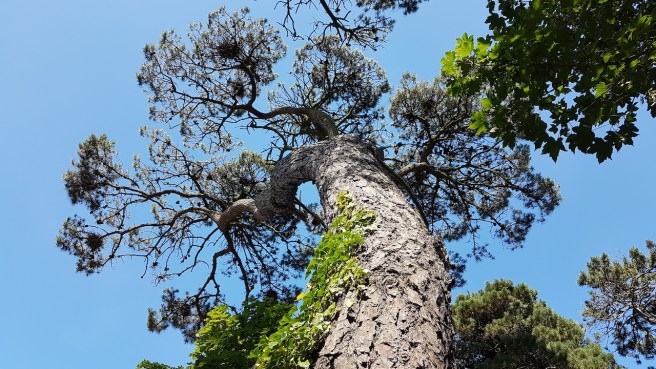 As you might expect we were sated and decided we had better work off some of the culinary inputs by steeply descending into Fowey.
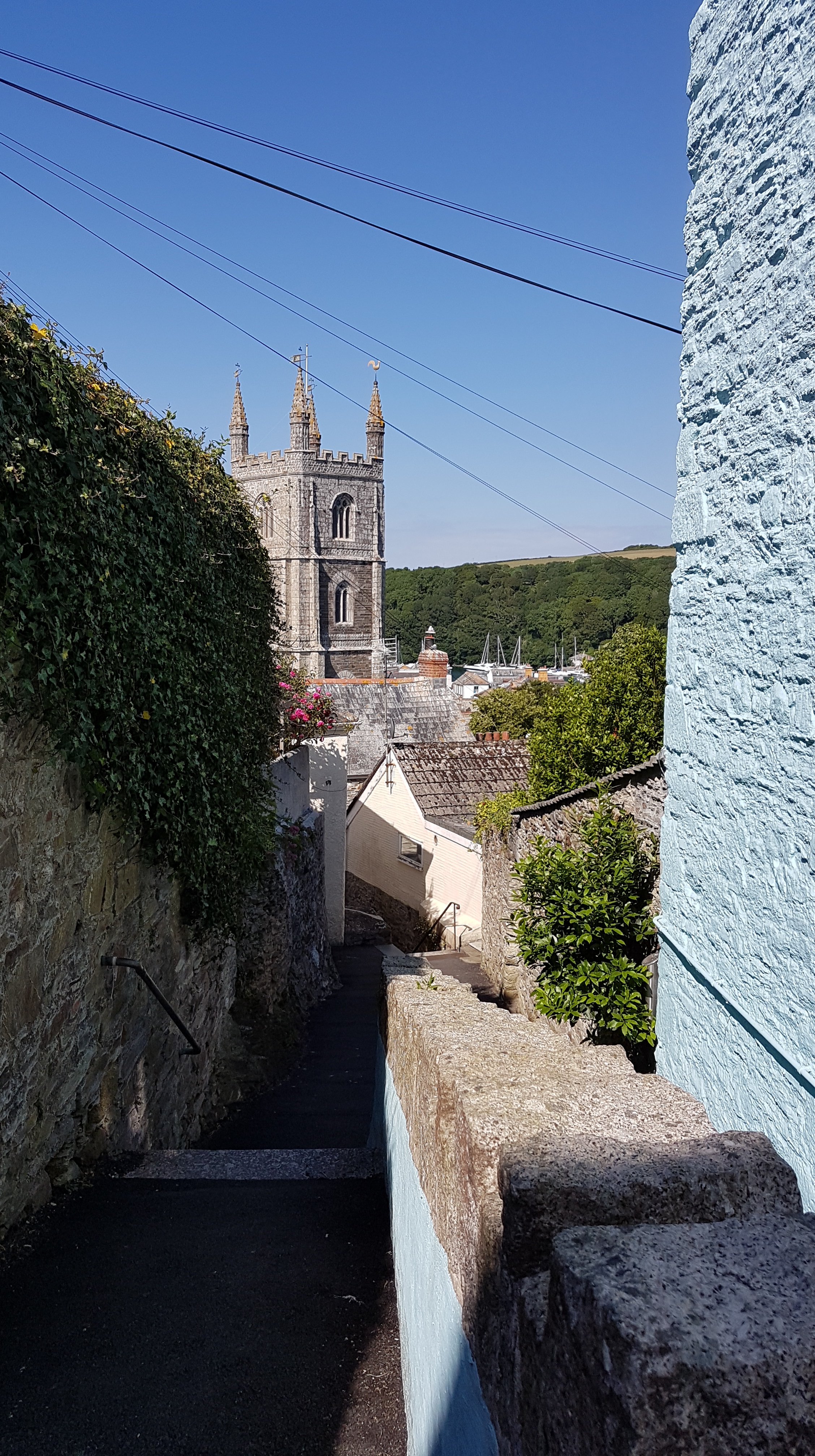
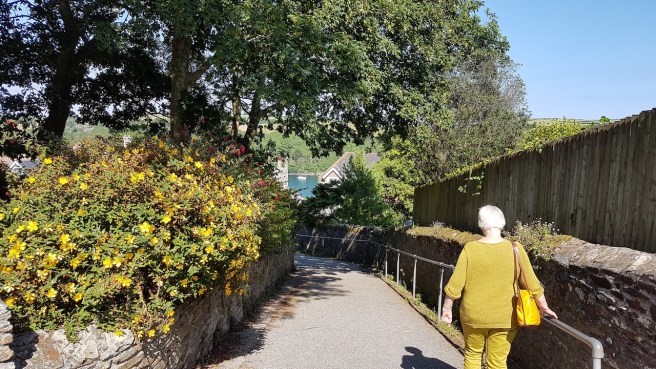 Some people might regard Fowey as twee. But it is one of my all-time favourites.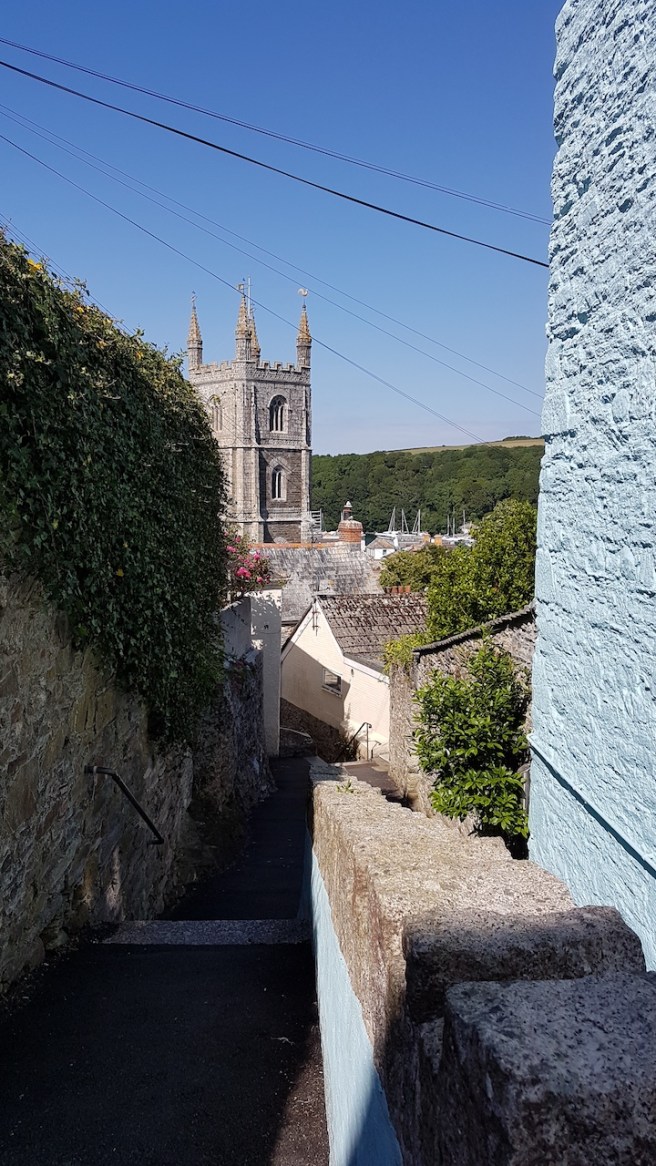
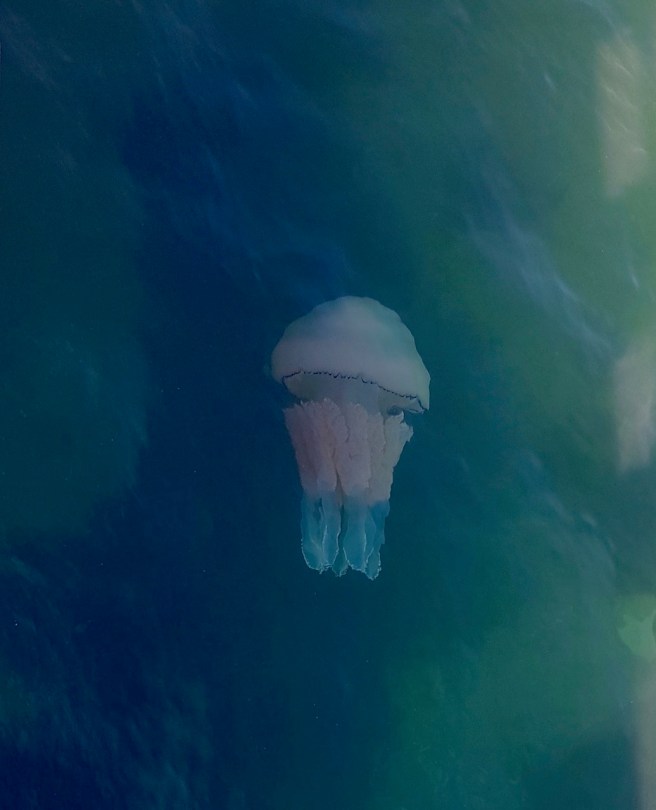
 The harbour and town were busy. Whilst enjoying the views, staring down into the waters we couldn’t believe our eyes when we saw a group of the most enormous jellyfish at least three or four feet long…..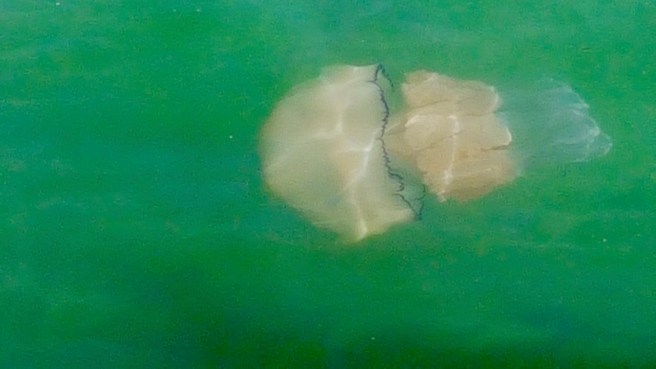

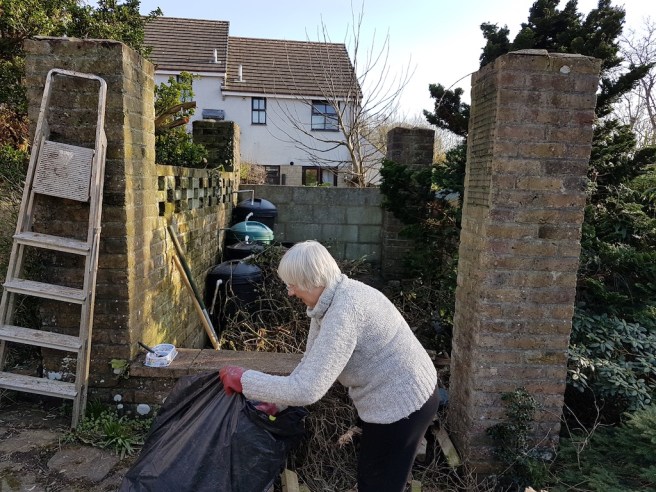 Apart from that, the garden is lovelier than this time last year. I really enjoy the benefits of global warning (if that is what they are).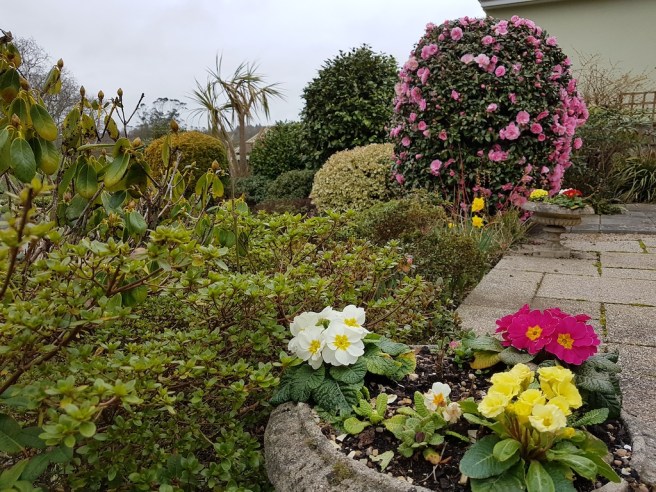
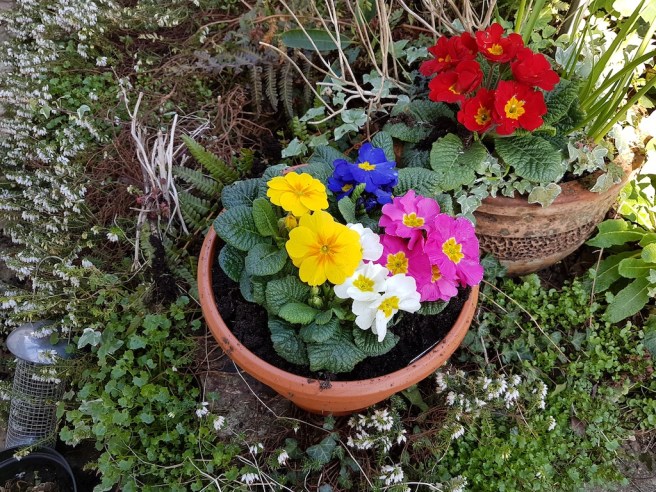
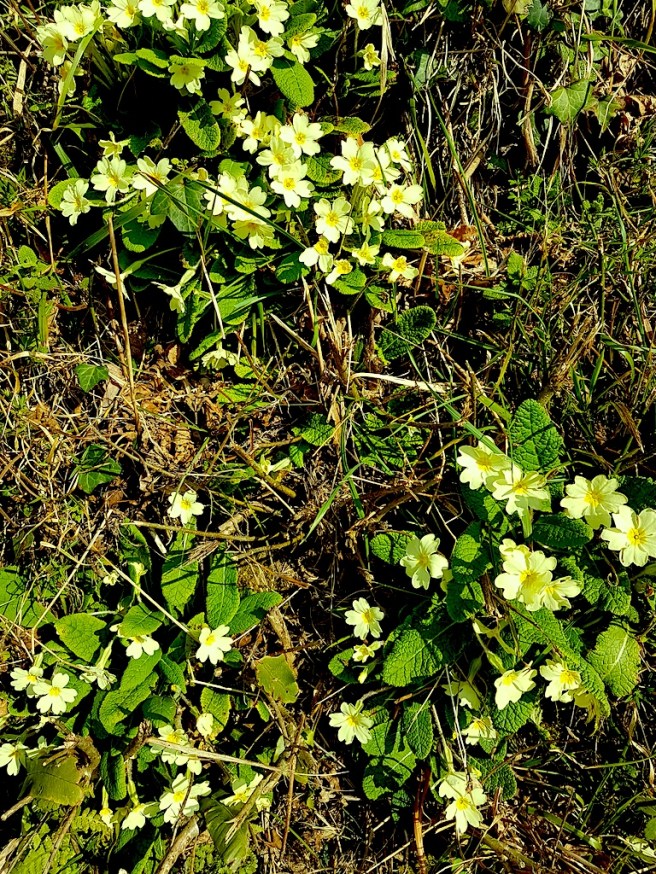
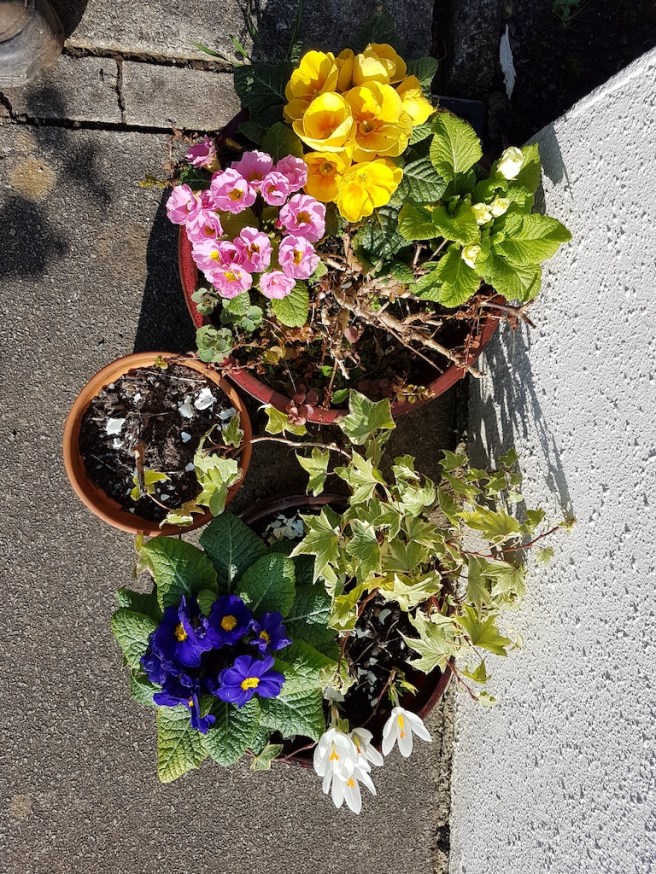 And it’s the same in our lanes…primroses and daffodils out, and wonderful days for walking (when its not raining that is)….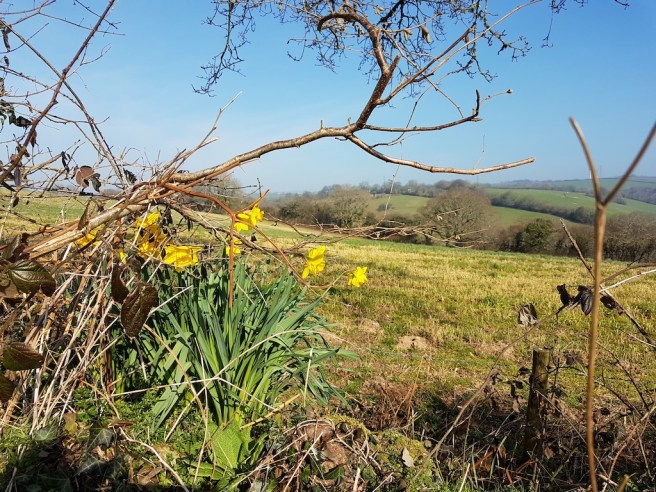
 Let’s hear more about the benefits and really make them work for us……..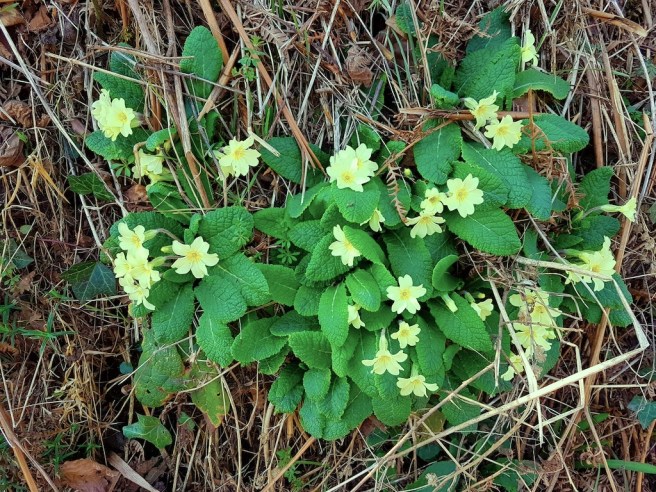
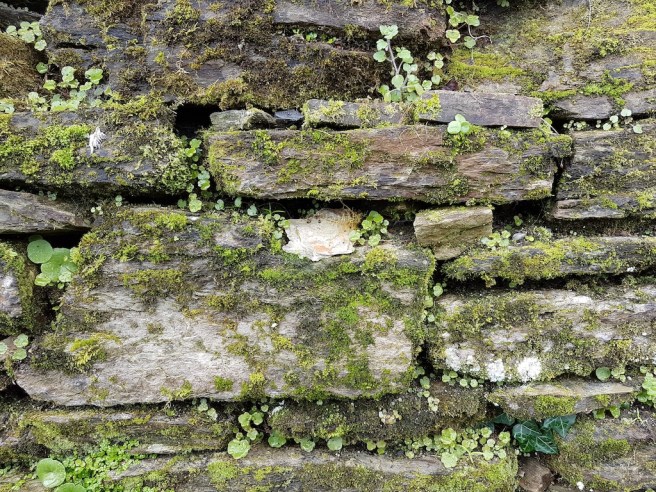 A lot of house walls and boundary walls in Cornwall have a veritable small world of green growth……they are almost becoming Cornish hedges.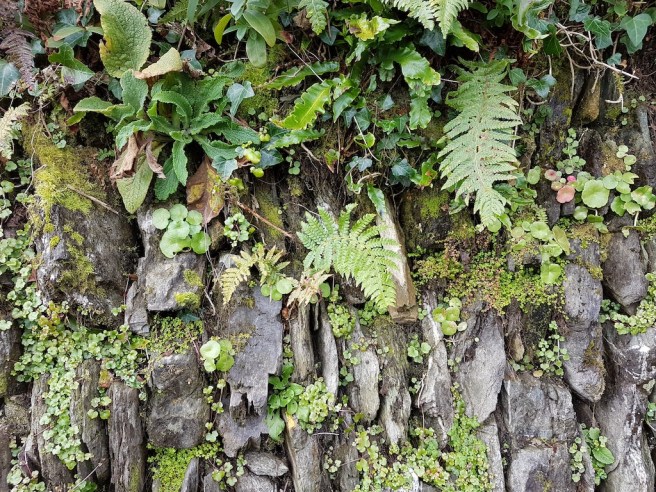
 You don’t see many bricks but some incorporate ‘Looe bricks’ as a design feature…
 ………..and here is the explanation for Looe bricks on a little glass panel to be found in a bus shelter on the front at Hannafore….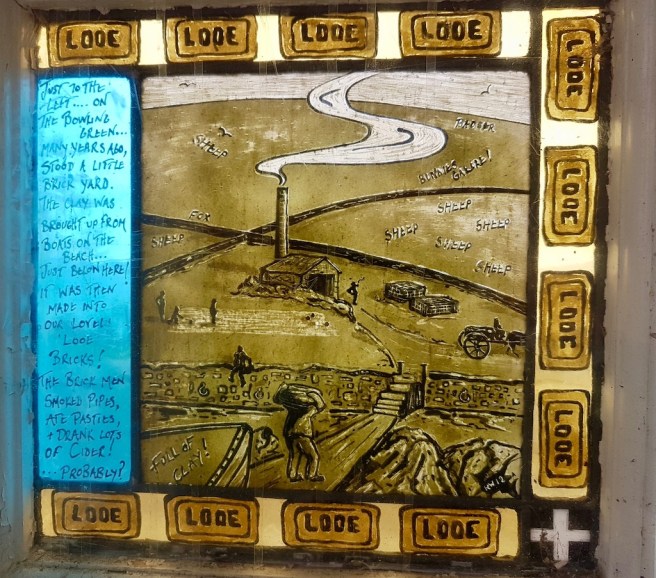
 I do love this feature in a tall wall at the end of the bridge in Looe……’Repeared By Ye County 1689’…..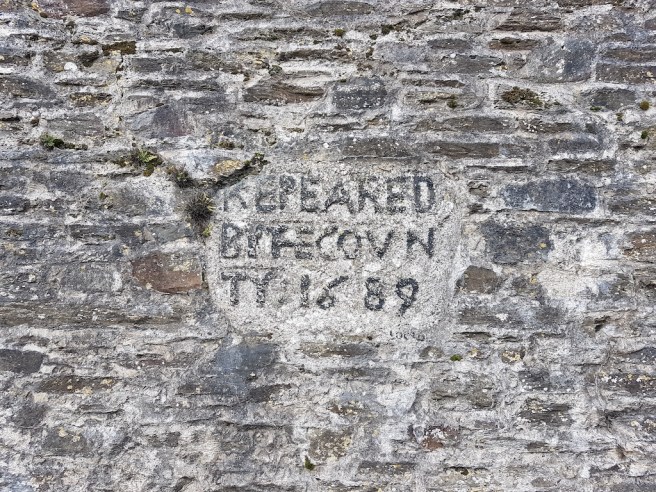
 It wasn’t such a nice day when we were there this time!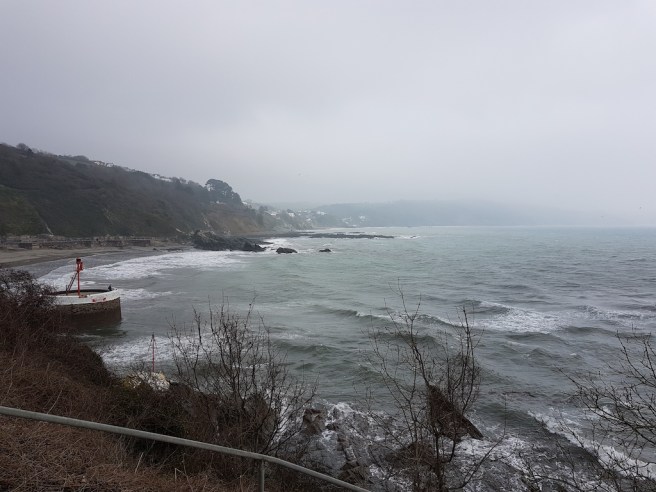

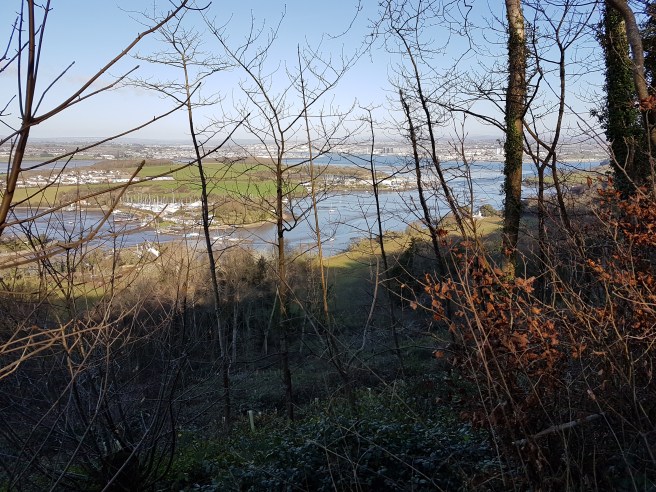
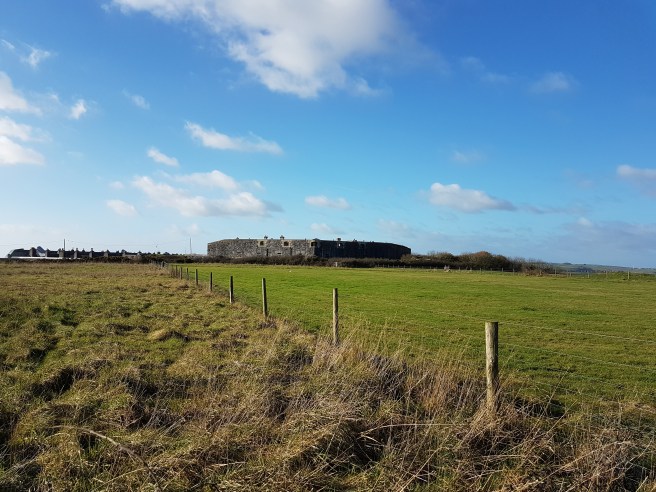 Sometimes you believe you are surrounded by a landscape of water with the sea on one side and numerous creeks and inlets to the side, in front and behind…
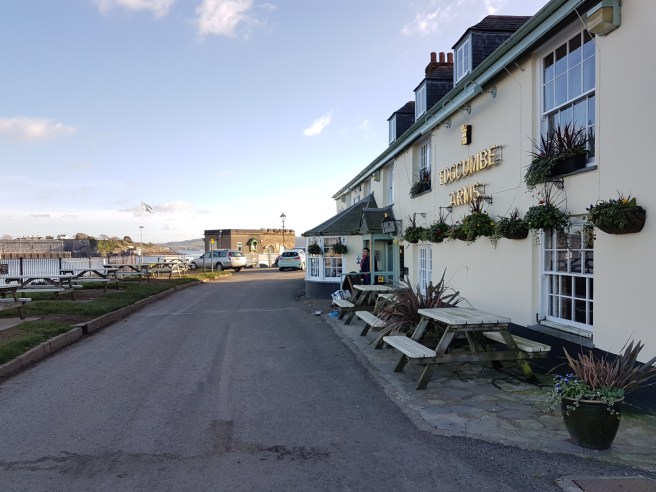
 We started off at the bottom end of the Edgcumbe estate with a drink in front of the fire at the Edgcumbe Arms. This then steeled us to face the cold but beautiful day.
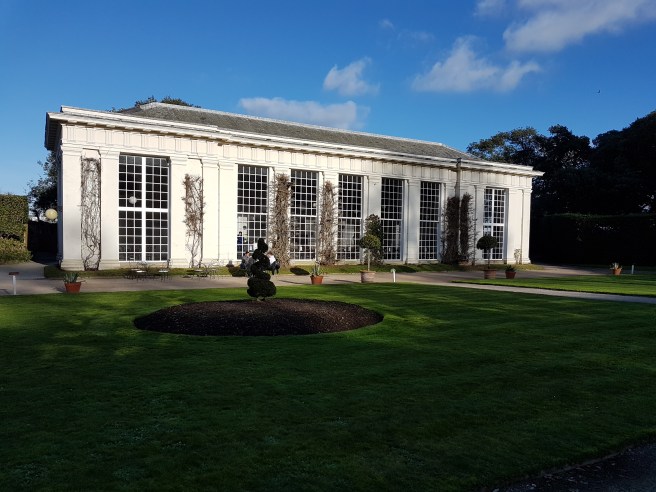
 First stop the Orangery…
 We then made our way along the coastal edge of the estate taking in various temples and follies….
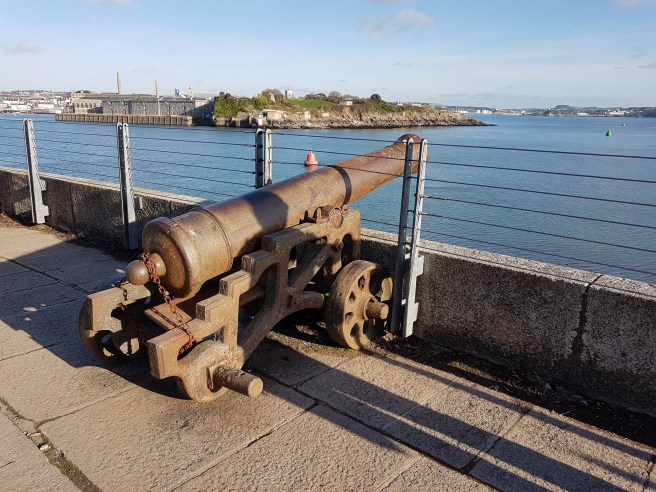
 One of the gun batteries showed how strategically placed Edgcumbe is – looking out over Plymouth Hoe, and one of the many very good information boards showed the location of an amazing number of shipwrecks in this part of the Sound. I would have thought that when you had made these waters you were safe – but apparently not!
 The path took us through various parts of the garden which we hadn’t seen before…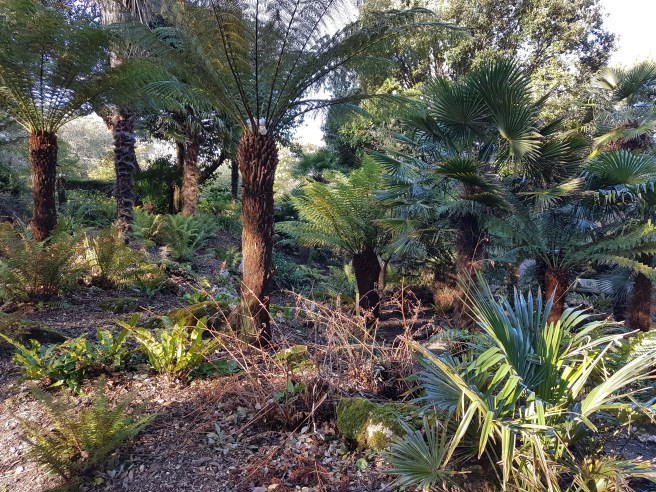
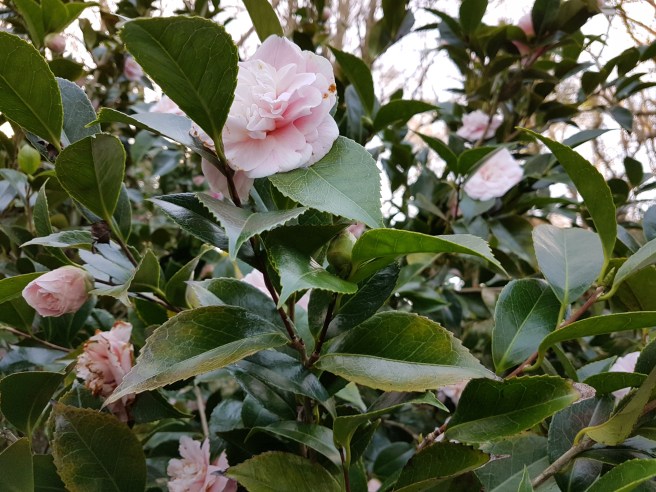
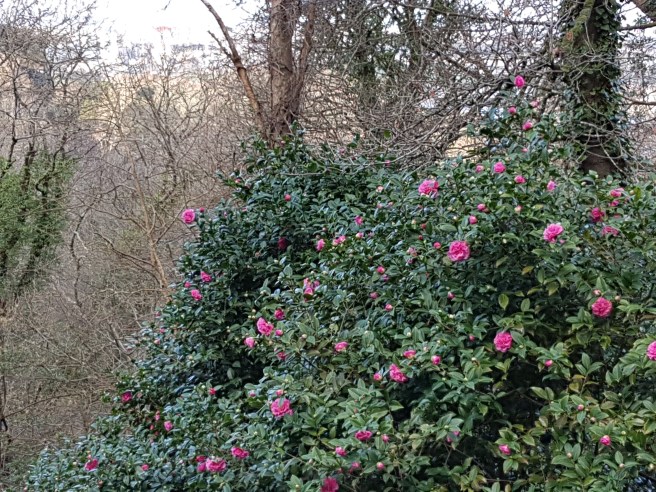
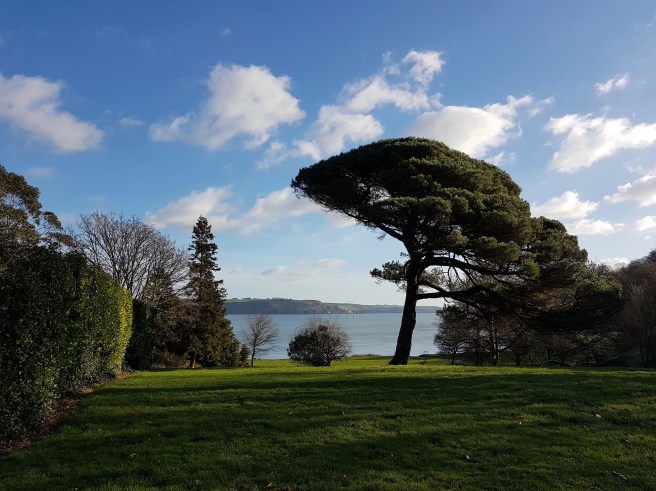 and we noticed our first burst of Camellias….
 This is ‘Milton’s Temple, c. 1755 – a circular Ionian temple, with a plaque inscribed with lines from the poem
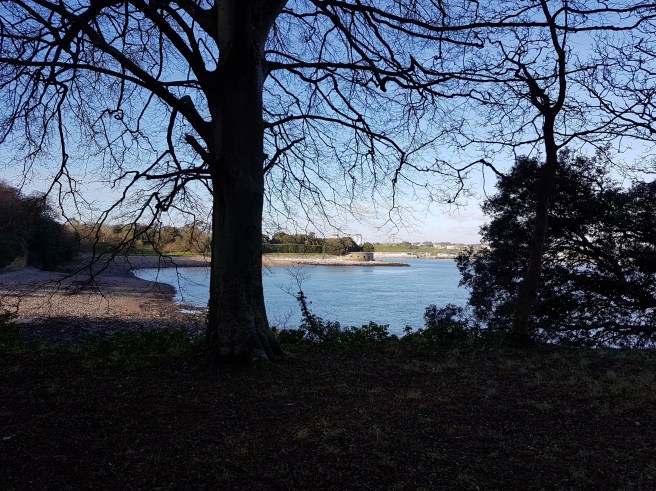
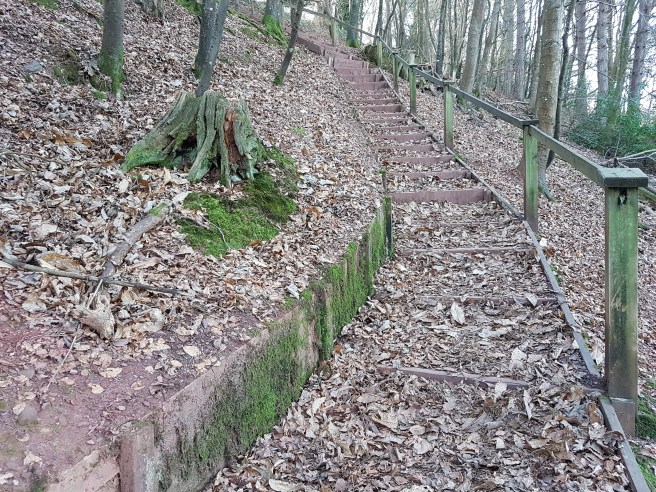
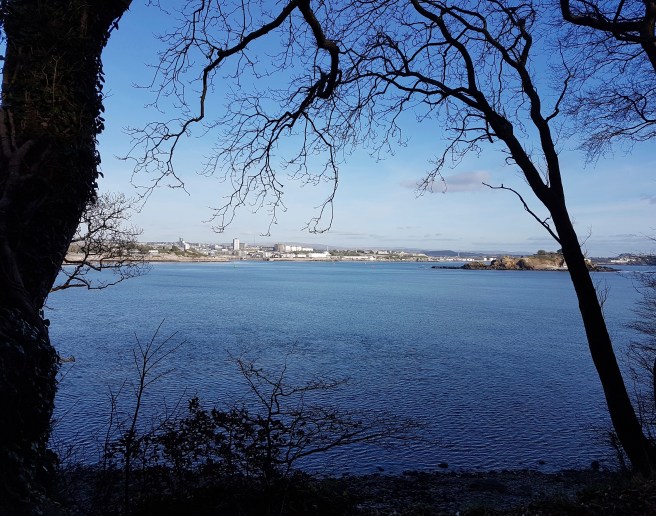 The walk was not without its efforts, but all very worthwhile and we saw very few people indeed which was good.
 I intended to climb this folly I think for the views but on approaching it I noted some very serious snogging going on at the top level, so I left well alone!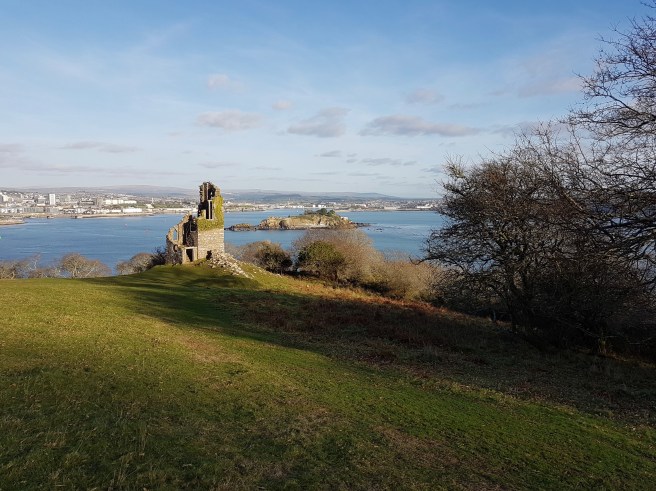
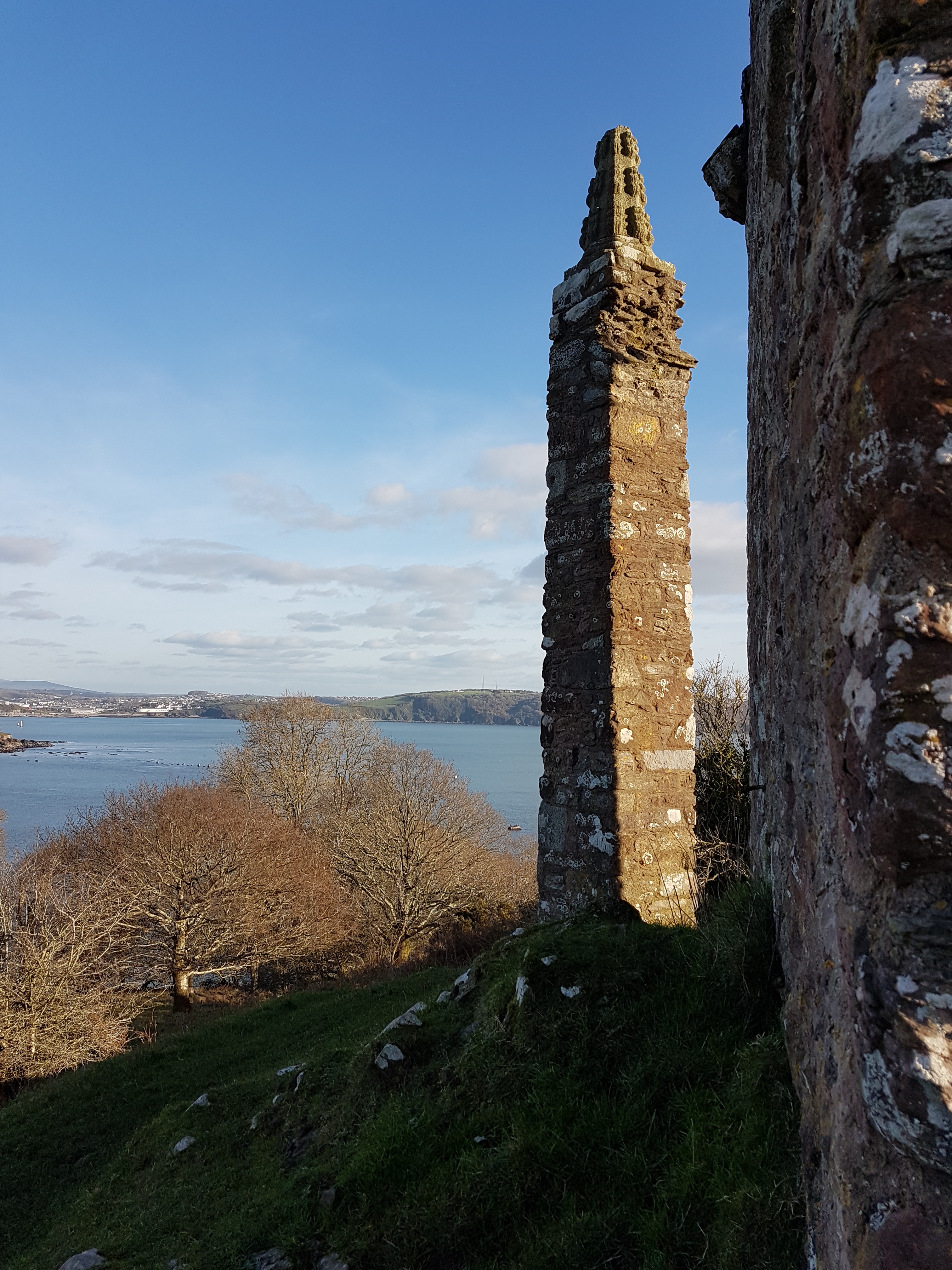 From here I tried out my panorama mode….not too bad……
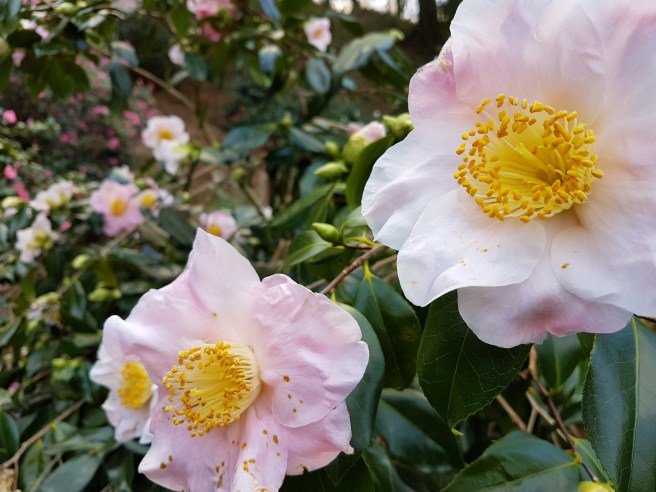
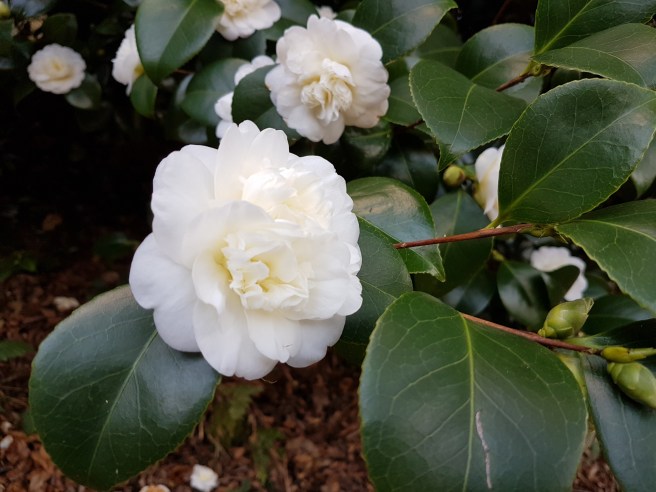
 and it was just past here that we noted that the grounds do contain the National Camellia Collection….what a cheering sight on this winter’s day……..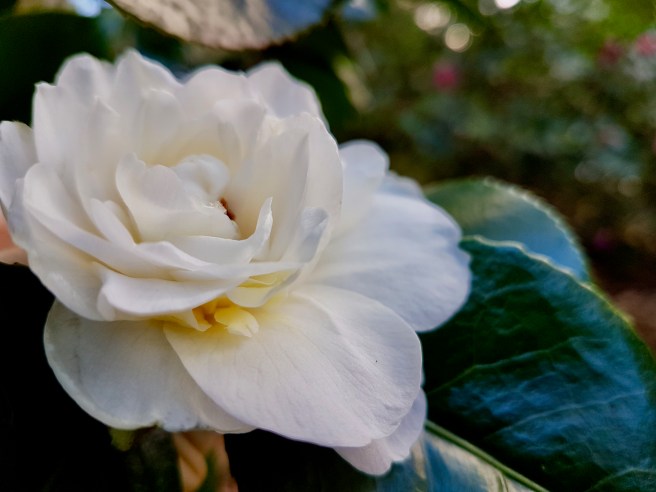
 Back at the house we visited the Stables area where all the trades used to be located – the blacksmith, wood turner and so on, all the buildings now used by independent crafts people……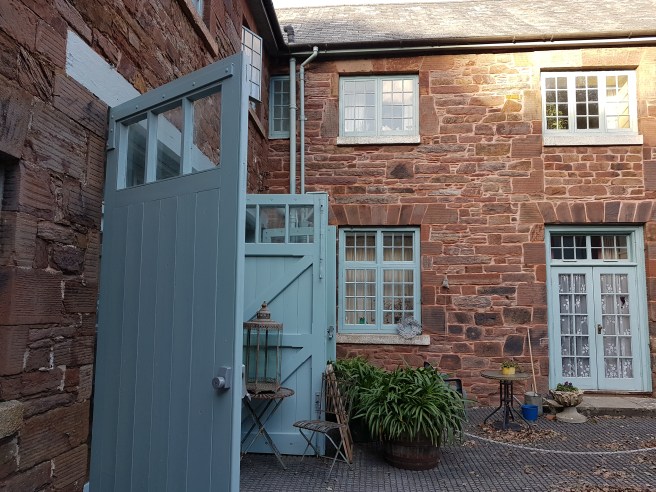
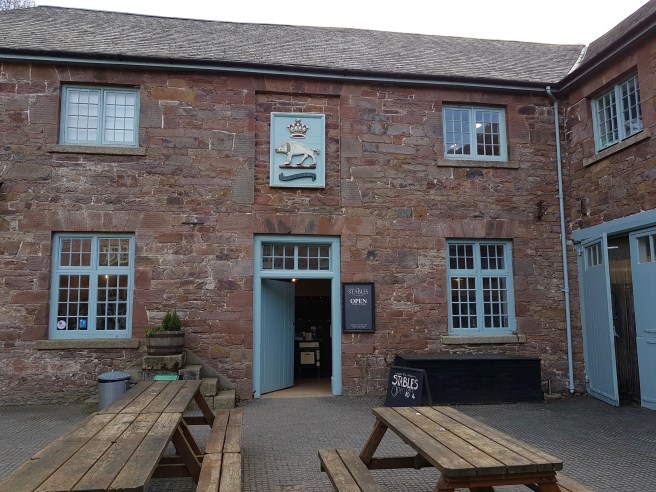 The house itself is not open until April….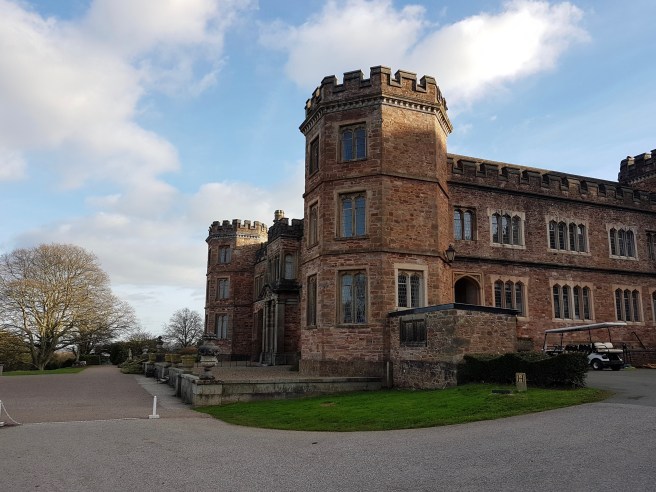
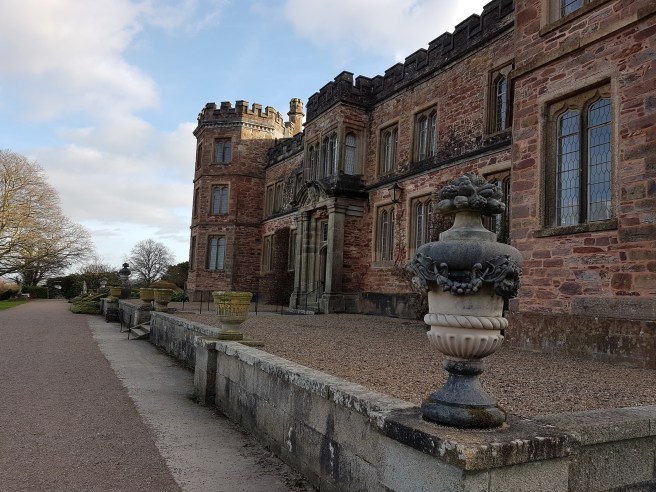 We made our way back to the car along a splendid avenue of trees……..
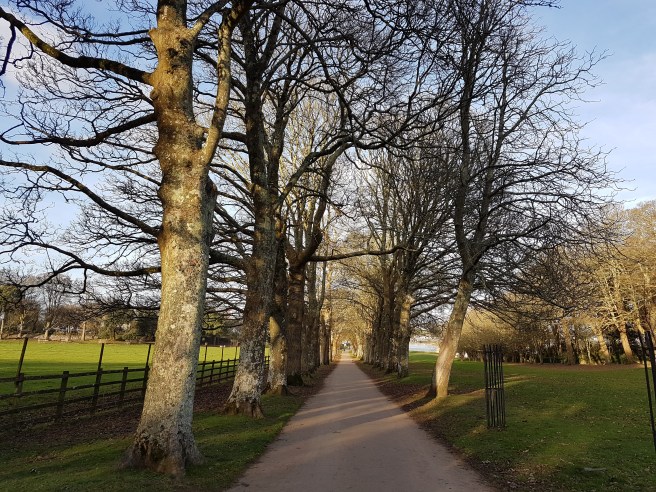 Days like this, cold and clear, remind us of winter days in York……they should be enjoyed to the full.
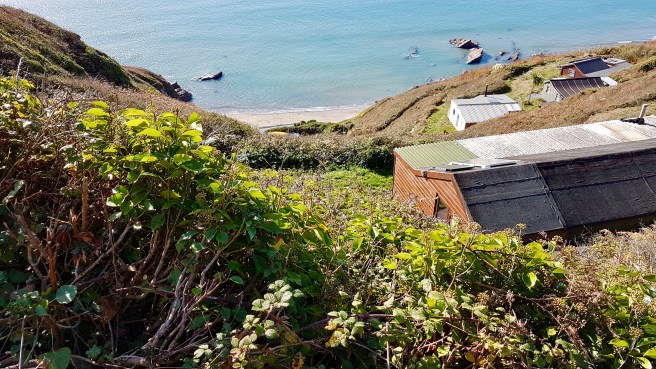 The start of my walk today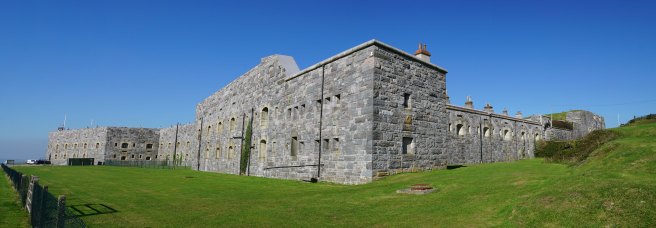
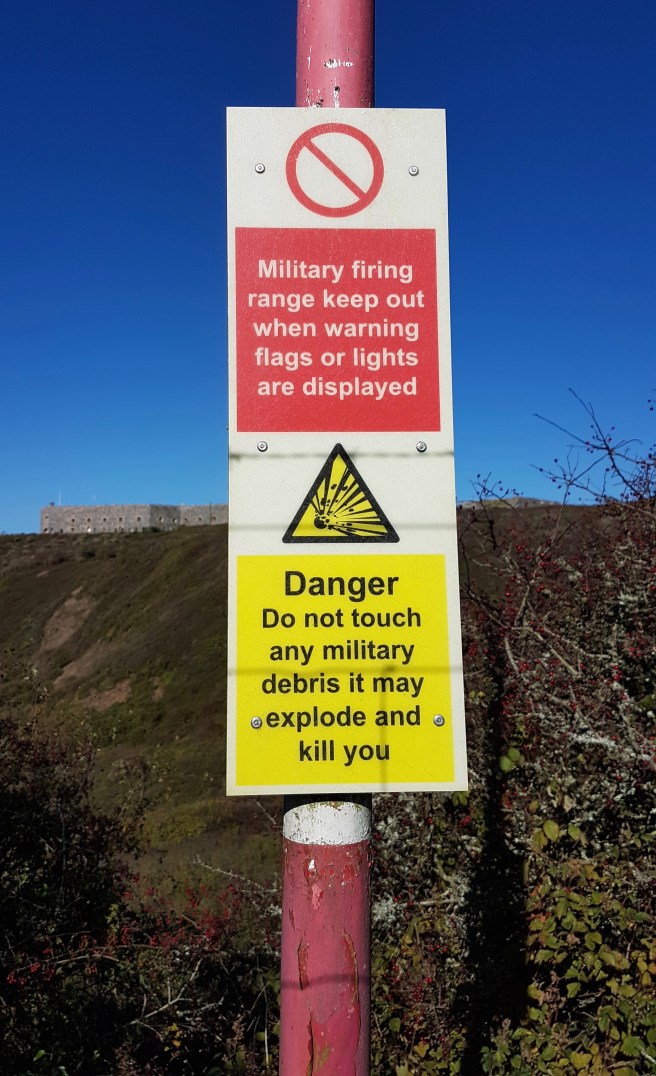
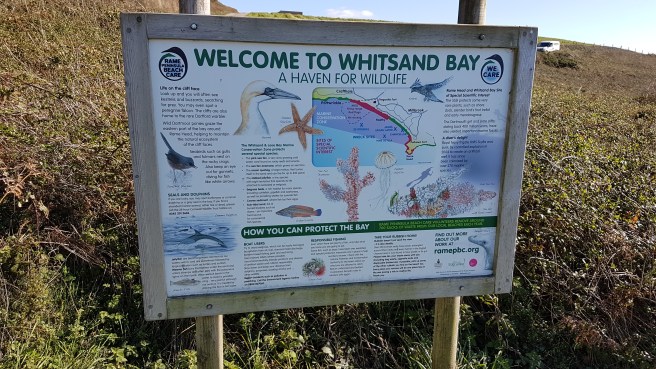
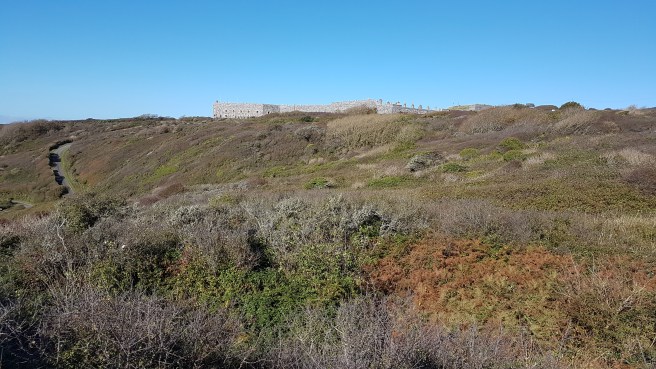 We parked on the road by the side of the fort….it’s great that we are outside the tourist season as parking is eased all over Cornwall. We then walked down by the side of some of the ranges (later on we were to hear plenty of small-arms fire). An interesting notice for my collection…
 You can just see some of the targets in the pic below….here we are looking back towards Looe in the far distance.
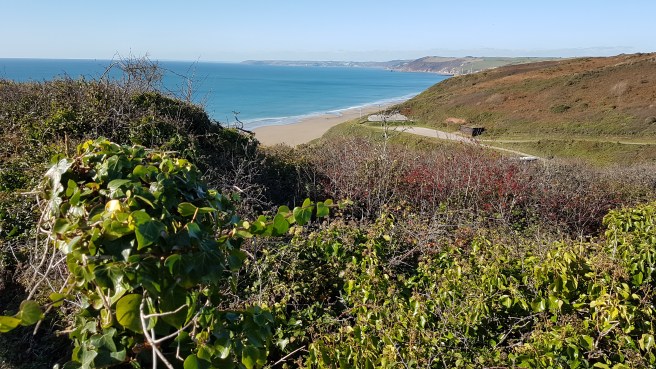 And it wasn’t long before we started to see the wonderful extent of
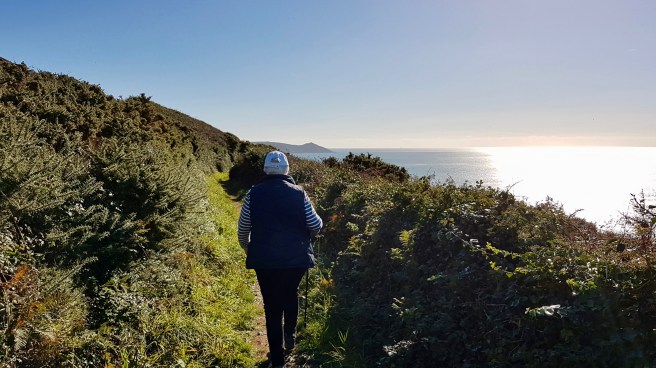
 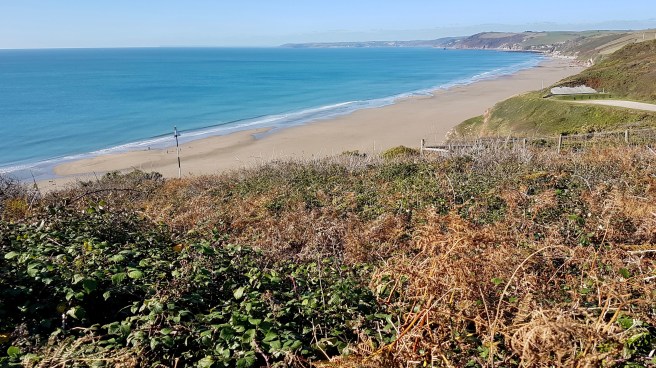 F. walked with me for a short while and we could just see ahead my objective – Rame Head. Throughout the walk it was extremely difficult to take pics of the way ahead as the sun was so dazzling (October in Cornwall!).
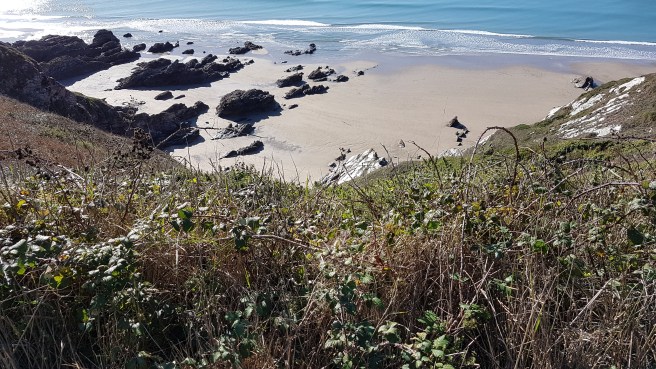
 It was in between tides so at absolute low tide one can imagine how magnificent the beach looks.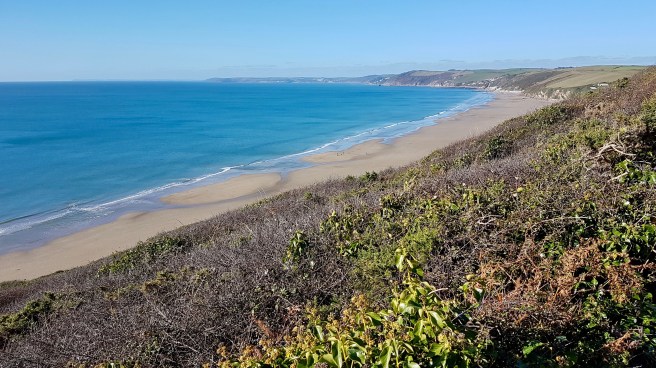
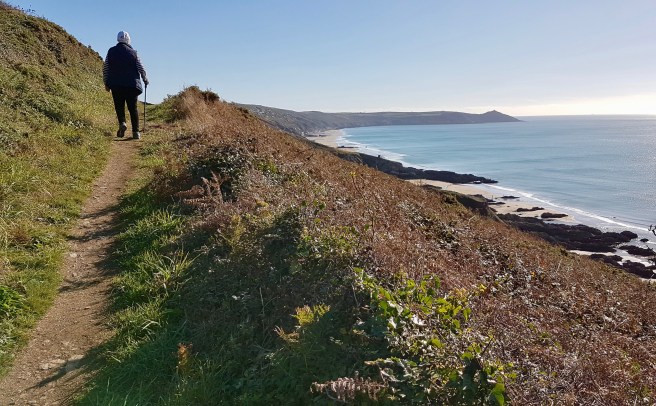 F. turned around after a while and was due to meet me with the car somewhere on
  At one isolated spot a lookout appeared, and I assume this is one of the National Coastwatch Institution’s as there is one somewhere around here. Having visited two in the last couple of weeks I gave this one a miss.
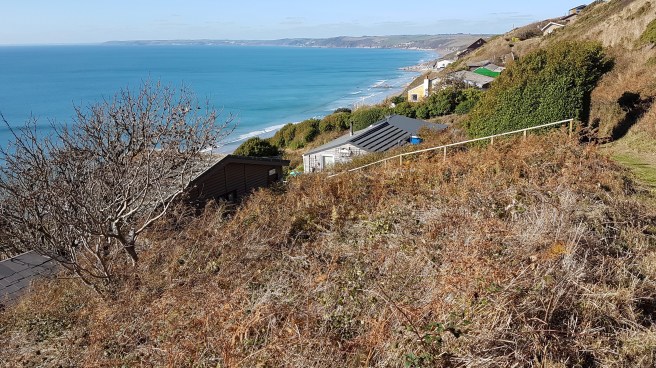
 All at once chalets appeared which seemed to cover the whole cliffside. What a lovely unspoilt walk this would be without them. Looks like a shanty town.
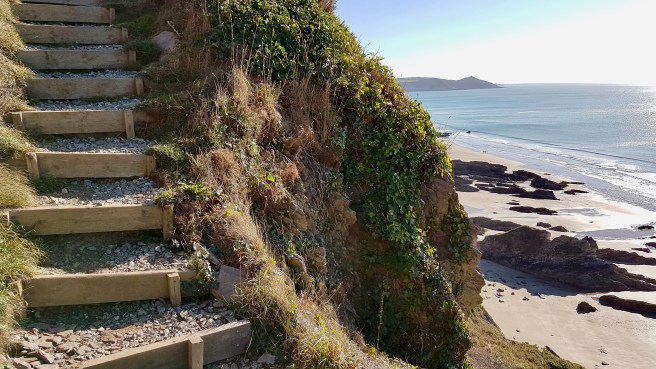
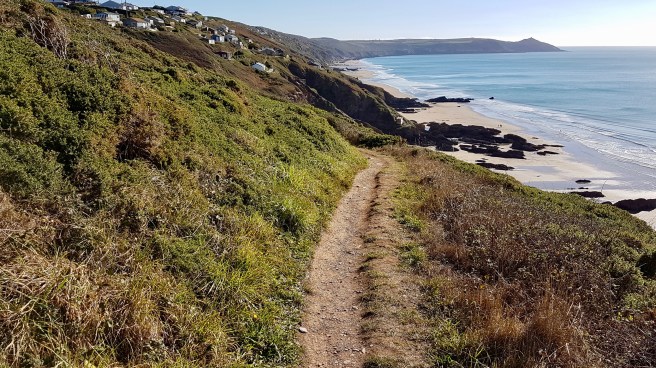 I assumed this walk would be quite flat. Wrong again, and I was glad F. had insisted I take my walking stick which is a tremendous help.
 The path appears and disappears as you have to make your way through all the chalets (or huts)…..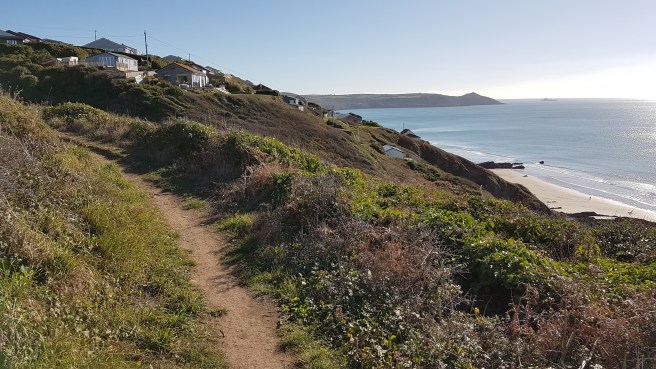
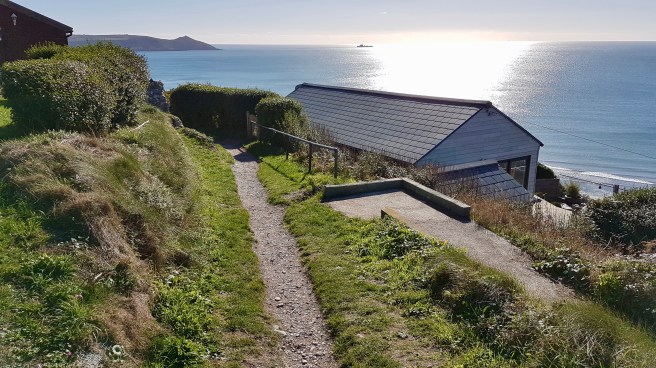 Quite a few I noticed had Indian names, so I am assuming they were from the thirties or thereabouts…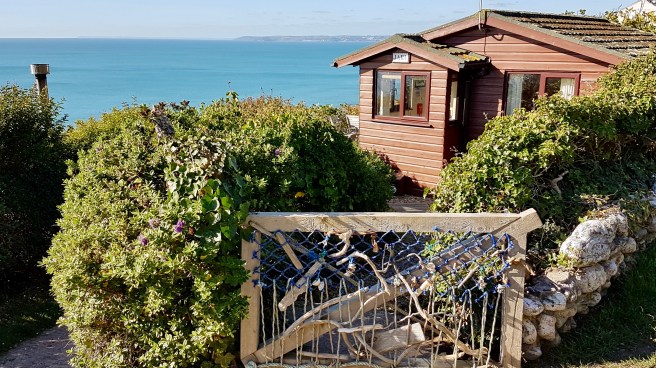
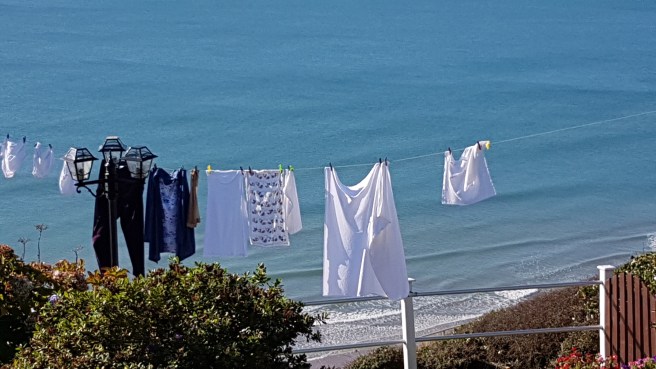
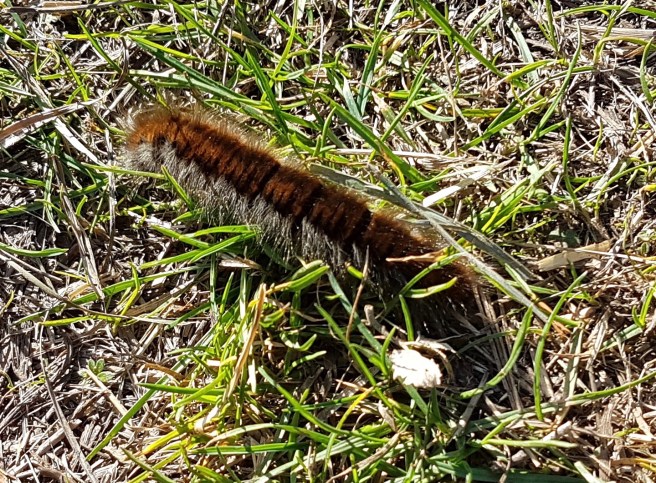
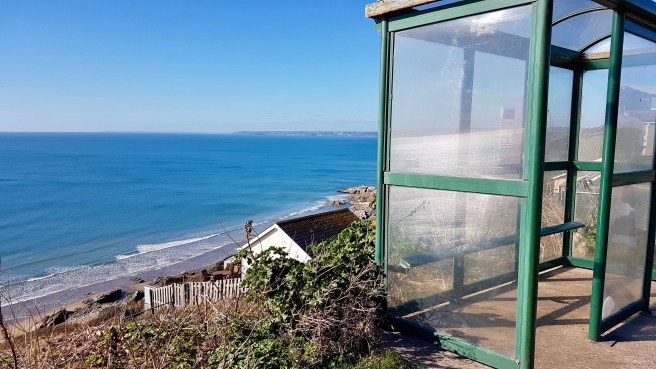 There are things blooming in Cornwall at all times of the year. Gorse is well-known to flower here all year round. This hedgerow was brightened up considerably. And I did see some wildlife!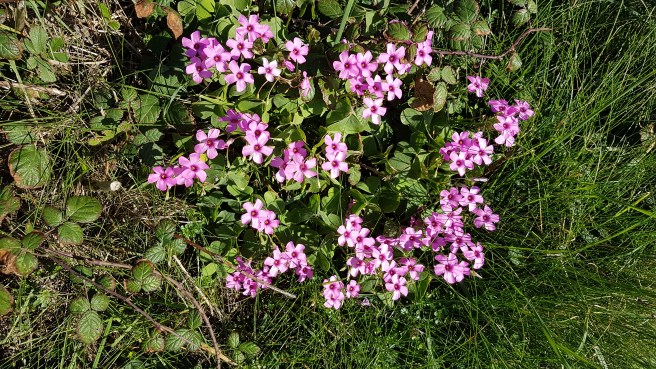
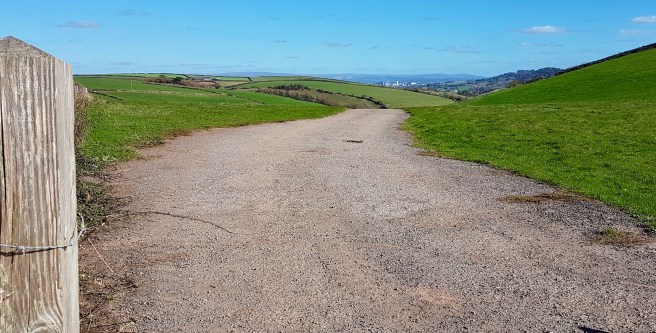
 Whilst the temptation is always to look seawards on a walk like this I did cross over the road (which you have to use occasionally) to get a great view in the distance of Plymouth.
 Of course there is danger wherever you go on the Cornish coast but this little monument was very poignant….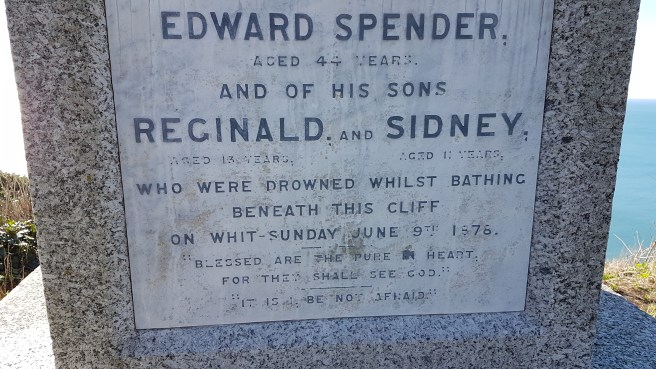
 I did see one restaurant with excellent views called rather unimaginatively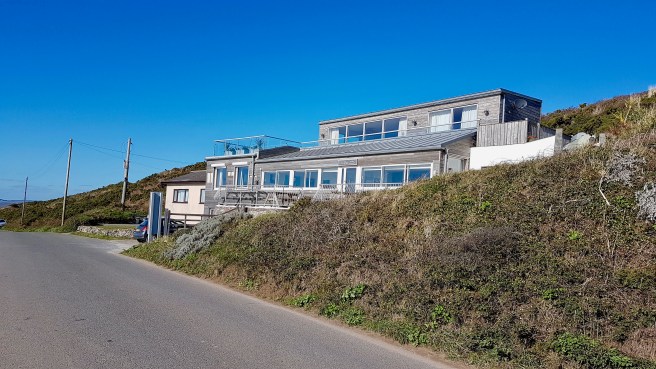
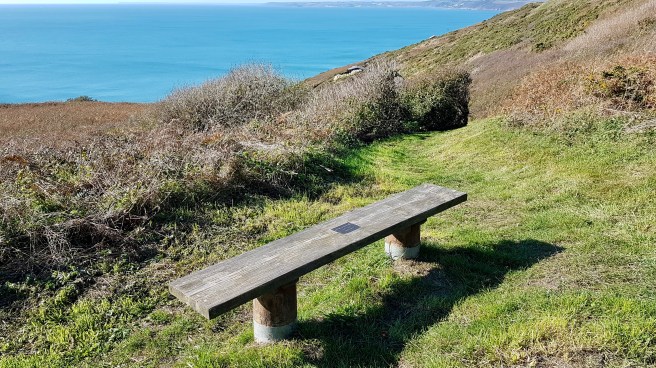
 I do like benches with a view and this was one of those walks where there were many.
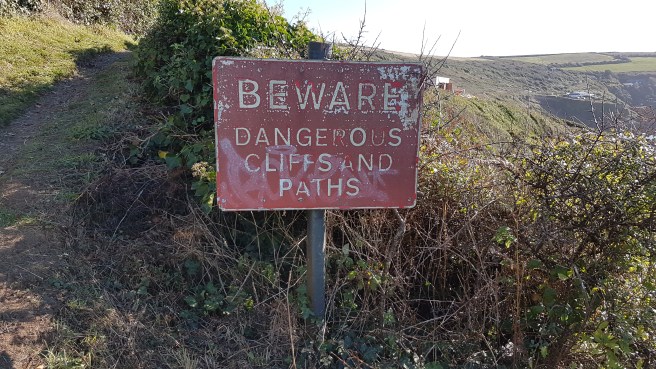
 Nearing Rame Head the cliffs were still dangerous.
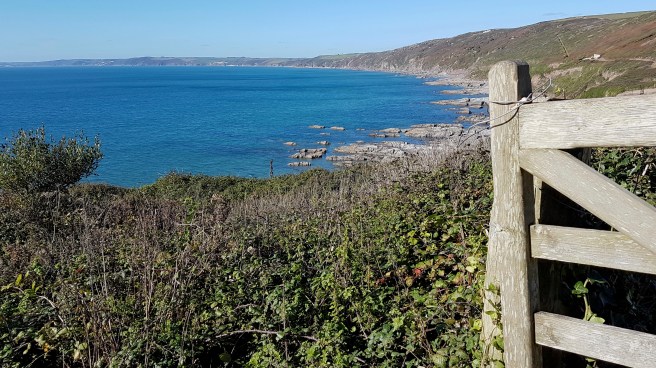
  I could just see Polhawn Fort another one of the three along here. Polhawn Fort faces out over the beach and was built in the early 1860s to defend the eastern approach to Whitsand Bay. If was armed with a battery of seven 68-pounder guns. A design flaw was that its exposed left side could be attacked from the sea and this was not as heavily fortified as the front which faces onto the beach. Rather than improving it, its role was taken over by the batteries at Tregantle and Raleigh and Polhawn was abandoned by the MOD in 1928. The building survives in good condition as a hotel.
 It was round about here with the Rame Head chapel just in reach that I received a message from F. saying she couldn’t get to Rame Head because the road was closed. I therefore decided to cut across the peninsula and meet her at Kingsand. My path led to the charming little hamlet of Trehill. It reminded me very much of a Lakeland village.
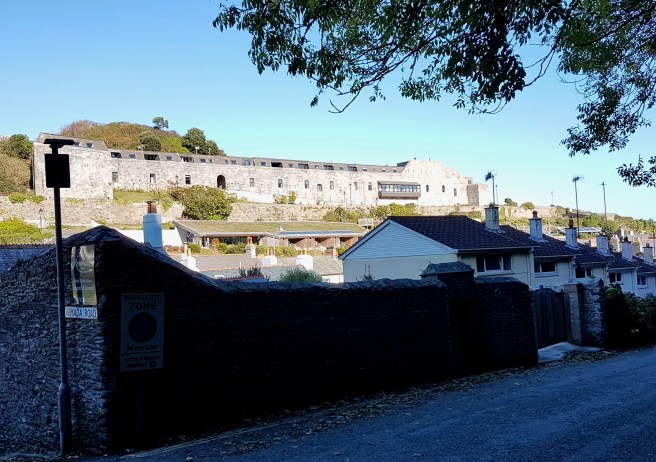
 As I dropped down into Kingsand I saw the third of the forts. Cawsand Fort was originally a Palmerston fort, and was remodelled as part of the late nineteenth-century defences that included the batteries at Pier Cellars and Penlee Point. Today it is a complex of luxury apartments. Good to see the variety of uses to which Palmerston’s forts have been put.
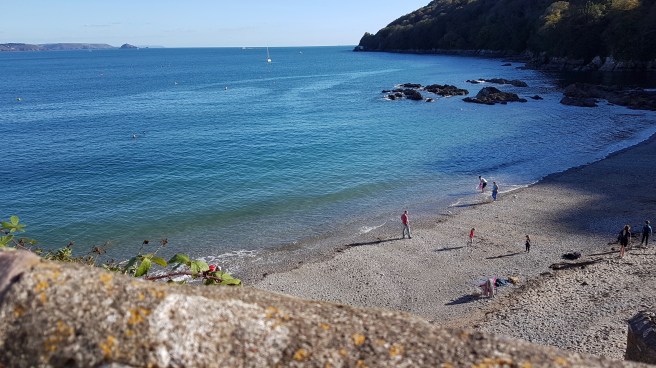
 Perhaps you can just see a couple of bathers near the little beach at Cawsand – it was warm!
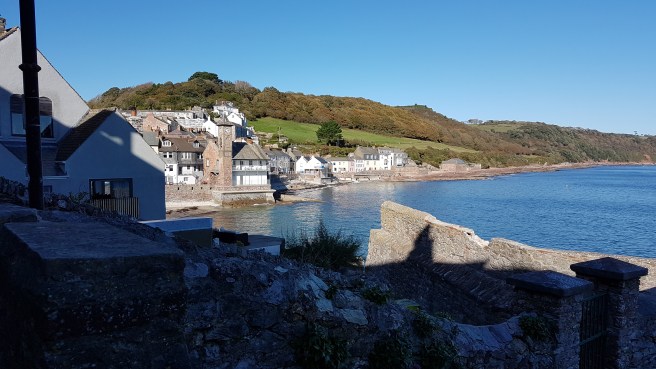
 As I have said before Kingsand and Cawsand together are one of the most delightful spots in Cornwall, and we always discover some new angle….
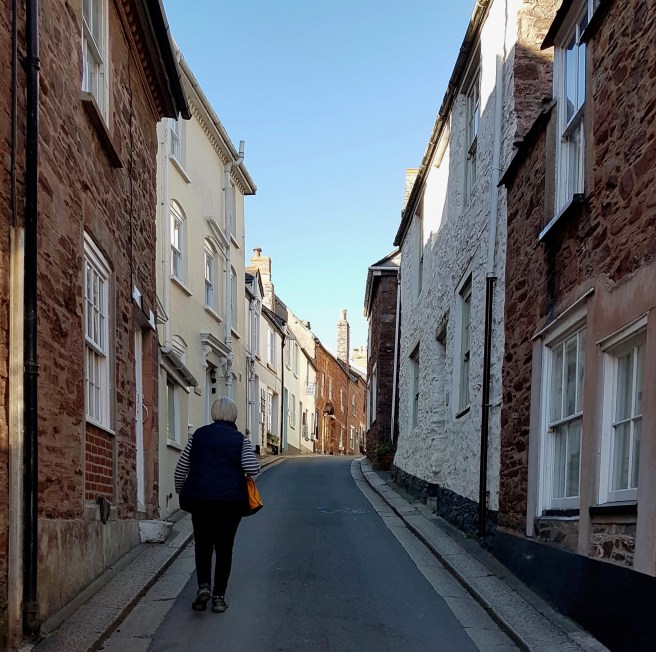 Pity the houses are so expensive……..
 A beautiful October day again saw us drive to Trenarren the end-point of my last walk. My destination from here this time was Pentewan which we had never visited. F. drove there after a short stroll with me on the first bit of my walk. I optimistically thought I would see her in an hour. It was more like three. Such are the vagaries of the Coast Path.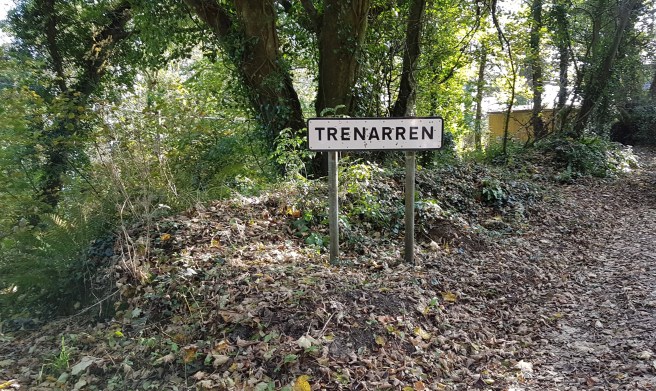
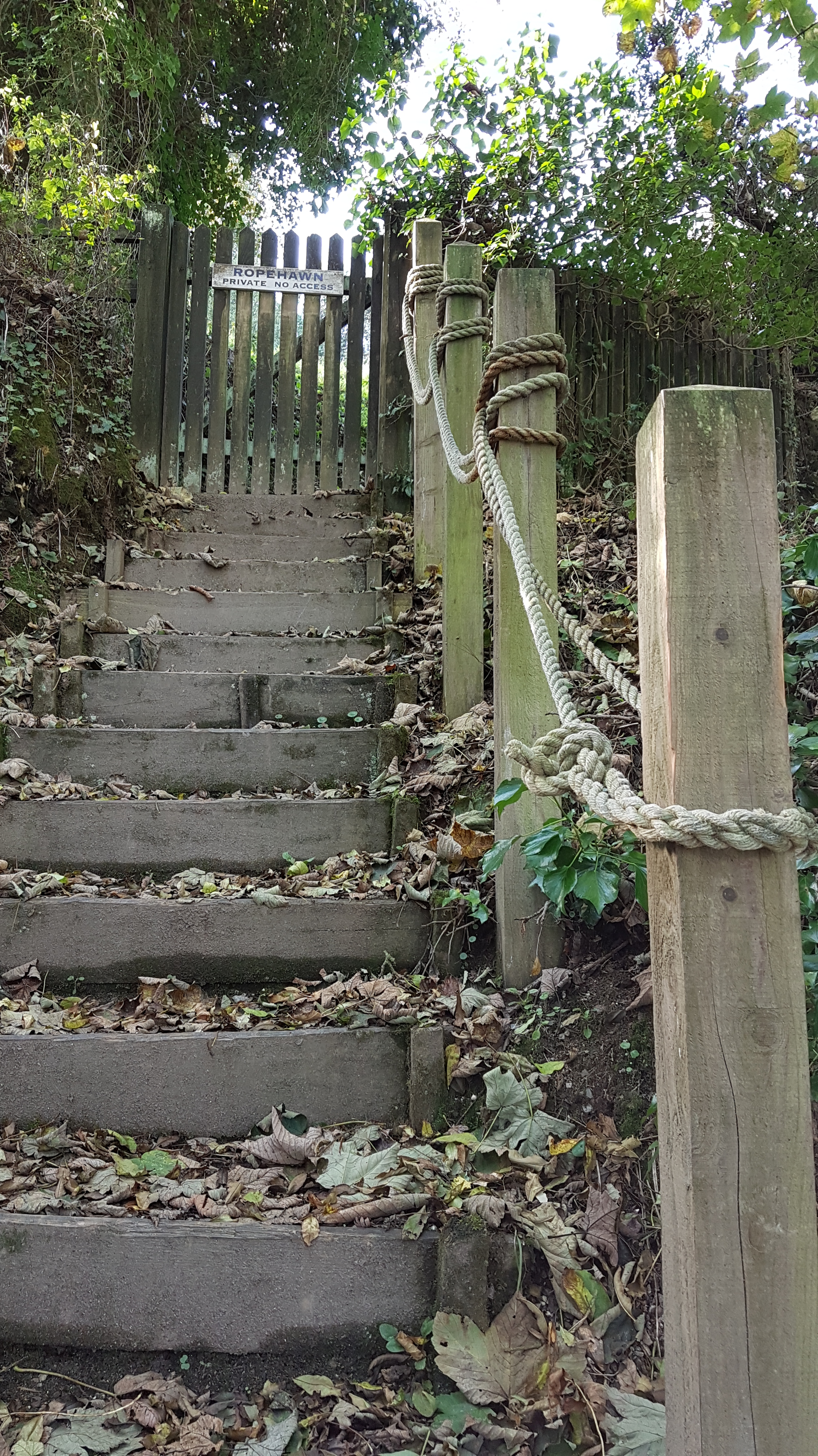
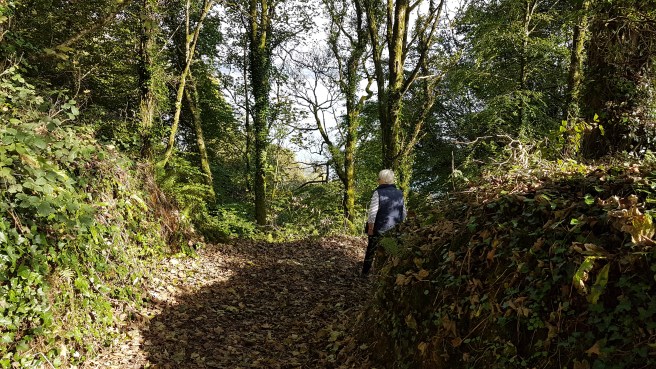 Very wooded to start off, it was interesting to note some private accesses to the Coast Path (must be nice).
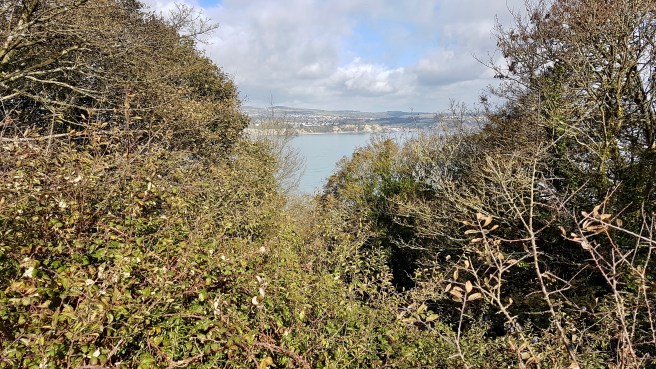
 The view back was towards St Austell (mining country still) but the whole bay could be seen at times.
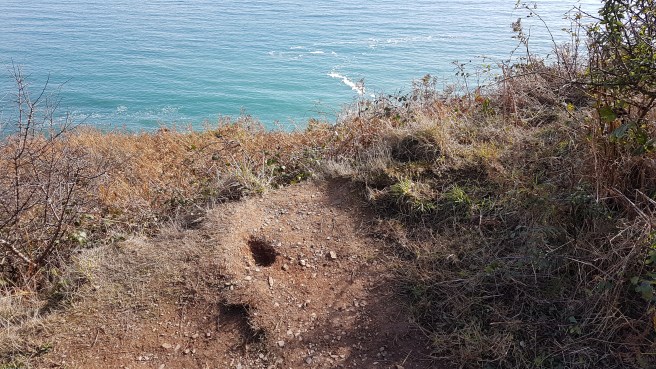
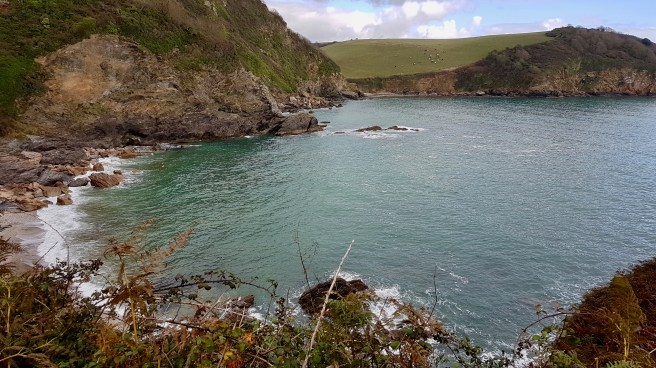
 In places the sea was the beautiful turquoise colour which you find in photos of more exotic places….
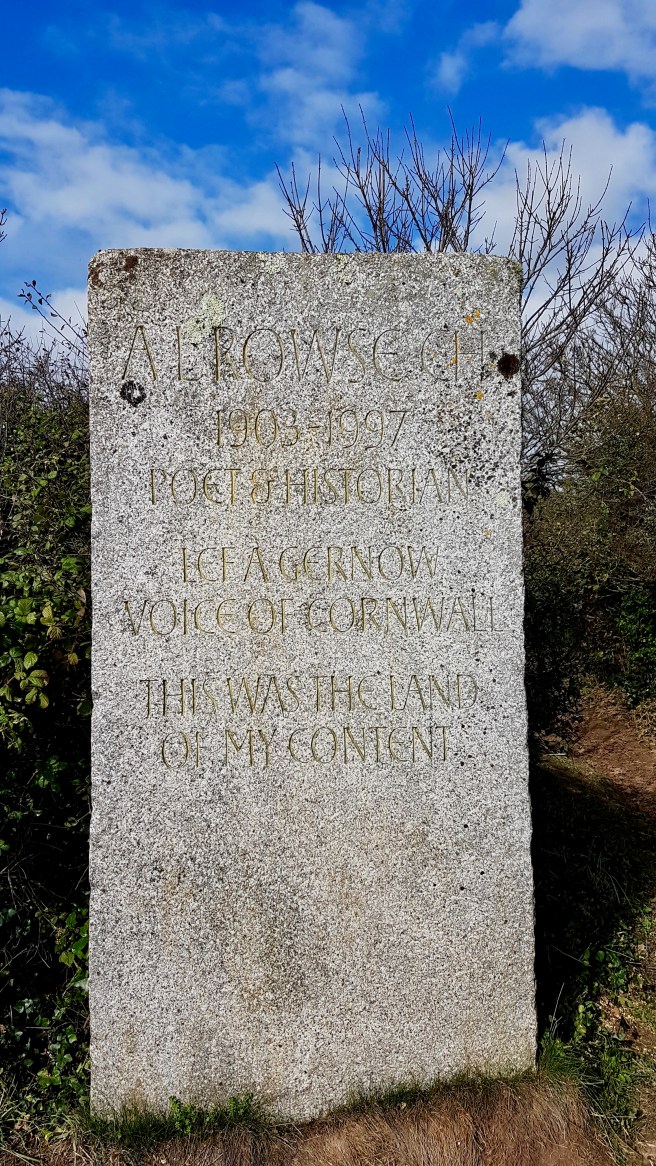
 I soon saw ahead my first objective – the little promontory of Black Head. I found the engraved stone at the neck….This granite memorial engraved with “This was the land of my content”, was erected in the memory of Arthur Leslie Rowse, a Cornish writer and historian. Rowse was born in 1903, the son of an uneducated china clay worker, and was the first Cornishman to win a university scholarship, reading English at Christchurch College, Oxford. Rowse published about 100 books. By the mid-20th century, he was a celebrated author and much-travelled lecturer, especially in the United States. He also published many popular articles in newspapers and magazines in Great Britain and the United States. His brilliance was widely recognised. His knack for the sensational, as well as his academic boldness (which some considered to be irresponsible carelessness), sustained his reputation. His opinions on rival popular historians, such as Hugh Trevor-Roper and A. J. P. Taylor, were expressed sometimes in very strident terms. All three were well-known to me when I studied History at Oxford in the late Sixties……..And in fact Rowse retired to Trenarren House. I enjoyed learning all this.
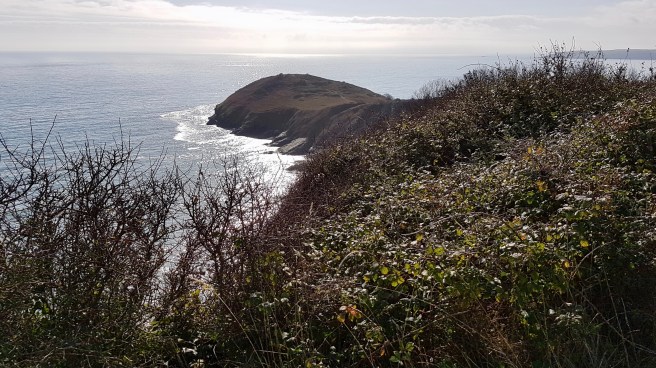 Great views of the bay and unsurprisingly there is a stone-age fort at the head. I thought I could discern some of the outline of ditches……

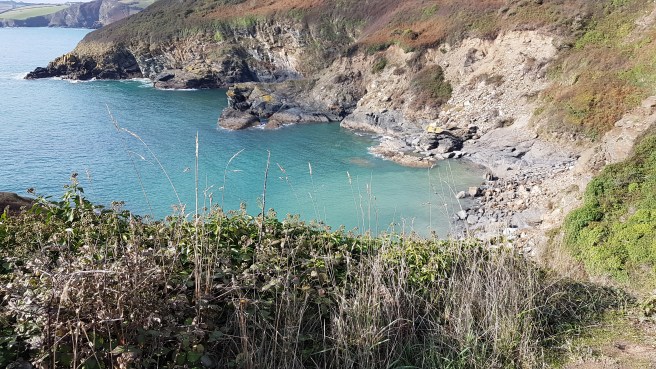
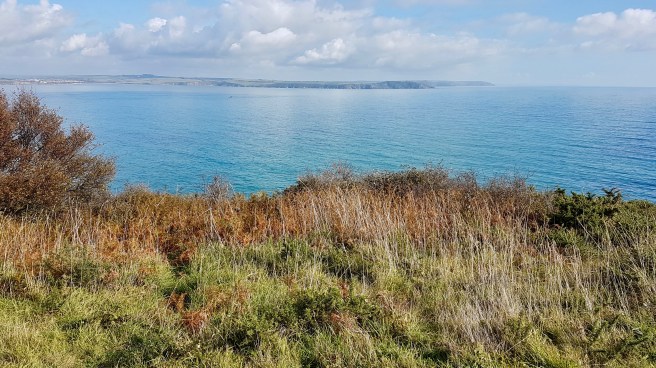
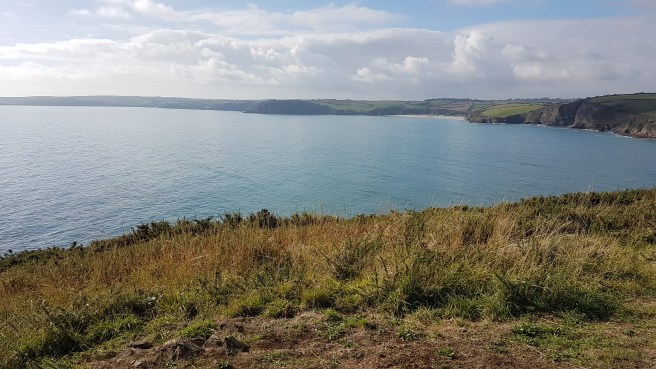
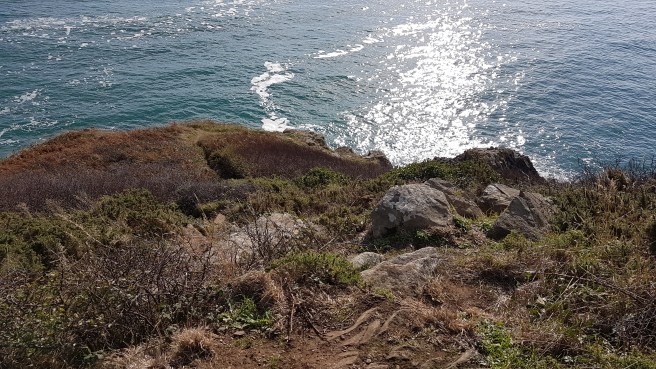 Walking back along the promontory I discovered what I assume is a First or Second World War gun emplacement….
 Moving on steeply down, after leaving Black Head, I could see the isolated little hamlet of Hallane with two or three houses or cottages strung down the combe ending up at a rocky cove. Ideal for smugglers.
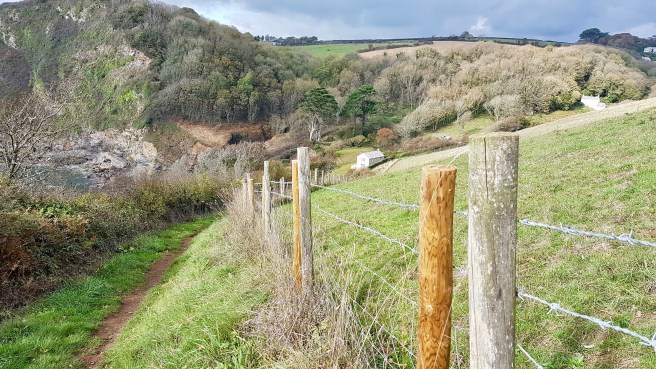 The problem was that each building had carefully marked off grounds with the sort of ‘Strictly Private’ notices some folk love to put up. Failing to discern the correct route for the Coast Path I nearly ended up back at Trenarren, before consulting the OS map on my mobile. You would think that on a coastal path you may not need a map at all. Just keep the sea to your left! But it certainly doesn’t always work out like that.
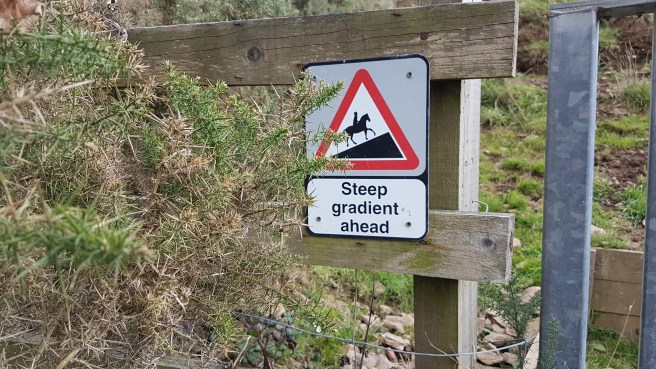
 Presumably horses can get tired with the gradients round here too!
 The correct route took me off into a wood along a pretty little brook on a stretch of land called The Vans (derivation?).
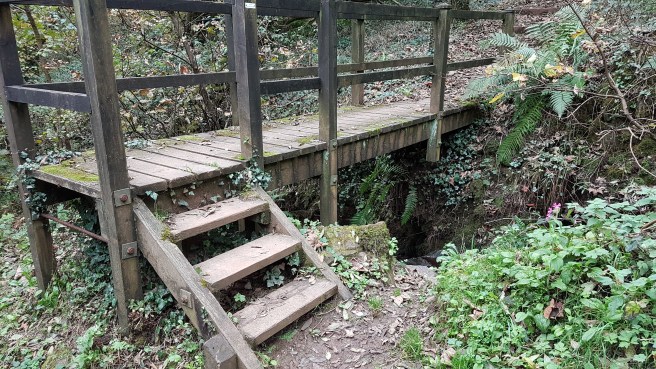 Next one of the brutal sections with very steep ascents and descents via steps, of which this shows just a small part. One can only laud the people who keep these footpaths in repair, but when you are using them you despair that they seem designed to be as difficult as possible, being half a step too long or too short between each riser…just the wrong amount especially for someone with bad knees like me.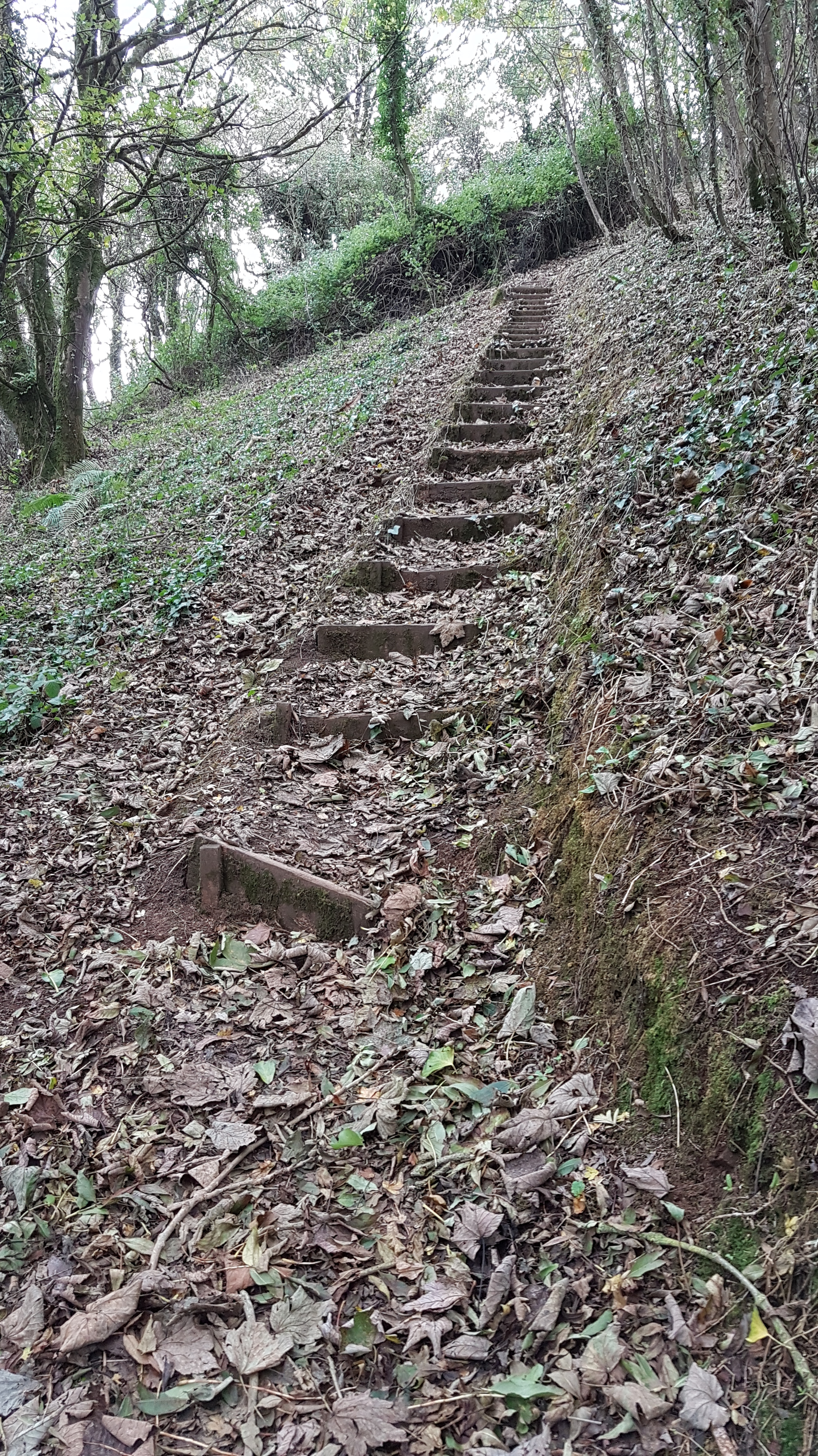
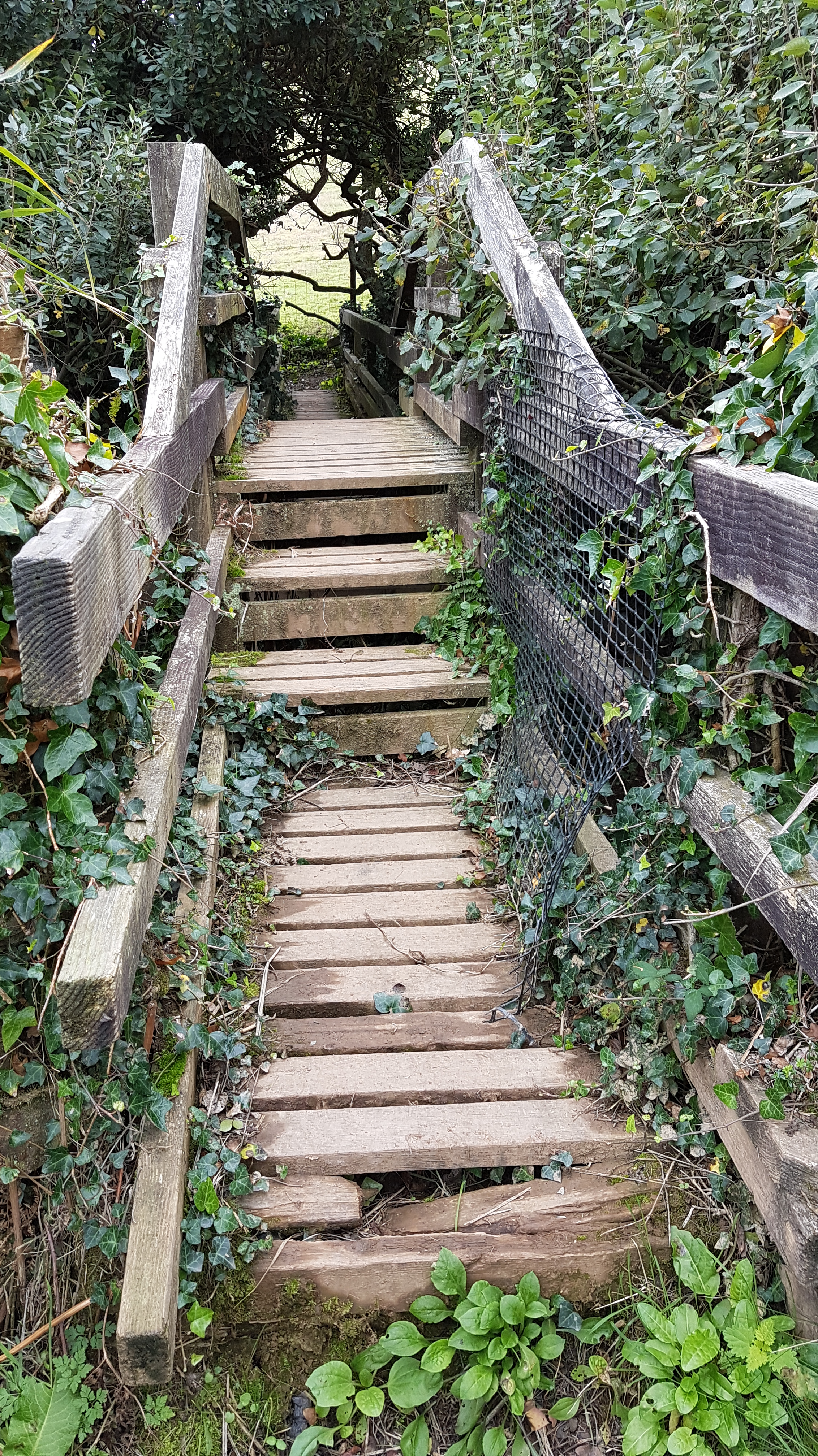
 Another individually designed bridge,,,
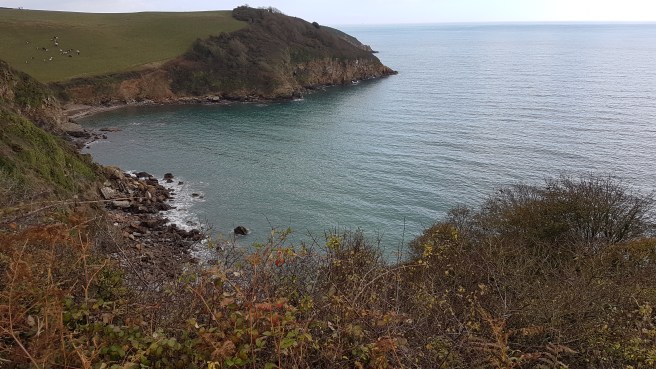
 Good views of isolated little coves with no apparent access. Let’s hope the bamboo doesn’t become as much as a problem as in our garden. I do think Cornwall is in real danger of being suffocated by bamboo.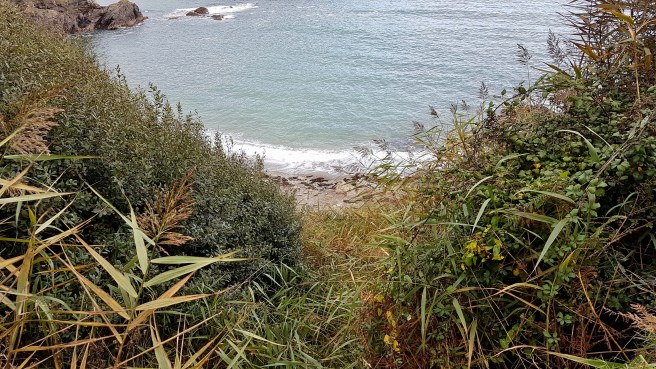
 What I had estimated and told F. in the beginning was starting to look silly now. What looks a short distance on the map, if full of these ups and downs can take 2 or 3 times as long as you think…..very dispiriting too to see them ahead of you, and to know from experience that what goes up must come down!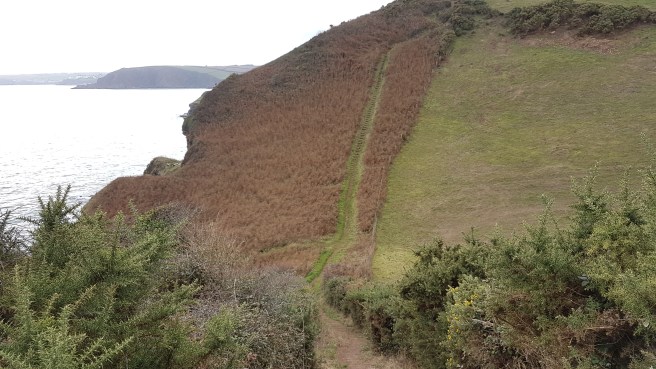
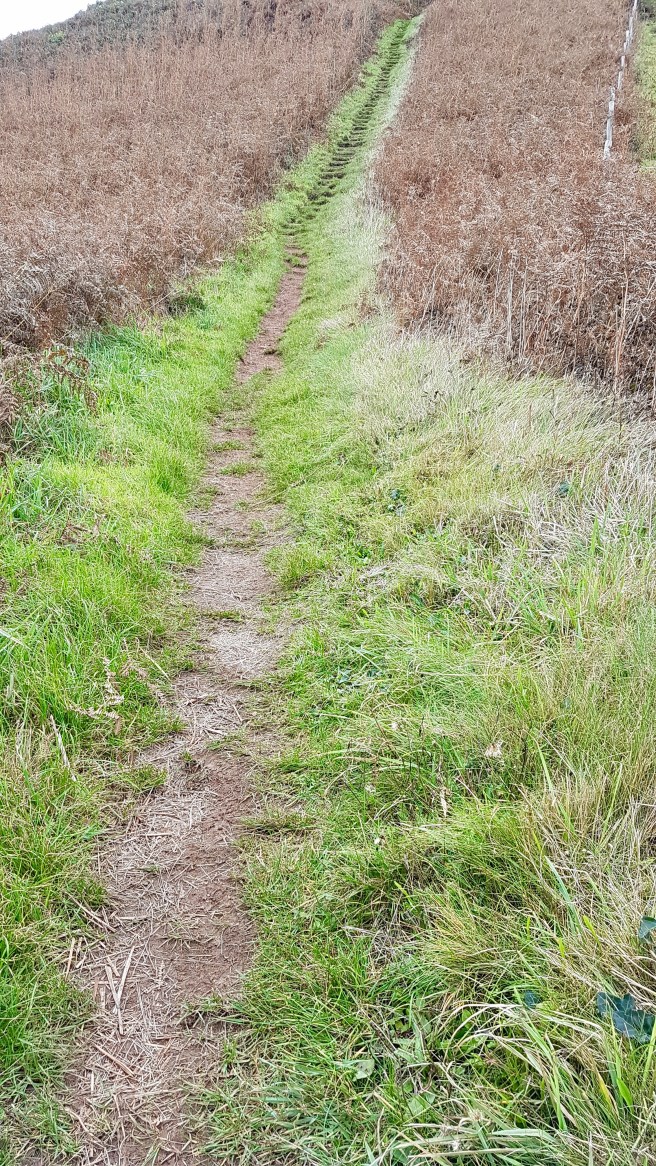
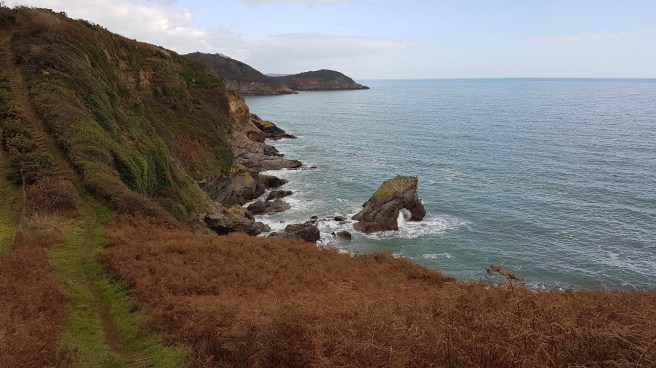 Looking back at this point I could just about discern the red and white stripes of the distant Gribbin Head marker as well as Black Head itself.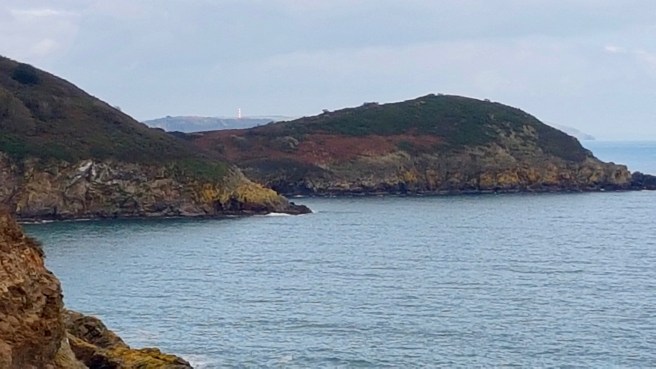

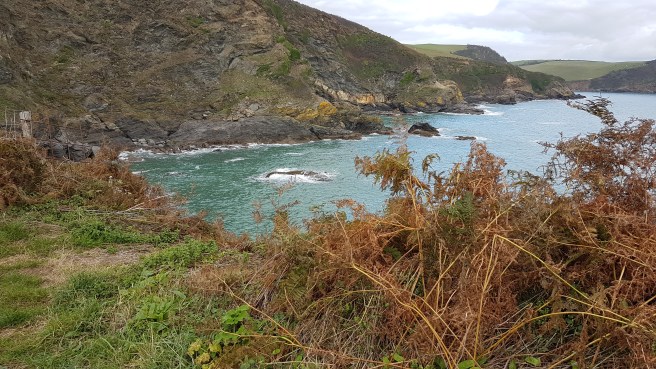 And since I have no head at all for heights I must mention that parts of this section of the Coast Path do seem very exposed with steep drops inches away from the path….
 At last my destination of Pentewan Sands can be glimpsed..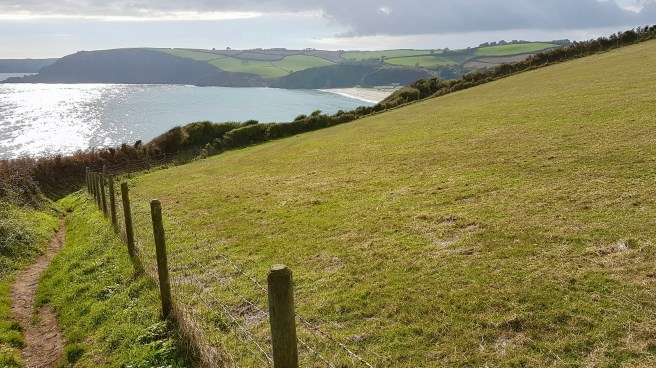
 But as it gets nearer the whole view and all sense of rural idyll is spoilt by the horrendous mobile home park typical of much else that totally spoils Cornwall. How could any sensible Planning Department give permission for all of this – plus deem the beach private to the Park. It’s an absolute disgrace. Cornwall really could be the place of your dreams or The Land Of My Content. But it isn’t. It’s despoiled and ravaged by caravan parks, mobile homes, wind farms, scruffy towns, no seeming overall plan, and the fact that it is is the end outcome of profit and cost control versus the environment.
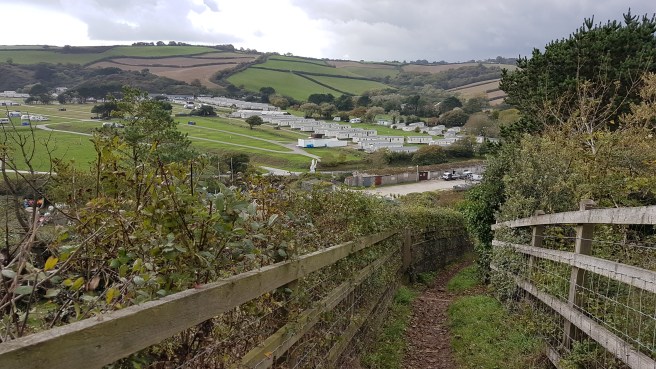 As I move down the last hill (thank God) into
 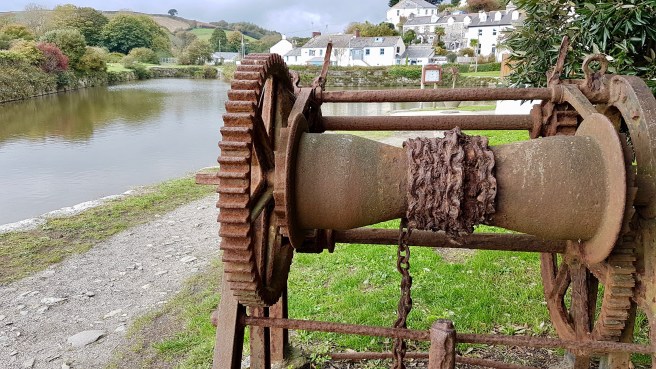 In fact the more I see of Pentewan the more charming it becomes. And, meeting Frances, we wander off to the local pub the Ship which is very presentable indeed…….
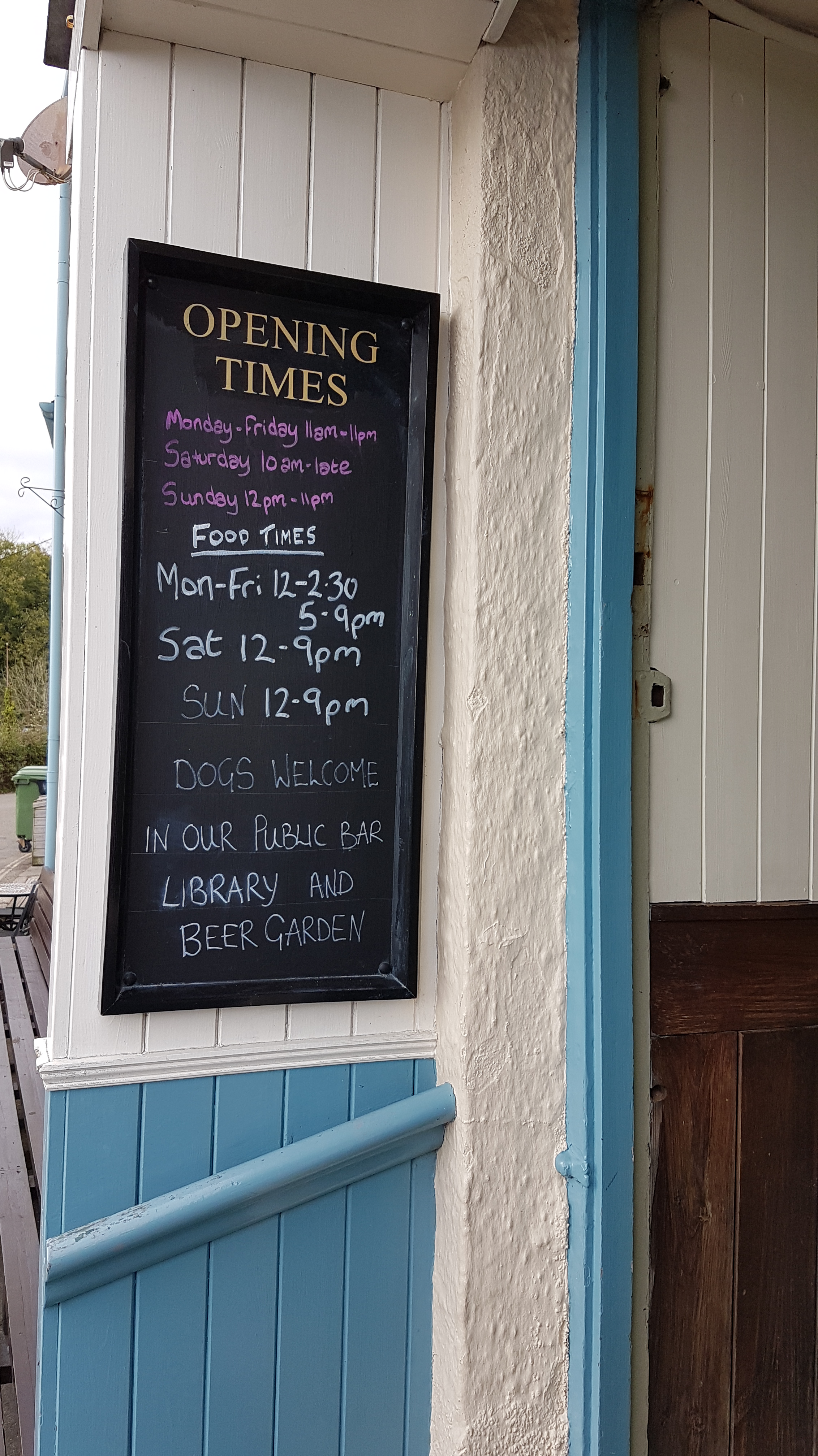
 …. and as well as bars and beer garden has a library. Who would have thought it?
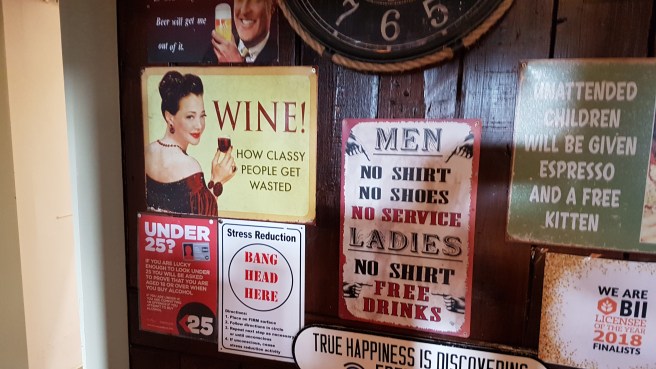
  And a sense of humour of sorts…
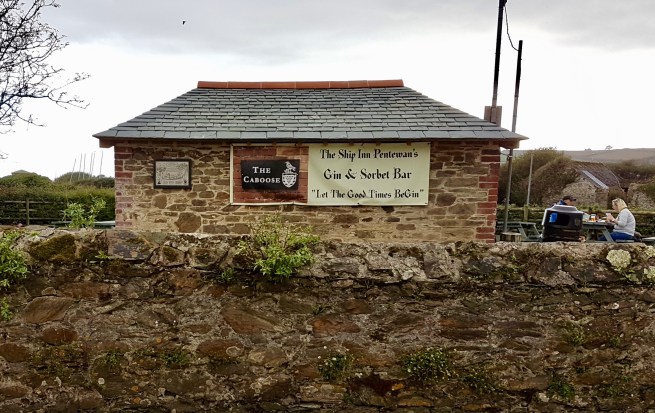
 We sit on benches outside enjoying the afternoon warmth and in front of us is a ‘Gin and Sorbet’ bar which would make London Metropolitans jealous. As it says with humour a bit like my own….’Let The Good Times BeGin’. Well, well.
 Walking to the car we pass through the heart of the village….
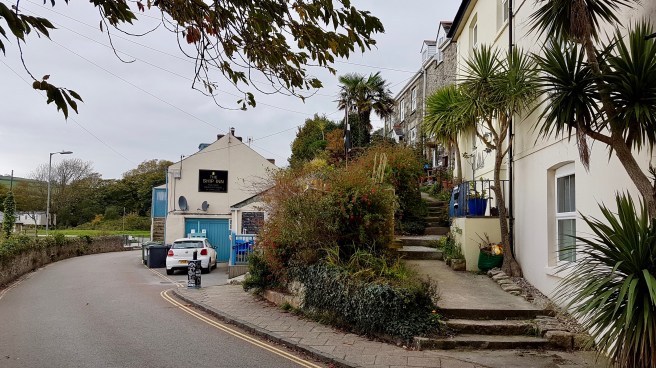 ….which even has a village green of the sort you might expect in Yorkshire or the Lake District……what a lovely place. How even more angry I am at the blot on earth that is the dominating mobile home park….and the concept of a ‘private’ beach….ugh.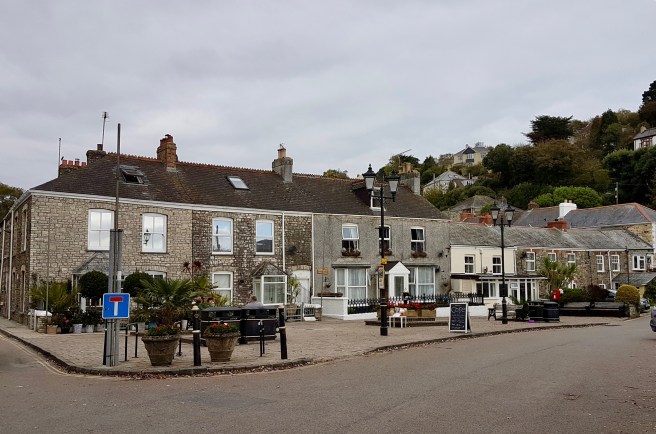
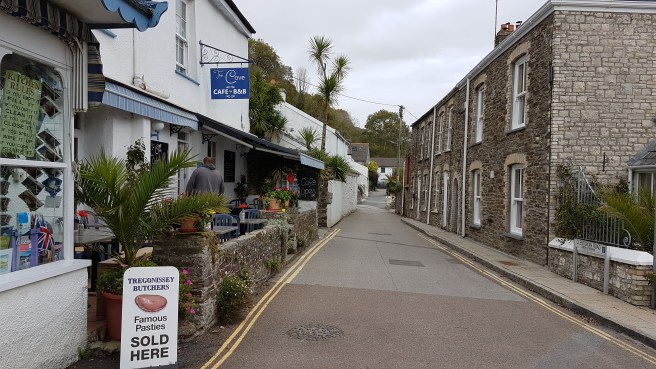
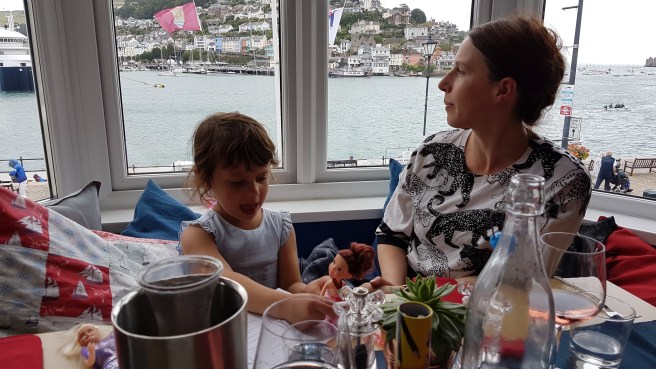
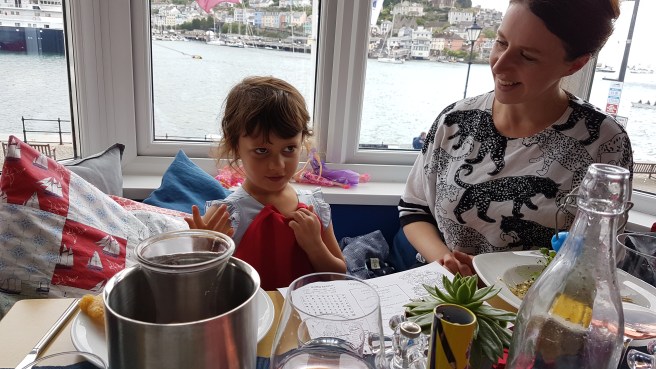
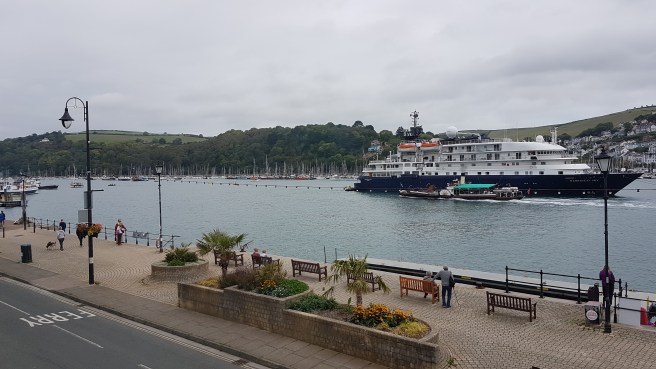 Dartmouth was our destination for lunch on Sunday at the first floor of the Dartmouth Yacht Club…good food, very reasonable and great service, much enjoyed all round. The first floor restaurant is actually run by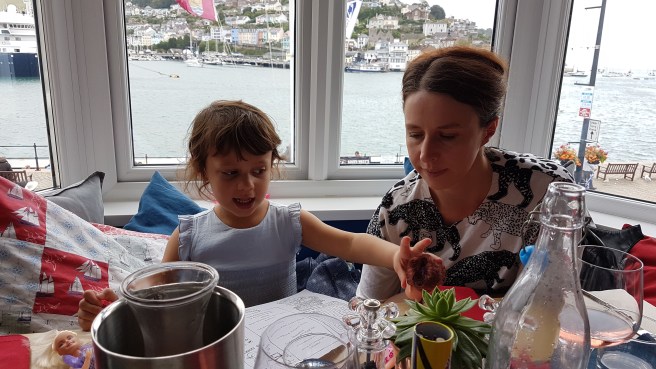
 Next stop was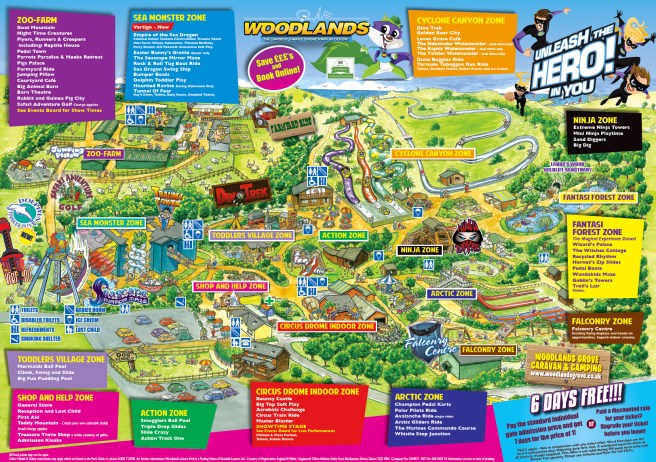
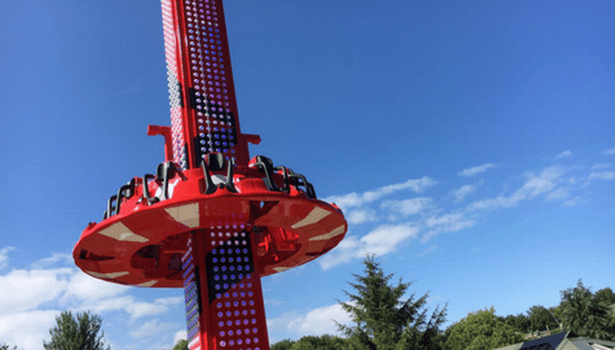
 Non-stop good times as the very next day we had even more adventures…first stop today was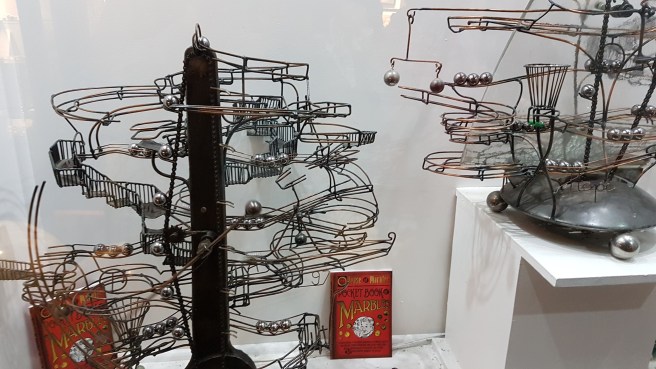

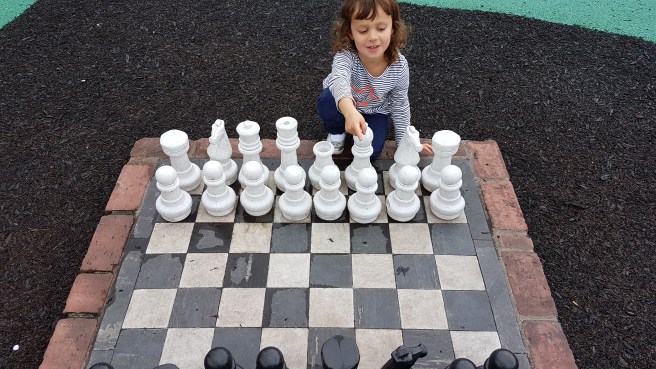 but we were fascinated by the experience of seeing two glass-blowers in action at the next door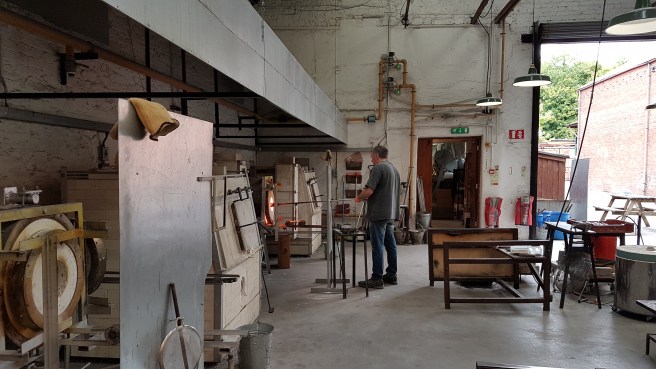
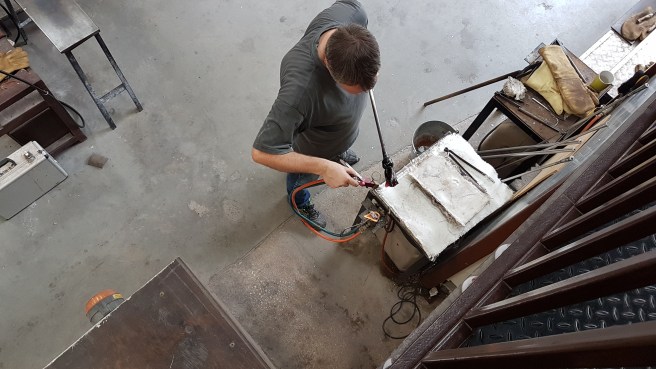
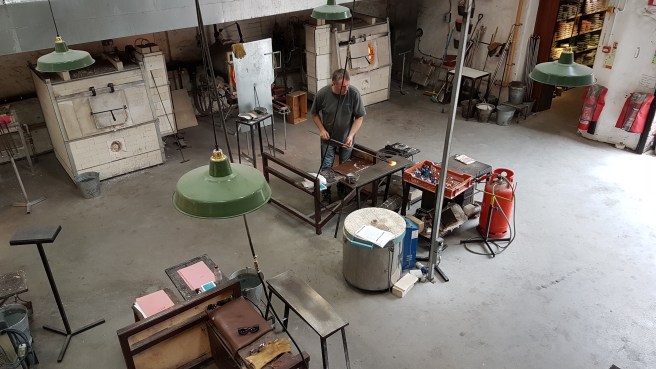
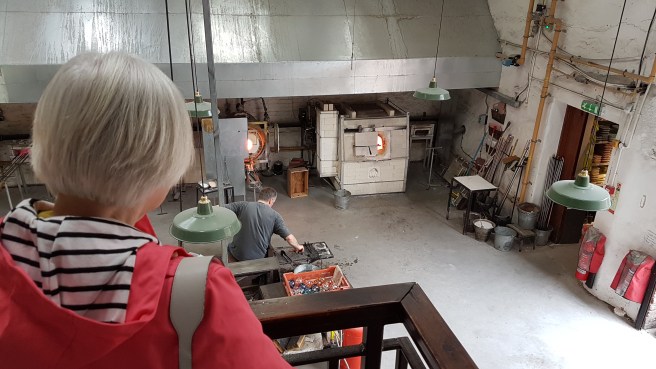 Even Aiisha was entranced by the way in which molten glass was quickly transformed into a cat or an elephant under the expert hands of the blowers…
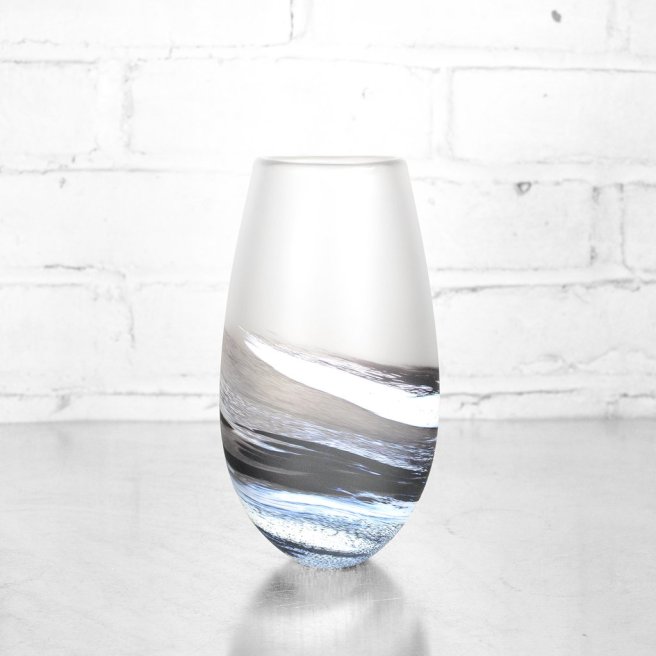
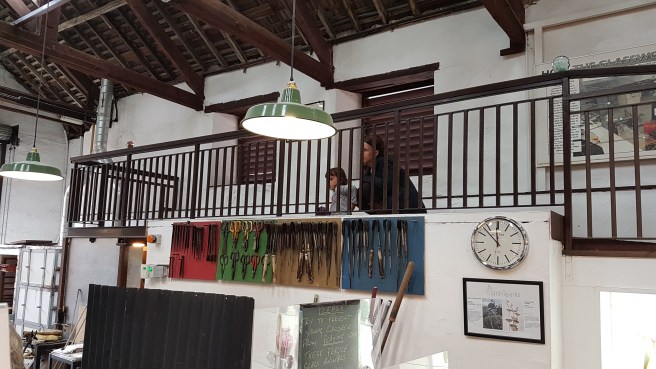 and although I don’t usually like glass products, I did enjoy looking round the shop and found some things amazing…I particularly fell in love with the idea of 4 glass lampshades strung over a kitchen table…too dear for now, but….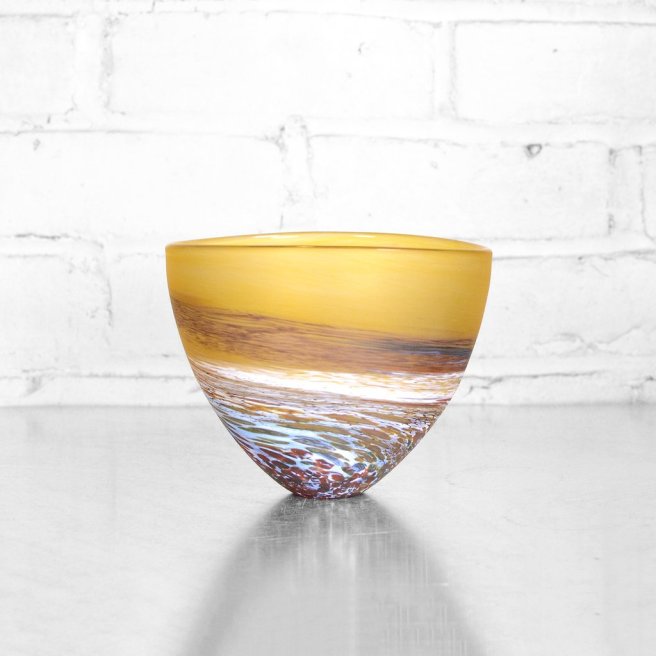
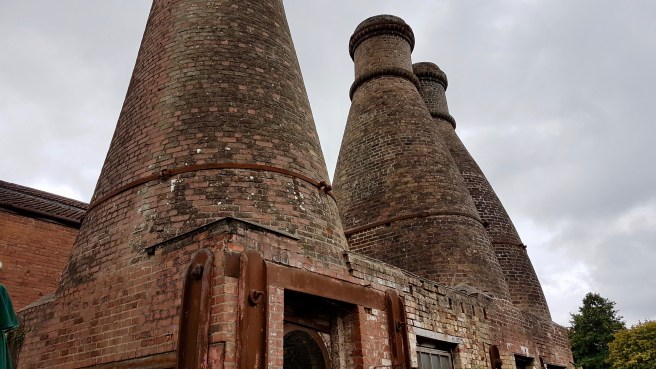
 But this was also a mini Industrial site, and had a lovely feel all round…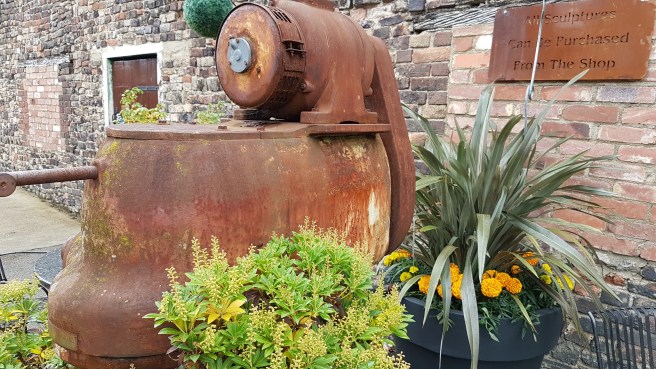
 We proceeded then through some beautiful countryside (I had forgotten how pretty Dartmoor is) to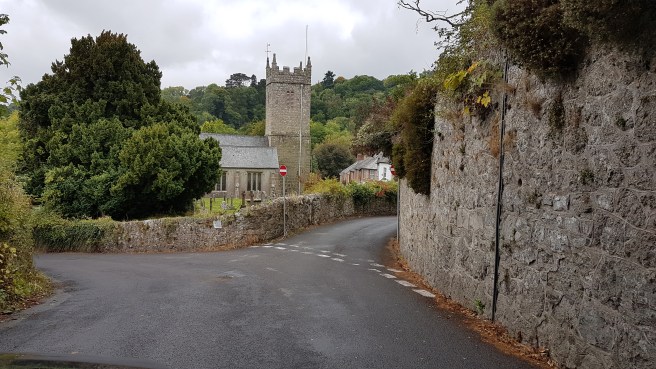
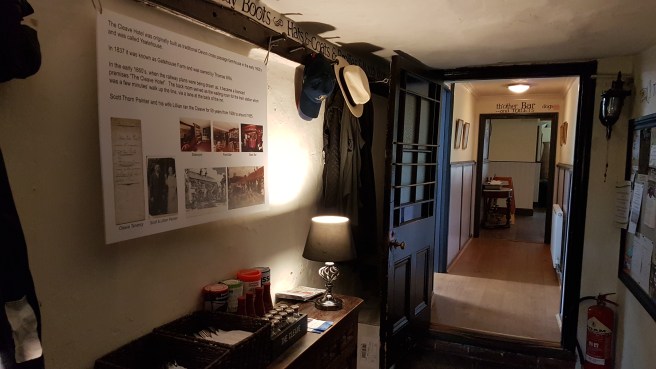
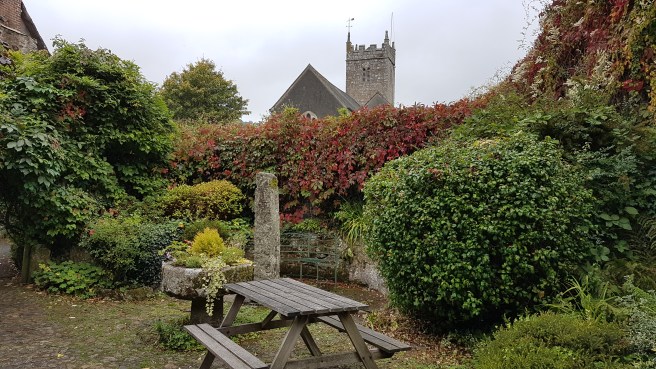
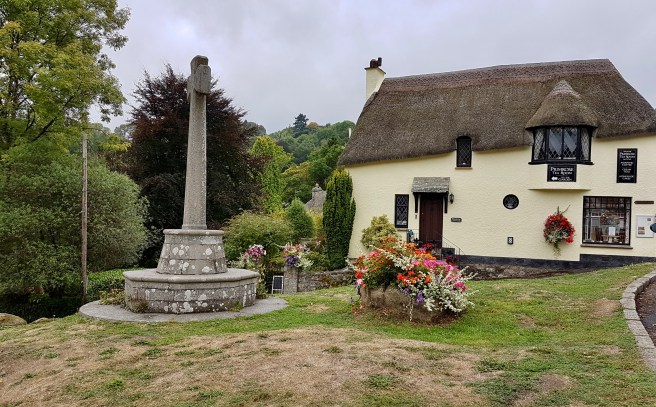 We still had time for the nearby
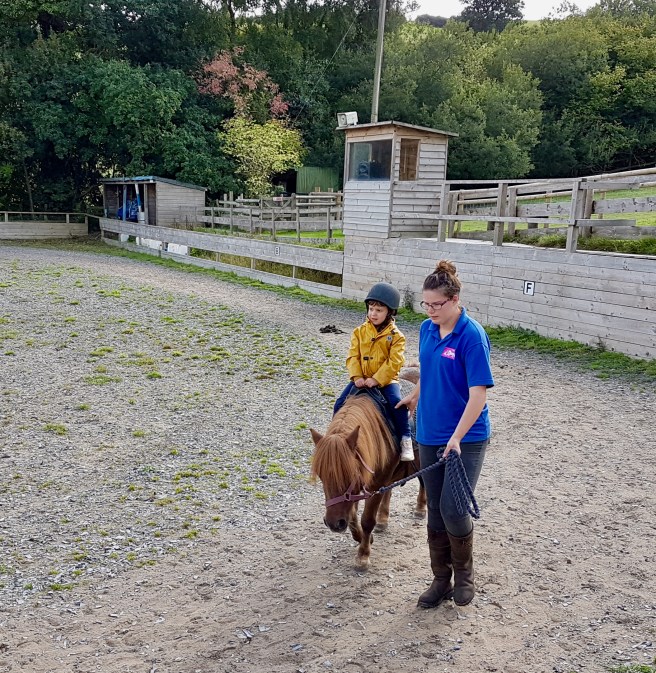
 and the ability to get up good and close to some of the residents….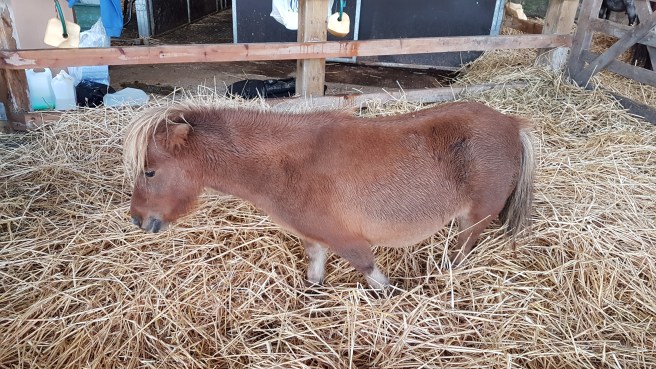
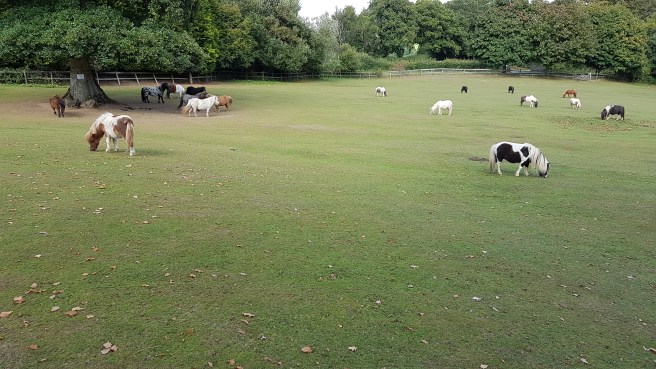
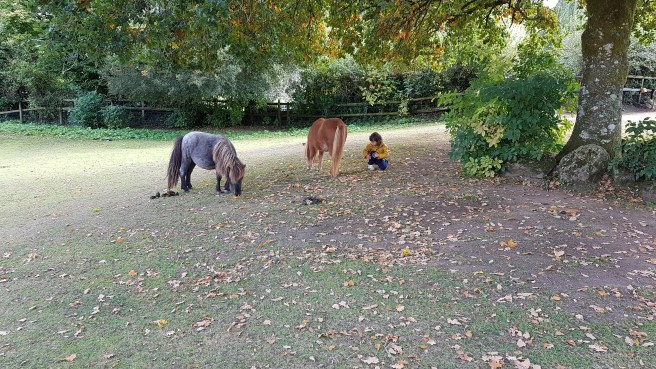
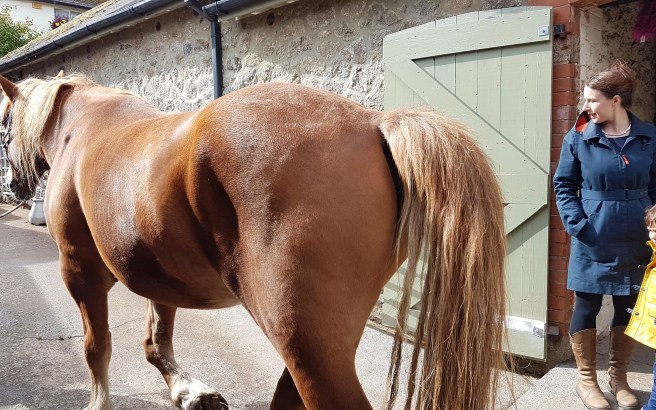
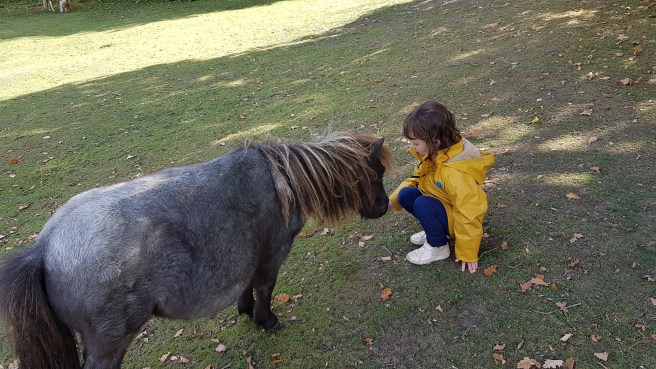 not all of whom were miniature!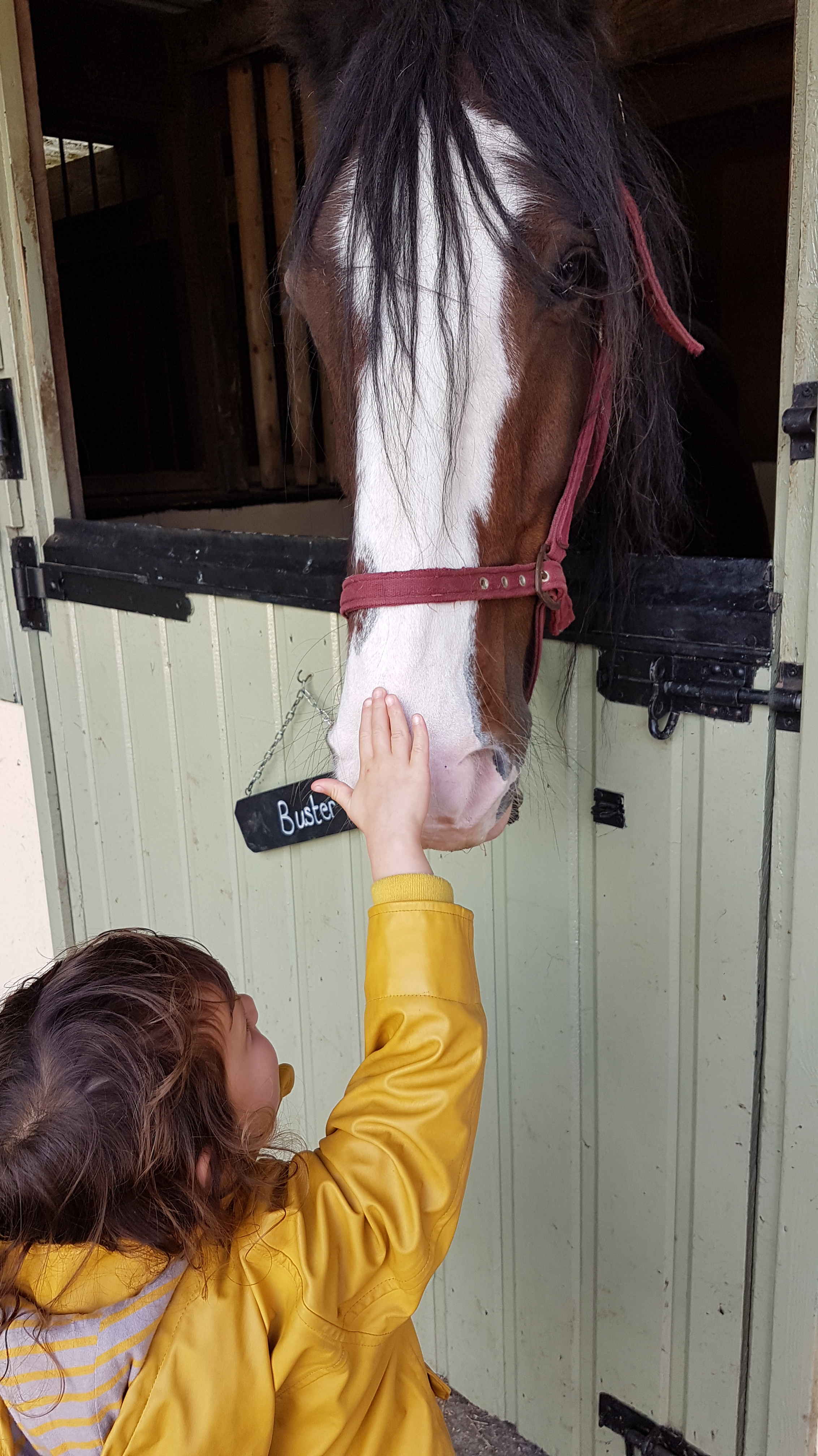
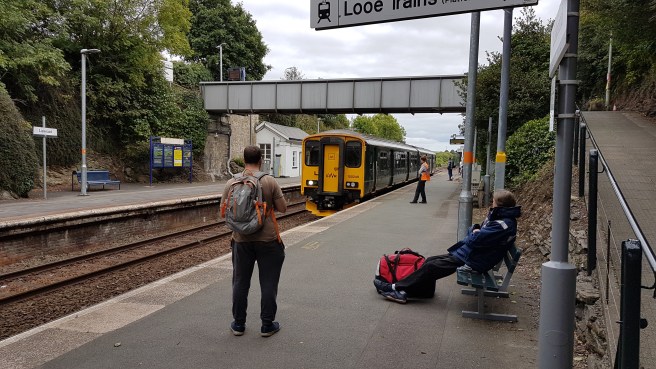 Our daughter and granddaughter were here for a long weekend, all the way from Scotland. We met them at our local station which, as I have said before, has trains running to almost everywhere in the country – amazing for such a remote spot. Aiisha was quick to show us the fruits of her labours on the last part of their journey.
 After a nice cup of tea (you very rarely say a nice cup of coffee), it was a quick game of football in the garden and hide and seek in the acer.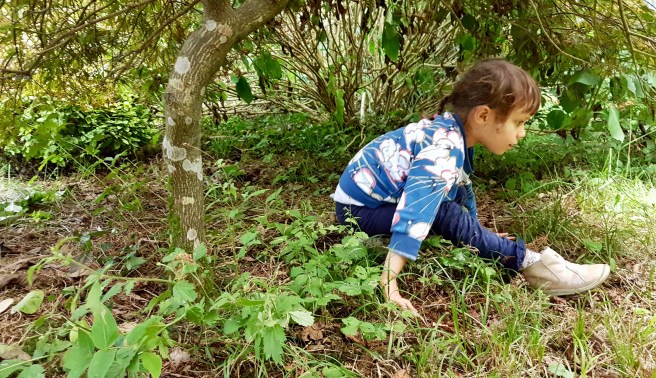
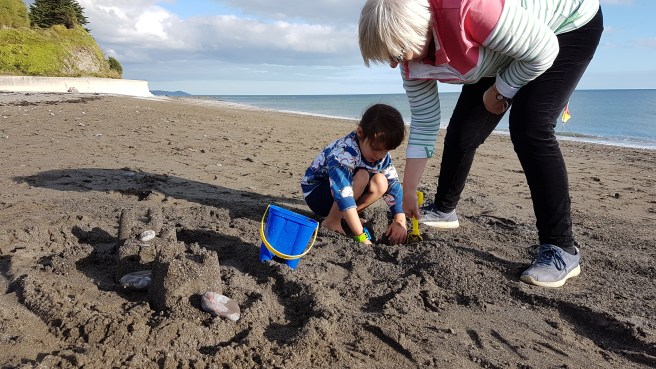
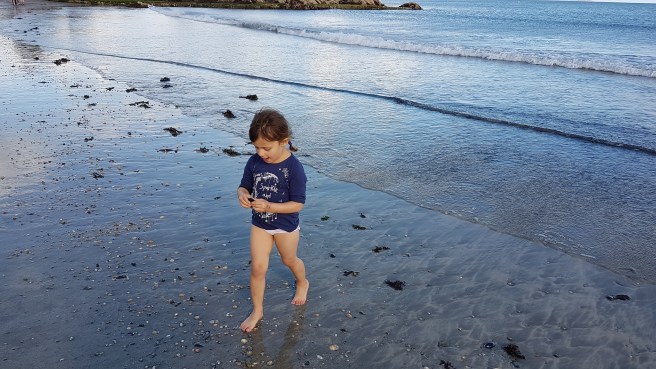
 ….before a drive to Black Rock, which turned into a drive to somewhere else entirely -Seaton due to the satnav! Katherine had been left behind for a recovery sleep, so we had a lovely time building sandcastles, paddling and having ice cream….well what else are you supposed to do at the seaside?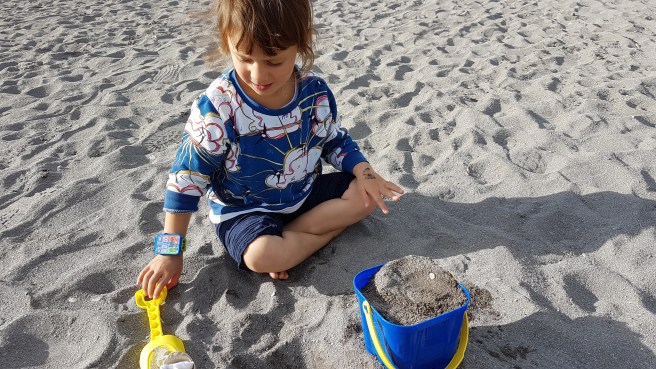
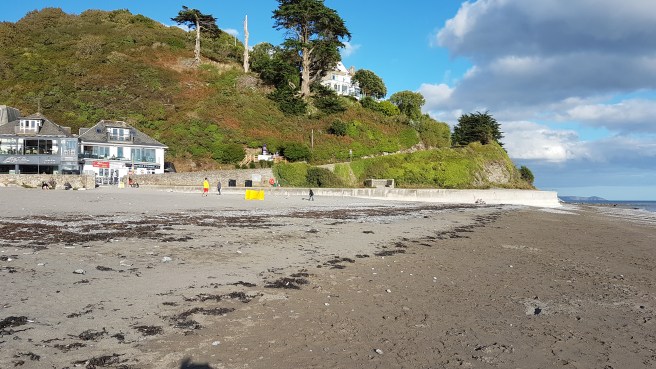
 After a lazy lunch off we went on the bus to Looe where the sun came out and a good time was had by all, especially on the slot machines in the Amusement Arcade where we won a Unicorn.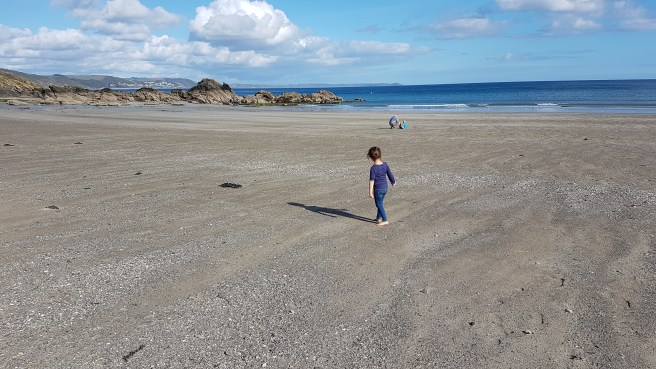
 Next day we took the train to Hayle on the North Coast where we visited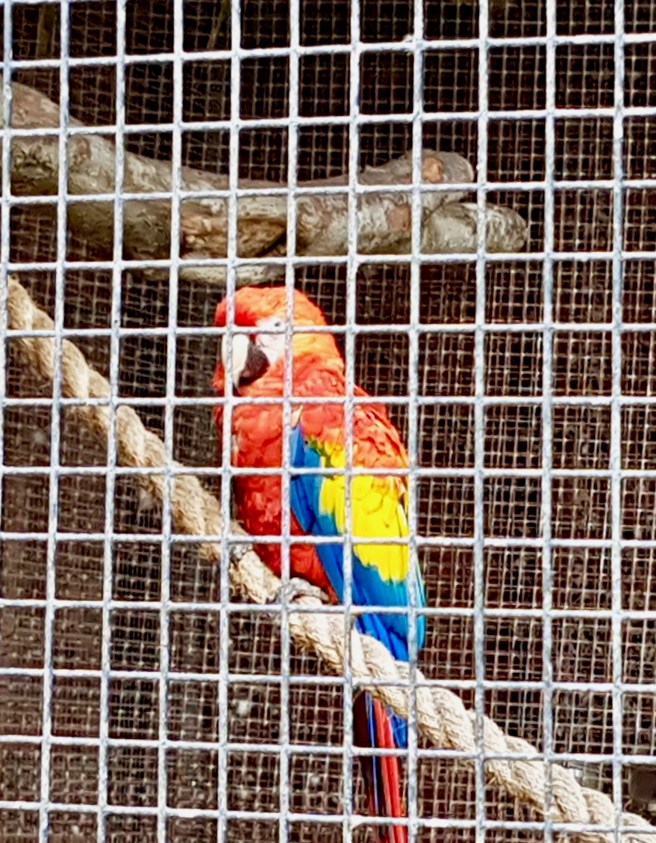
 and you can get very close to some of your favourites including flamingoes…
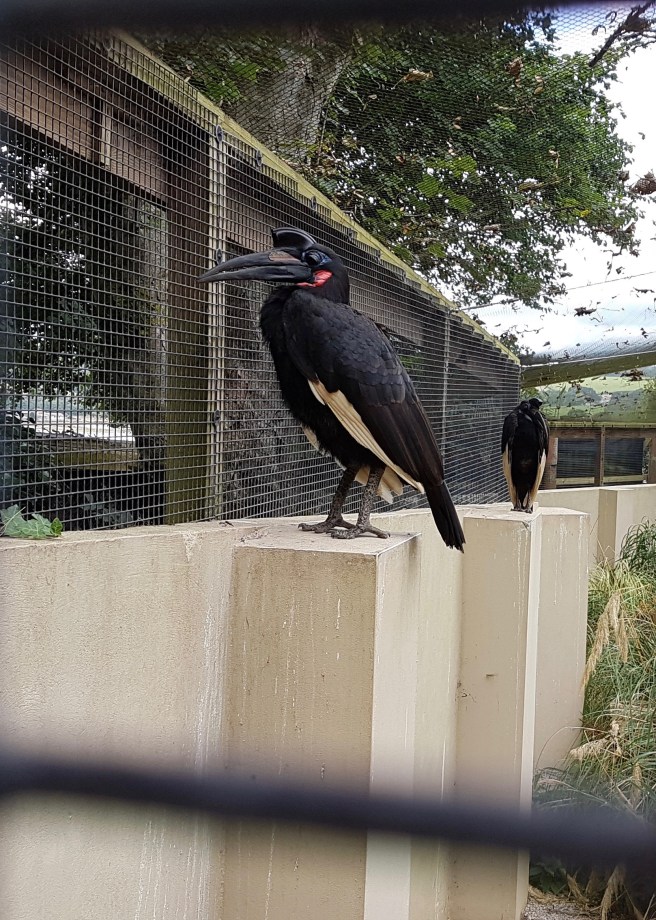
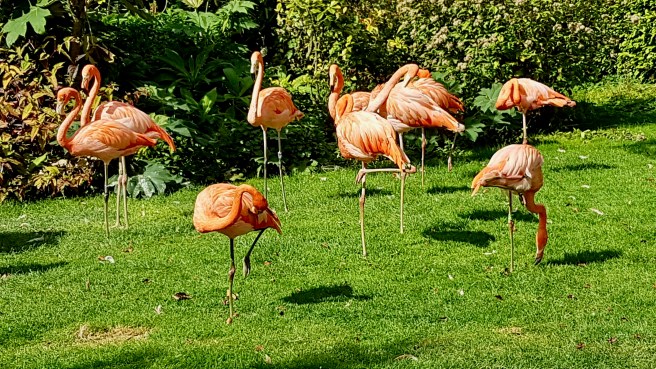 and the very first Chough we had ever seen (we have looked out for them on the Lizard but to no avail)……
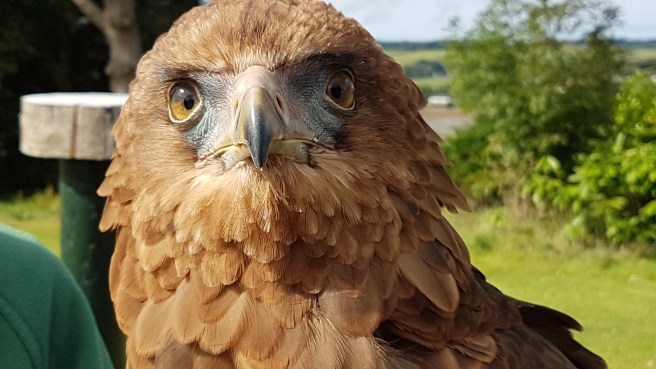
 We really enjoyed the flying display with an extremely knowledgeable and personable guide….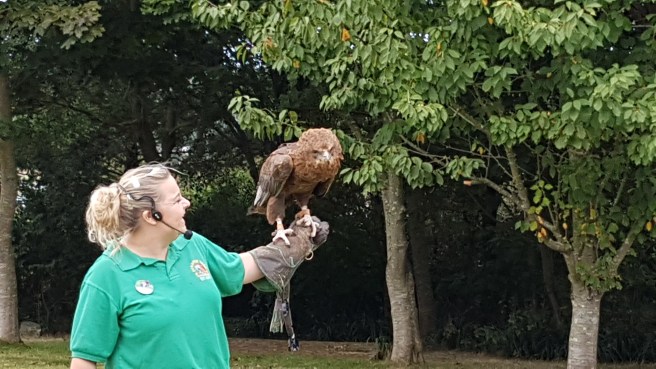
 and the opportunity to get up really close was terrific…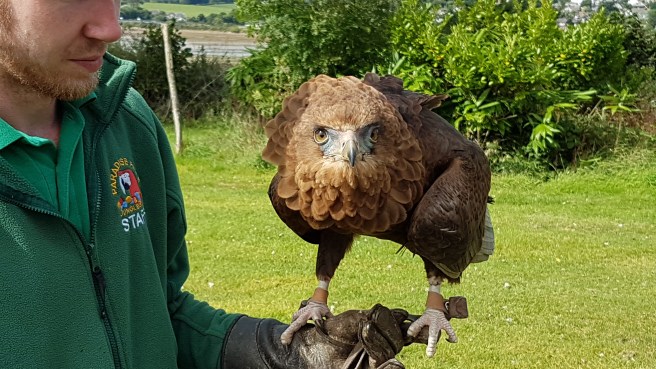
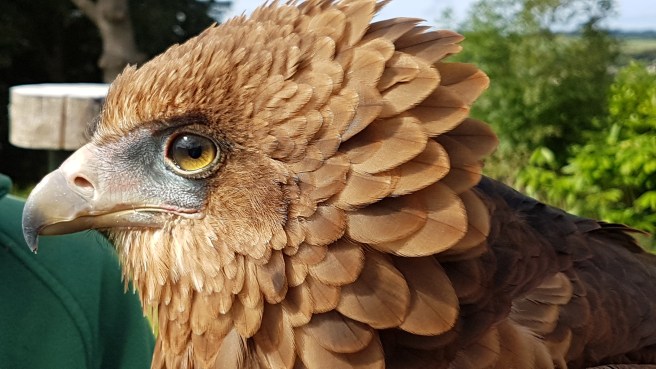
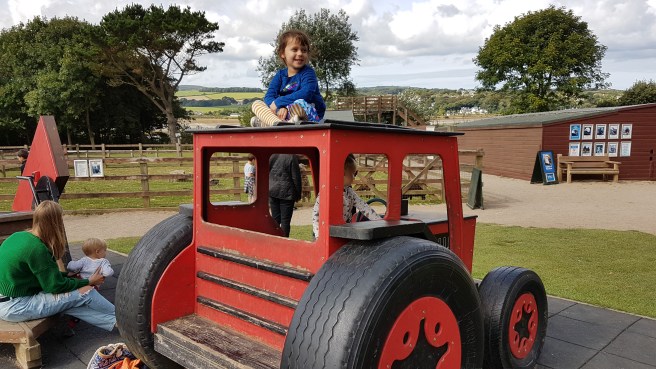
 Having said all that, it has to be said that the younger element did prefer the other side to Paradise Park! And why not?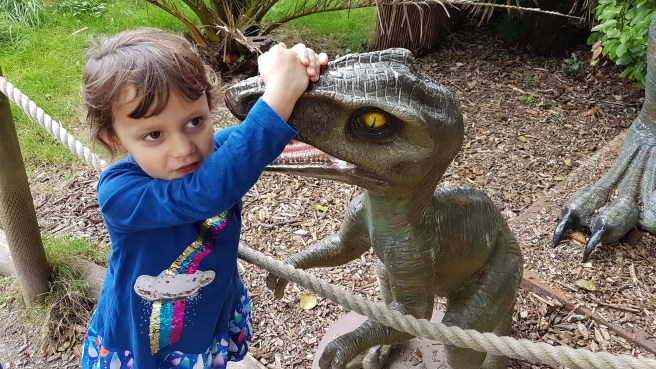

 there was time for a late lunch, but first we had to get to St Ives on the lovely little railway round the bay….where the views from the train window were as breathtaking as usual….what beaches, what skies.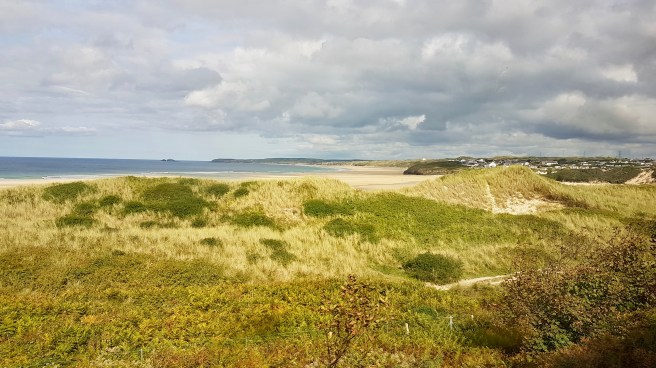

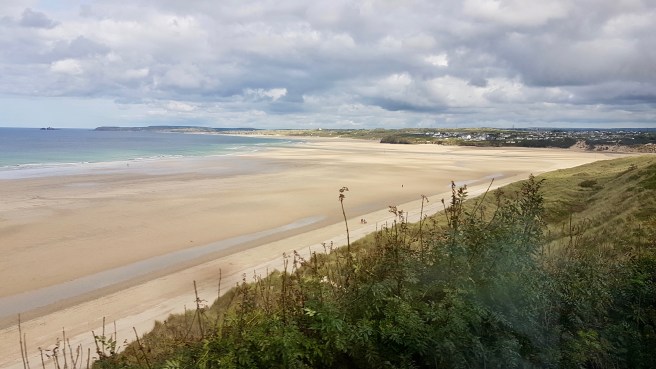

 For a change and to avoid walking all through town we decided to lunch at the
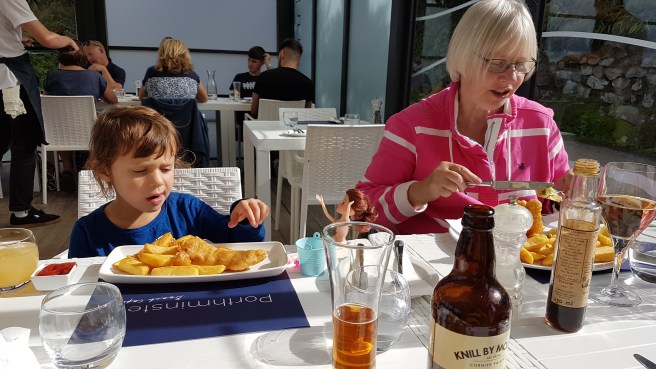
 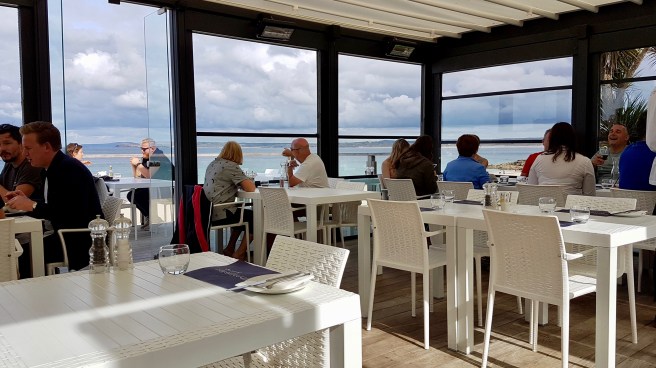 Good choice..
 and straight out onto the beach afterwards…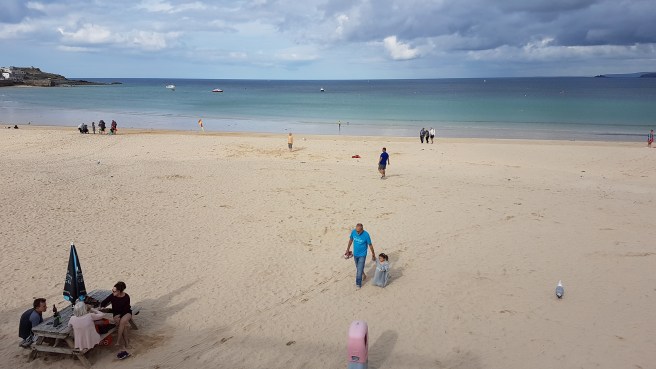
 Enjoying Cornwall...