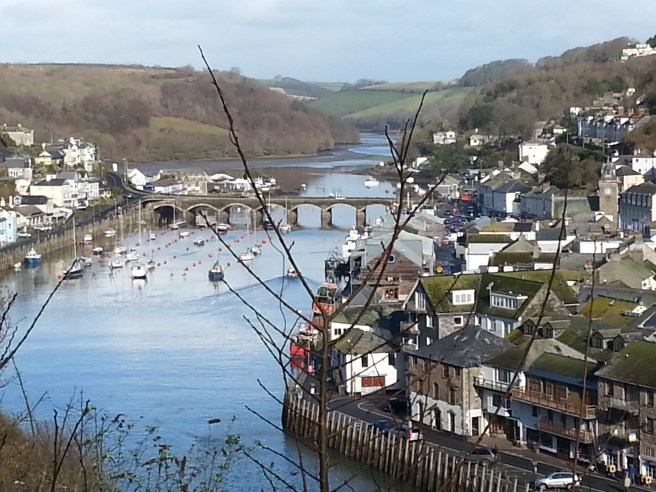
 We’ve discovered a little twist to our walk around Looe which involves ascending the (very steep) hill in West Looe and getting the full scenic reward. Apart from anything else it is fascinating being able to see the variety of housing styles and see how people have approached making the best of steep sites. In the old days it was said that the divorced wives of sea captains lived in West Looe and their ex’s in East Looe…whatever, each side of the river has a distinct character.
Uncategorized
5th February 2017…from Mozart to PSmith
 Finished John Suchet’s ‘Mozart’. For one who knows nothing about music, but who loves biography, this was a really rewarding read. What a man, what a prodigy, and yet, as John shows, full of flaws and incomparably human. A driven soul, exploited by his family, and who dies tragically young, Mozart could dash off music at the drop of a hat. And we learn how and where all his great music was written, and the circumstances which were often fraught. Written in a very chatty style which was only occasionally annoying, I loved this book and am so glad I have found out so much more about Mozart which now enables even
 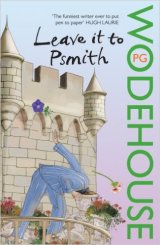 I to appreciate his music more. This weekend I also finished my very first P G Wodehouse – ‘Leave It To Psmith’. An instance where my son is ahead of me. Highly enjoyable for many reasons..the period charm, the characterisation, and the muted humour, I shall definitely want to read more Wodehouse.
3rd February 2017…rough seas
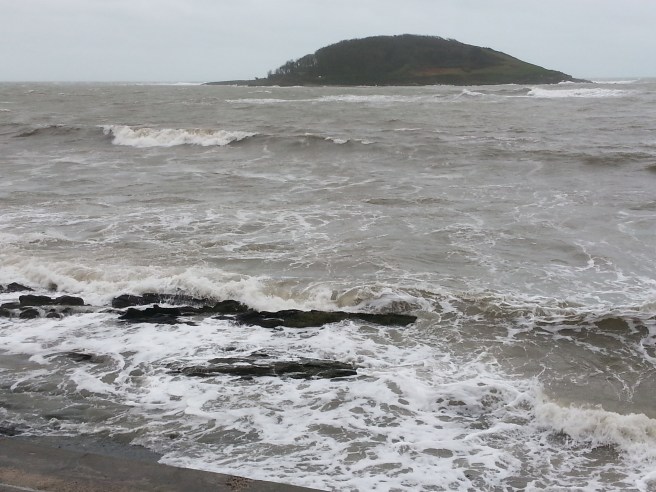 Of course the weather isn’t always benign (we know that from our time living in Devon), but our walks just take on a different character…Looe island looks quite isolated in this sort of sea, and there are certainly no day boats out.
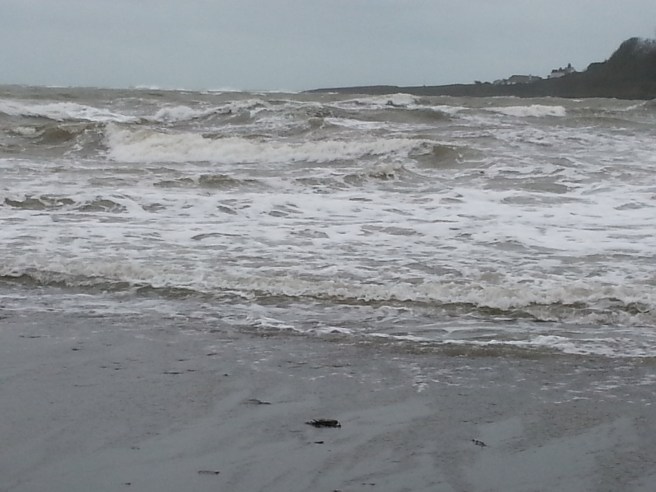
Below you can just spot Eddystone lighthouse about 10 miles offshore with a vital role to play when the seas aren’t kind….

28th January 2017….a rethink on Elizabeth
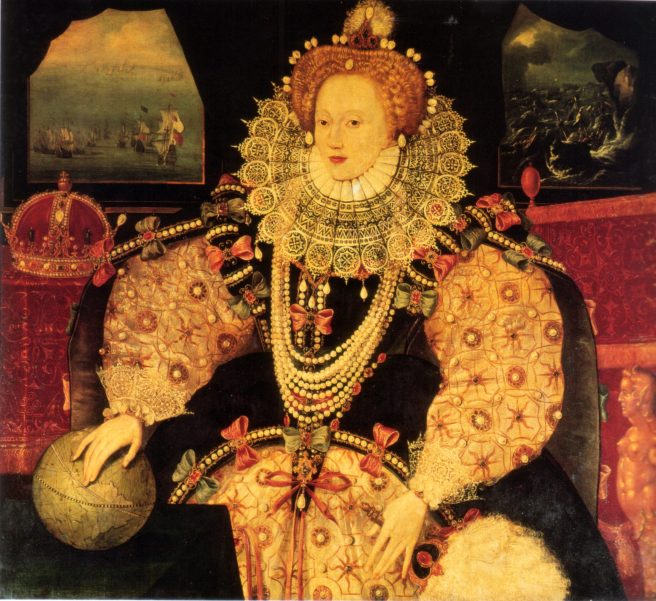 Finished ‘Elizabeth : the Forgotten Years’ by John Guy, a serious read, and one of my Christmas presents. Guy mined forgotten archives, and made new discoveries, and undoubtedly this is a heavily researched work, and yes it does make us re-appraise Elizabeth (who I studied at school and Oxford). She comes across as a tremendously insecure ruler, often manipulated by her advisers, particularly Burleigh, and often in thrall to a succession of handsome courtiers some of whom twist her round their little finger. The important thing was that these very personal courtly relationships actually drove the politics of England very often, both domestic and foreign. She also comes across as a very unsympathetic monarch, happy to send people to war but not to repatriate or pay them, nor indeed look after them once returned…..quite the opposite in fact…she decreed that those soldiers who managed to drag themselves back from fighting her wars and who were roaming the streets, penniless, often badly wounded, be classed as vagabonds and imprisoned or even worse. She wrote personally to the hangman on one occasion demanding that he make sure that the victim be still alive when taken down for drawing
  and quartering. Guy emphasises too that she disliked and feared puritans just as much as Catholics and persecuted both groups severely. A very interesting and thought-provoking read indeed. I also re-read ‘1974’ over the past few weeks. A brilliant portrayal by David Peace of Yorkshire crime and corruption at the time, hard-hitting, breathless, visceral. He is an incredible writer, and to think we had the chance to get him across from Japan, where he lives, to Warwick to give a talk for our bookshop….but nobody was interested! Words fail me.
27th January 2017…minibus to Polruan
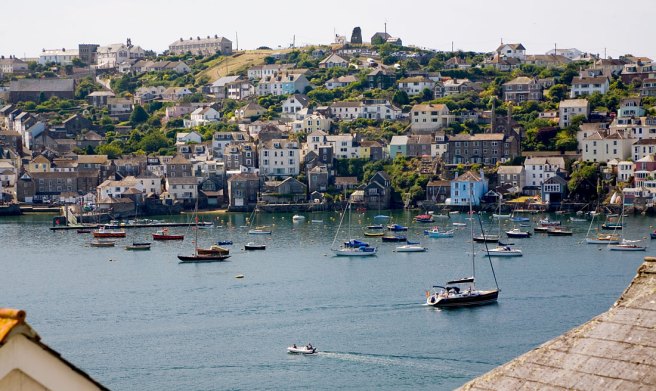 Today we went in search of a bus service frankly I didn’t believe existed. I was wrong. We took the car to Hannafore, great place to park for Looe, then waited for the 381 which turned out to be a minibus holding 16 people (or, strangely I thought, 4 wheelchairs plus the driver ). The bus service was free for us with our passes and again this was a surprise. The driver took us up the steep residential hill in West Looe, full of fishermen’s cottages and impassable to a normal bus, then via Polperro to Lansallo, and down very rural narrow
 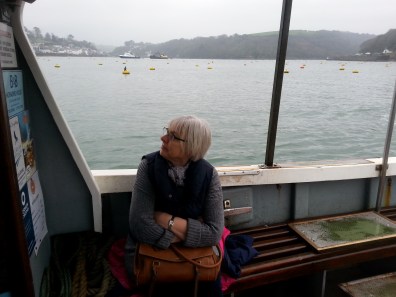 lanes with lots of grass growing in the middle, to end up in Polruan. Here we took the ferry across to Fowey, £2 each, each way, so we were glad the bus was free! As the day was cold we went straight for a warming coffee in the new restaurant on the front Havener’s…fantastic location, very nicely done up, excellent welcome, prices a little high. We then did our usual amble up Fore Street, seeing some good paintings for over our fireplace but too expensive, and buying a lovely rosemary and walnut loaf from Quay Bakery. It was already time to go to the ferry back across to Polruan as we only had just over two hours at our location (the following and last bus was another 4 hours away). Whilst waiting we had a quick drink in the Lugger Inn on the quay, nice pint from their own micro-brewery in Looe, and log fire. We made a mental note of the start of the famous Hall walk which we will do soon. More great scenery on the way back and we noted the NT car park which would be our access for Lantic Bay in the future. Picnic on the beach and then short mile and a half walk to Polruan? Today we were home by 2pm and considered it a lovely little trip out.
‘Cornwall Guide’ says….
Polruan is an ancient fishing village just across the water from the better-known Fowey. Built on a very steep hill, Polruan is bounded on three sides by water; Pont Creek to the north, the River Fowey to the west and the English Channel to the south. At the top of Polruan Hill stands St Saviour’s Ruin, which pre-dates all of the churches in the area and is built on a site first occupied by St Ruan, after whom Polruan is named. St Saviour’s ruin, which was equipped with bells, would have been both a landmark for ships and a good lookout point over the strategically important Fowey harbour. The ruin dates from the eighth century, although it was enlarged by Sir Richard Edgcumbe in 1488.
At the bottom of the hill, and sheltered by it, is Polruan Pool, which has long been a haven for small boats. Two blockhouses were built in Polruan and Fowey in the fourteenth century to protect the harbour from attack by pirates or the French. A chain was pulled tight across the river between the blockhouses to stop vessels entering in times of crisis. Although the one on the Fowey side is collapsing beyond repair, the one on the the Polruan side has been lovingly restored.
Below the cliffs to the south west of St Saviour’s Point, on the eastern tip of the Fowey river, stands Punche’s Cross. There are numerous theories as to the origins of the cross, which is marked on very early charts. One story holds that it is named after Pontius Pilate. Another says that the cross was put there to mark a visit to Polruan by Jesus and his uncle, Joseph of Arimethea, who apparently came to inspect the tin mines! Today the cross is in the care of the harbour commissioners.
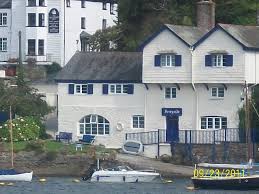 Just outside the village lies a house called Ferryside, which was bought by the DuMaurier family in 1927 and whose back wall consists entirely of the cliff face. Daphne DuMaurier wrote her first novel here in 1928 and her son and his family still live there. Polruan is connected to Fowey by the Polruan Ferry, which crosses the harbour every fifteen minutes throughout the year.
Aside from fishing, Polruan has a long history of boatbuilding and there is still an active boatyard today.
23rd January 2017….coastal path from Millendreath to Seaton
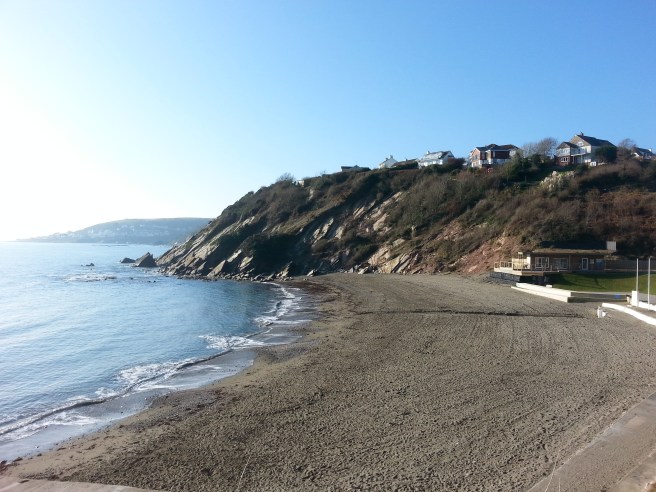
A walk today of around three and a half miles for F. from Millendreath, seen above, to Seaton, and seven miles for me (somebody had to go back and get the car!). Plenty of gorse in flower but according to the excellent iwalkcornwall site…..Gorse, also known as furze, is 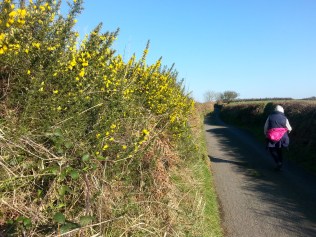 present as two species (Common Gorse and Western Gorse) along the Atlantic coast. Between the species, some gorse is almost always in flower, hence the old country phrases: “when gorse is out of blossom, kissing’s out of fashion” (which is recorded from the mid-19th century) and “when the furze is in bloom, my love’s in tune” (which dates from the mid-18th century). Gorse flowers are edible and can be used in salads and to make a tea, beer or wine.’ and here is the old recipe for furze wine….’Gorse flower wine can be made using 5 litres of gorse flowers stripped from the stems and simmering these in 5 litres of boiling water. Once the flowers are removed, 1.3kg of sugar should be dissolved in the hot water and allowed to cool to room temperature. Then add 500g of chopped raisins and juice and zest of 2 lemons and ferment with white wine yeast and yeast nutrient. Although flowers are present year-round, they are best picked in Spring (April and May) when they are most profuse and fragrant’.
What a glorious day for January…let’s hope for many more!
20th January 2017…the delights of Lansallos

We started our walk today in the NT car park just by Lansallos church. Here is the entry in the Cornwall Historic Churches Trust site….’Dedicated to St Ildierna on 16th October 1321, the present church may have replaced a Norman one built on the site of a Celtic “lan”, perhaps the hermitage of St Salwys after whom the village of Lansallos (Lan Salwys) is named. A Celtic Cross, dug up in a field near the church, is in the churchyard about 25 metres west of the tower. William of Worcester recorded that, when passing through Fowey in 1478, he heard that “Saint Hyldren, a bishop, lies buried in the parish of Lansalux”. This may be the origin of the dedication, though another school of thought believed St Ildierna to be a virgin.
The exceptionally fine wagon roofs have all been dendro- or tree ring dated. This new dating suggests that the church was extended from the very late 15th and early 16th century with a south aisle and porch, and then a two phase north chapel which was still being built in the 1540s as the Reformation unfolded. The nave and chancel were probably reroofed in the 1530s-40s due to the introduction of a rood screen and loft. Some Norman worked stones were reused when the south aisle was constructed. Equally remarkable are the oak pews, probably dating from no earlier than the 1520s and continuing through to the 1560s; one of the best surviving sets of carved Renaissance designs. The font, dating from about 1100, is from the previous Norman church. One half of a Celtic font found in a field nearby, and which may have been used by St Salwys over eleven hundred years ago, is now displayed at the east end of the south aisle.
Similarly displayed are relics dug up from the nave during restoration work in 1883 and 1908, which include the mutilated stone effigies of a knight in armour and his lady, possibly members of the Hywys family who were lords of the manor in the 14th century and earlier. A slate coffin slab, now mounted on the south wall, depicts in full Elizabethan costume a Margery Smith, who died in 1579. It is a beautiful piece of craftsmanship, signed by the maker Peter Crocker. Set in the floor by the main door is a wedge-shaped foliated cross grave slab, probably used to cover the grave of an important person now unknown. Also on display is a cracked bell, the only one left of three medieval bells that once hung in the church and which were broken by drunken villagers at the beginning of the nineteenth century. The church now possesses a fine peal of eight bells installed by the Revd N Rivers-Tippett, rector in 1937.
After a lightning strike in 1923, a fallen tower pinnacle was used as a base for a new pulpit. A serious arson attack on 23rd February 2005 caused great damage, destroying the organ and burning out all the Lady Chapel roof and much of the chancel roof. Fortunately, all the medieval pews survived unscathed and the church has since been fully restored. After the fire restoration, oak and glass screens were installed in 2011 across the three arches of the Lady Chapel. Don’t miss the splendid green man carving on one capital of the tower arch’.
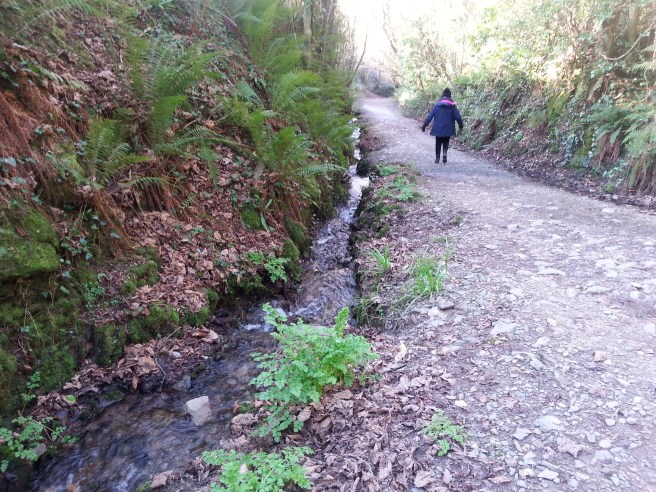
We were walking to Lansallos cove which I had read was particularly attractive. The walk was a delight down a shaded path with, at intervals, wooden features for children to play on, a very nice touch. When you reach the beach it is a world of its own and not much visited compared to many. More sand when the tide is fully out when you can walk round the rocks to another sandy cove. The atmosphere was terrific, and it would have been good to have brought a picnic. Interesting rock formations and just before you step down onto the beach parallel ruts carved into the stone floor by generations of carts (farmers bringing back seaweed and smugglers no doubt).
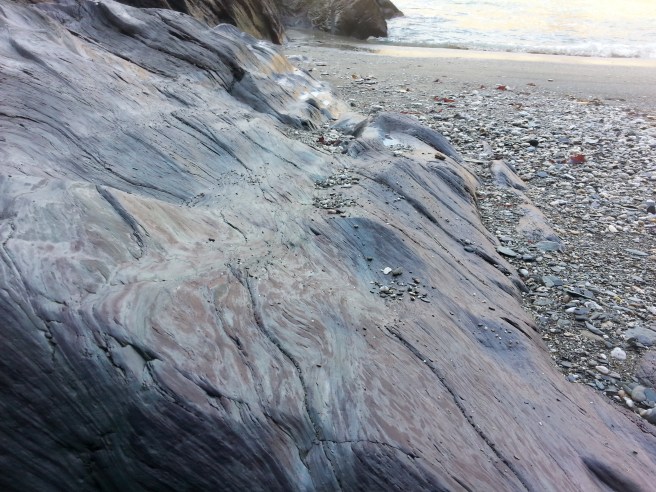
We took the alternative route back through the woods, and finished by visiting the church.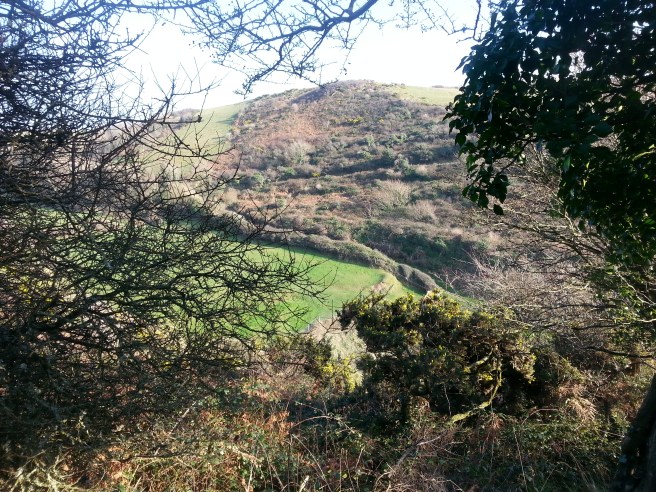
19th January 2017….nudism definitely not allowed
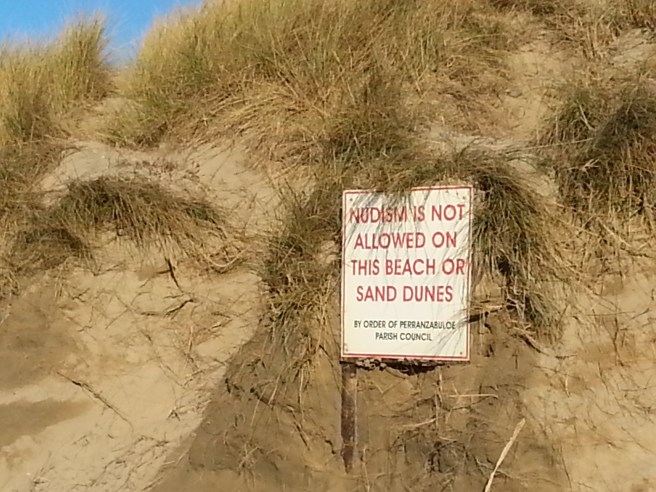
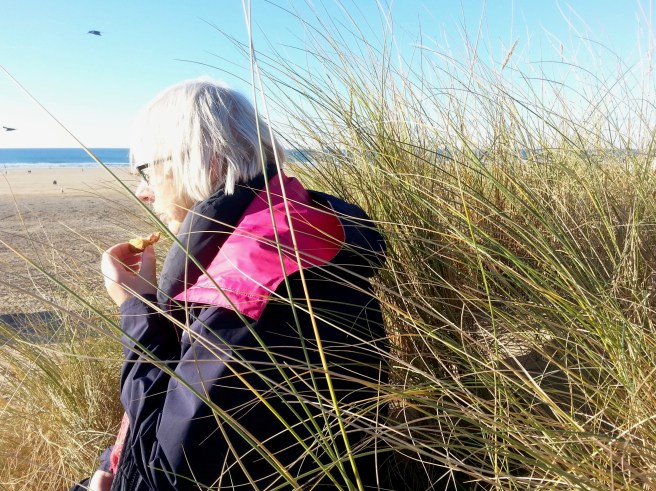
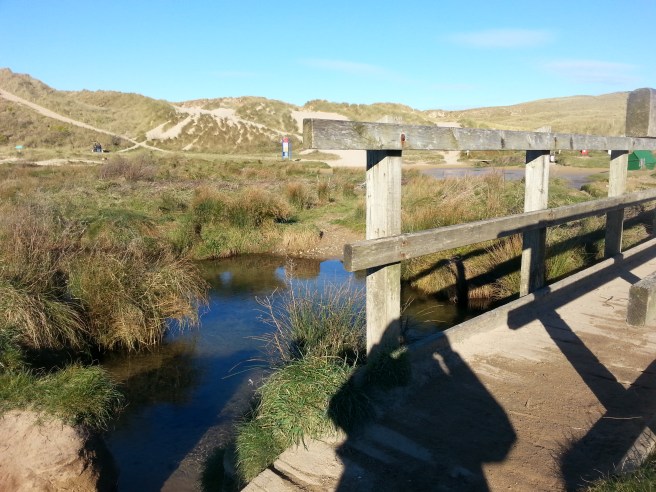
Another trip to the North coast to Perranporth, and we felt it was a bit too cold for nudity anyway! Lovely clear cold day – ideal for walking, and just sunny enough to sit in the sand dunes for a small picnic. And the approach to the beach through the extensive dunes is along a landscaped path which is lovely in itself….

17th January 2017…St Keyne church and the well of St Keyne
 Whilst the fitter was busy laying the kitchen floor we did our usual round walk to St Keynes’ well. Here is the poem by Southey…
The Well of St. Keyne
BY ROBERT SOUTHEY
A Well there is in the west country,
And a clearer one never was seen;
There is not a wife in the west country
But has heard of the Well of St. Keyne.
An oak and an elm-tree stand beside,
And behind doth an ash-tree grow,
And a willow from the bank above
Droops to the water below.
A traveller came to the Well of St. Keyne;
Joyfully he drew nigh,
For from the cock-crow he had been travelling,
And there was not a cloud in the sky.
He drank of the water so cool and clear,
For thirsty and hot was he,
And he sat down upon the bank
Under the willow-tree.
There came a man from the house hard by
At the Well to fill his pail;
On the Well-side he rested it,
And he bade the Stranger hail.
“Now art thou a bachelor, Stranger?” quoth he,
“For an if thou hast a wife,
The happiest draught thou hast drank this day
That ever thou didst in thy life.
“Or has thy good woman, if one thou hast,
Ever here in Cornwall been?
For an if she have, I’ll venture my life
She has drank of the Well of St. Keyne.”
“I have left a good woman who never was here.”
The Stranger he made reply,
“But that my draught should be the better for that,
I pray you answer me why?”
“St. Keyne,” quoth the Cornish-man, “many a time
Drank of this crystal Well,
And before the Angel summon’d her,
She laid on the water a spell.
“If the Husband of this gifted Well
Shall drink before his Wife,
A happy man thenceforth is he,
For he shall be Master for life.
“But if the Wife should drink of it first,—
God help the Husband then!”
The Stranger stoopt to the Well of St. Keyne,
And drank of the water again.
“You drank of the Well I warrant betimes?”
He to the Cornish-man said:
But the Cornish-man smiled as the Stranger spake,
And sheepishly shook his head.
“I hasten’d as soon as the wedding was done,
And left my Wife in the porch;
But i’ faith she had been wiser than me,
For she took a bottle to Church.”
And its listed building entry..10/187 St Keyne’s Well and cross to south east 21.8.64 II
Well house of Holy Well of St Keyne and cross opposite . Circa C16 rebuilt in July 1936 by the Liskeard Old Cornwall Society. Granite ashlar with gabled roof of large granite blocks. Rectangular in plan. Well opening in front gable end with round granite chamfered arch and jambs with pyramid stops. Rectangular well shaft. Situated in low stone rubble retaining wall. Robert Southey’s poem quoted the legend concerning the race of brides and grooms to the well after the wedding service. “If the husband of this gifted well Should drink before his wife A happy man henceforth is he For he shall be master for life”. The poem continues “I hastened as soon as the wedding was done And left my wife in the porch But I’faith she had been wiser than I For she took a bottle to the church.” The poem also describes the old well “An oak and an elm tree stand beside And behind does an ash tree grow And a willow from the bank above Droops in the water below”. These were thought to have sprung from 1 root planted by St Keyne. In 1703 the trees were blown down and were replaced by trees planted by Mr Rashleigh of Menabilly. In the 1930s, the trees had decayed and the lane was widened and consequently the well was rebuilt. Illustration of the unrestored well together with a ballad appear in the Gentleman’s Magazine, 1799 and 1822. In Blights Cornish Crosses, and in A Lane-Davies Holy Wells of Cornwall, 1970. An illustration in the National Monuments Record illustrates the well-house arch as a pointed granite arch with ovolo moulded arch and jambs. The full text of Southey’s poem is quoted by M L Quiller Couch in Ancient and Holy Wells of Cornwall. Directly opposite the well opening is an incised granite stone cross with an alisee patee cross and a carved semi-circular panel below. Resited in 1951. J Meyrick A Pilgrims guide to the Holy Wells of Cornwall, 1982 A Lane-Davies Holy Wells of Cornwall, 1970
Back up the hill to the church and here is the entry in Cornwall Historic Churches Trust..
St. Keyne Parish Church

The Church of St. Keyne is located on high ground at the southern extremity of the village of St. Keyne within the parish of the same name, the second smallest in Cornwall. The parish lies on the edge of the Looe valley between the parishes of Liskeard (to the north and east) and Duloe (to the south and west).
St Kayne seems to be the most ancient spelling, but Kaine, Keane, Kean and Keyne, have also been used. St. Keyne is noted in 12th century Welsh sources as being one of the children of King Brychan of Brecon in Wales. Her brother Berwin is noted as being in Cornwall and may be St Barry of
Fowey. Such legends were used to explain the repetition of saints’ names in the Celtic areas of Britain: Devon, Cornwall and Wales and there is a more Cornish version of the Children of Brychan which does not include St Keyne.
According to another legend, St. Keyne is said to have lived like a hermit and visited St. Michael’s Mount, which coincidentally is the only parish smaller than St. Keyne in the county of Cornwall. She is also said to be responsible for the construction of St. Keyne’s well, situated just outside the village, which was the old baptismal well. It is famed for its ability to ensure that the first of a newly-wed couple to drink the water will become the dominant partner.
The hood moulding over the door in the porch of the present church building indicates that a Norman church stood at St. Keyne. The building appears to be mainly constructed in the 15th or early 16th century as indicated by the Cornish standard granite piers, the font and one of the bells, although the north aisle west window may date from a little earlier. The tower windows look early 16th century and the tower is built in the typical Cornish pattern of three stages, but the stages are uneven; the first stage being half the height of the tower, less pinnacles.
In the 16th Century the whole parish was one manor, Lametton, which at times has also been the name of the parish. In the 16th Century the manor was owned by the Coplestone family, but in 1561 John Coplestone was forced to sell 13 of his manors to buy a royal pardon for murdering a son and godson. This was sold to the Harrises of Mount Radford in Devon (One Harris was MP for Liskeard in 1661), who married a daughter of the Rashleighs of Menabilly. In 1911 the estate was sold in lots at Webb’s Hotel in Liskeard.
Throughout the first 20 years of the 19th century the church was consistently recorded by successive Rural Deans as being ‘out of repair’. Minor improvements were attempted but, by the 1860s, it was noted that the church was neglected and out of repair, and a substantial restoration was undertaken by J P St Aubyn between 1872-1878.
Today the church consists of the chancel, the nave, short north aisle, south transept or vestry, porch and west tower. St. Keyne parish is linked to the market town of Liskeard and the fishing and tourism centre of Looe by the B3254. The church serves the population of St Keyne parish (505 in the year 2,000) & the Trewidland area of Liskeard parish (345 in 2,000).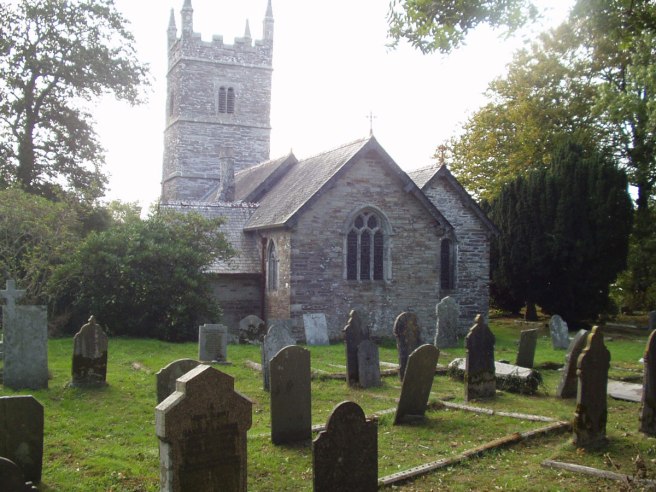
4th January 2017….John Knox’s house
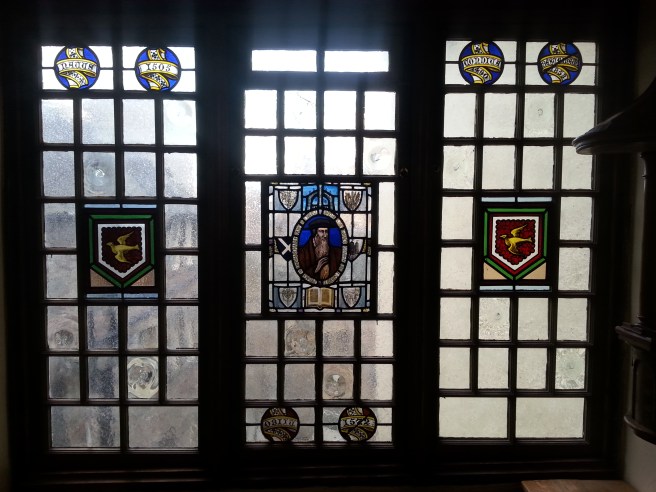
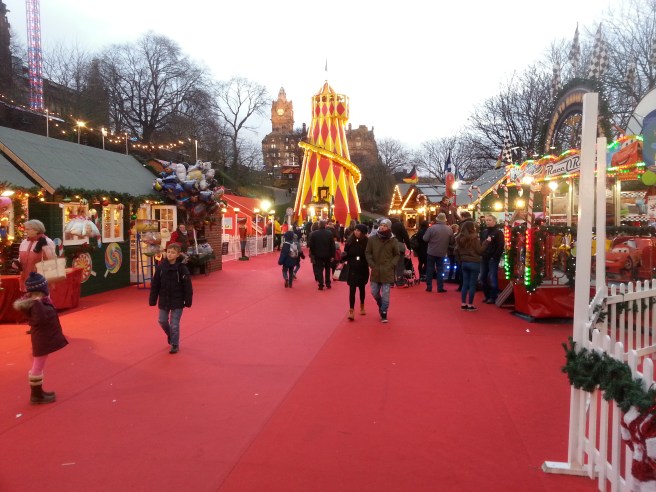
Our turn to visit, this time daughter and family in Edinburgh. We always try to do something new and so we visited John Knox’s house on the Royal Mile which was moderately interesting. Christmas presents had to be opened and a visit to the fair in the beautiful location of Princess Street Gardens…there was even snow on one ride. As usual, a lovely time was had….



 Enjoying Cornwall...