Saturday 15th July 2017…a jigsaw puzzle

20170714_215800.jpg

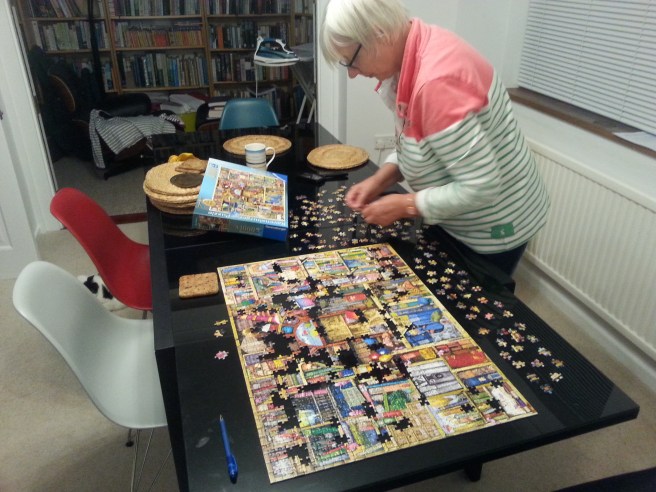
One benefit of being retired is the ability to do what you want when you want, and not feeling guilty! On reflection, half of one’s working life is spent feeling guilty….Very occasionally we start a jigsaw and here is one such – appropriately for us the theme is books. 1000 pieces is quite a lot, and it took us a few days to complete. On this occasion the honour of placing the last piece wasn’t mine. Great satisfaction resulted, as we were convinced as always that there were missing pieces…

20170715_165503.jpg


Friday 14th July……Agatha Christie, Vanessa Bell, Virginia Woolf…..

Unknown-2.jpeg

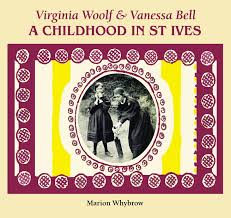
This is one of the books I bought F. for her birthday (knowing I would like to read it after her!)……it really is poorly written if reasonably well researched. However it gives a good insight into how spending thirteen summers in a beautiful house in St Ives transformed the sisters’ childhoods, and led to an imaginative approach which would be adopted by Virginia Woolf in her books and Vanessa Bell in her paintings. Little old me was unaware that they were sisters or that they had such an intimate connection to Cornwall, but it was fascinating to read of their development, life story and work. I was also unaware of Vanessa’s paintings, remarkably forward for a female painter of the day, and as the book is beautifully illustrated it was a pleasure to see some of them. I am familiar with Virginia’s work of course but find it ‘difficult’. I was so looking forward to reading ‘To The Lighthouse’ knowing it was based on Godrevy lighthouse and the family life in St Ives, but had to admit defeat half way through. Stream of consciousness stuff like ‘Tristram Shandy’ isn’t for me I’m afraid.

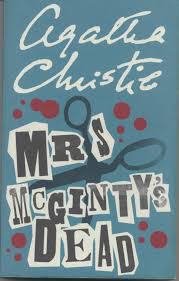
Must have some light reading for bed, so what better than Poirot. I have always been Unknown-1.jpegattracted to Agatha Christie since we lived in Dartmouth and we visited and boated past her house on a few occasions. Lovely to see the Bath House on the Greenway Estate which featured in her 1956 book “Dead Man’s Folly” as the spot where the first murder victim is discovered…anyway, the trouble with reading books like Agatha Christie’s at night is remembering the convoluted plots from one night to another. unknown-11.jpeg‘Peril At End House’ is set in a large seaside villa in Cornwall which is pleasing. One of the more enjoyable Poirots. Lots of ‘incidents’, some bold characterisation, dramatic setting….however, ‘Mrs Mcginty’s Dead’ was quite frankly boring. Not a good idea to set aside Hastings and Jupp on whom so many of the novels depend for their internal working. Poirot on his own is just Poirot! Glad to finish it.


Sunday 9th July 2017…other people’s gardens and a night at the opera…

WP_20170709_14_27_03_Pro.jpg

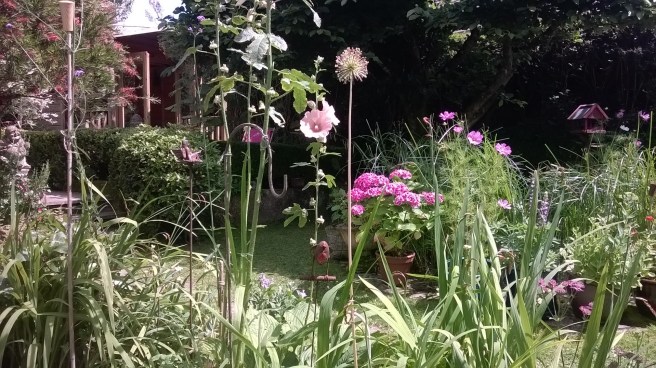
A really nice day today starting just after lunch with a village garden walkabout at Colebrook which is near Plympton. I don’t know where, but we picked up a brochure  beautifully put together, detailing gardens open during the season on behalf of St Luke’s Hospice in Plymouth. What a very good idea. There were only 5 gardens open today, each of them attached to ordinary semi-detached houses. The first was, as it happens, the best…it had everything, different areas including a fire-pit hut which must be nice in winter and a lovely neat hot tub which must be nice any time! There was quite a large pond and waterfall with a variety of fish, some very large, and planting and veg areas. Lots of ideas to take away. I know I won’t be satisfied until we have some water feature in our garden. There were refreshments available at one house and very nice they were too.

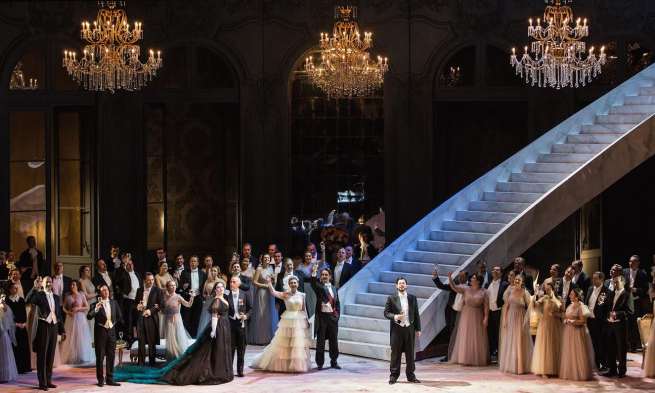
After that little bit of exercise (Colebrook is built into the side of a hill) we went to the Vue cinema in Plymouth where with our free Times+ tickets we were due to see Sofia Coppola’s La Traviata captured live in 4D from the Teatro Dell’Opera Di Roma. 1325.jpgI had been advised by customers in Warwick Books to attend similar events at Warwick Arts Centre but we had never got round to doing so. My own recollection is that I have never been to a live opera (F. begs to differ), so I was very excited to be doing the next-best thing. What an experience. We could well have been there (apart from the odd niggling movement of a scenic view seen through the window of Violetta’s country house). The screen was huge, the sound was huge, the singing immense (what do I know?).

Francesca Dotto was hugely impressive as Violetta. How on earth can singers keep that up?…what range, what work, what finesse, I find it unbelievable that this sort of performance can be repeated on just one more night let alone a succession. The single most memorable thing I have seen in a long time. Terrific! The support from Antonio Poli, and Roberto Frontali was also amazing. The storyline based of course on a shortish story by Dumas was trite (as in all opera?). But the performance had me at least in tears. I know I am sentimental (like Churchill and the Welsh amongst others), and I well up at D-I-Y SOS or Love Your Garden or sporting climactics, but I have never known myself to be just sitting there with single tears dropping dramatically at intervals…..all quite quite wonderful really! Must get to the opera……..


2nd July 2017…our first visit to Mount Edgcumbe

20170702_133304.jpg

Mount Edgcumbe is the third of the great houses in our part of Cornwall, and as it was such a nice sunny day we thought a drive along the coast to somewhere we hadn’t visited before would be a good idea. So it proved. Samuel Pepys no less said of Mount Edgcumbe “A most beautiful place as ever was seen”. I couldn’t agree more. What a revelation. There were lots of folk about but it is only a short hop on the passenger ferry from Plymouth, so that was to be expected.

The setting is immense from the church at the top of the hill to the formal gardens  to the landscaped deer parkland to the huge vistas of Plymouth Sound. The house now covers the footprint of the old Tudor house having been bombed to smithereens in the Second World War and rebuilt on a much smaller scale than previously. It is interesting to see pictures of the magnificent pile pre-war….

tsecc_view2.jpg

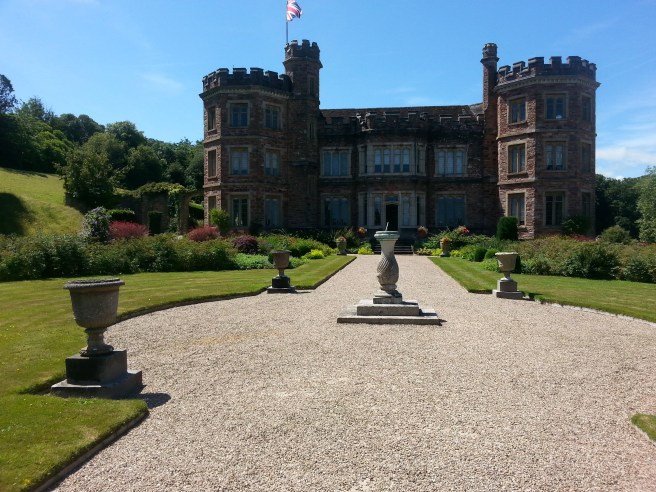
and compare with the present house rebuilt by the Edgcumbes

20170702_142253.jpg

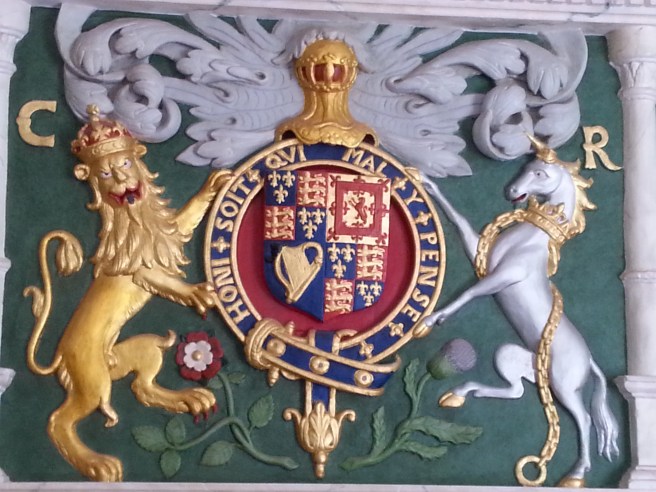
But as to the magnificence of the house, now owned by Cornwall County Council and Plymouth City Council we were not to be disappointed. It still contains treasures accumulated by the Edgcumbes over centuries and the structure of the house and its contents were full of interest. I particularly enjoyed the dining room with its naval table and crest of King Charles I…

20170702_131336.jpg

20170702_131942.jpg

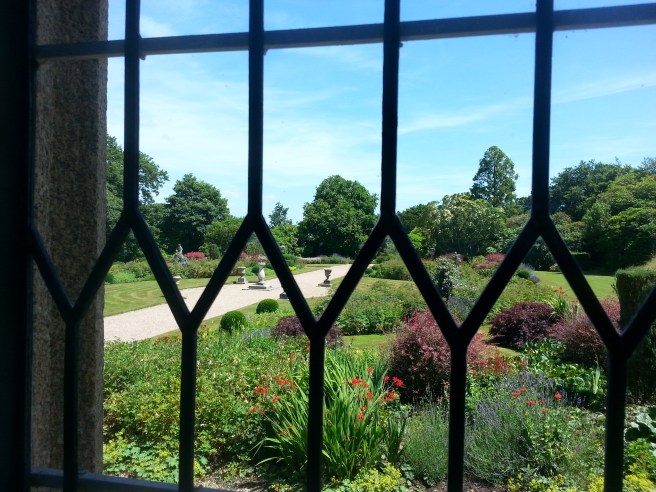
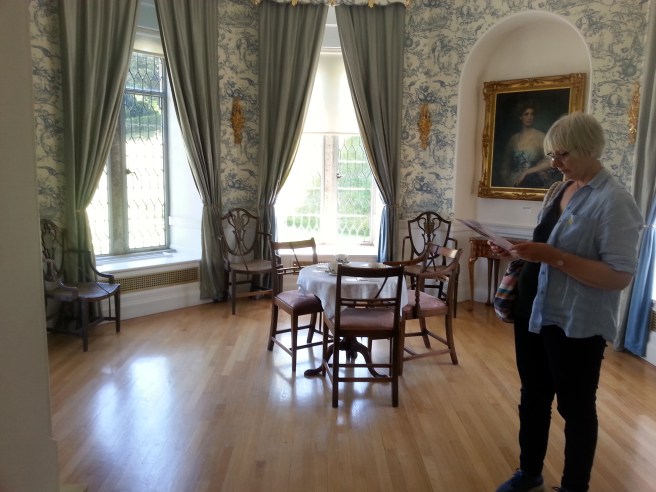
and the octagonal rooms at the four corners were some of the most beautiful imaginable, the boudoir being particularly enchanting

20170702_133217.jpg


The magnificent settee in the library was one of the objects hurriedly rescued during the bombing and thrown into bushes where it lay for several years before being rescued and sent to France for restoration….a great story.

20170702_133525.jpg

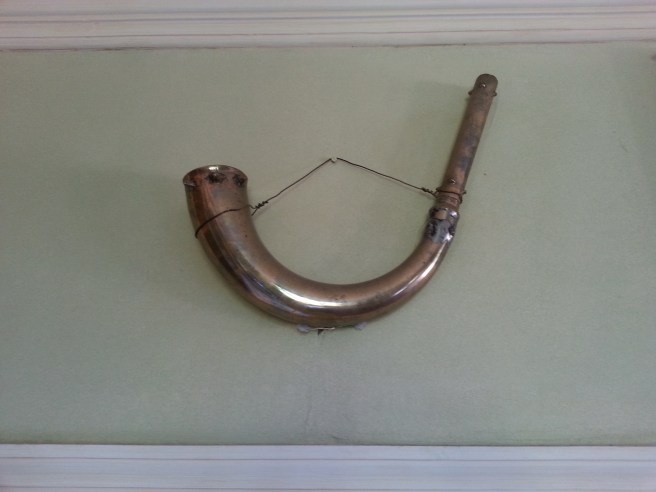
Absolutely fascinating were the pair of hunting horns recovered locally and reckoned to be from about 1000 BC. They could have been made yesterday…..I think they are astounding

20170702_133656.jpg

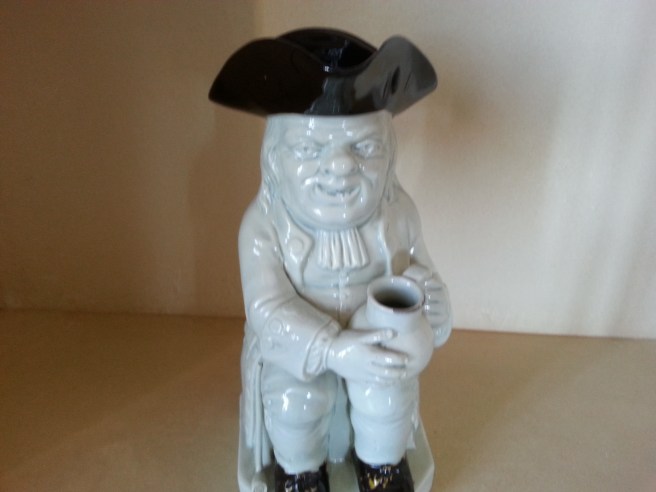
The toby jug on display was one of the very first. I used to have quite a collection myself, until being forced to get rid of them during our continual downsizing.

20170702_133740.jpg

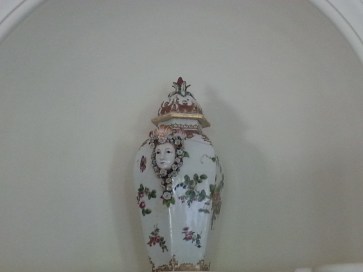
20170702_132419.jpgAnd the two vases in the dining room were also amongst the very first to be made in this country from china clay, a local man William Cookworthy discovering the secret of making porcelain and then setting up his factory in Plymouth and then Bristol from where these vases originated. His factory was only in existence for a few years, so these are very rare survivors indeed. It is astonishing to think that this man was responsible for Cornwall’s china clay industry which is still going strong and indeed at St Austell the mines are the largest in the world. Looking at the satellite view of St Austell on Google Maps is very instructive!

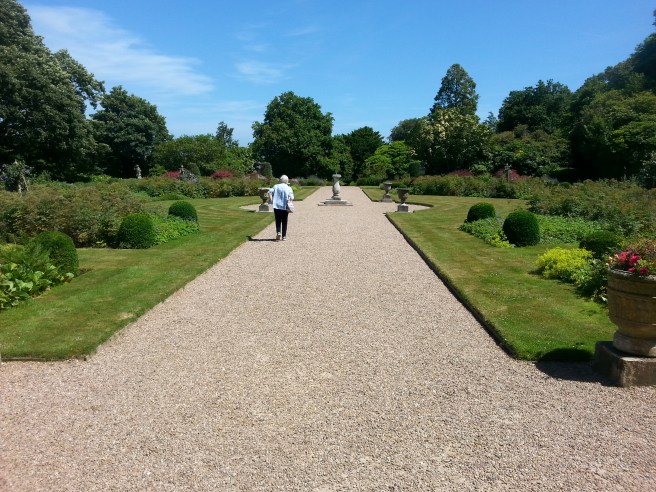
Having enjoyed the house we then went out into the formal gardens after which we took a useful buggy service to the Orangery

20170702_142105.jpg

where we enjoyed a very good lunch and looking out onto the Italian gardens

20170702_144436.jpg

20170702_152559.jpg

The walk back up the hill was rewarded with marvellous views of Plymouth Sound….a lovely place for a picnic, which we duly noted….

20170702_153210.jpg


30th June 2017…..Trelawney Day at Pelynt

1200px-Sir_Jonathan_Trelawny,_3rd_Bt_by_Sir_Godfrey_Kneller,_Bt.jpg

I am writing this the day after Trelawney Day, having just found out about it! Had I known I would perhaps have gone to the yearly commemorative concert in Pelynt yesterday. Pelynt is a village proud of its connection with a Cornish hero. I learned to play this tune on the recorder, when I was about eight I suppose, which is why it is familiar to me and why I burst into song whenever we drive through Pelynt (well the chorus which is all I can remember!).

Jonathan Trelawny was born in Pelynt in 1650. He was ordained in 1673. Along with his brother, Major General Charles Trelawny, he helped to put down the rebellion in the west led by the Duke of Monmouth. In gratitude for his services, King James IIknighted him and appointed him Bishop of Bristol in 1685.

Although he was loyal to the crown, Trelawny was one of seven Bishops who petitioned against the king’s Declaration of Indulgence in 1667, granting religious tolerance to the Catholics. Along with the other bishops, he was imprisoned in the Tower of London for three weeks, then tried and acquitted. He became Bishop of Exeter in 1688 and Bishop of Winchester in 1707. He died in 1721.

Trelawny was the hero of the 1825 “The Song of the Western Men” by R. S. Hawker, the well known Vicar of Morwenstow Better known as “And shall Trelawny die?” or just plain “Trelawny”, the song was derived from an old Cornish proverb which forms the chorus.

Robert Stephen Hawker (1803-1875), priest, poet, and mystic.

Hawker was parson of the parish of Morwenstow on the desolate north Cornish coast for forty-one years. He first became known for his work in rescuing and burying the remains of shipwreck victims washed up on the jagged rocks below his church. He was one of the finest poets of his period, and his Arthurian masterpiece, The Quest of the Sangraal, drew from Tennyson the acclamation: “Hawker has beaten me on my own ground.”

His eccentricity was a by-word. He dressed in claret-coloured coat, blue fisherman’s jersey, long sea-boots and pink brimless hat. He talked to birds, invited his nine cats into church, and excommunicated one of them when it caught a mouse on a Sunday.

Hawker is best known for his ballad about the imprisonment of Bishop Trelawny, The Song of the Western Men. Of this ballad he wrote:

The history of that Ballad is suggestive of my whole life. I published it first anonymously in a Plymouth Paper. Everybody liked it. It, not myself, became popular. I was unnoted and unknown. It was seen by Mr Davies Gilbert, President of the Society of Antiquaries, etc., etc., and by him reprinted at his own Private Press at Eastbourne. Then it attracted the notice of Sir Walter Scott, who praised it, not me, unconscious of the Author. Afterwards Macaulay (Lord) extolled it in his History of England. All these years the Song has been bought and sold, set to music and applauded, while I have lived on among these far away rocks unprofited, unpraised and unknown. This is an epitome of my whole life. Others have drawn profit from my brain while I have been coolly relinquished to obscurity and unrequital and neglect.

Trelawny

A good sword and a trusty hand!
A merry heart and true!
King James’s men shall understand
What Cornish lads can do!
And have they fixed the where and when?
And shall Trelawny die?
Here’s twenty thousand Cornish men
Will know the reason why!

And shall Trelawny live?
Or shall Trelawny die?
Here’s twenty thousand Cornish men
Will know the reason why!

Out spake their Captain brave and bold:
A merry wight was he:
Though London Tower were Michael’s hold,
We’ll set Trelawny free!
‘We’ll cross the Tamar, land to land:
The Severn is no stay:
With “one and all,” and hand in hand;
And who shall bid us nay?

And shall Trelawny live?
Or shall Trelawny die?
Here’s twenty thousand Cornish men
Will know the reason why!

And when we come to London Wall,
A pleasant sight to view,
Come forth! come forth! ye cowards all:
Here’s men as good as you.
‘Trelawny he’s in keep and hold;
Trelawny he may die:
Here’s twenty thousand Cornish bold
Will know the reason why

And shall Trelawny live?
Or shall Trelawny die?
Here’s twenty thousand Cornish men
Will know the reason why!

Herodsfoot…a Thankful Village

Village-630x481.jpg

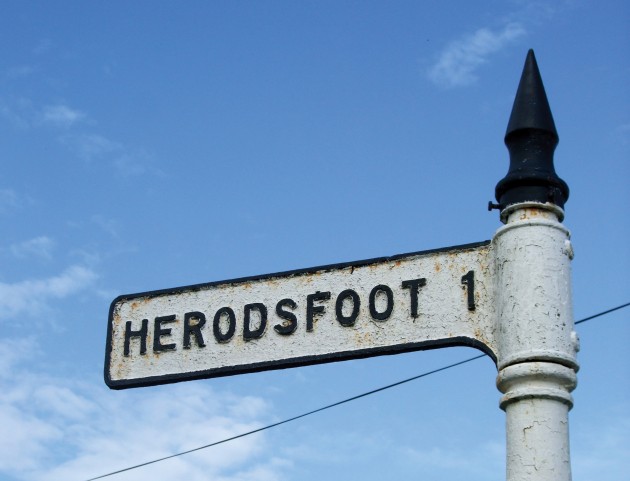
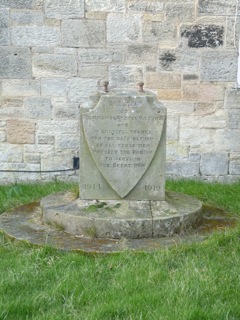
Herodsfoot is just over a mile from where we live and we have driven through it and walked through the woods to it. It is a lovely tranquil little place set around its stream and surrounded by hills and woods with its church on the upper slopes looking very Swiss. It is a Thankful Village and an interesting article on the BBC site tells us this means it is one of a tiny handful of settlements (53 in fact) where all those who served returned home after the First World War. But Herodsfoot was even luckier, if luck it be, in that it is 2428018_39eb3101.jpga Doubly Thankful village, one of only 14 places in the UK where all survived the Second World War too. There is a memorial on the green…..The inscription is as follows….
(On the shaft)
The parish of Herodsfoot erected this memorial to the following men in gratitude for their services in the Great War 1914-1919
(On the base, the following names)
J Body . . C Honey
J Bunney . . A Kitt
S Cross . . H Medlen
JH Doney . . C Parker
RJ Doney . . H Somerset
W Hoar . . P Trengrove
WH Turner
(beneath the names as an addition)
In memory of all who served in 1939-1945.

See also an article on-line for some background to these villages., and the results of detailed research to see whether the evidence for no deaths for particular villages is confirmed. There appears to be no doubt as to the valid claim of Herodsfoot to be a Doubly Thankful Village.

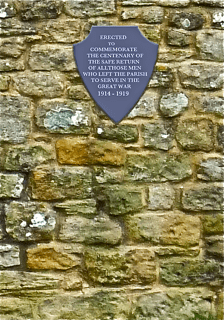
P1030612.jpegOur friends Julia and Allan live in Meldon, Northumberland, another village about which there appears to be no doubt as to its validity as a Thankful Village. There is a memorial stone there….but this is at the school house which is now a private house and so the stone is not publicly accessible. However Allan, who is a retired Art teacher and jeweller, has designed aScreen shot 2016-03-06 at 23.40.54.png new memorial plaque for the church in Meldon. A lovely thing to do as it is really important that we remember the lucky few at the same time as we commemorate the horrors of the two wars. I shall look forward to seeing it when we are next up there.

June 2017…Devil Water and more…

The_Devil's_Water,_near_Dukesfield_smelt_mill_-_geograph.org.uk_-_611085.jpg

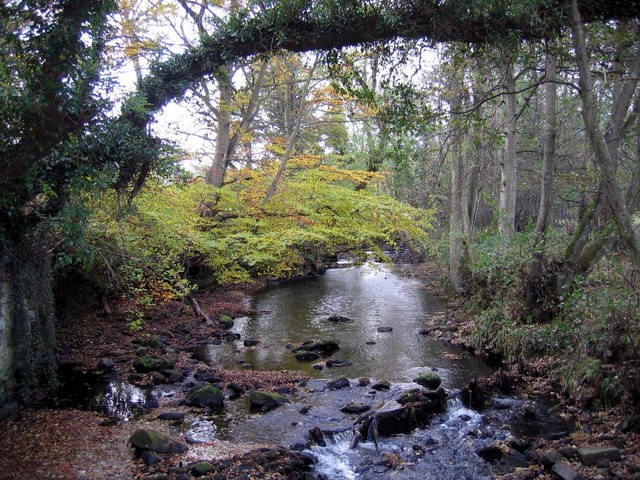
Devil’s Water is the name of the river at Dipton in Northumberland, just a mile from where we used to live in Corbridge. Devil Water is the name of the novel by Anya Seton that I have just finished re-reading. It’s a book that I have often hovered over on my shelves but not having read it since the 1970’s I was reluctant to pick it up again in case of disappointment. I was not disappointed. Anya Seton is a most accomplished if old-fashioned novelist. The amount of research she did for this book set over fifty or so years around the twin Jacobite rebellions is absolutely astonishing. She talks about it somewhat in an epilogue, but the evidence is there to see all the way through. She mixes fiction, faction and fact with a magic hand. Even the soft Northumbrian dialect comes across as authentic. I just love reading about the Jacobite rebellions and visiting associated sites such as the hugely romantic Glen Finnan. I must admit to being a secret admirer of the loyalty inspired in the Highland clans and some good English folk (as in Preston where I come from) by the Kings across the water. Right or wrong, who cares? The romance of a lost cause is immense. What an enjoyable read.

images-1.jpeg

A Shropshire Lad, a large illustrated edition with sumptuous photos of ‘Houseman Country’ was also a sheer delight to read. I took it in a few nightly chunks because it is serious stuff and needs thinking about. But I am left full of admiration for the imagination and the depth of feeling of a poet writing about the horrors of the First World War and contrasting it with life and death in the supposedly idyllic countryside. Something I could/should return to more often.

I have also read recently Wild Looe, a pocket book telling me of the flora and fauna of the area we continually visit. Whilst we are reasonably observant this little book shows how much there is still to see. From the same series I have read Exploring The Cornish Coast which obviously takes Exploring-South-East-Cornwall-cover-image-small.jpgthe wider view, and also Exploring SouthEast Cornwall which leads me wanting to visit the many places we haven’t been to all within half an hour’s drive of here! One of the foremost of these is Rame Head which we continually see on our walks in Looe but have not yet visited, and also Mount Edgcumbe and its extensive grounds. This was the house built (unsurprisingly) by the Edgcumbes who then put Cothele in mothballs for a few hundred years.

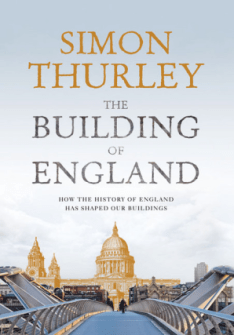
9780007301409.jpg.pngAlso read with great enjoyment was Simon Thurley’s The Building of England. Subtitled ‘How The History Of England Has Shaped our Buildings’ it does exactly that in tremendous detail with page after page of sumptuous photos and a very incisive text. Thurley who is of course in a very good position to do so tells us how our architecture has evolved and how it is inextricably linked to politics, culture and ideas. This book was such a good idea I am very surprised that nobody has seized on this compelling subject before. From why the Roman infrastructure was allowed to fall into disrepair rather than being used (a question that has always puzzled me), to why particular groups of people built as they did, what influences we exported and what we took on board ourselves this is a fascinating study told in a fresh style. Marvellous.

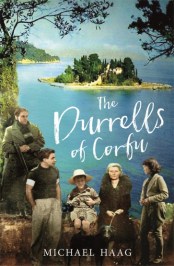
I finished today The Durrells of Corfu which was a straightforward tale of an usual (to9781781257883.jpg say the least) family. It was one of the books I bought F. for her birthday knowing I would be able to read them second-hand as it were. We haven’t seen any of the TV series but we were lucky enough to have our honeymoon in Corfu in the 70’s when it was still relatively unspoilt. We spent our time in a lovely whitewashed room with nothing other than a bed and small wardrobe but with blue shutters that when flung open looked over the beautiful beach to the wine-coloured sea. The room was above a taverna standing on its own on the beach, and every morning the owner would ask us what we wanted for dinner that night and if it was fish he would be out in his boat later in the day catching it for us. alternatively he ushered us into his kitchen where there were various pots on the boil or simmering and we would point to whatever we fancied. Usually as nearly always in Greece it involved lamb and aubergine and tomatoes. The pudding was always baclava ( a very good one it has to be said, but repeated each night over a fortnight? ). Anyway enough reminiscing. I enjoyed the book. I may read some of the Durrells’ books as a result. Perhaps especially ” My Family and Other Animals’ and the ‘Alexander Quartet’. As well as being odd in many ways, Gerald and Lawrence were apparently very good authors.


27th June 2017…trip to Trewithen near Truro

Trewithen1.jpg

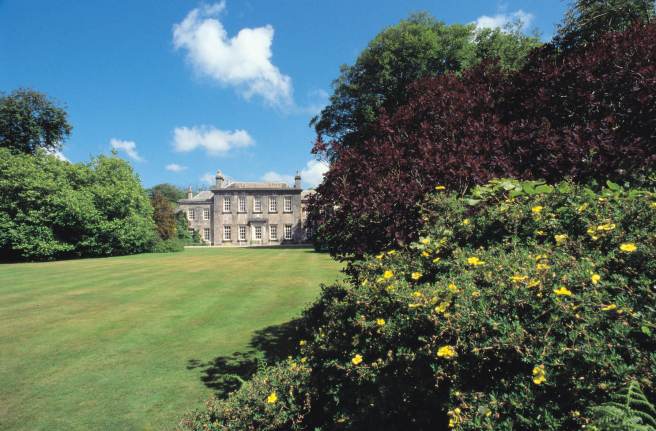
A bit of a grey day but no matter, we came to tour Trewithen house and not the gardens which we will save for next Spring. The house is only open in Spring and we went on the last day of opening to take advantage of our HHA membership. Historic England

20170627_142610.jpggives a history of the building, but I cannot find any more details on the net of either the history of the building or its contents which is rather annoying. I purposely didn’t buy the guide because I thought I would be able to find masses of information myself! Here is the entry from Trewithen’s website..

“When Phillip Hawkins first bought Trewithen in 1715 he established the estate as home to a dynasty that has, through the centuries, made a very significant contribution to Cornwall.

John Hawkins was the first member of the family to move to the county in 1554. Originally a courtier to Henry VIII, he settled at Trewinnard, near St Erth, married and established a maritime trading business through Mevagissey that thrived for many years.

Phillip Hawkins was a wealthy attorney and landowner who commissioned London architect Thomas Edwards to rebuild Trewithen and lay out the park. When he died childless the estate passed to his nephew, Thomas Hawkins, whose parents lived at Trewinnard – thereby uniting the two branches of the Hawkins family in Cornwall. Phillip’s will is very interesting and shows a man contrite at taking advantage of smuggling ( a not unusual activity for the gentry of Devon and cornwall ).

Thomas fell in love with Anne Heywood, whose father agreed they could marry on the proviso that his architect, Sir Robert Taylor, was commissioned to re-design and embellish Trewithen House. The work was carried out and, in addition, Thomas had plans drawn up for landscaping the gardens. Many fine specimen trees were planted and the famous vistas around the house were created.
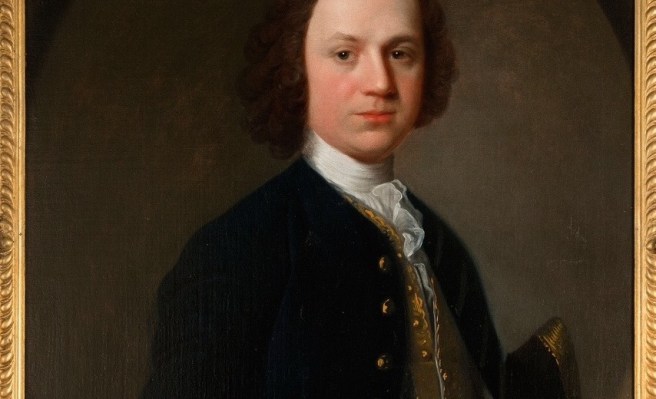
Thomas-Hawkins-1-854x520.jpg

When Thomas, shown here, died from a smallpox inoculation, the estate passed to his eldest son Christopher.  Although Christopher Hawkins never married, he did an enormous amount for both Trewithen and Cornwall – including opening new tin and copper mines, becoming involved with clay mining near St Austell, re-building the harbour at Pentewan and the great breakwater at St Ives, endowing local schools and building new ones. He also became Richard Trevithick’s patron and commissioned the world’s first steam thrashing machine from him. Trewithen was expanded to the extent that he ‘could ride from one side of Cornwall to the other without setting hoof on another man’s soil’.

On Sir Christopher’s death in 1829, Trewithen passed to his brother John Hawkins (who built and lived at Bignor Park in West Sussex), a man of great learning and intellect who planted many fine trees at Trewithen – including Holm oaks.

John was succeeded in 1841 by his young son Henry Hawkins – known to all as CHT – who chose not to live in Cornwall.  When he died in 1903, the estate passed to his nephew John Heywood Johnstone, changing the family name for the first time in nearly 200 years. Sadly John survived only a year after his inheritance – leaving his 22 year old son George Johnstone in charge.

It was George who was responsible for developing the gardens and, by sponsoring some of the great plant hunting expeditions to the Himalayas and China, introduced a wealth of new species.  When George died in 1960 his widow and eldest daughter Elizabeth continued his botanical work – with Elizabeth going on to be awarded the Bledisloe Gold Medal for services to Agriculture and Landowning.

Trewithen’s current owner is Michael Galsworthy, George Johnstone’s grandson. Equally committed to the care and further development of both the gardens and the wider estate, he came to live in the house with his family in 1980. Since then, he has overseen the planting of more than 30,000 trees to enlarge the shelter belts and surrounding woodlands – compensating for the many casualties of the great storm in 1990.”

In fact Michael has now died, and the new family members have only been in residence for 7 months…..

The tour with a guide of about an hour was very interesting although our guide was new and only feeling her way into the job. The most splendid of the ground-floor rooms, which is what you see, was the dining room or salon which originally had been the hall…very impressive indeed. But each of the rooms had interest. Definitely a family house, photos and belongings everywhere, one could even sit on the furniture…I quickly sat on one of the Chippendales just for the experience! There were many great paintings in particular portraits by Joshua Reynolds who was born in Plympton. One was particularly interesting because it was when Reynolds was experimenting with different flesh hues. He gave the sitter a rather greenish face which was most odd. I’m surprised he didn’t cut the whole thing up and start again. Some of the furnitures was exquisite, particularly some of the pieces brought to England by Raffles who was connected to the family through marriage. Interesting too was the family history with the house and estate passing between branches of the family as deaths occurred……one couple had nine children all of whom died. One head of the family, Thomas Hawkins, wanted to prove the new smallpox vaccination was fine to his children. He unfortunately died. Such brave men our ancestors…All in all a visit well worth while.
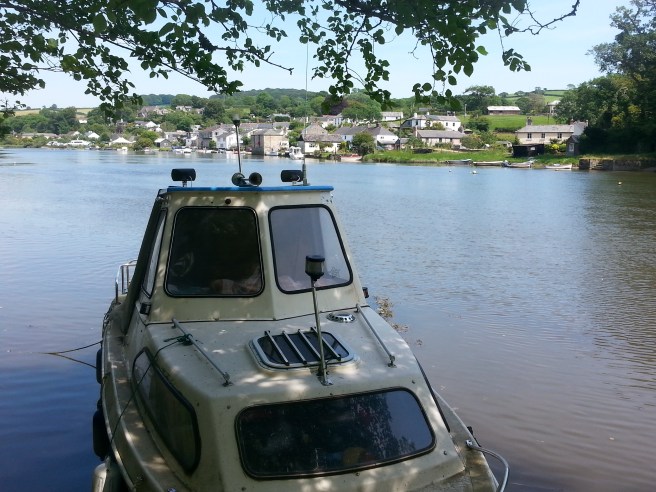
20th June 2017…walk from Lerryn to St Winnow

20170620_144152.jpg

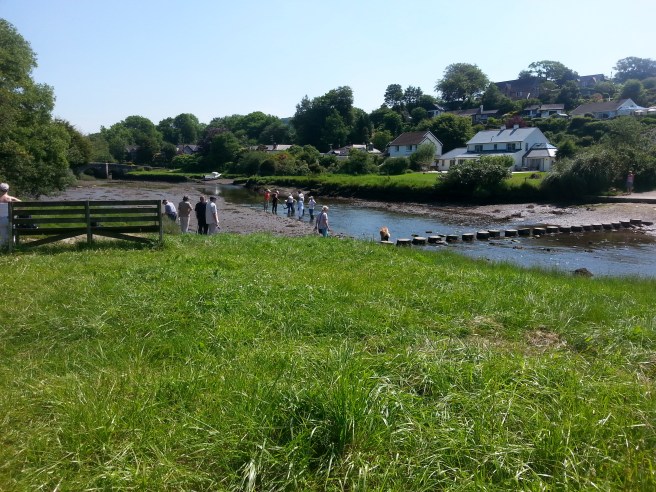
We had done a short walk of our own devising before but today we followed the five and a half mile round walk to St Winnow found in the splendid IWalkCornwall. I had noticed that the local history society were doing some metal detecting by the stepping stones, Roman coins having been found in the vicinity before, so we thought we would have a nose at their activities…all a little disorganised whilst we were there!20170620_111950.jpg

We thought we better press on as it was a boiling hot day and luckily a large part of the walk was on a shady path through the woods and alongside the Lerryn creek….

20170620_112623.jpg

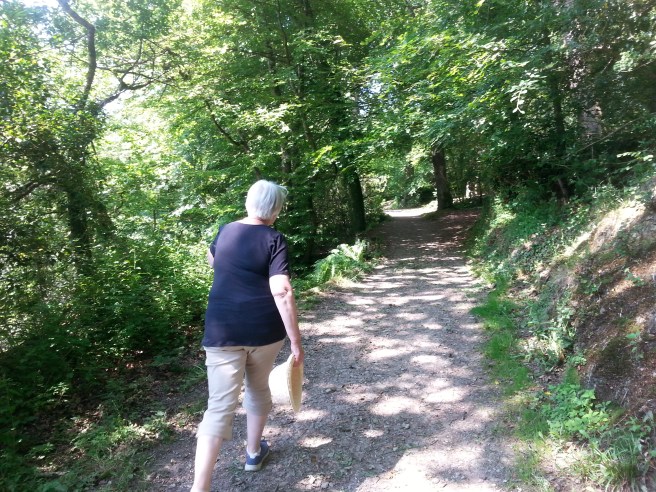
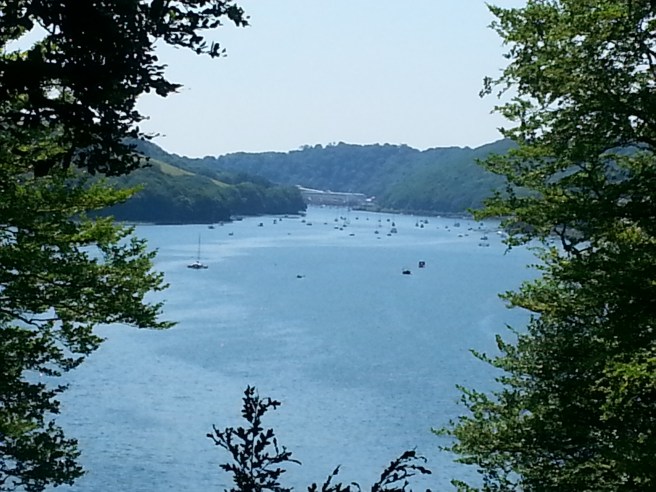
What a lovely walk it was and as the Lerryn broadened out into the River Fowey a strategic bench gave us a wonderful view and a chance to replenish the water in our body.

20170620_115839.jpg

20170620_122054.jpg

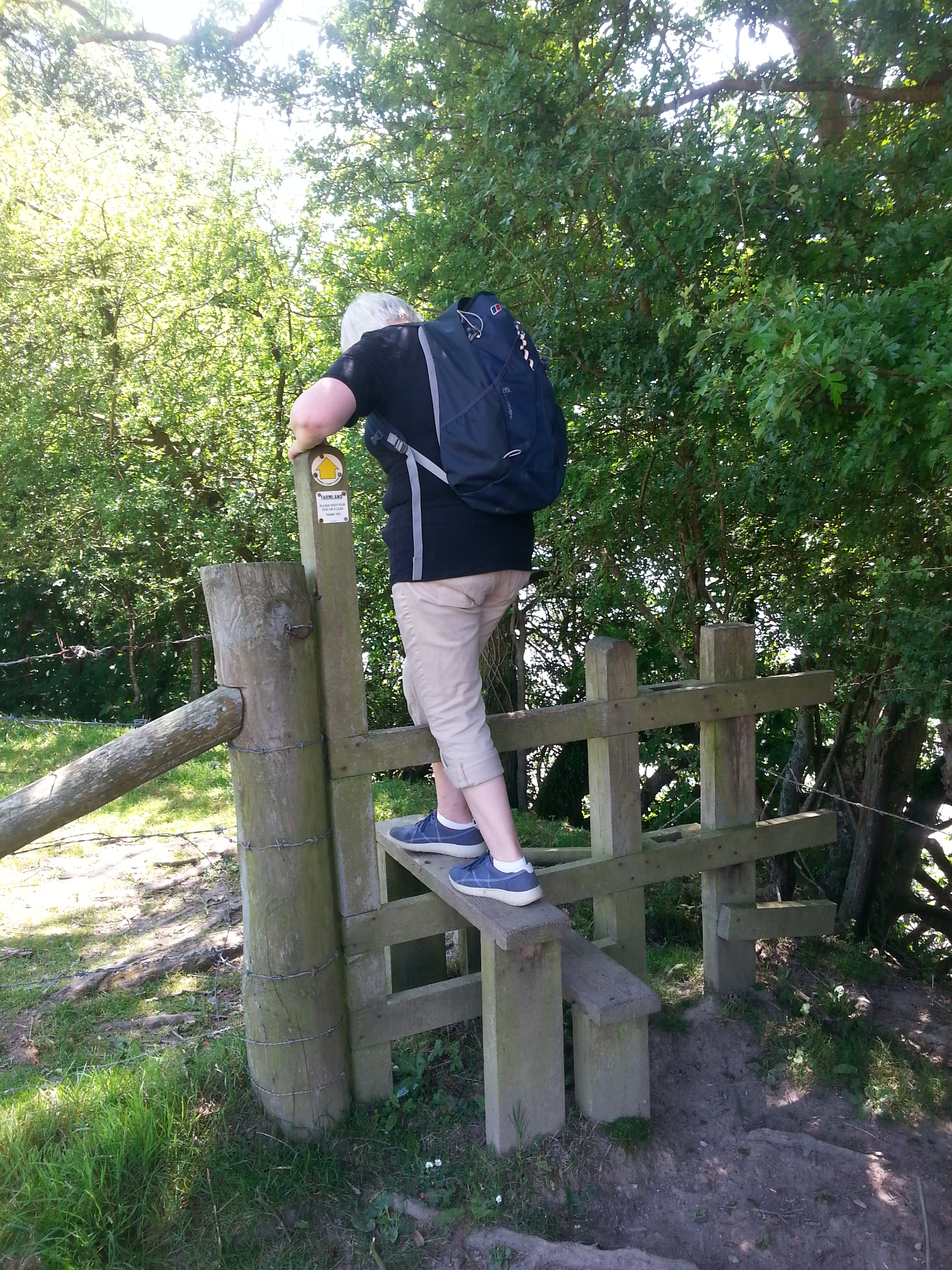
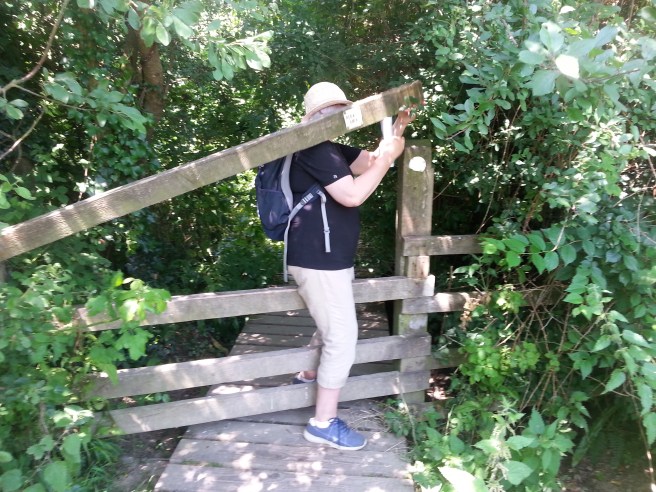
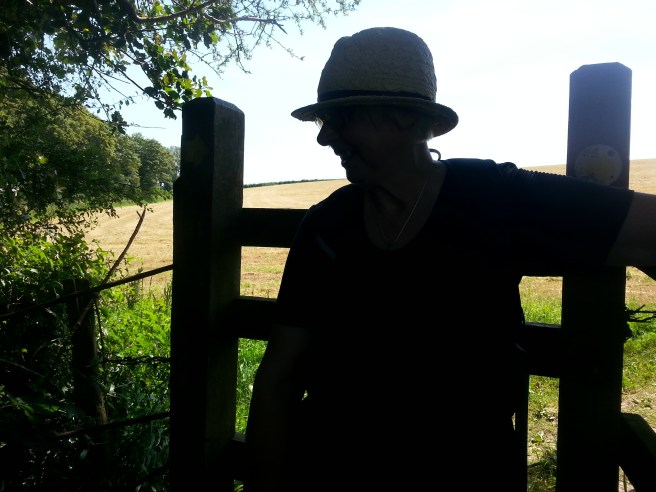
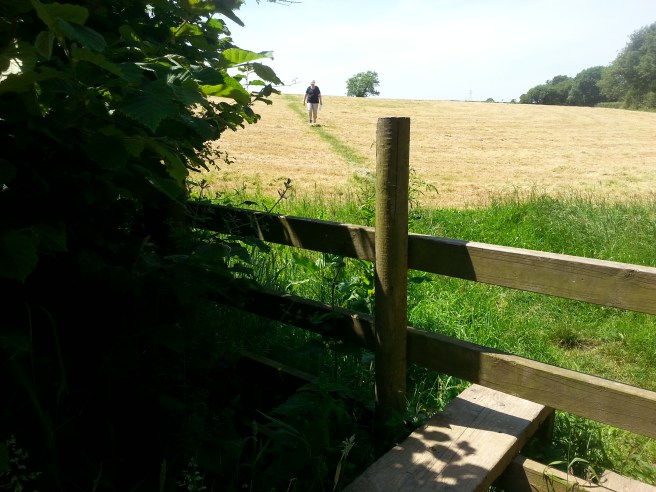
Nice to see all the boats moored and, in the distance, Golant on the opposite side of the river. during the walk we had to cross a variety of stiles and gates (always fascinating to me ( I have often thought a book on the subject is deserved). A lifting gate/stile was particularly unusual….and probably unique!

20170620_124504.jpg


20170620_124842.jpg

Eventually we came to St Winnow the beautiful church on the river..”St Winnow was recorded in the Domesday Book of 1086 as Sanwinnel, and early maps indicate that the churchyard was originally oval in shape, typical of Celtic religions enclosures know as a lann. It is therefore thought that the churchyard may be on the site of the 7th Century chapel of St Winnoc. A stone church was built in the 12th Century and a few traces of this remain in the current church which was built in the 15th Century and restored in the 19th. Much of the stained glass added in the Tudor period survived and can still be seen in the church.”

20170620_130305 2.jpg

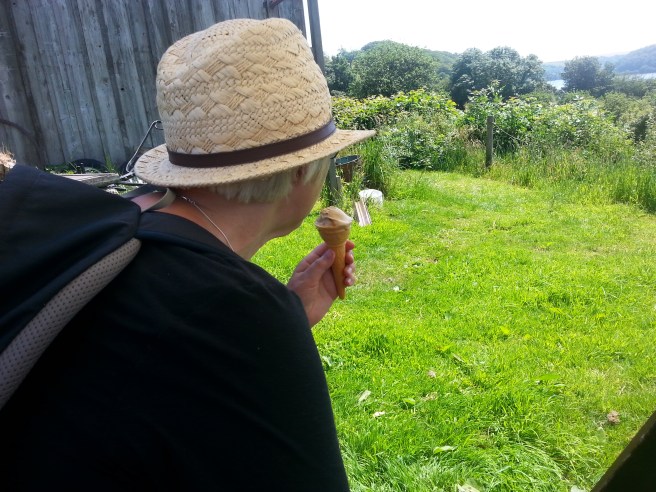
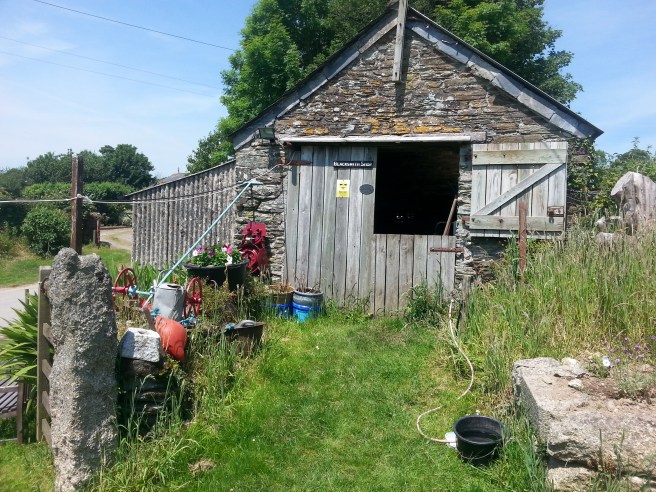
One good thing about this stop on our walk was the brilliant food van from which we bought most welcome ice creams and sat in the garden to eat them. Within sight were a blacksmiths and a farm shop. The hamlet had virtually no other buildings.

20170620_130922.jpg

20170620_131348.jpg

We were rather glad of our break when the next stage of the walk was a steep climb uphill with great views back of the church in its setting, and then a walk across open fields in blistering heat. We were very glad to make the shaded relief of Ethy woods…

20170620_135616.jpg

20170620_134854.jpg

A blissful last part of the walk was back along the Lerryn river, where we noted the splendid gardens of nearly all the houses (minimum £750,000 in Lerryn unfortunately), and then we got pasties and drinks from the wonderful village shop and enjoyed them in the shop’s riverside garden….a great end to a lovely trip.

20170620_144152.jpg

20170620_144855.jpg

25th to 29th May 2017…Visit of Katherine and Aiisha

20170526_163246_001.jpg

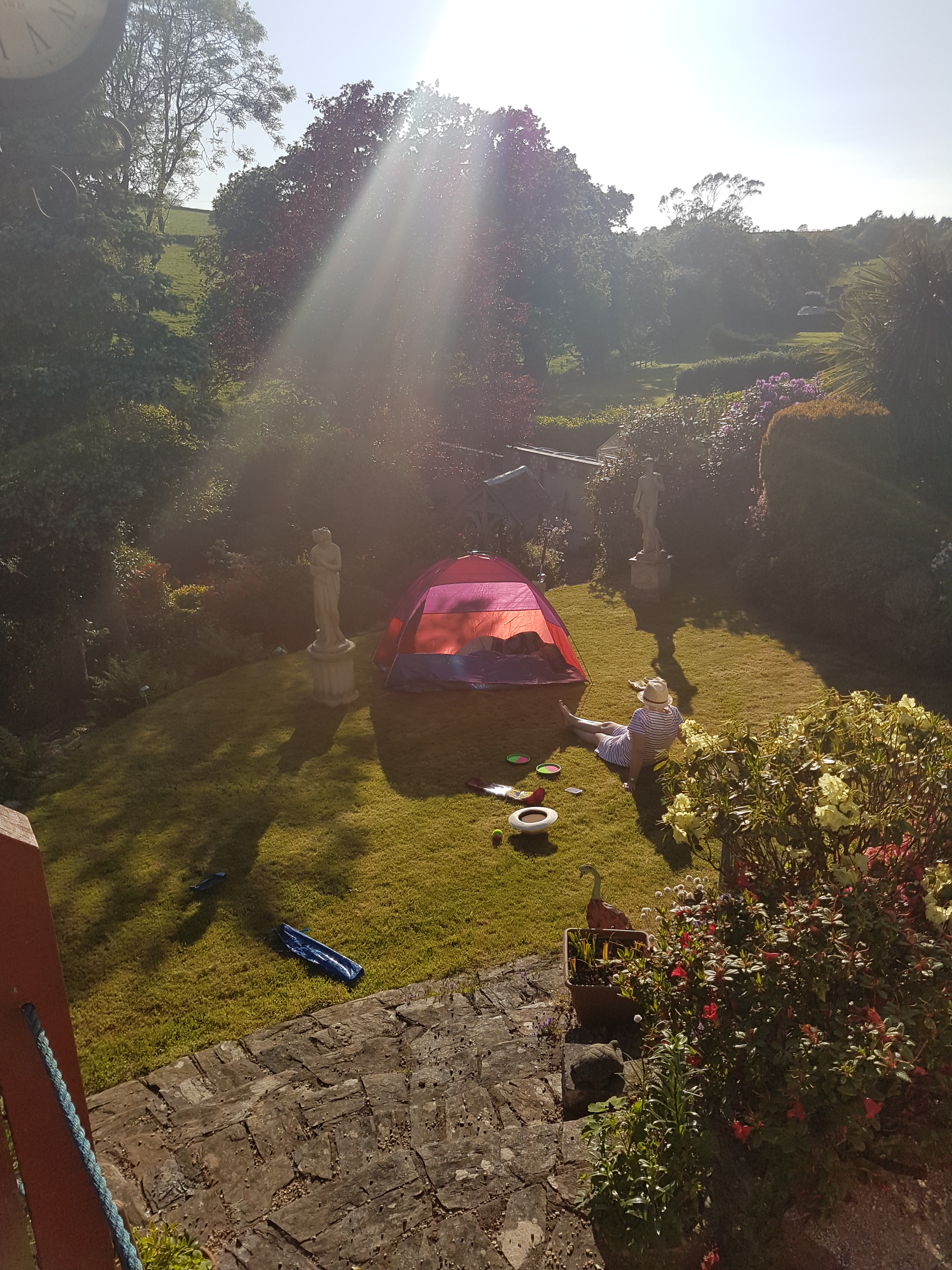
One of those visits when we were more or less lucky with the weather. On the first day we experimented with our new buy…a £9.99 beach tent from Trago Mills, and we had a picnic in the garden…a real success.

20170524_184644.jpg

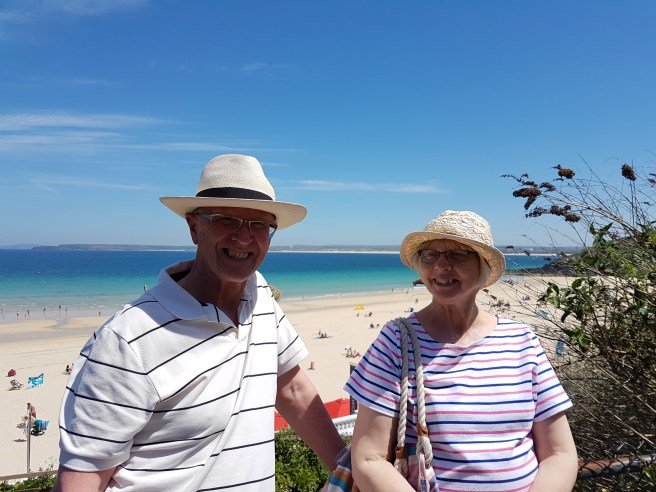
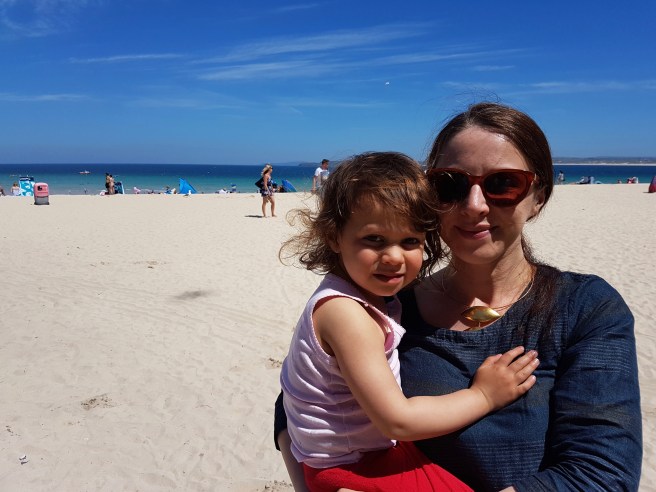
A last minute look at the weather reports on the Thursday morning encouraged us to go to St Ives..just over £6 each on the train, a real bargain. What fantastic weather!

20170526_133423.jpg


20170526_133659_005 2.jpg

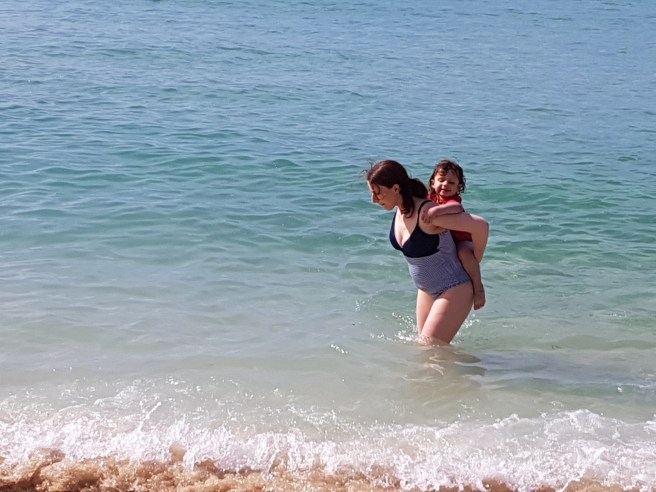
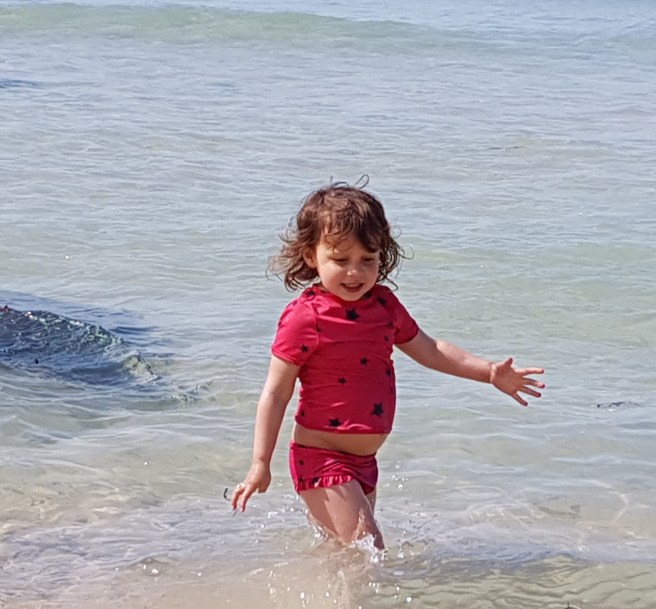
Can this really be England in May? Well, yes. And if we didn’t like it as busy as this, we could always go beyond Hayle (in the distance) to the miles of deserted sands there. But we were here for fun, and the sea was (just about) warm enough for games…..

20170526_155127_001.jpg

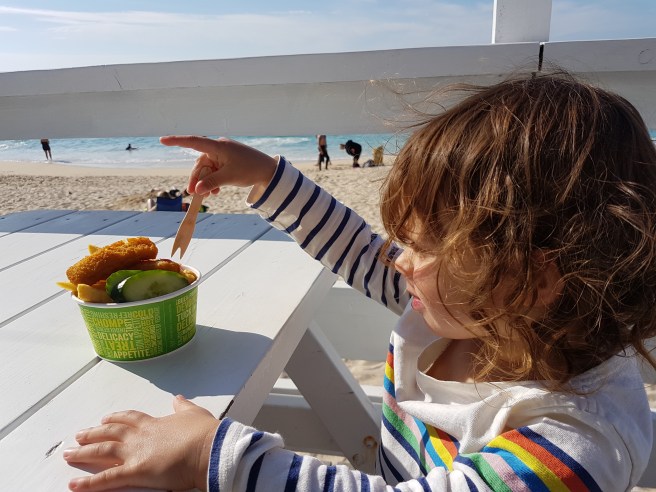
Katherine treated us to lunch in our favourite Porthmeor cafe, and then when more sustenance was needed she took the little one to the downstairs section which this pic seems to show she enjoyed.

20170526_173645.jpg

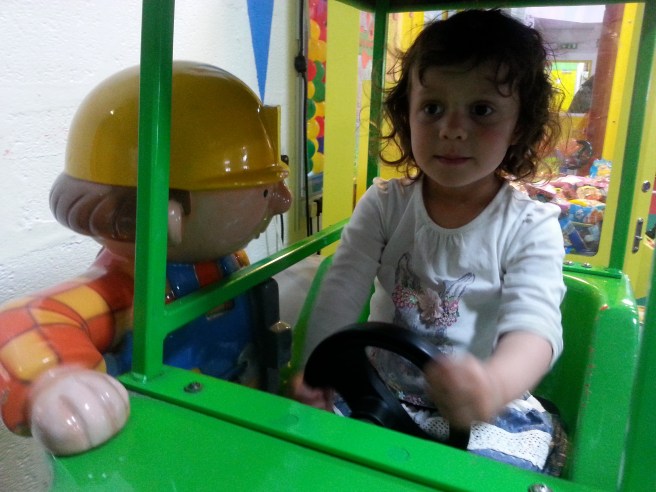
Everyone caught the sun. As good as days can be in my opinion! Katherine was down for work and so we drove across to Penryn on the Friday where her meeting was, and visited the SeaSalt seconds shop whilst there. We took our tent for a try-out to Gyllngvase beach Falmouth, and despite (or because of) slightly windy conditions it did the job and gained admiring comments. We also made a mental note that the Gylly beach cafe was well worth a visit. We also scouted out the soft play location at Raze The Roof in Penryn. So, on Saturday when her main meeting took place we went with Aiisha to the soft play. We were first there at 10am, but not the first to leave as we were still there at 2pm (something of a record). Aiisha made a couple of friends human and unspeaking too (enter Bob The Builder)…..

20170527_140711.jpg

All in all a lovely few days.