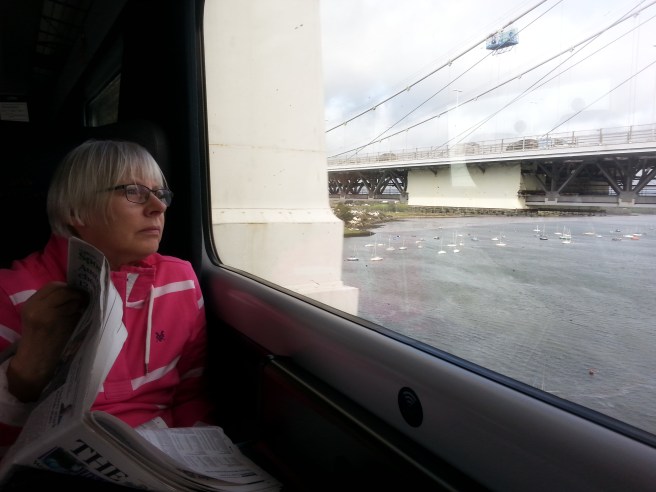
 The iconic 28 old wooden tram that still plies its way up and down the hills of Lisbon. I probably used this very tram on my last trip to Lisbon when aged 13. A lot has changed but Lisbon remains as beautiful as ever. F. and I were invited to go for a few days holiday with David and Jennifer ostensibly for various ‘missed’ anniversaries and, setting out across the Tamar first-class on GWR (I booked well beforehand), there was already a sense of adventure…..
 After leaving a cold and rainy London we arrived in a coldish and overcast Lisbon where we used the first of many Uber taxis to get us from the airport to our hotel….incredibly and amazingly cheap – 6 Euros for quite a lengthy journey. When Jennifer talked to some of the Portuguese and Brazilian drivers later, it still seemed they made a reasonable living…..
 After dumping our cases we headed for the rooftop solarium where drinks by the pool were in order, and it was just warm enough for the British contingent to sit without a coat (not Jennifer of course…).
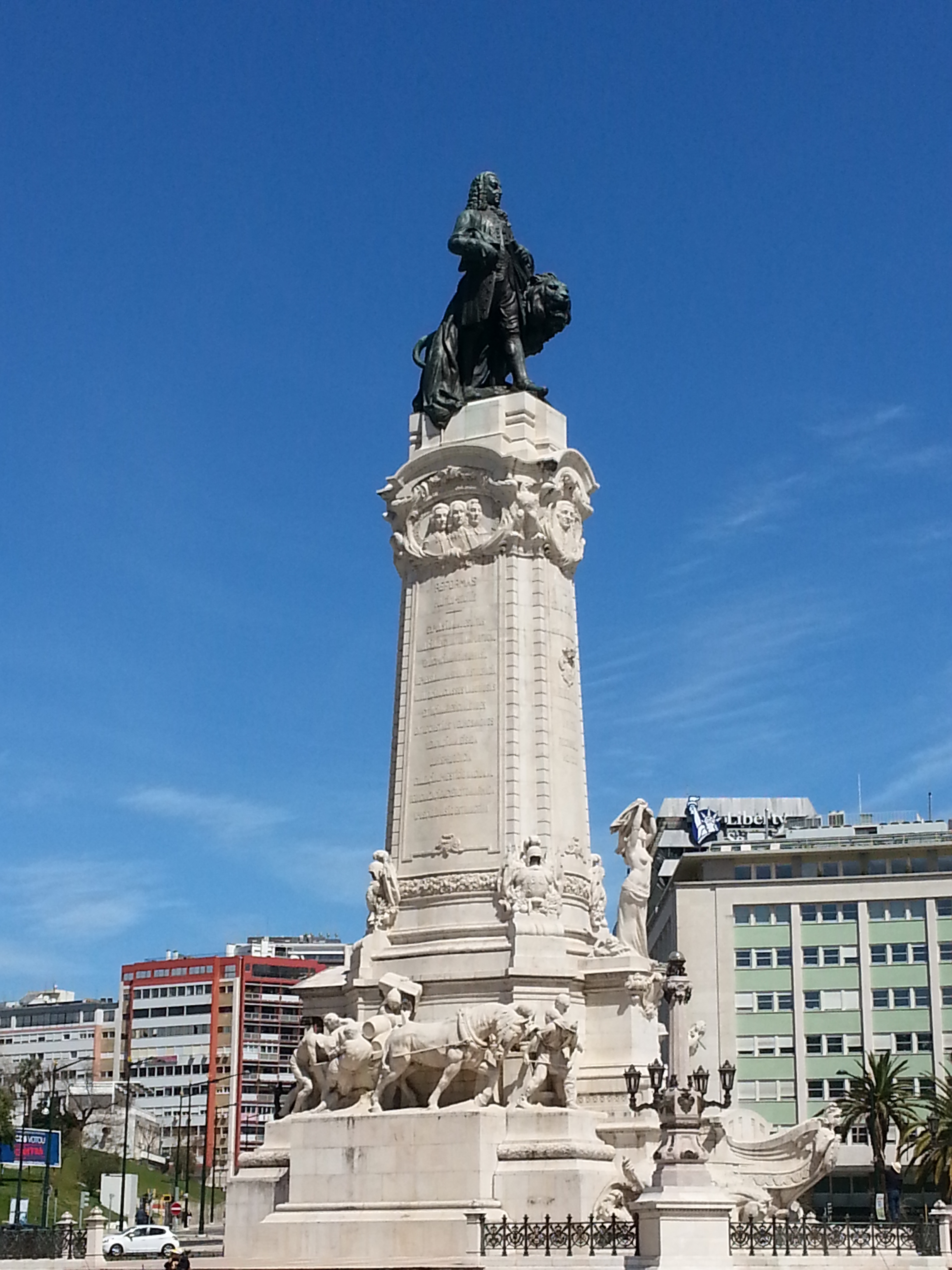
 We then took an Uber into the city centre to do a bit of exploring and have our first meal. Bit of a disaster for me as I chose the local speciality of Bacalao or salt cod and it stank to high heaven and tasted the same. This was our only instance of bad food during our stay thank goodness (recommended by The Times, but you can’t win them all……). Wandering through the centre we made our way to one of Lisbon’s many beautiful open spaces, this time a magnificent colonnaded square by the sea where we were able to enjoy a post-prandial coffee at one of the inviting cafes…
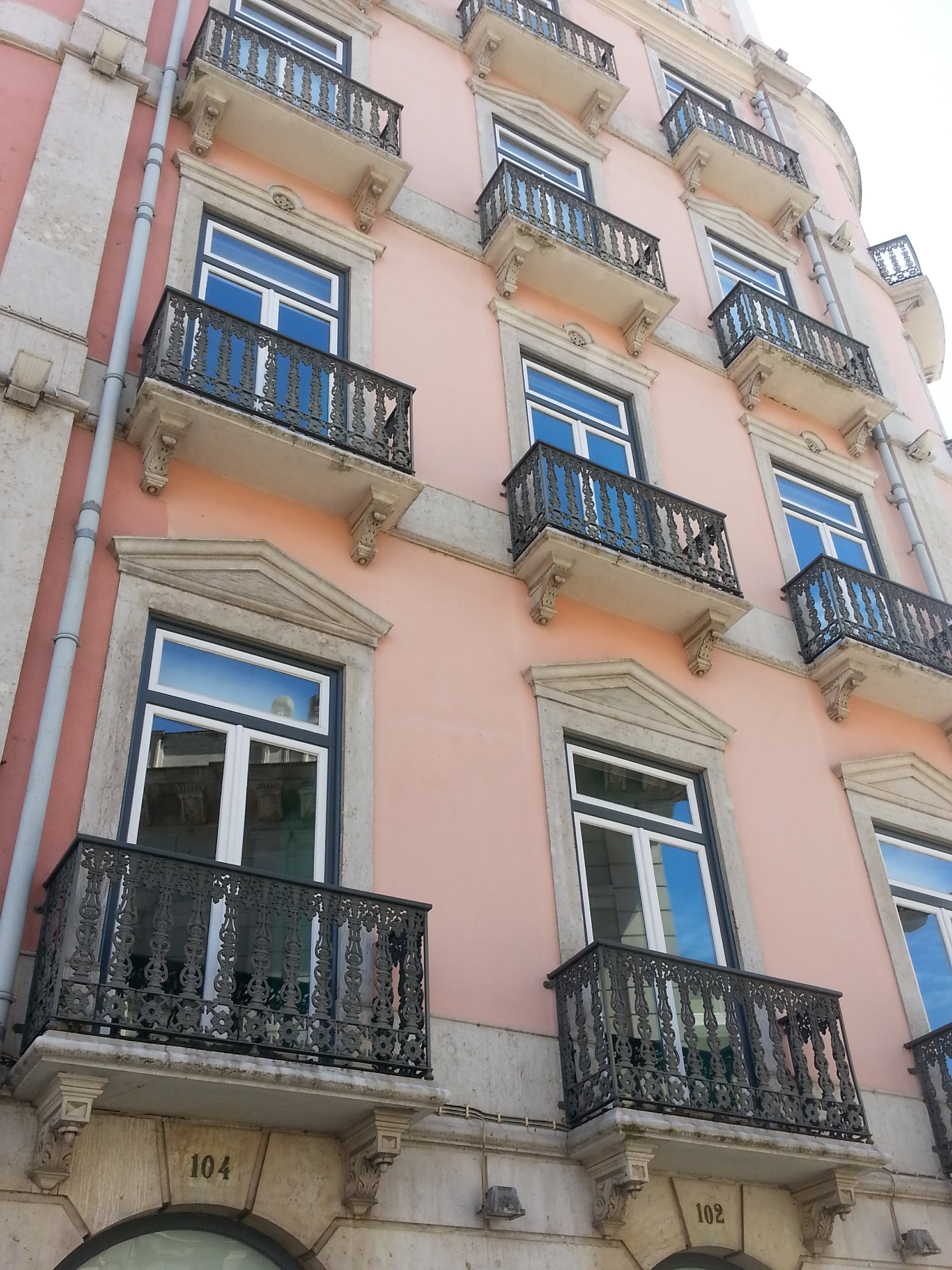
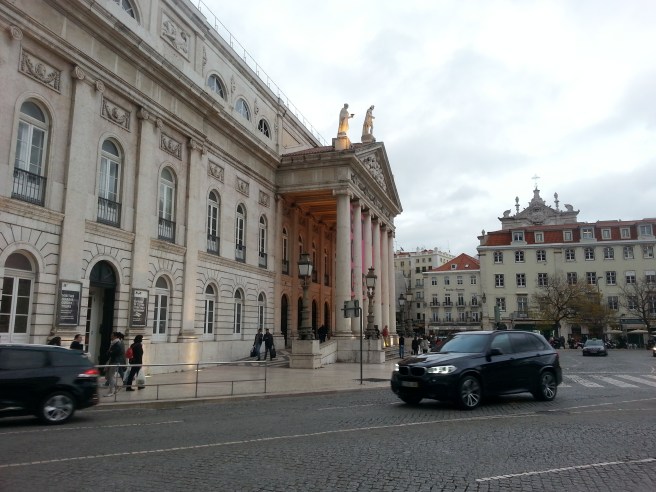 on our way we marvelled at the stunning architecture of the buildings,
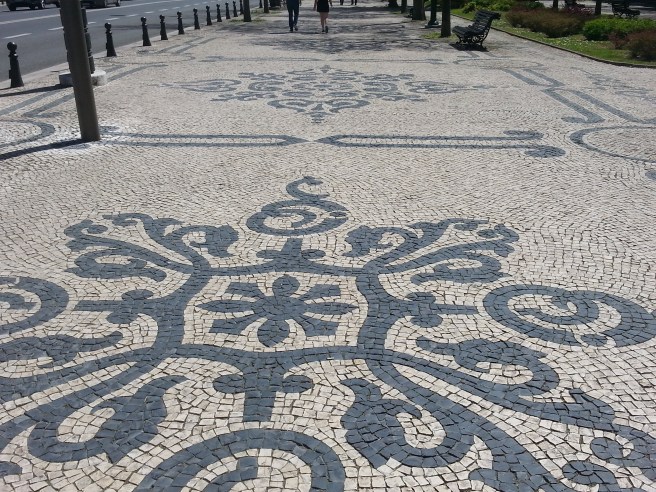
  the fantastic coloured, mosaic-like Portuguese pavements or calcada portuguesa, coming in many patterns…
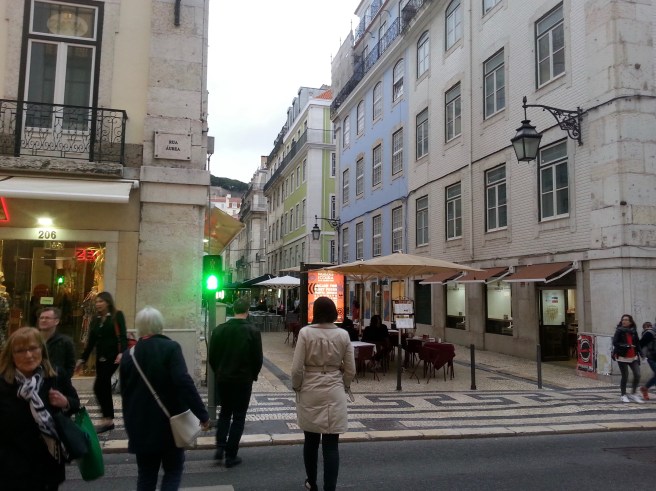 the jolly colours of the buildings themselves…just looking gladdens the heart…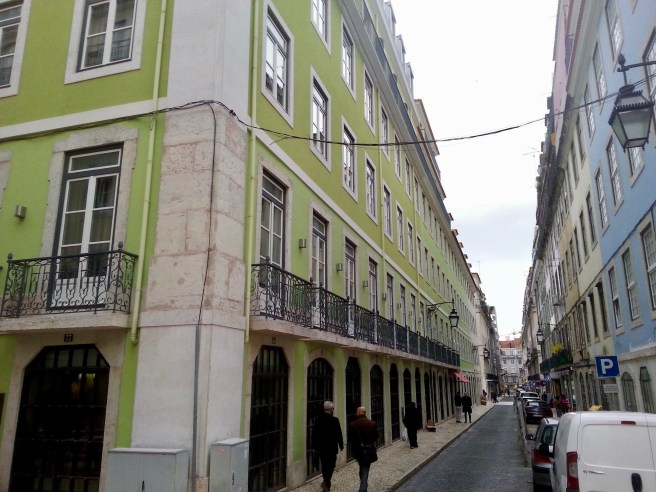


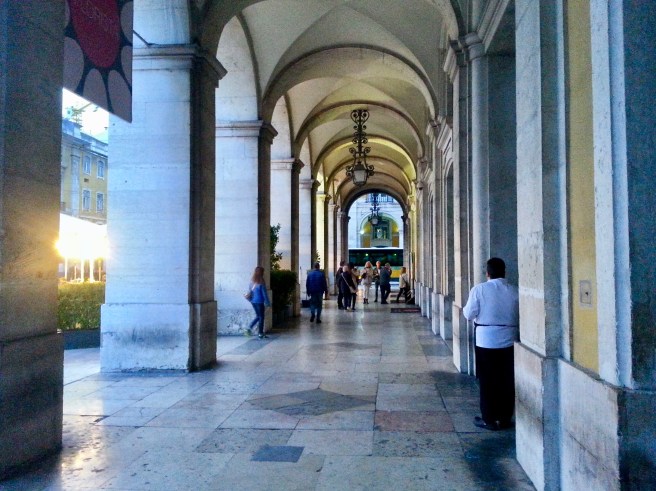
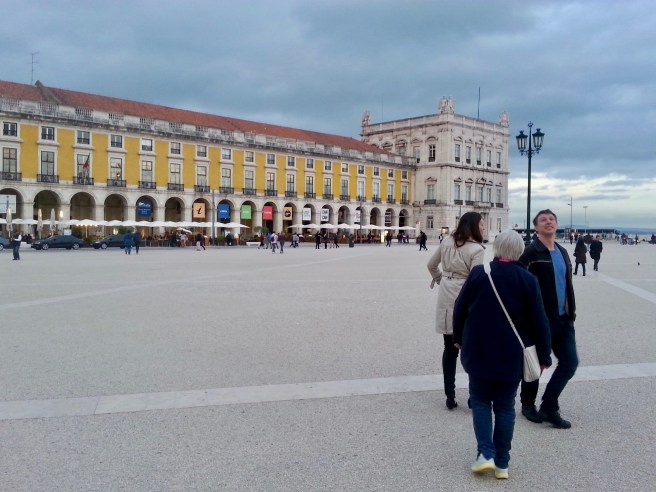


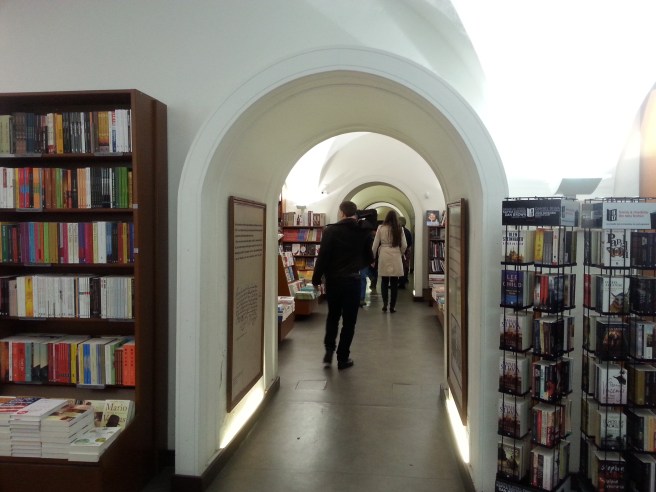
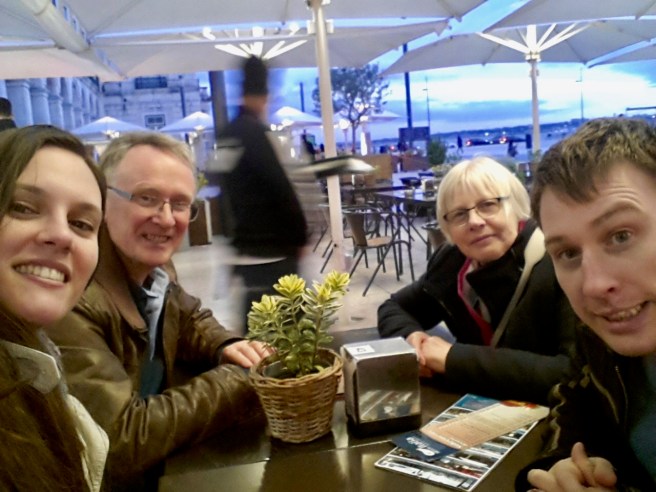 Refreshed for more wandering we found by chance the oldest operating bookshop in the world (Guinness Book of Records) which was in an absolutely lovely building itself, long and arcaded with a terrific selection of books…it was a privilege for us ex bookshop-owners to see it….
 More footwork led us to the square with a statue of Camoes, the famous Portuguese poet. I was always familiar with Camoes as, when on my visit aged 13, I fell head over heels in love with our local guide, she gifted me a copy of his poetry. Ah, the joys of being 13! Maybe I read this of his….
Love is a fire that burns unseen,
a wound that aches yet isn’t felt,
an always discontent contentment,
a pain that rages without hurting,
a longing for nothing but to long,
a loneliness in the midst of people,
a never feeling pleased when pleased,
a passion that gains when lost in thought.
It’s being enslaved of your own free will;
it’s counting your defeat a victory;
it’s staying loyal to your killer.
But if it’s so self-contradictory,
how can Love, when Love chooses,
bring human hearts into sympathy?
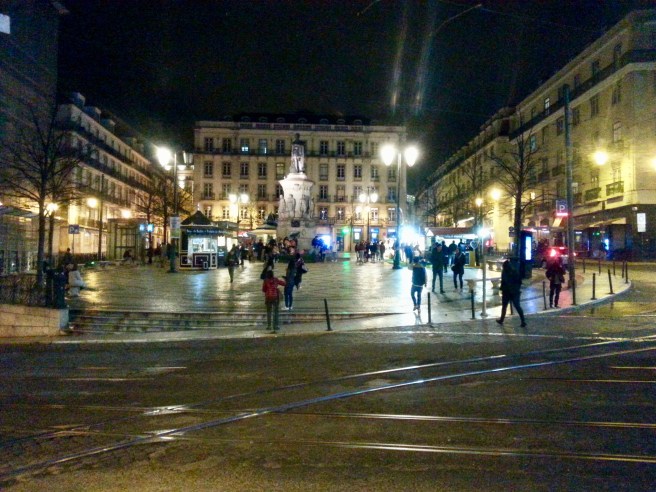 and here, by chance, the 28 tram was waiting for us to board,
 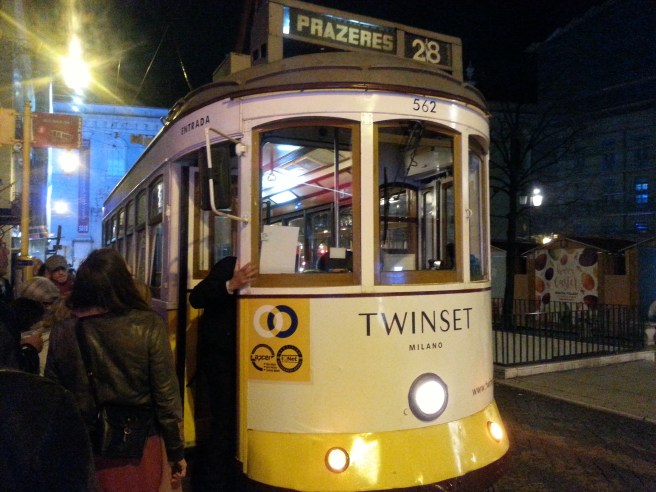 and we took it to its terminus by the cathedral called Sé. The word Sé derives its name from the initials of Sedes Episcopalis which when translated means bishop’s seat. Interestingly the first bishop of Lisbon to have his seat here had no roots or ties to the region but was actually an English crusader named Gilbert.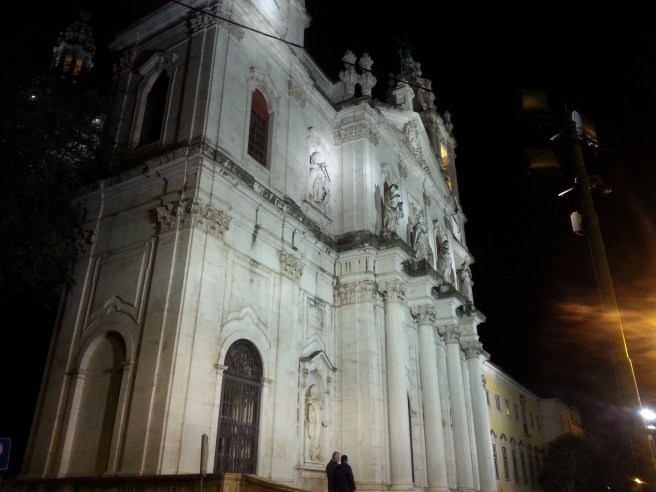
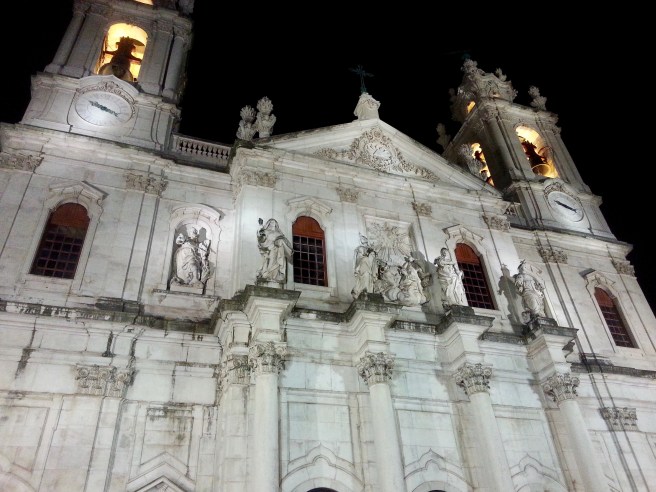 Through the gates opposite the cathedral was a marvellous park, which even in the dark we enjoyed! And on the other side of the park we found a local bar/restaurant. It looked busy with locals eating, but the door was shut. Undeterred we knocked, and the friendly owner admitted us through what we saw was a disguised heavy iron security door. He quickly made two tables available for us, and we enjoyed a nice relaxing bottle of vino verde our first of the trip (but not the last). It was late but when we asked what time he served food till, he said 2am…….quite astonishing!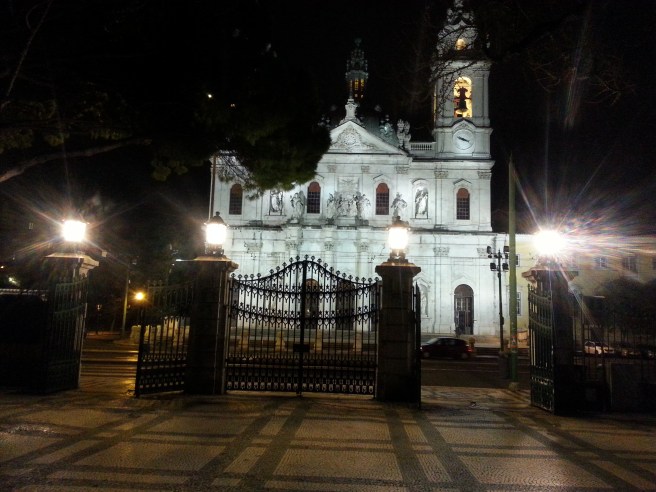
 Next day, which dawned nicer, we made for the historic area of Belem and had our first breakfast of croissants and pastel de nata at the historic Pastéis de Belém. We were so lucky in our timing not to queue in this astonishing place which makes 20,000 of these alone each day and which is an absolute maze of a building holding up to 500 foodies.
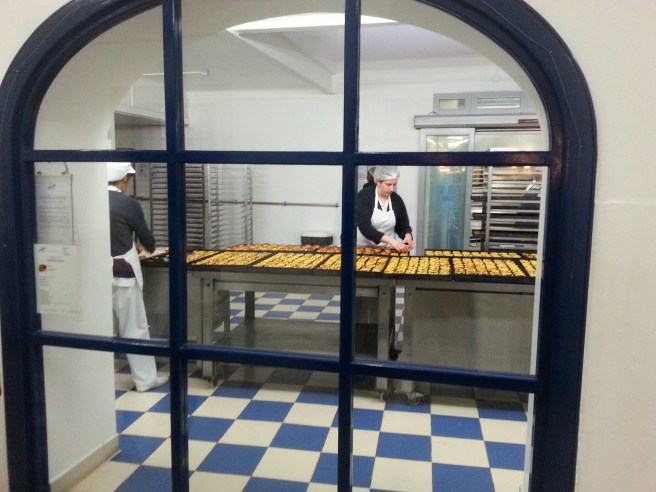 the front shop itself is extraordinary….
 and it adjoins the magnificent Jerónimos Monastery where the first tarts were baked…
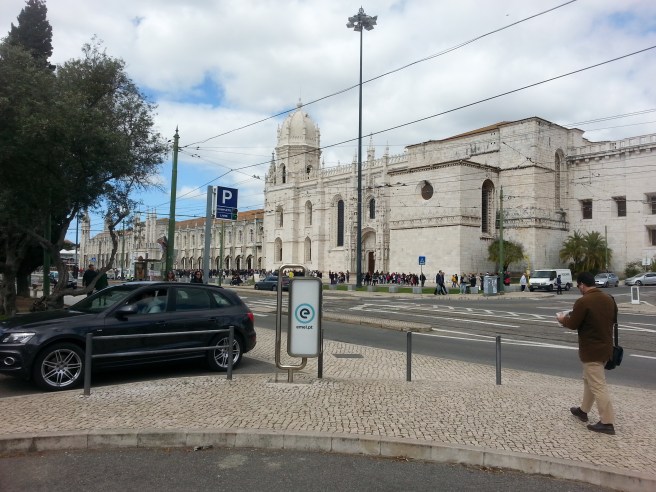 thank goodness Jennifer knew all about this place! A pleasant stroll through the park by the side of the River Tagus took us, past the marina, to the monuments which remind us of Portugal’s significant role in the Age of Discoveries. The Belém Tower (Torre de Belém) was built in the 16th century as a fort to protect the coast from foreign attacks, and like the Jerónimos Monastery, it is a UNESCO World Heritage Site and an example of Manueline architecture.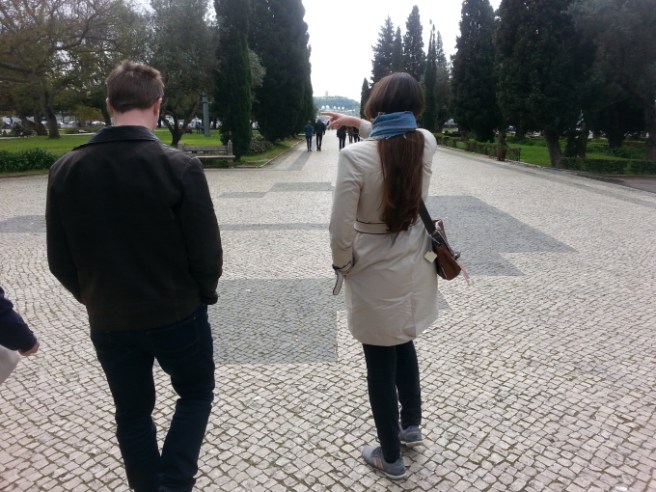
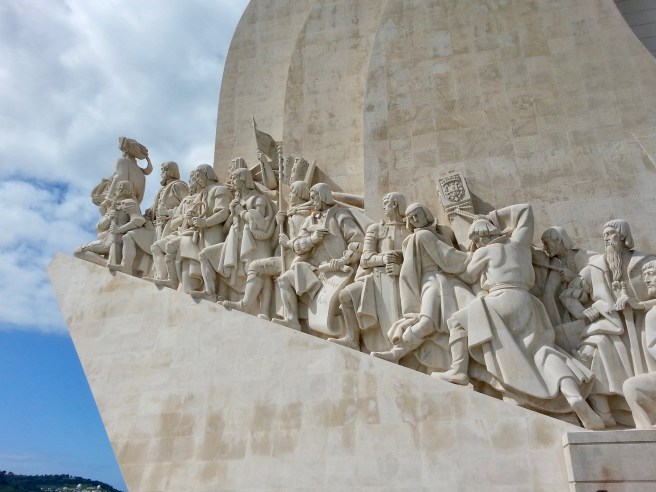
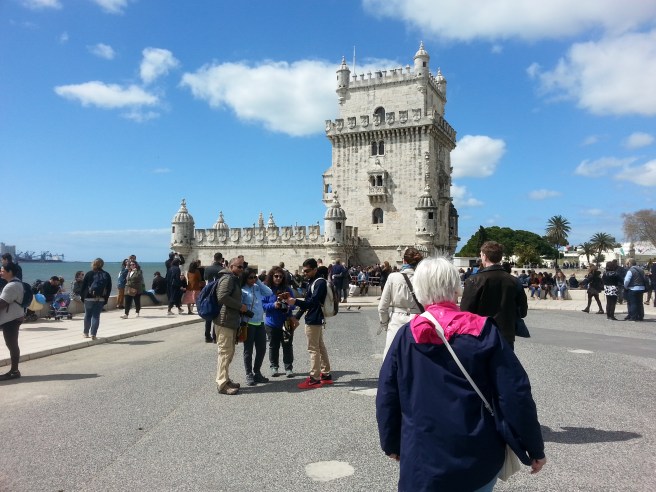 and further on was the Padrão dos Descobrimentos (or Monument to the Discoveries) which was built in 1960 and pays tribute to 33 prominent figures in Portugal’s Age of Discoveries, including Henry the Navigator and the poet Luís Vaz de Camões.
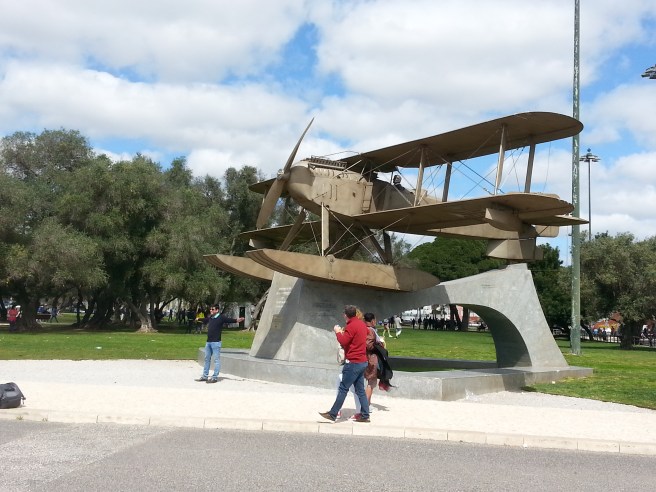
 Wandering back (we did a lot of wandering) we saw the old crane which lifted the sea-planes from their landing site……commemorated in a rather nice sculpture…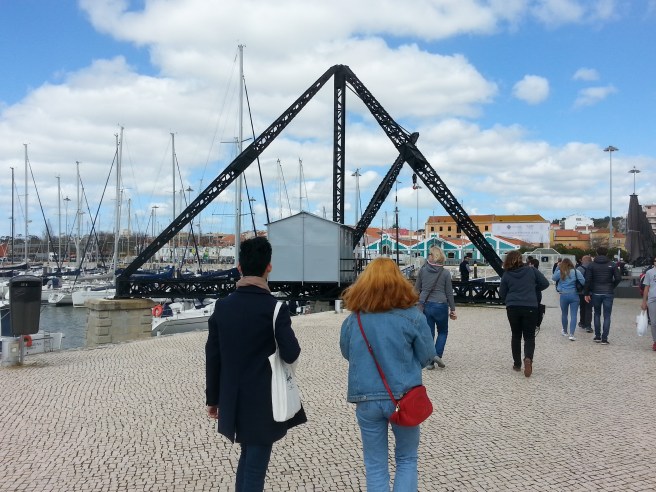
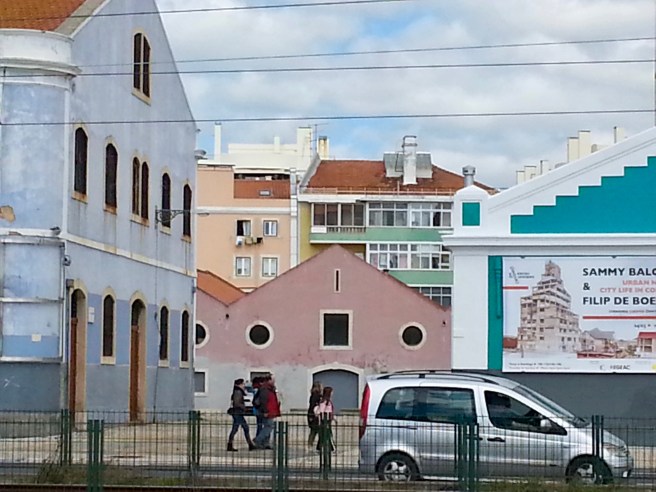
 and enjoyed the port architecture (so different from many ports I can think of)….
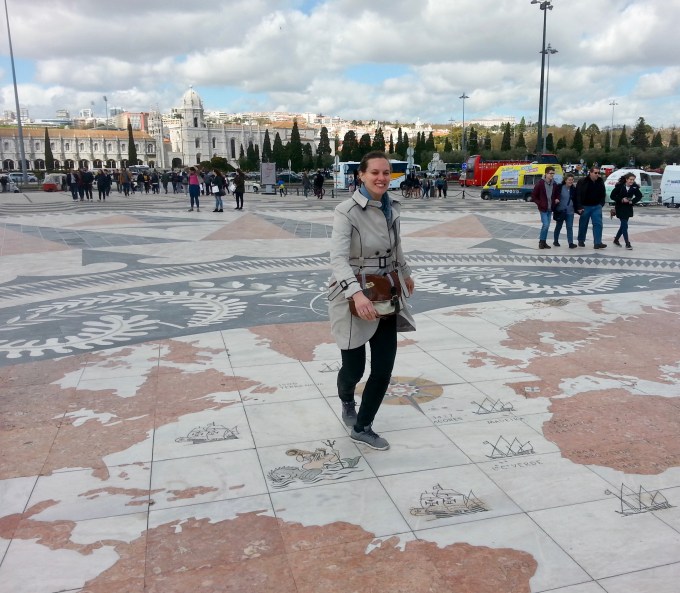
 and thrilled Jennifer (only joking) by letting her stand on Brazil….in this rather nice map of the world…..
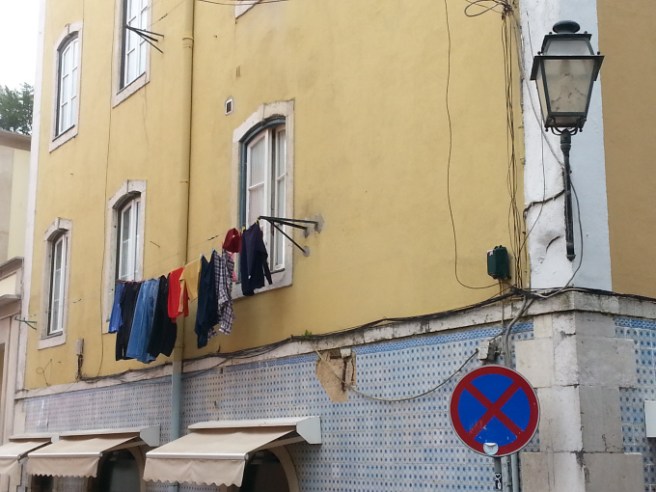
 Our next stop, past some more stylish buildings was the Alfama district by far the oldest of all districts in the capital of Portugal. It has kept a strong medieval atmosphere, mostly due to the fact the 1755 earthquake had no impact on the area (given the solid dense rock foundation of the district).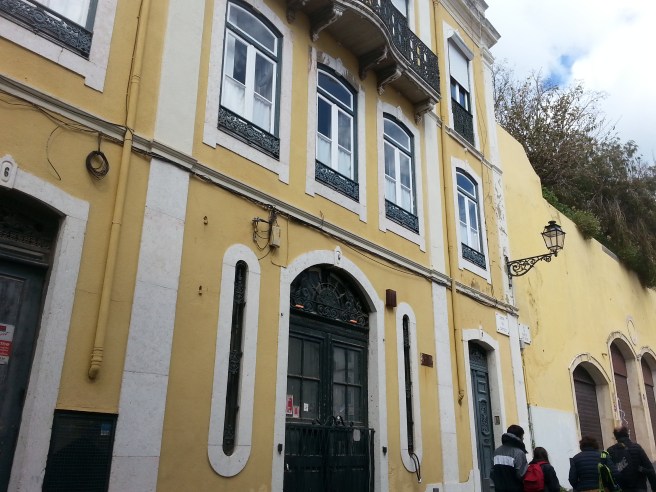

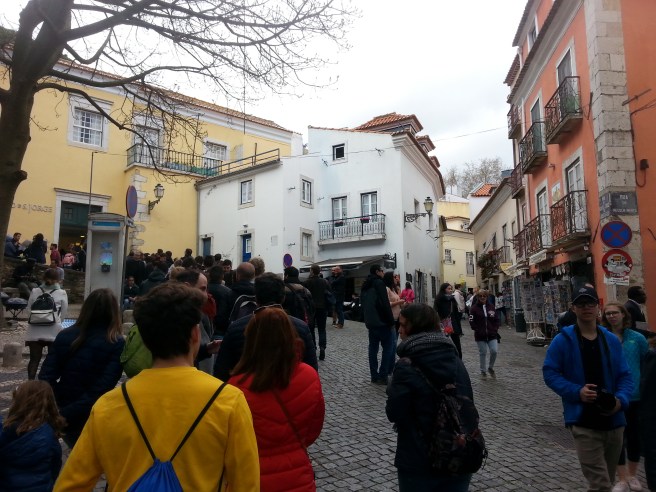
 at the top of the hill is the imposing castle of St George which we visited.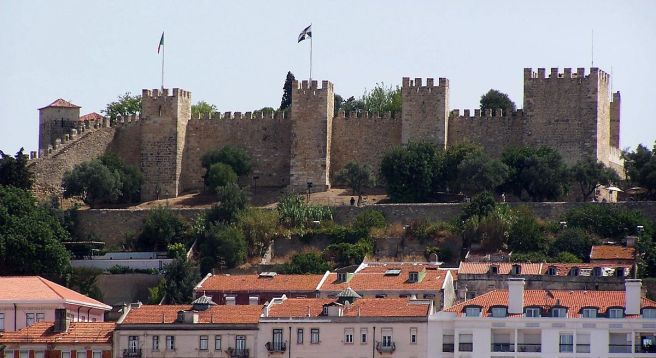
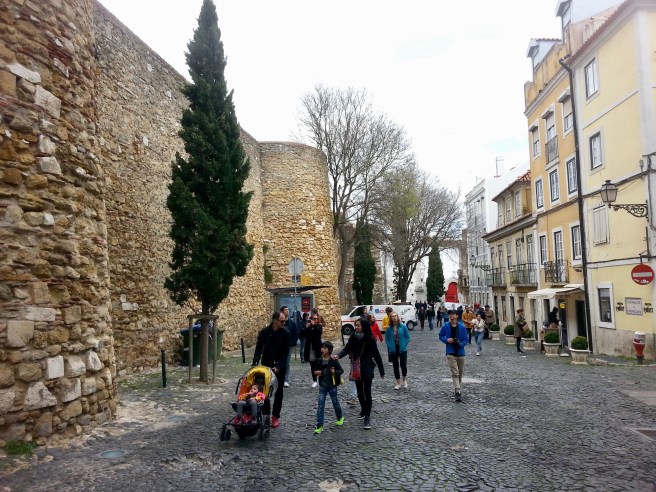
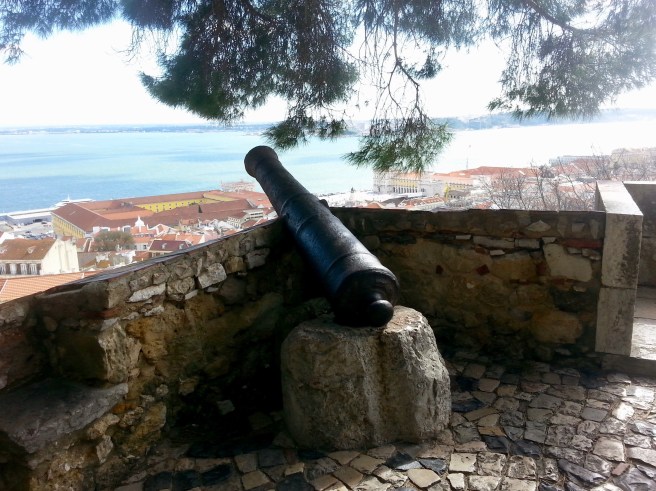
 Very interesting history…Moorish at first and then captured by the Crusaders on their way to the Holy Land, at which it became a royal palace and fortification for King Afonso Henriques in 1147. Its battlements and towers are well-preserved and the views of Lisbon are stunning.
Another day and more pleasure. To be honest I was just as happy wandering the streets near our hotel in the commercial sector and admiring the different styles of buildings. Pity there is no book on ‘the buildings of Lisbon’ or come to that ‘the buildings of Barcelona’ (I have looked far and wide).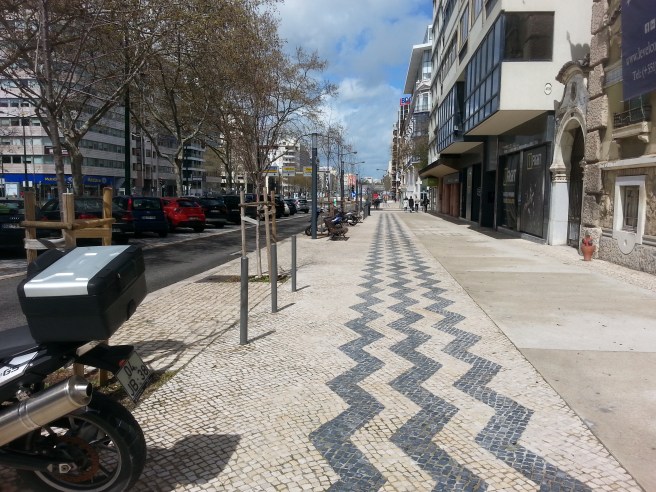
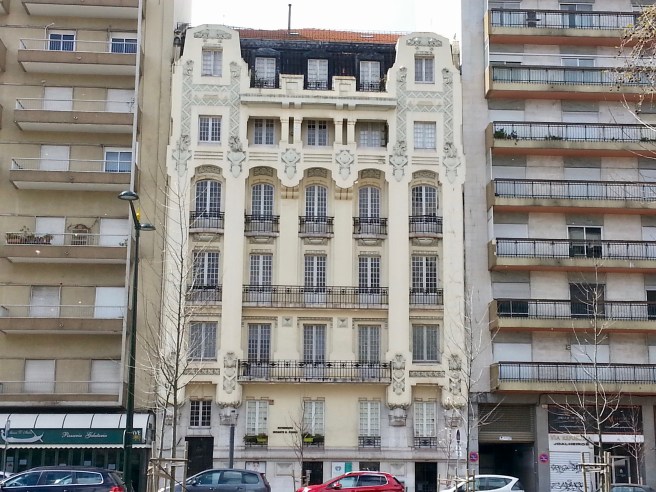
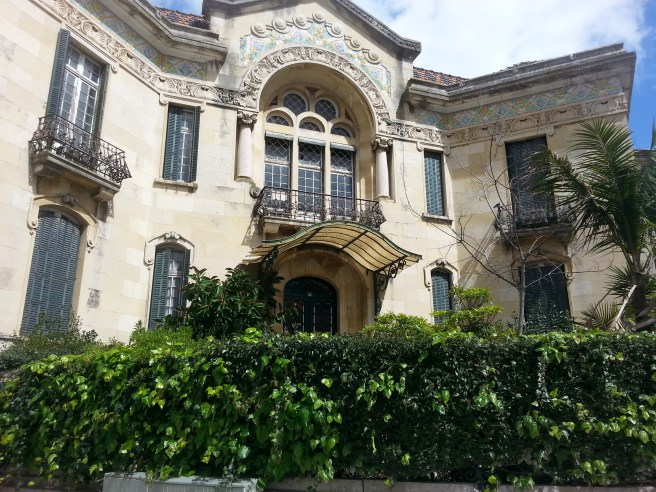
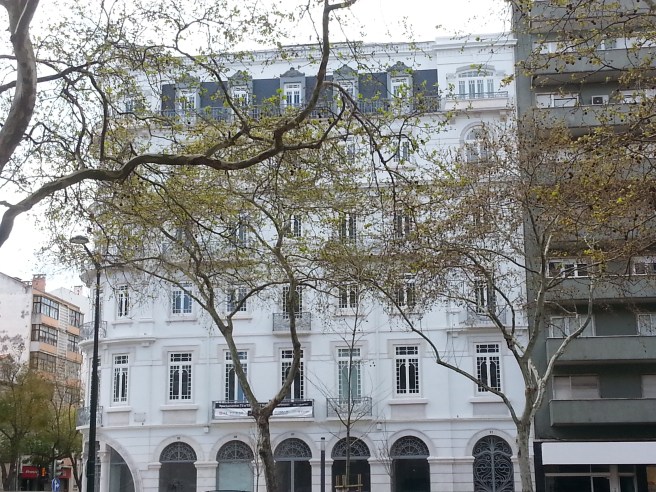
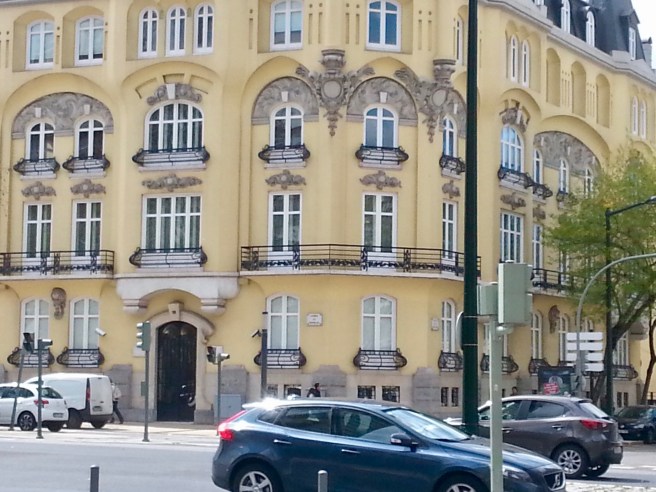
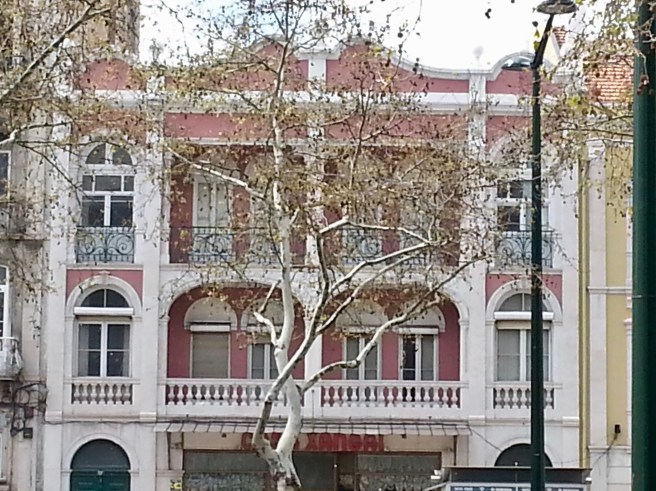
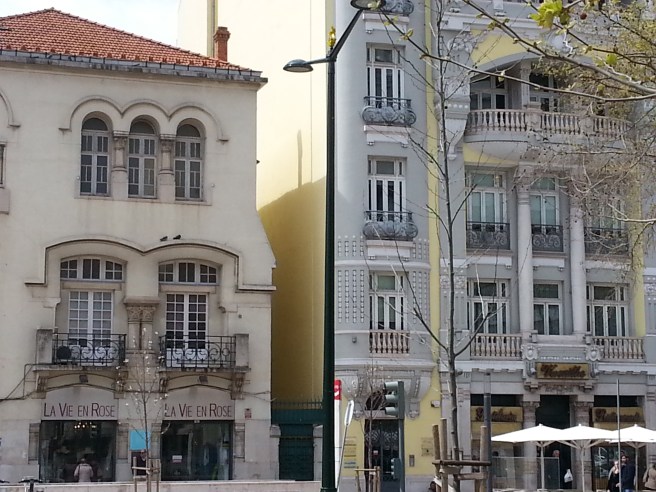
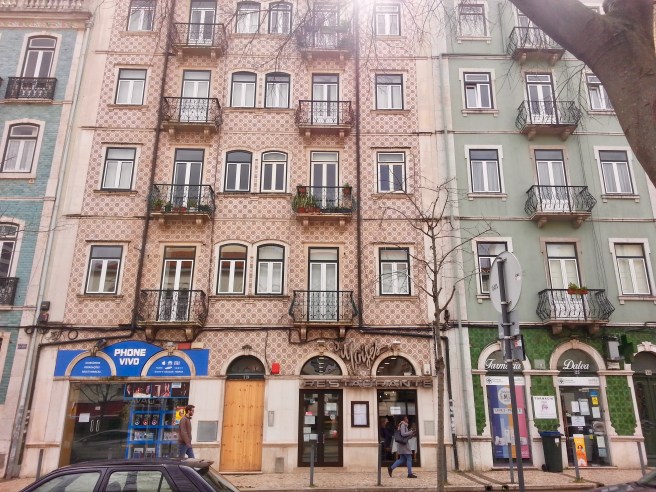

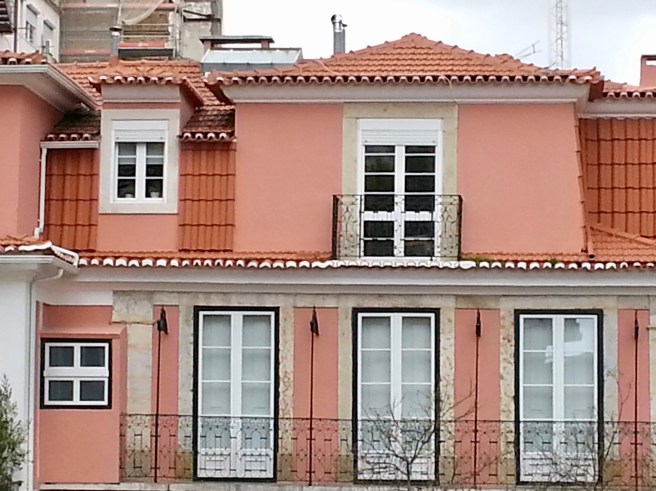
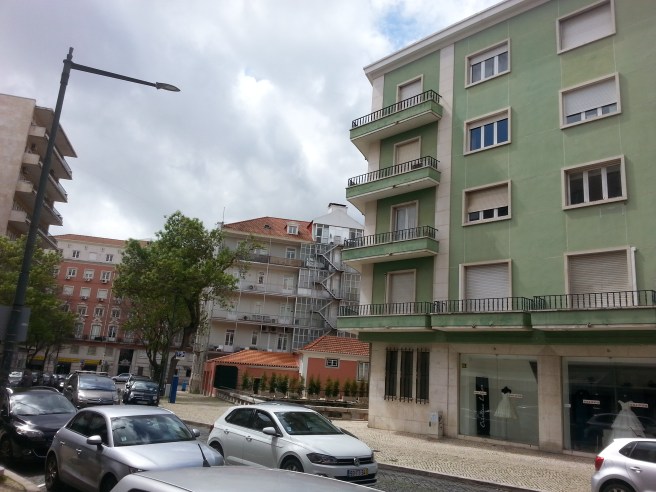 but our destination today was the Escher exhibition which we had noticed was on when in Belem. It really was worth the admission price (cheap). It was fascinating to learn how Escher’s work developed and how it became of interest to scientists and mathematicians (amongst others).
 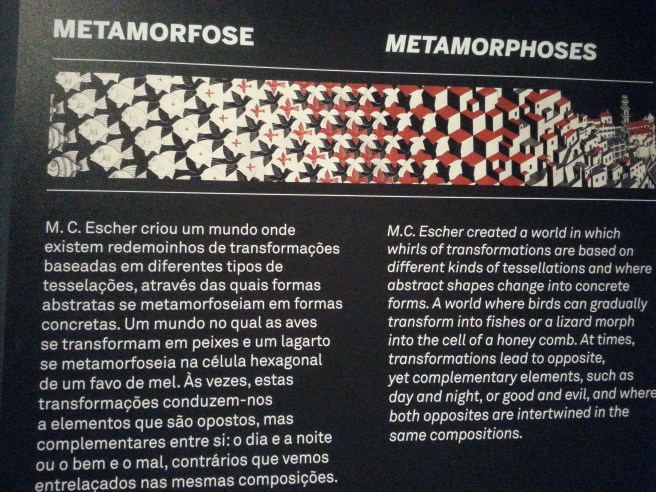 By looking at his earlier prints and lithographs of stays in Italy and Spain, of nature, and of Moorish art, you could see how this would lead him eventually to the works of ‘impossibility’ for which he has become so famous…
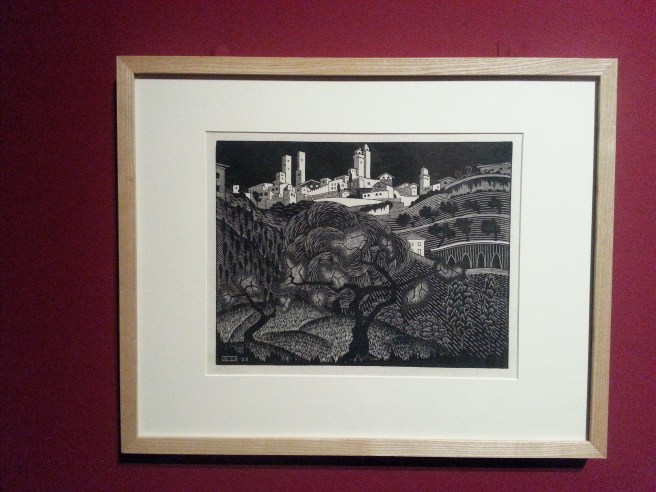
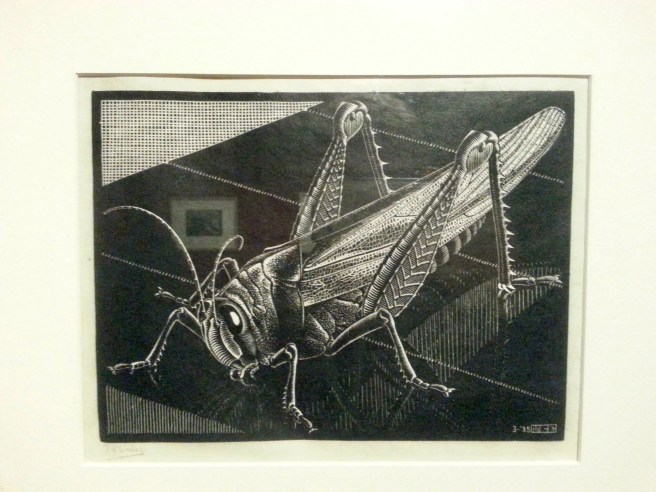
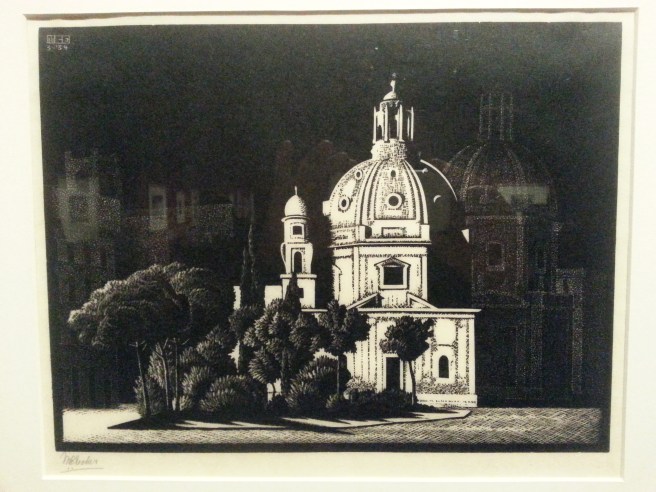
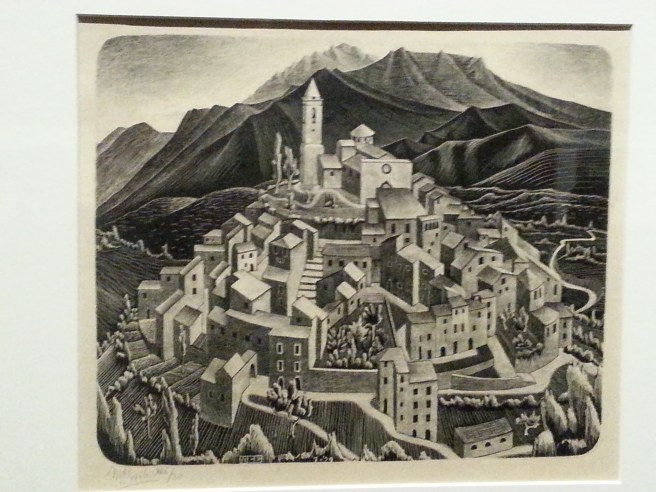
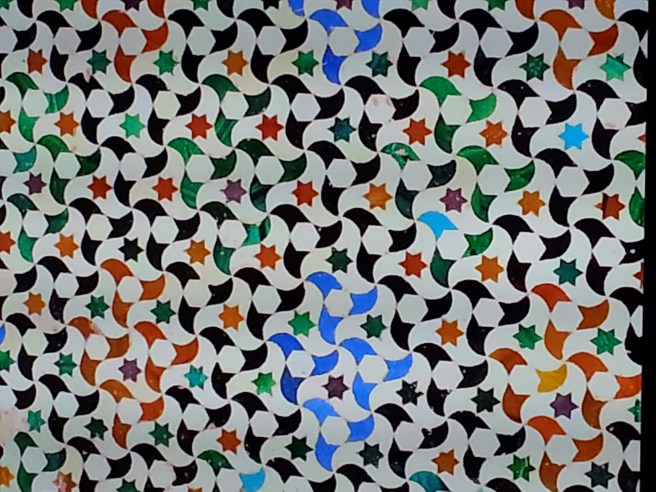 It was his minute viewing of detail that led him onwards…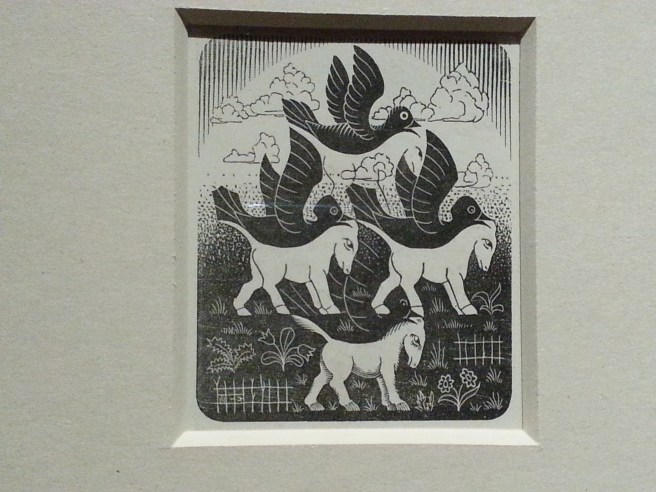
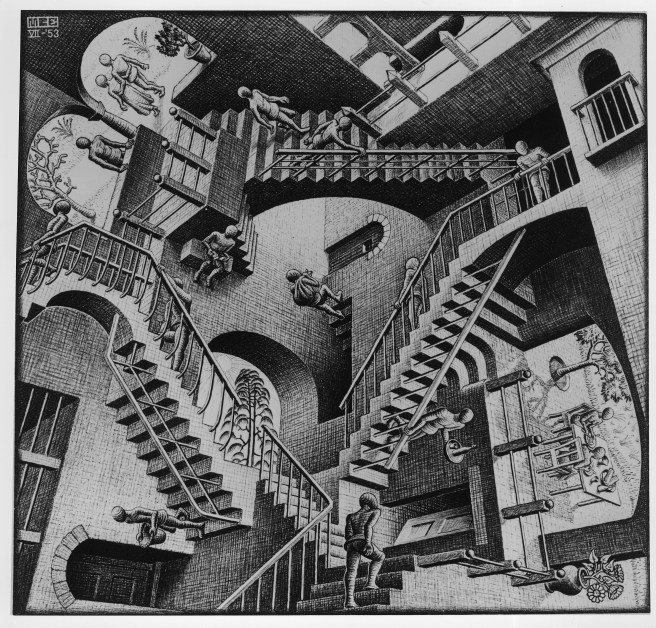
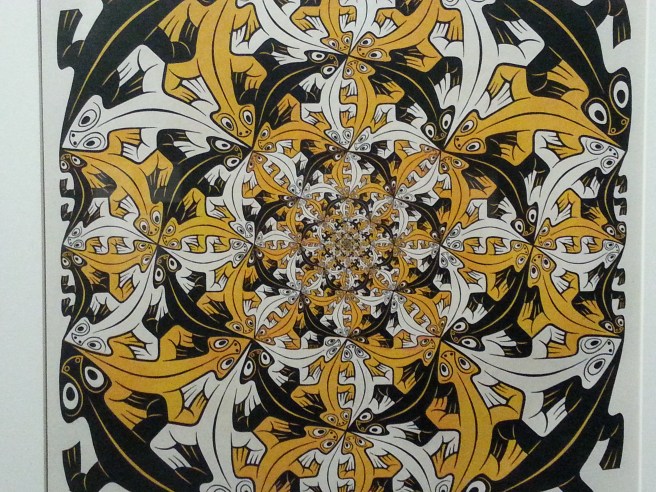

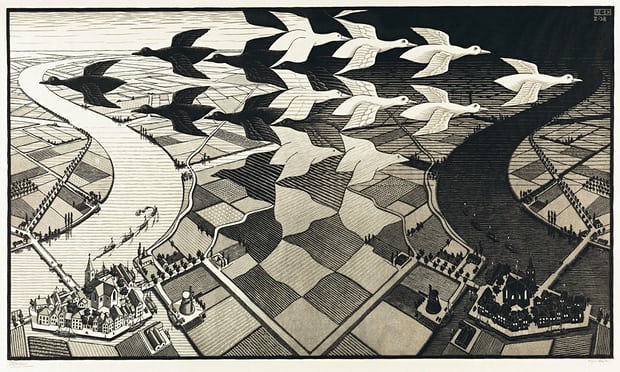 and wide interest (although strangely not in the art world) led to him doing commissions for bookplates,
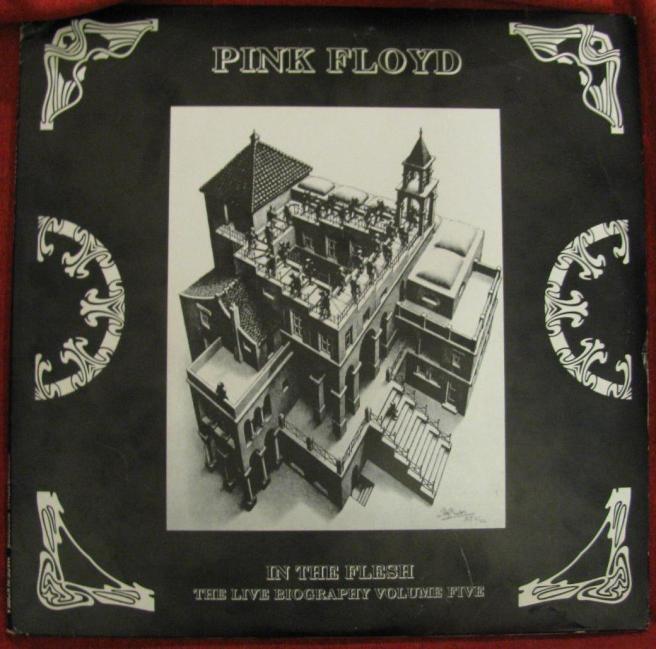
 album covers (here Pink Floyd)
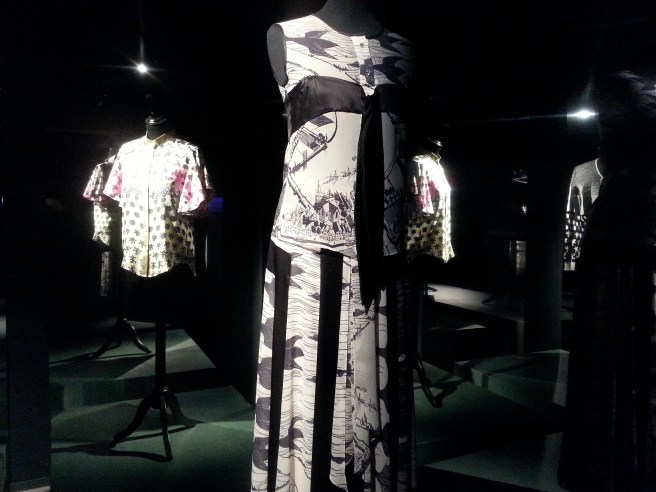
 and even fashion….
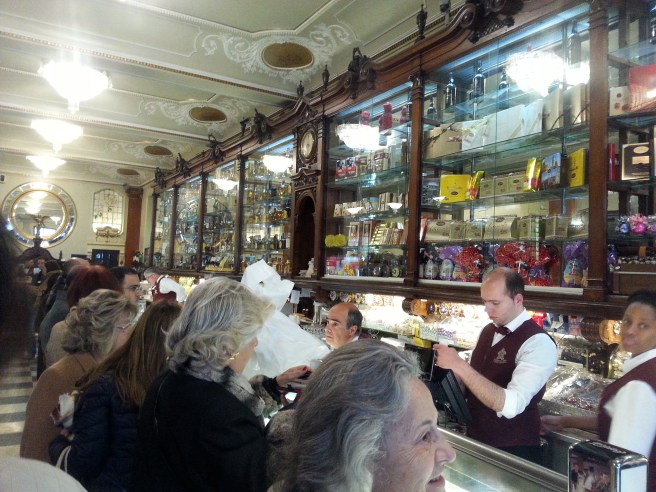
 Not all exhibitions hold your interest all the way through, but this one did. From the exhibition we went to meet one of Jennifer’s friends who lives and teaches in Lisbon, Tanya. We met near our hotel in a lovely old-fashioned tea rooms which reminded us of Betty’s in Harrogate….A lovely friend from whom we learned a terrific amount about Lisbon and living in Lisbon. I feel guilty about not inviting her with us to dinner.
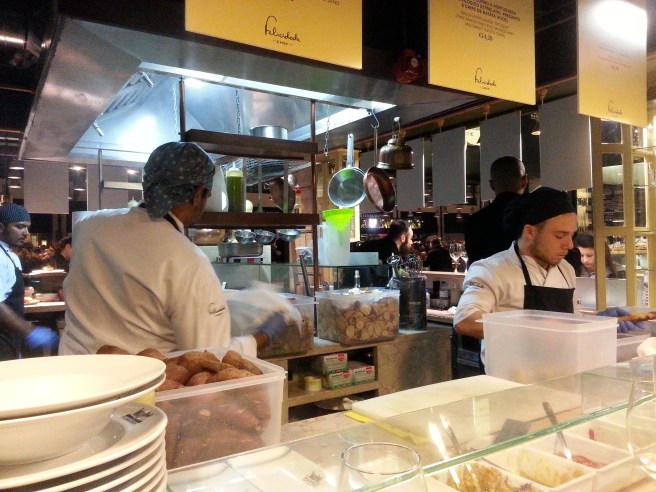
 Our meal this evening was in a Times recommended restaurant in the Market, the largest market in Lisbon, the Mercado da Ribeira which as well as selling fantastic produce during the day (which we missed), also houses a large food pavilion created by Time Out where some of the city’s top chiefs have bars….for on the ground floor this is just like some street market of your dreams, unlike anywhere I have ever seen, and with a buzzing atmosphere from the crowds of mainly young eaters. What an amazing place. Being slightly separate upstairs we went to Pap’Açôrda, one of Lisbon’s most iconic restaurants, and we were not disappointed. Fantastic food (including their signature chocolate mousse served from the biggest bowl of chocolate mousse ever seen), fantastic value. One of our best-ever meals.

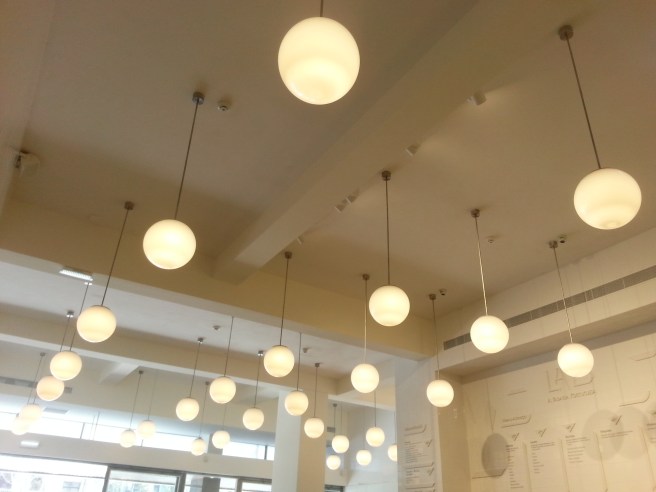
Next day started with breakfast at Lab near the hotel, a pristine, wonderful bakery with incredible value and delicious food.

 We then took the train to local seaside hotspot Cascais, along with lots of Lisboans and enjoyed a pastel de nata on the sands soaking up the sun….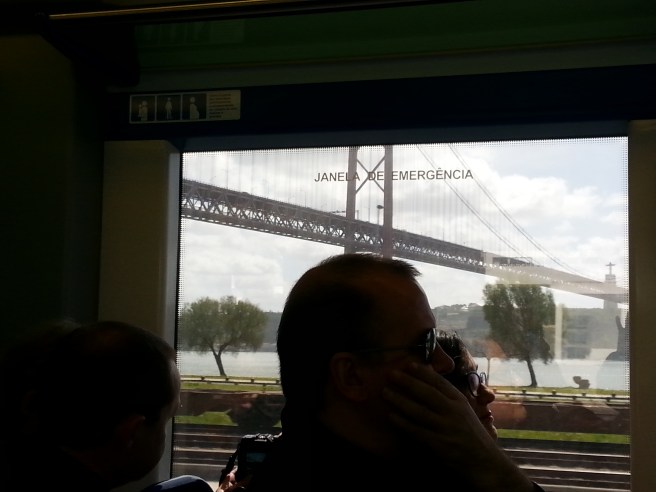
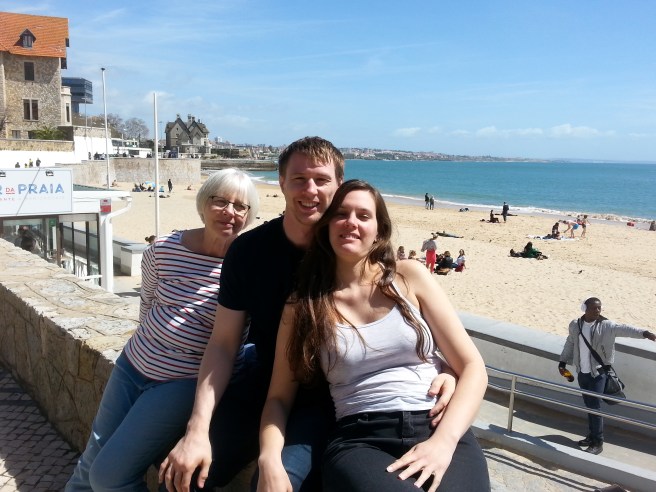
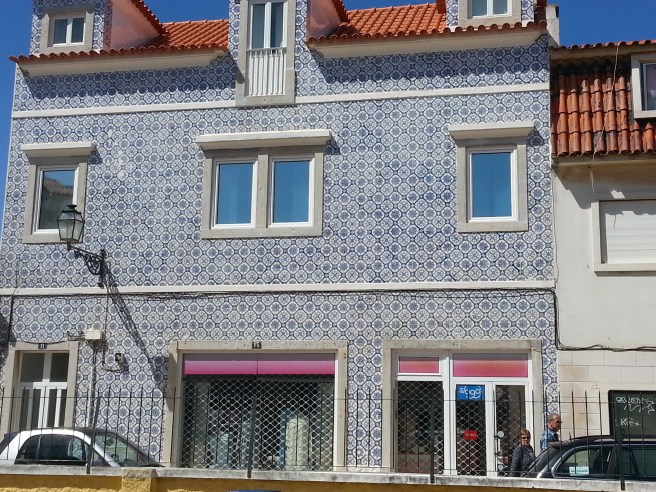
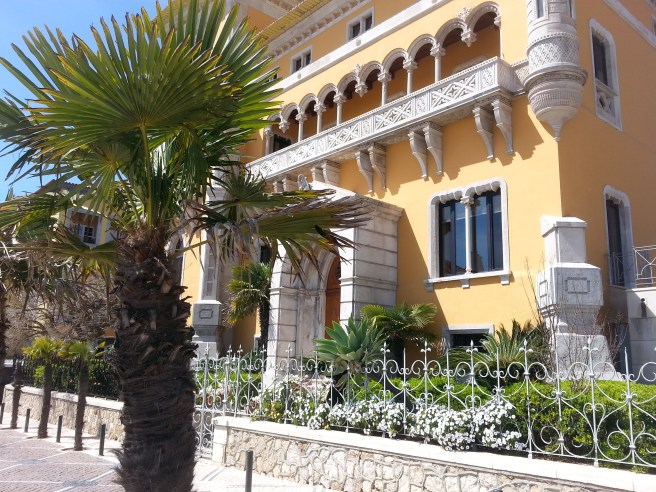
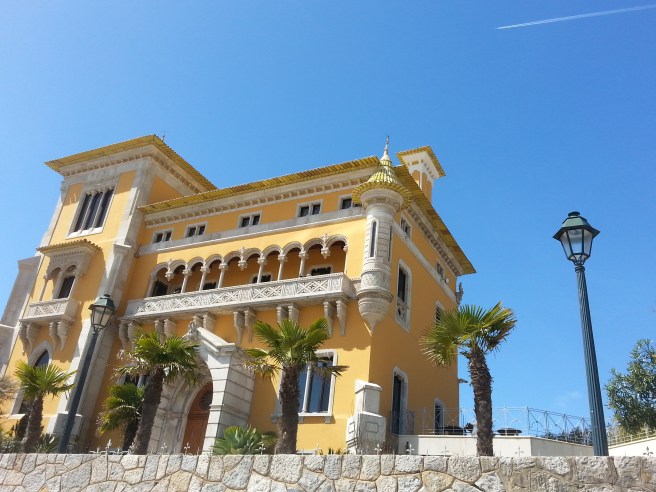
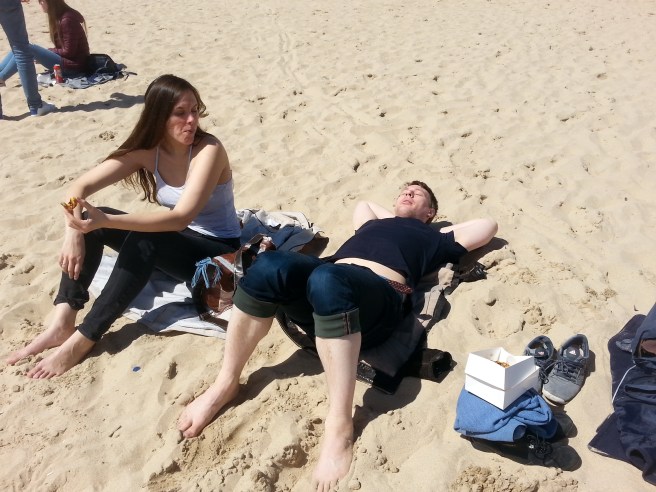 before wending our way through tourist streets and back streets, again admiring the architecture…and the pavements…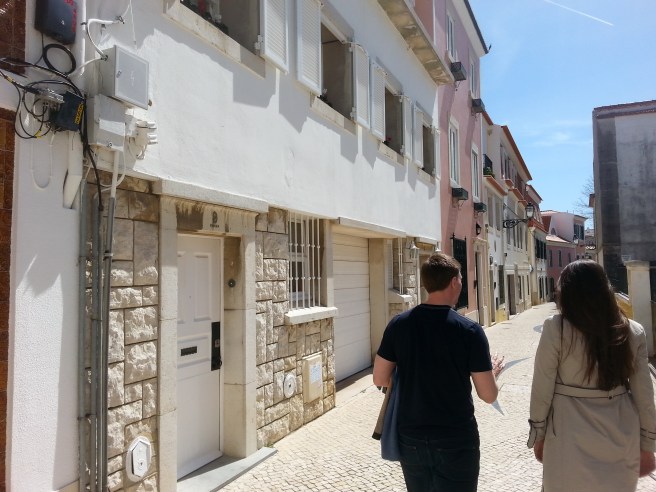

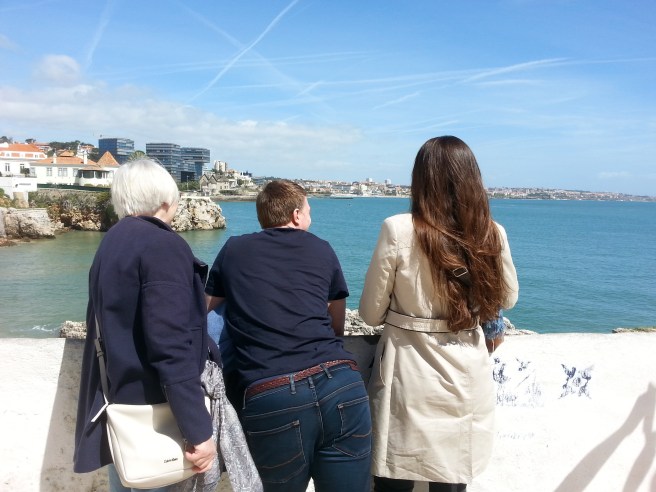 up the hill, past the citadel in order to lunch at the marina and get a shot which is iconic…very nice too….
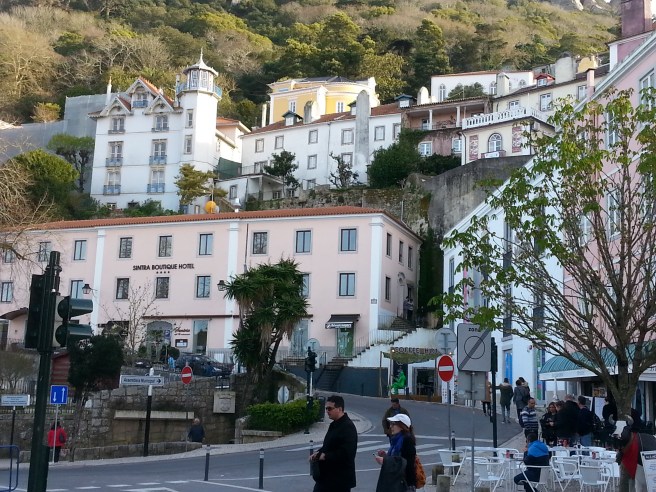
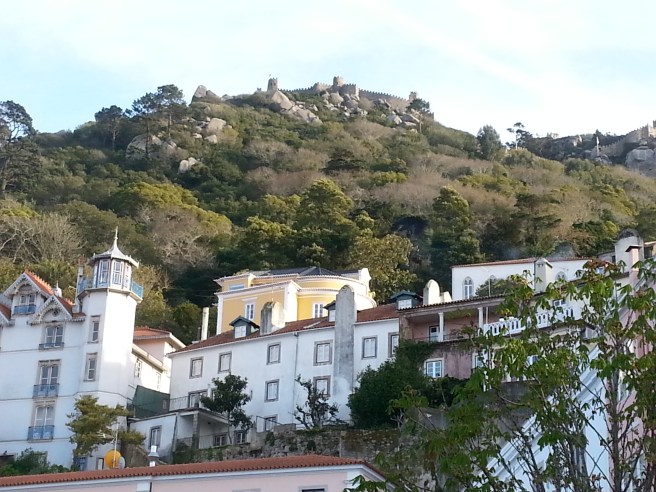
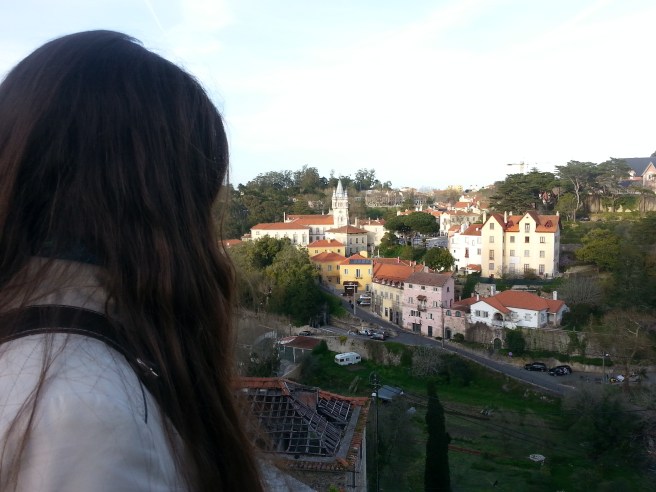
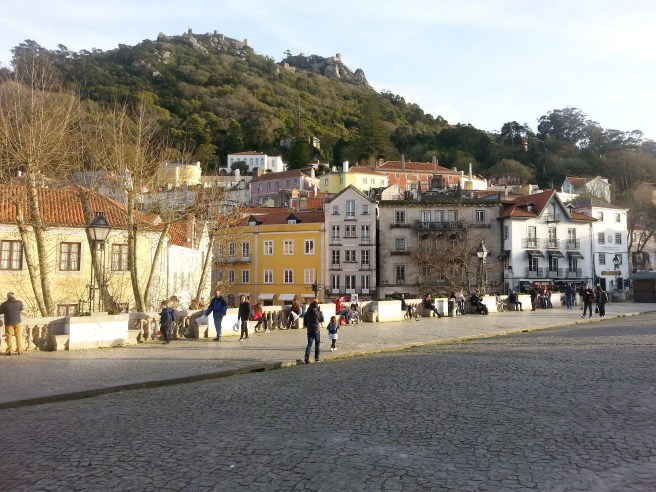
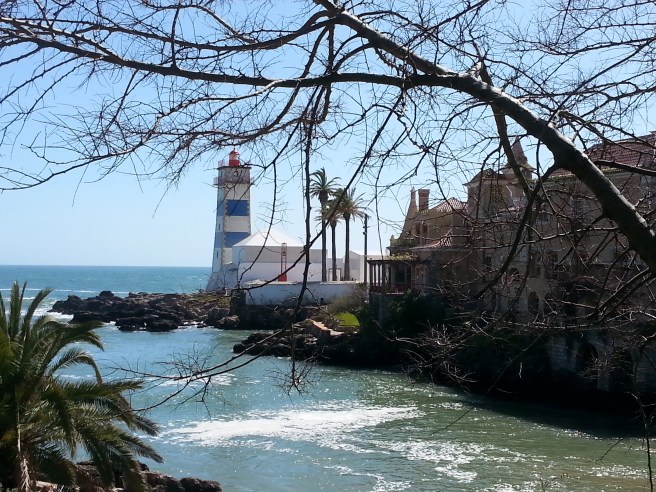 our next move was by Uber to Sintra a quite extraordinary town in the mountains where we didn’t quite manage it up to the castle or one of the royal palaces because of a snarl-up in traffic, but enjoyed very much looking round the quaint town itself and having a coffee in another traditional cafe full of atmosphere …….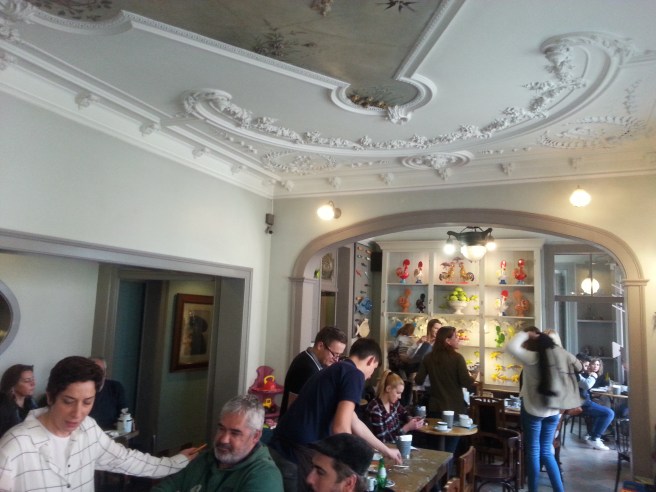
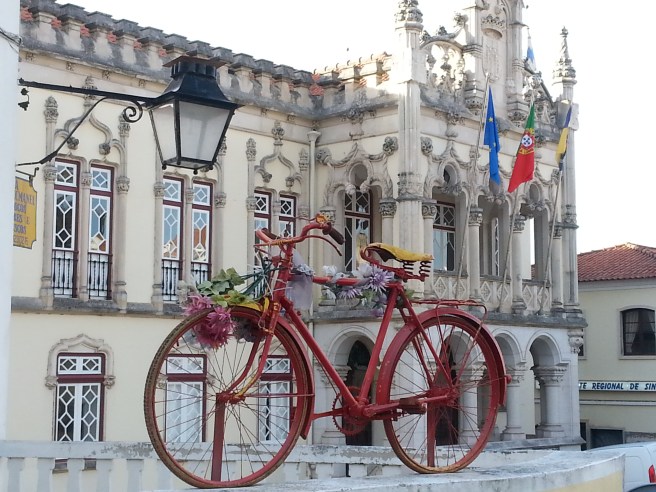
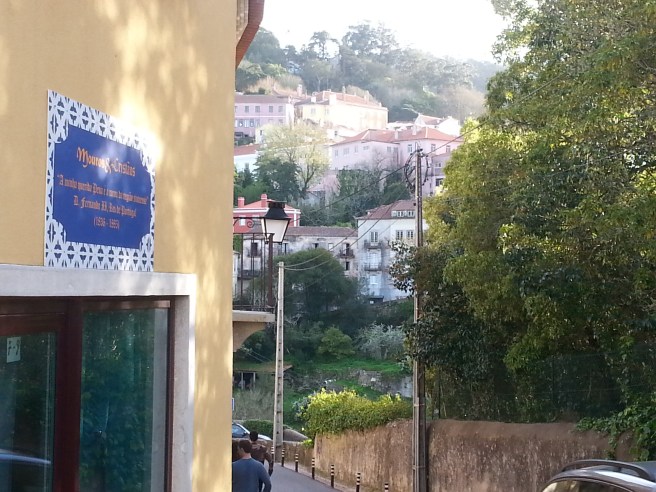

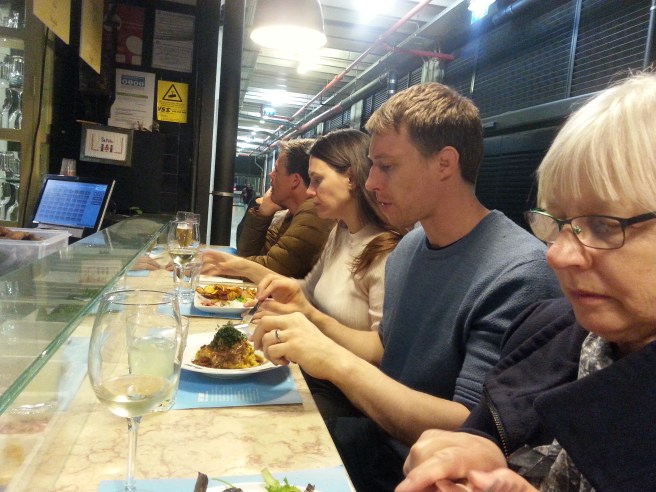
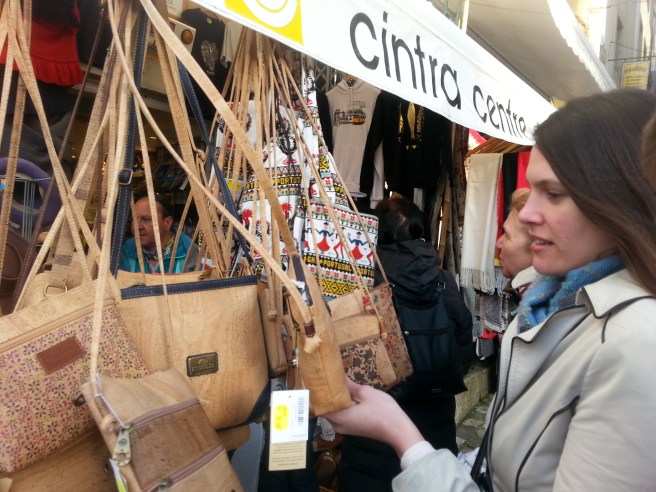 on our last night we had to decide where to eat, a no-brainer really….theMercado da Ribeira in an attempt to find the stall where the Times correspondent had had pork cheek on mash. Again the whole ground floor was swimming with people all enjoying themselves immensely and there didn’t seem a seat to be had anywhere. We were so lucky to find four seats in our last trawl up the aisles, two on either side of a local couple who charmingly moved so that we could sit together……..and the incredible bit was that this was exactly the place where pork cheek was served. We did enjoy our food, the vino verde, and the atmosphere, as our studied concentration shows…..terrific.
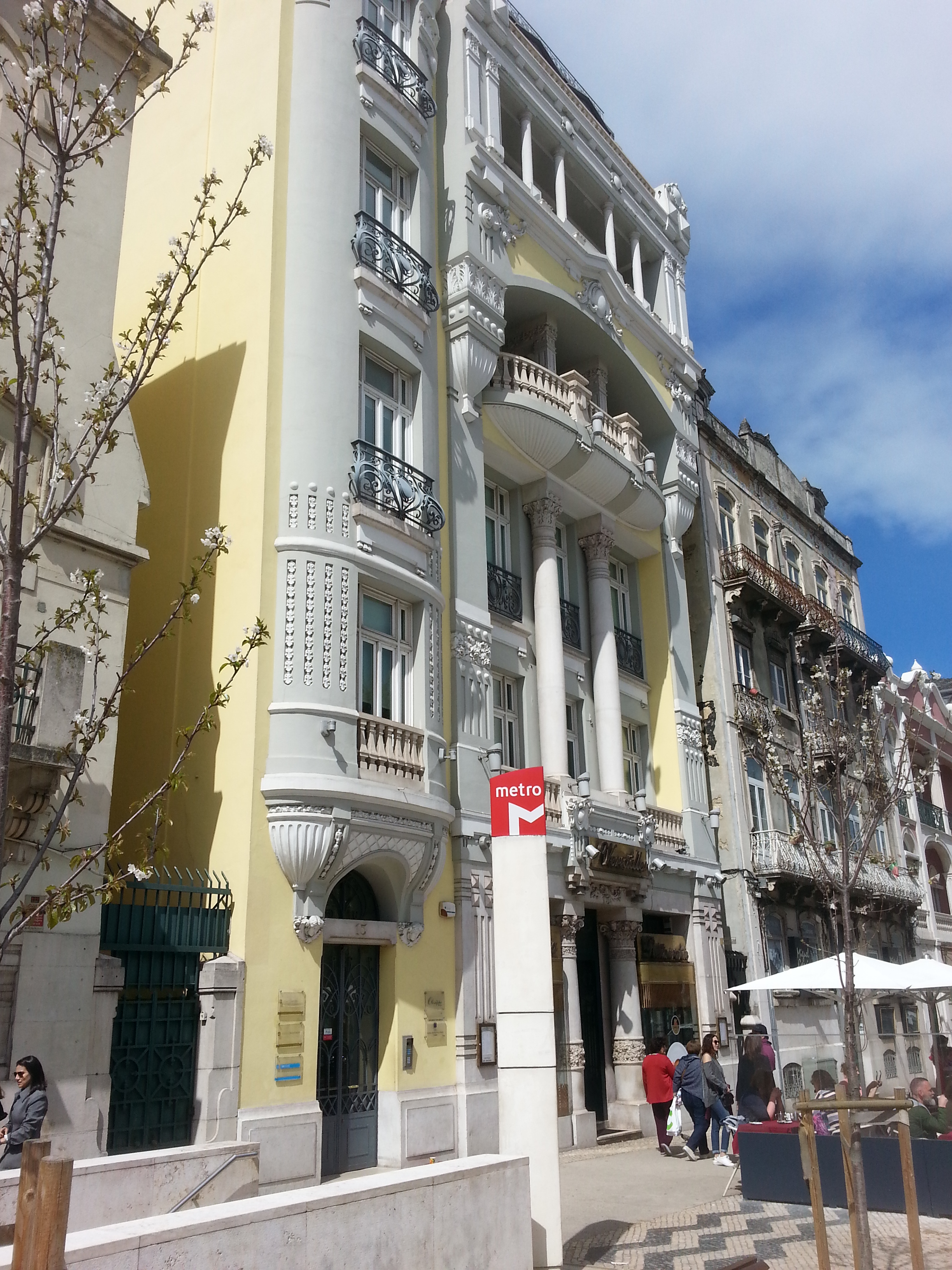
So, our last few hours in Lisbon, what to do? A stroll down the streets from our hotel with its quirky mural for breakfast at Lab (of course). Then into town through more beautiful parks and past more really interesting architecture….

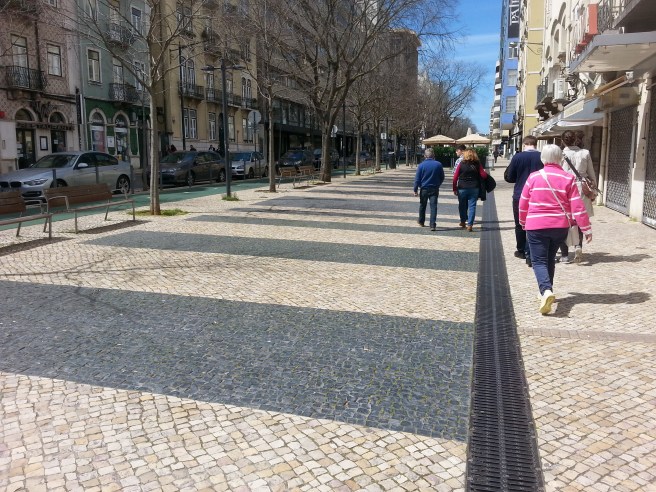


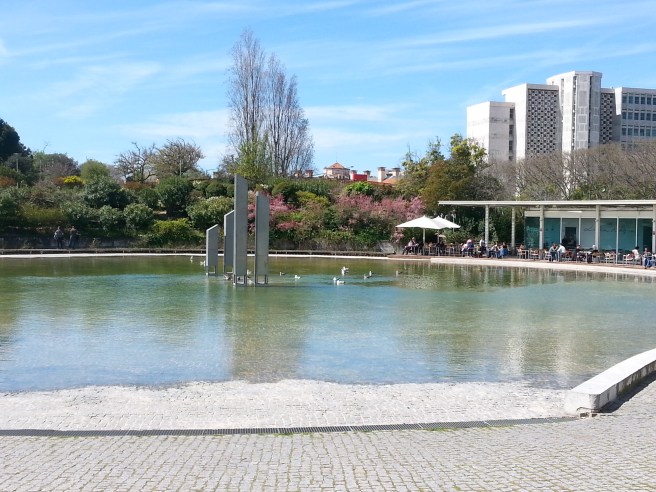
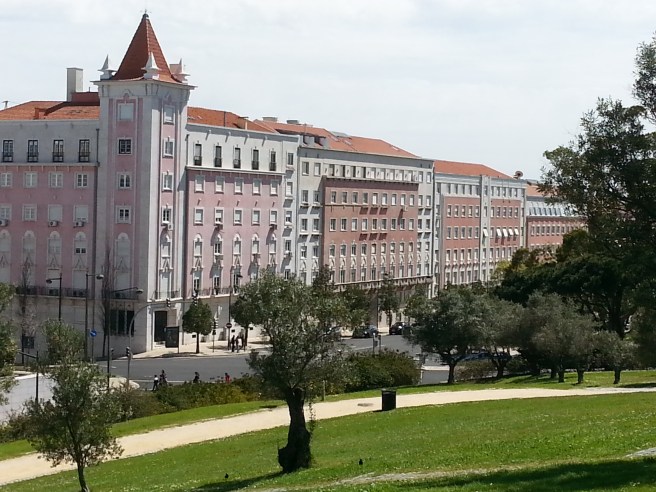


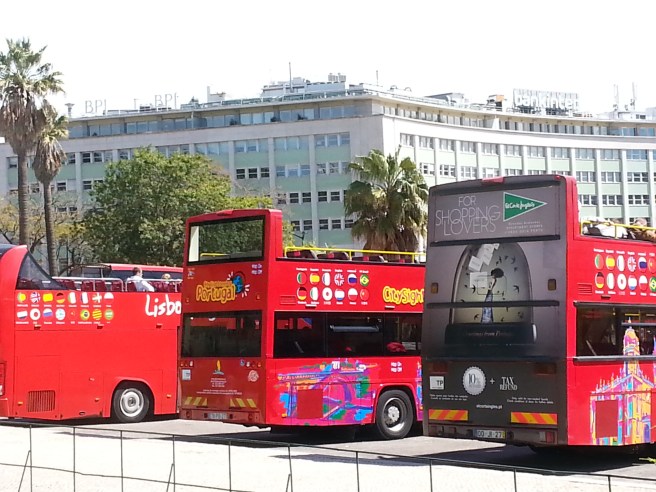




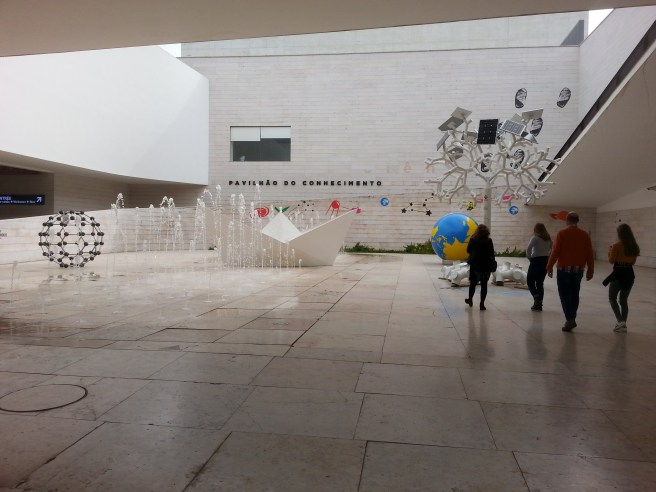
Finally, on Tanya’s recommendation by Uber to the Parque das Nações which was built for Lisbon’s Expo 98. It’s a futuristic new town of modern apartments and gardens flanking various tourist attractions, including a casino, science museum and an Oceanarium which is one of the largest in Europe. It made a very different diversion for us, and i even managed to go on the cable car with enjoyment….a first.
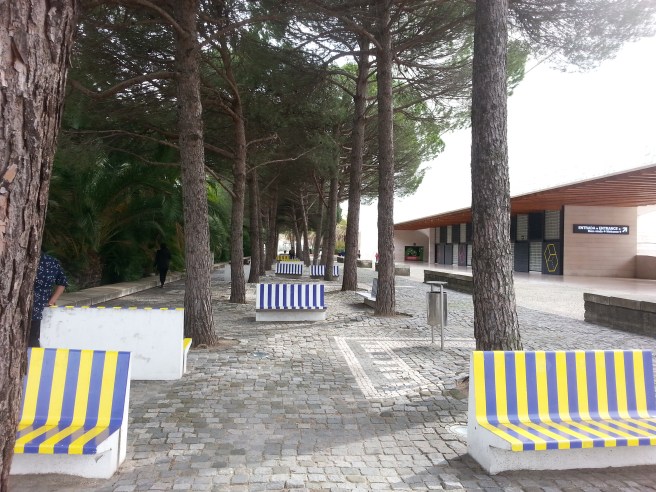


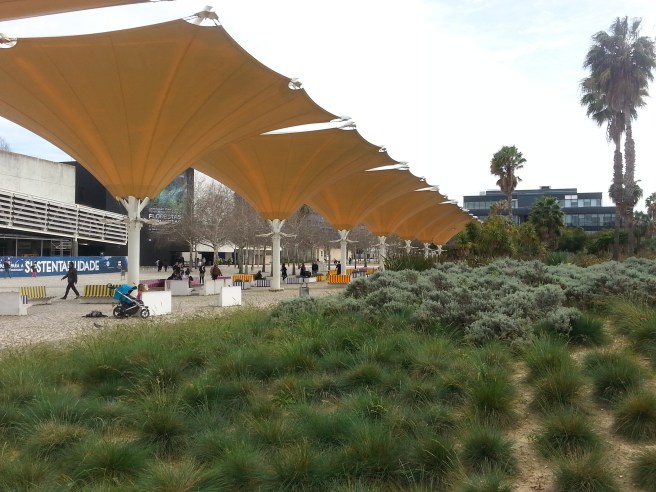
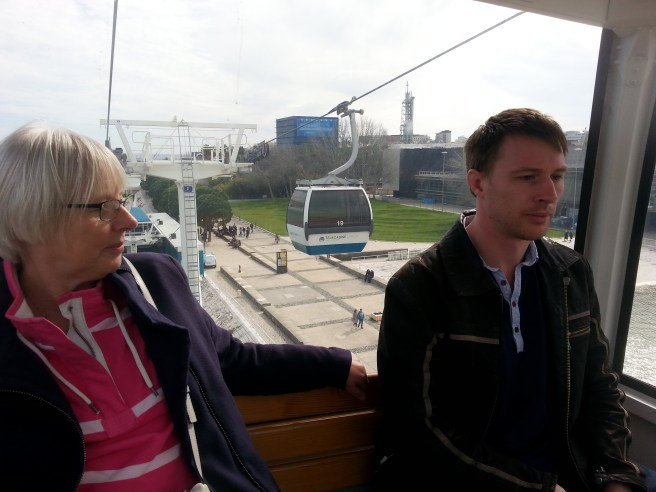

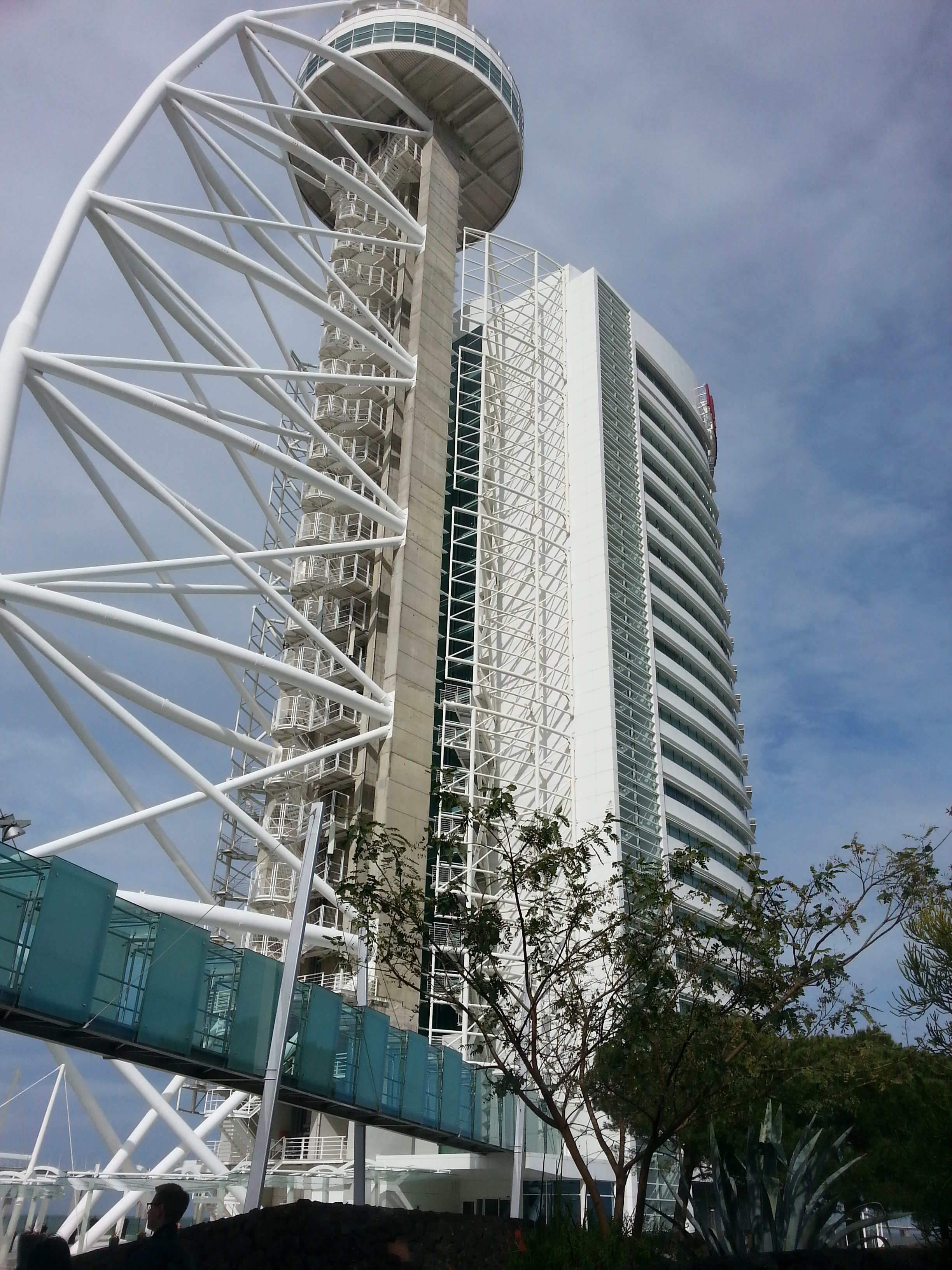
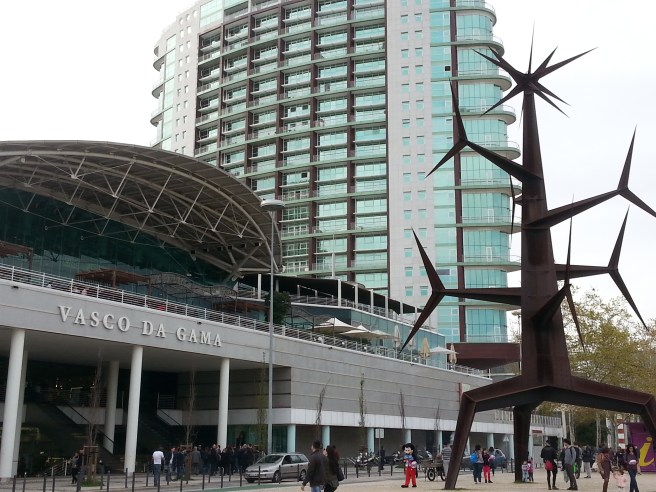
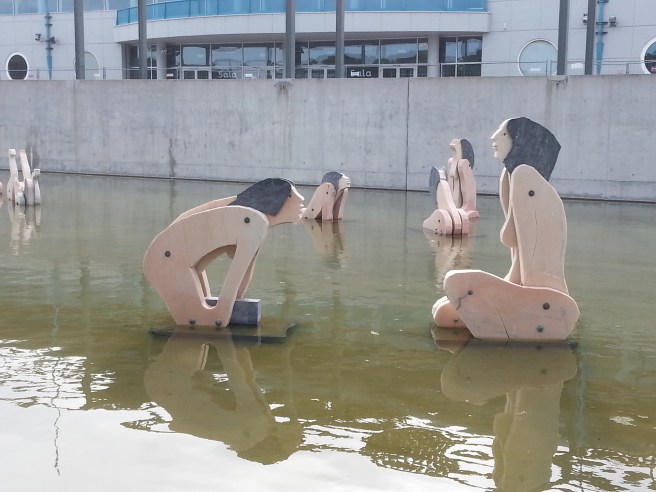
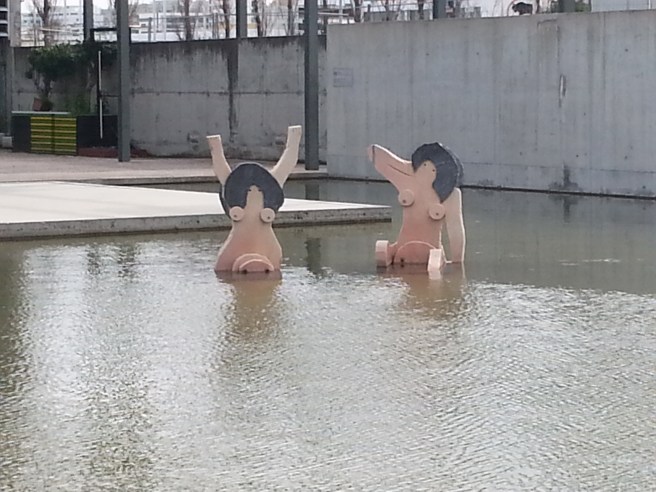

As you can see a quirky, colourful, pleasant, clean, interesting capital city which we all really enjoyed. Can’t wait to go back. Thanks David and Jennifer…..
Back to a rainy London, but when you are away you forget how wonderful London really is, what incredible architecture and art it contains…..we were off to the Tate (never visited before), but I simply couldn’t resist taking pictures of the buildings we passed on the bus and walking….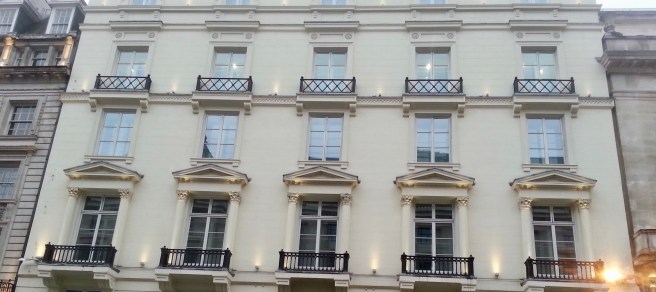

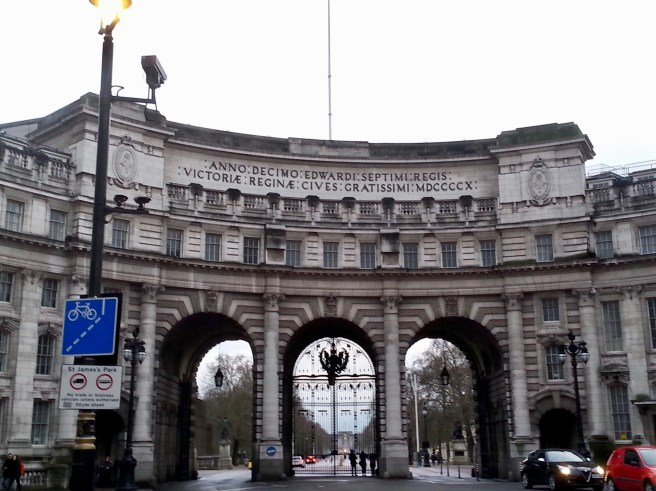


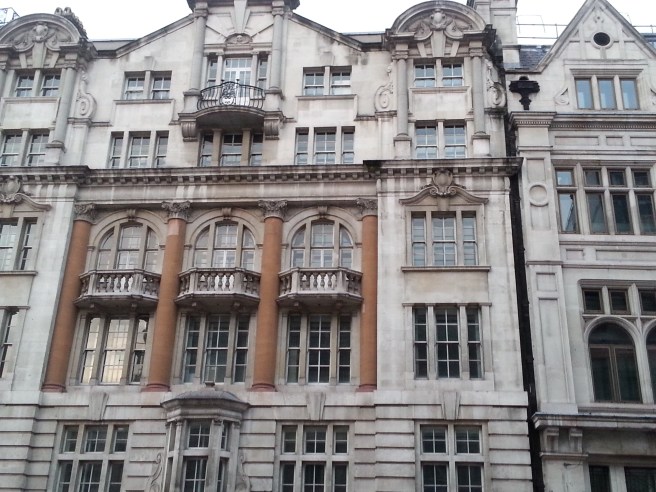
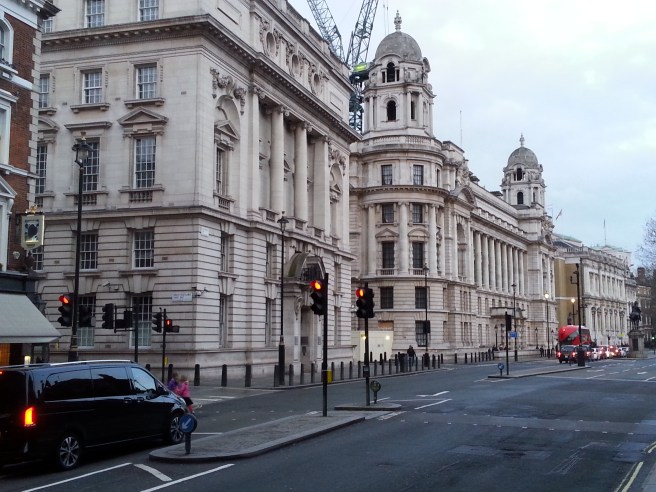

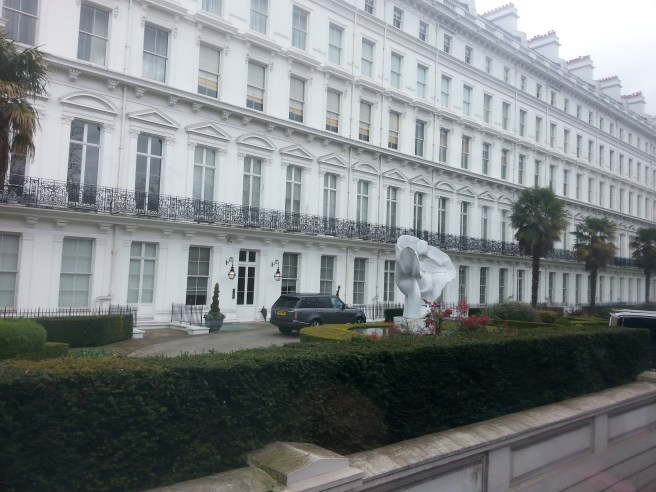
And so the Tate…..it’s a bit late in the day for me to be going to these wonderful places for the first time, but probably that makes my wonder and enjoyment even more powerful. It was a great building….
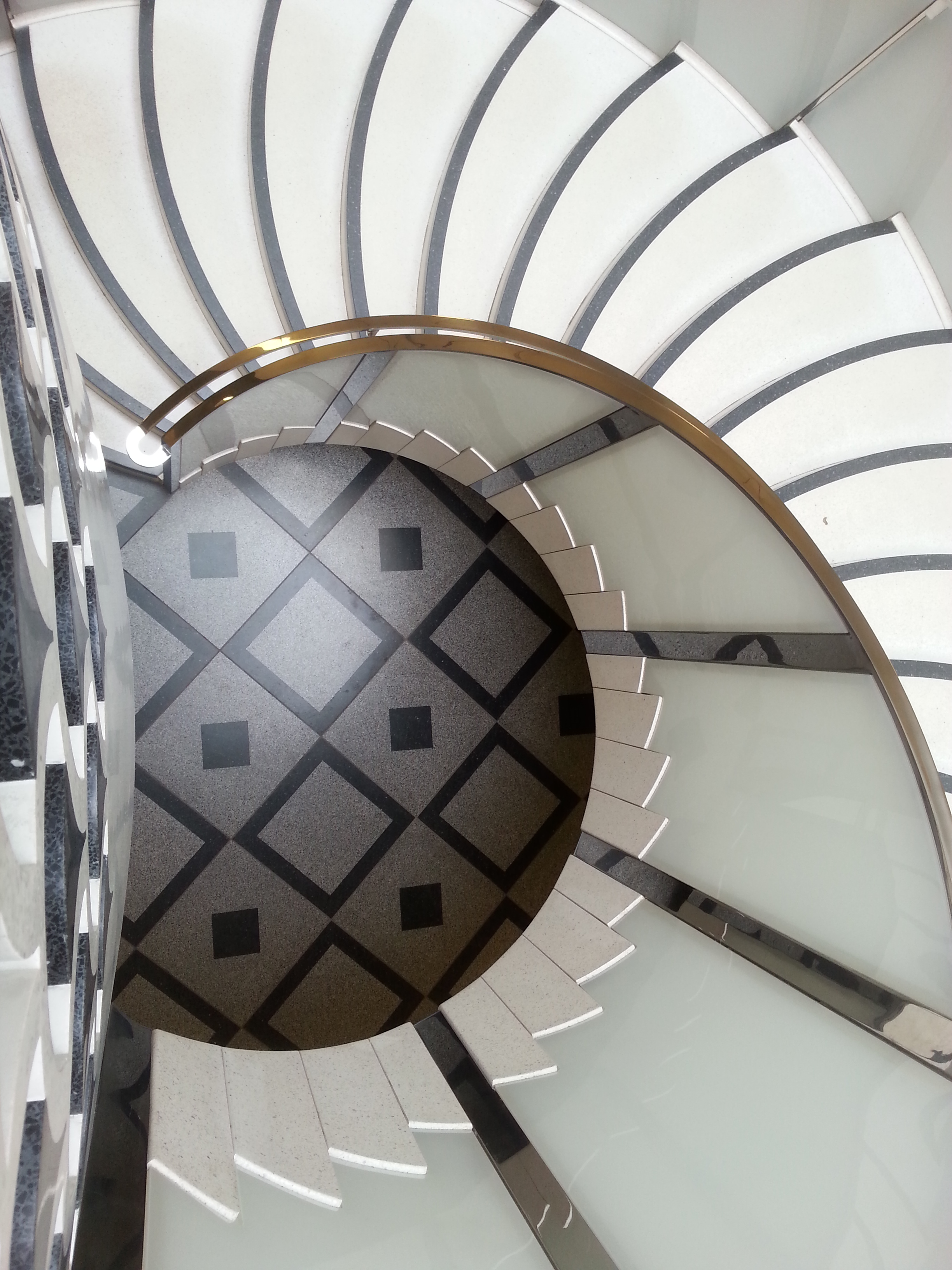
 with all the ‘additional’ bits and pieces you would wish…..
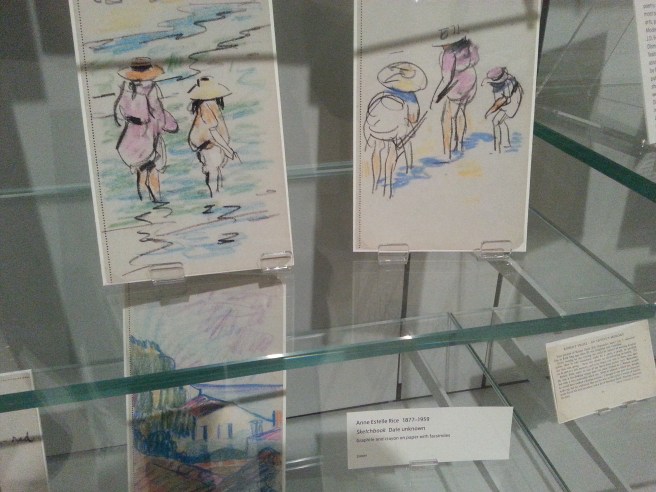 but absolutely marvellous to see art in the flesh within touching distance one had only seen in books or on TV…how infinitely better to see the real thing…..
 and to see the development of British art through the ages (which is what the Tate is all about)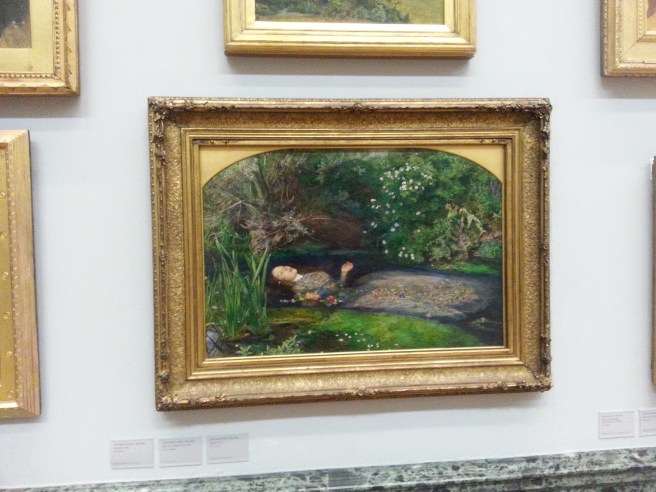
 art so luscious at times you could eat it!
 extravagant busts by Le Sueur…
  and a bust of Wellington cleverly placed in front of a canvas of Waterloo…
 and statues so tactile you wanted to touch (too many people around of course)…..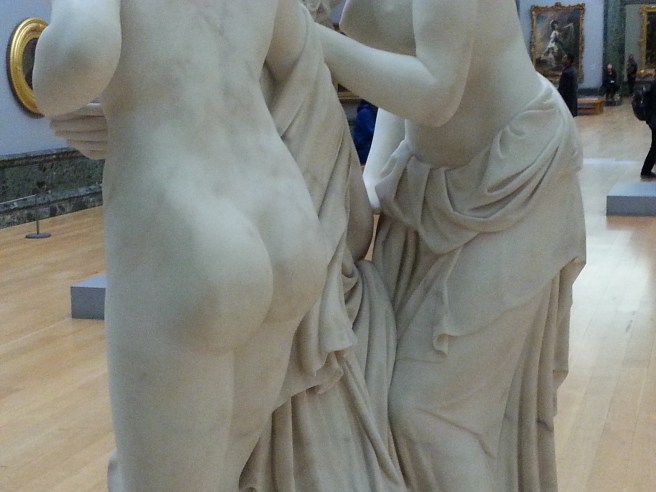
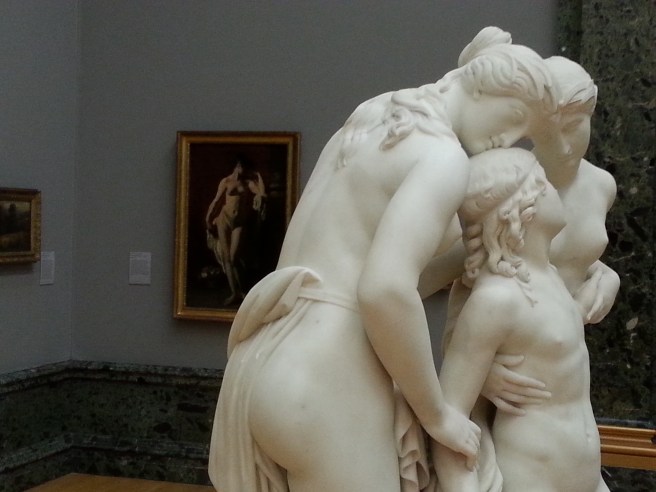 and what a really good idea Reynolds had to picture a young lad as Henry The Eighth
 and to finish we enjoyed a guided tour around the paintings of Turner (of which the Tate has the most incredible collection)….so much better than wandering around on our own to see it through the eyes of an expert….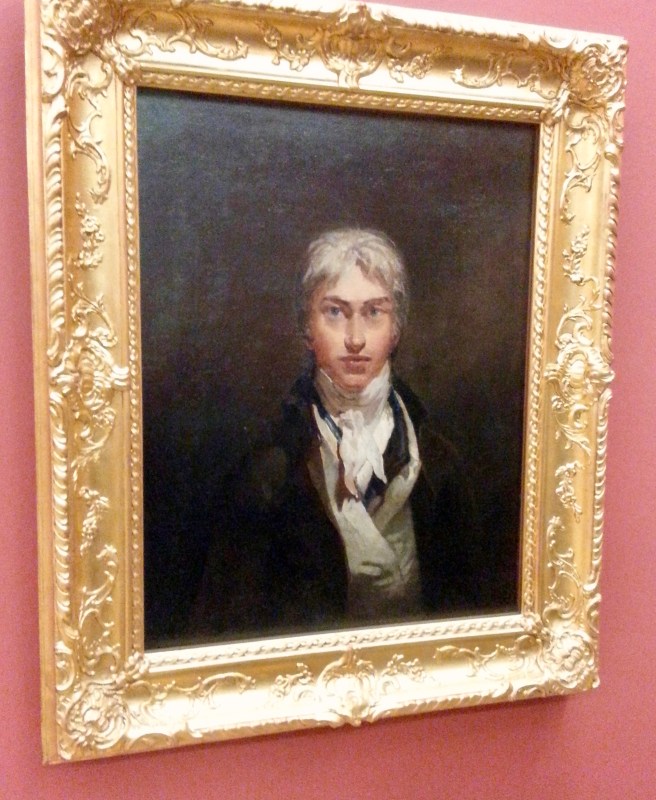
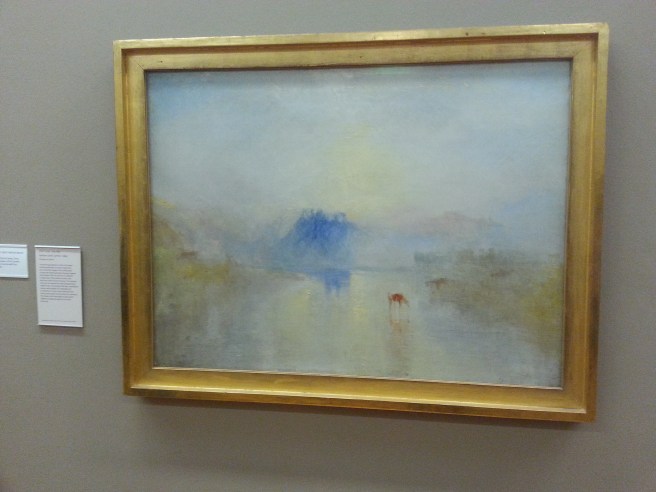
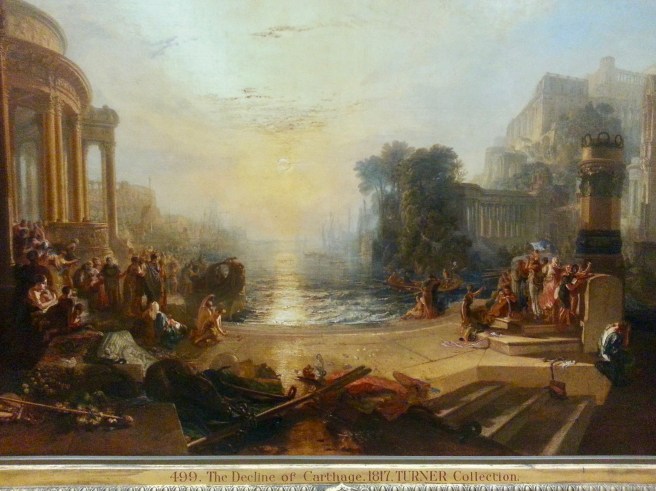
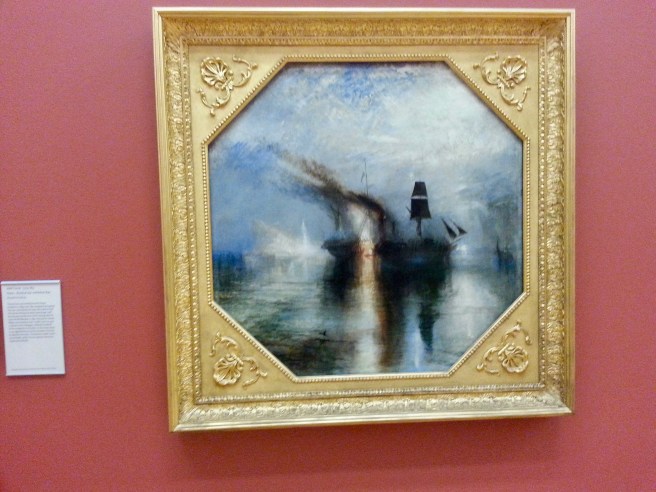 a tremendous experience, and how lucky the Art School next door…….
An evening was spent seeing the area where Jennifer is to start her new job – the Embankment….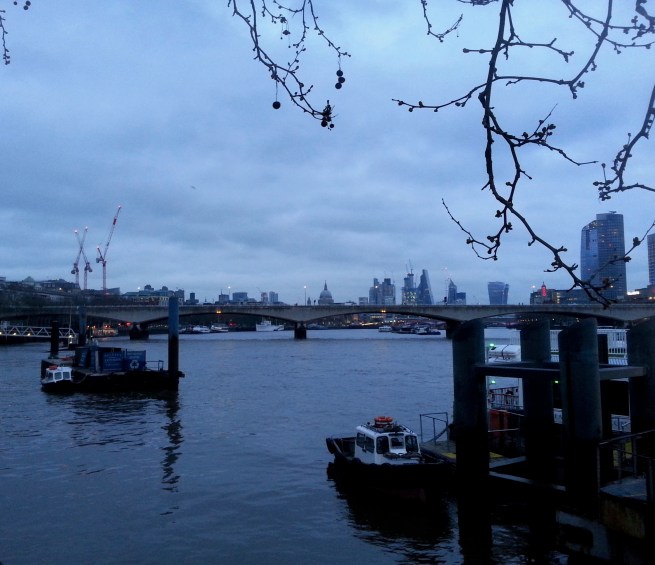
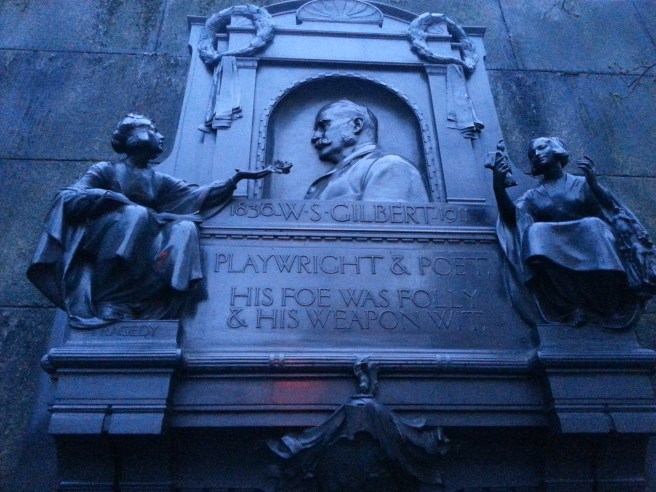
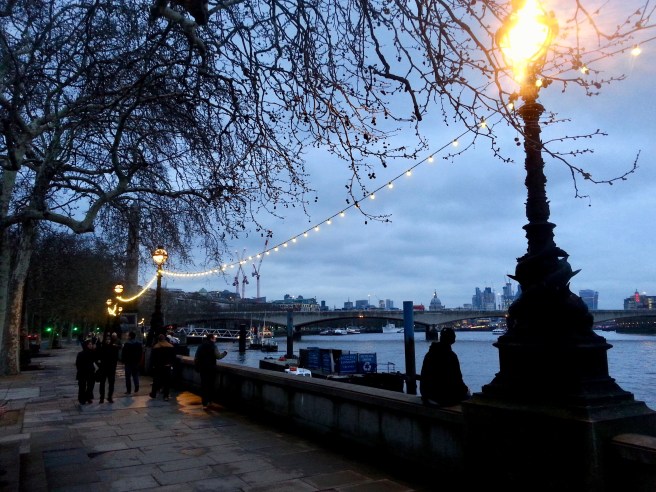 plenty of interest around…a memorial to the very great W S Gilbert
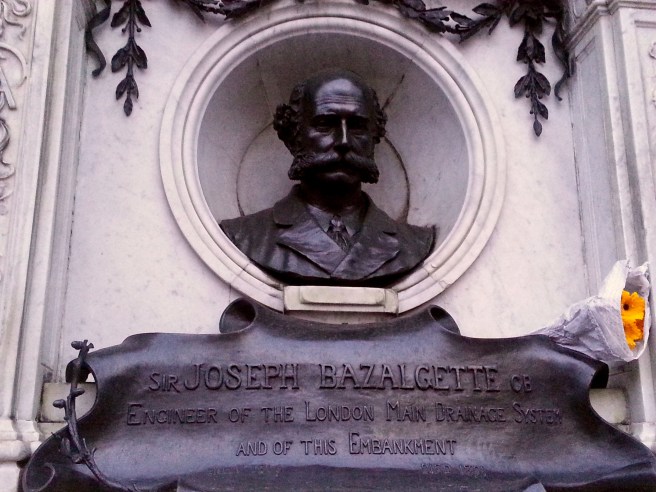
 and one to the King of London’s sewage……(and much else to be fair)
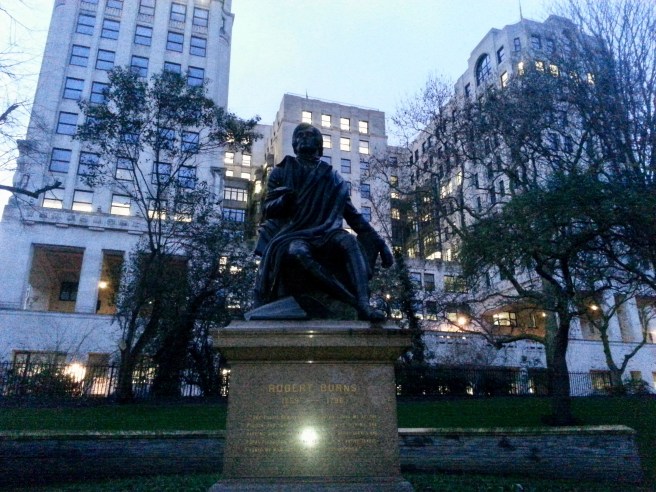
 and she will be working in the iconic Adelphi building, very impressive indeed…strange that there should be a statue of Robbie Burns in front…..
 and after all we (or rather I) couldn’t resist a drink in another iconic building yards away…Gordon’s Wine Bar thought to be the oldest wine bar in London having been established in 1890.
 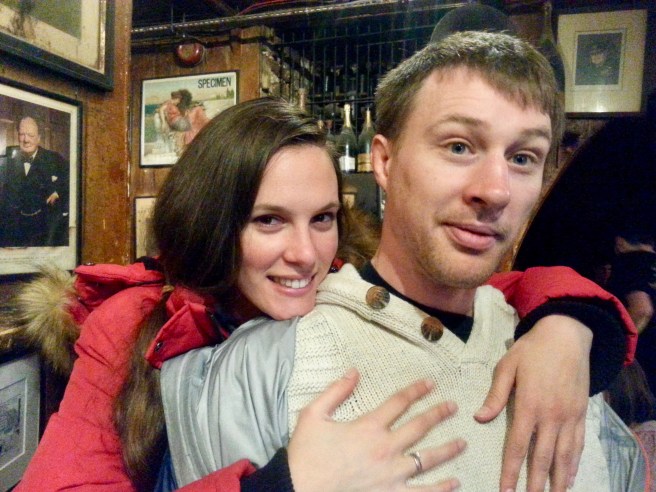 Can’t wait to meet Jennifer from work!
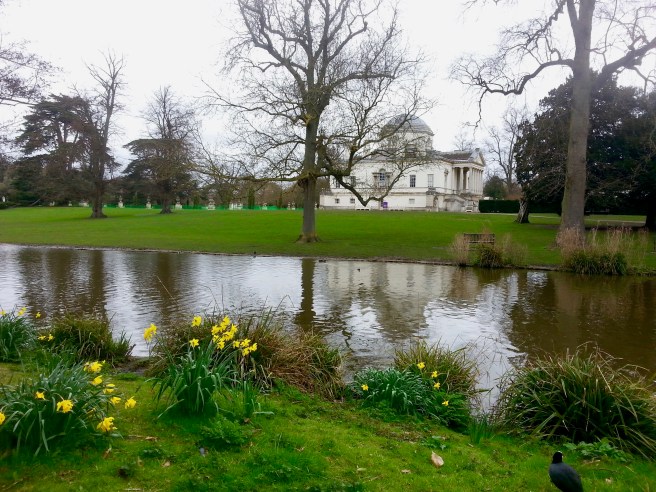
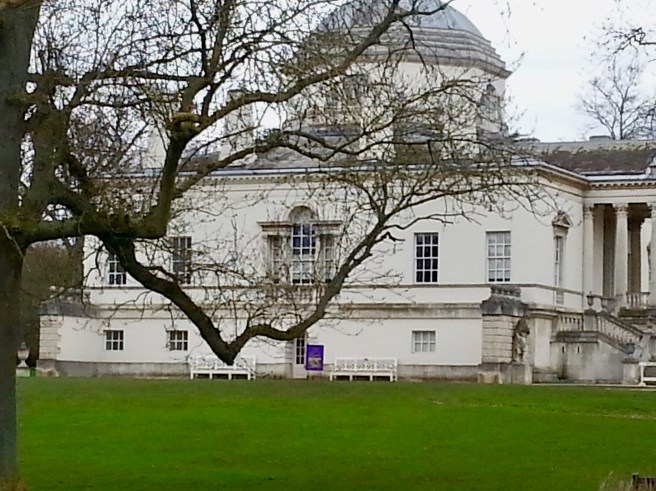
Our last morning on this lovely trip was spent using our National Art Passes once more to visit Chiswick House………
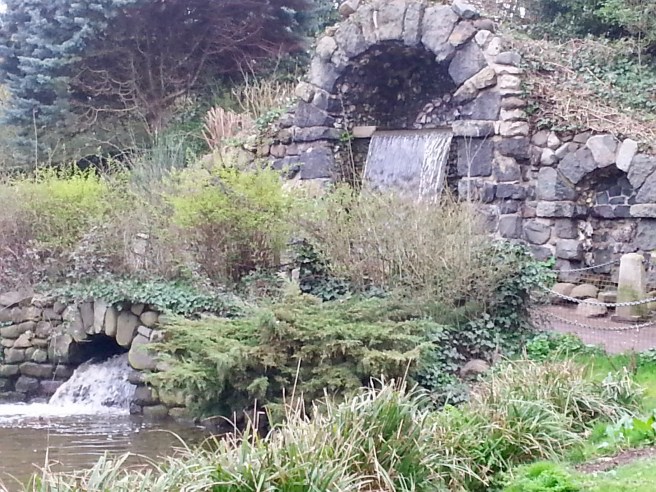
‘Chiswick House is one of the most glorious examples of 18th-century British architecture. Its gardens are the birthplace of the English Landscape Movement.


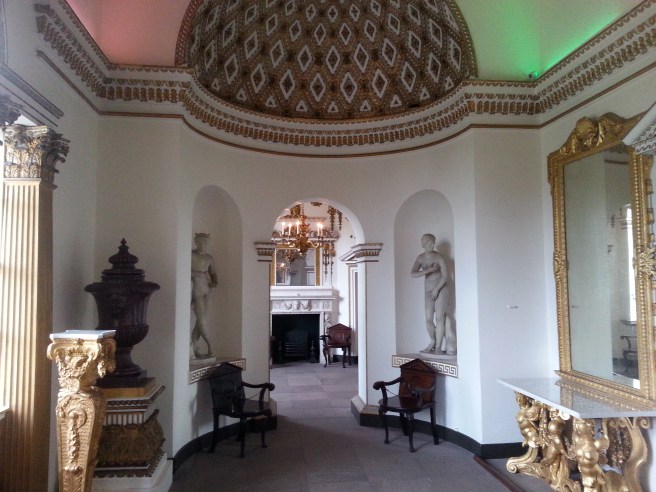
 paintings displayed as they would have been….
 …as original paintings of the house interiors showed….
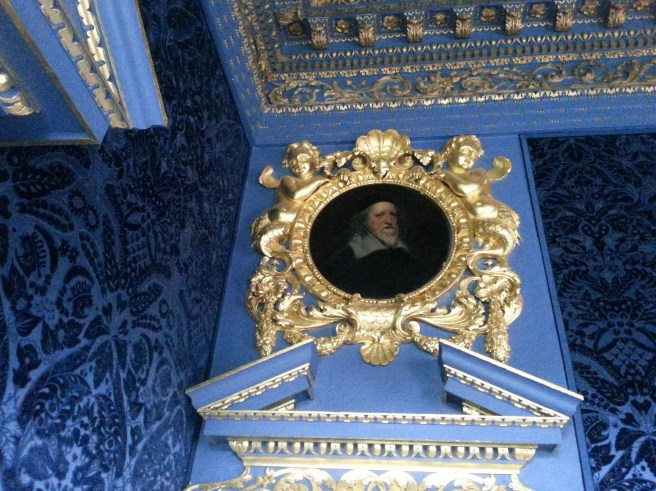
 and we even were impressed by the Blue Drawing Room…not usually my cup-of-tea….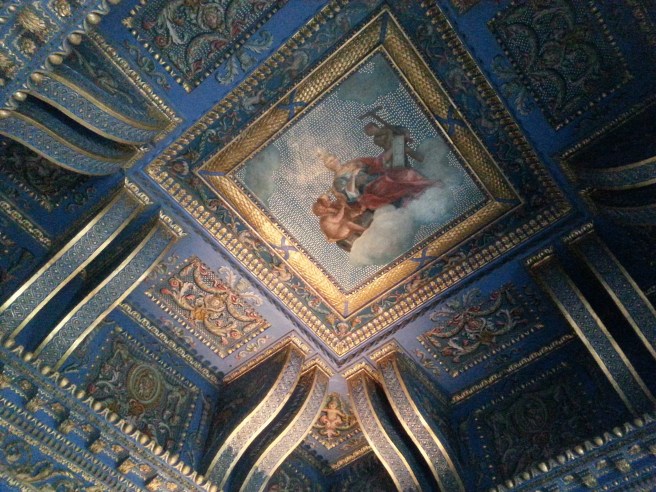
 The Orangery (must this be the largest?)…was especially breath-taking..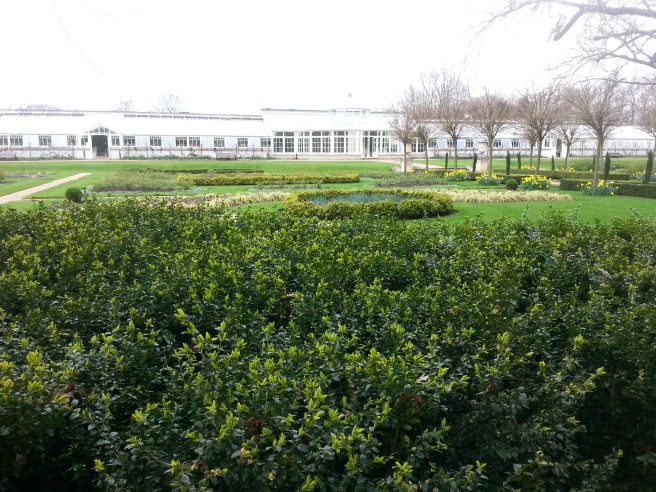
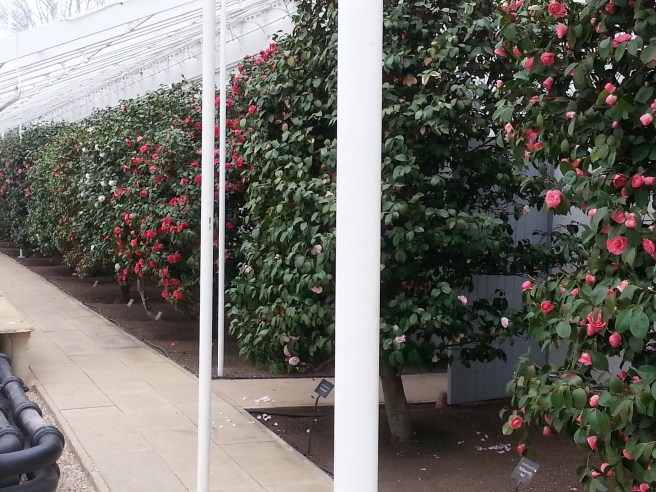
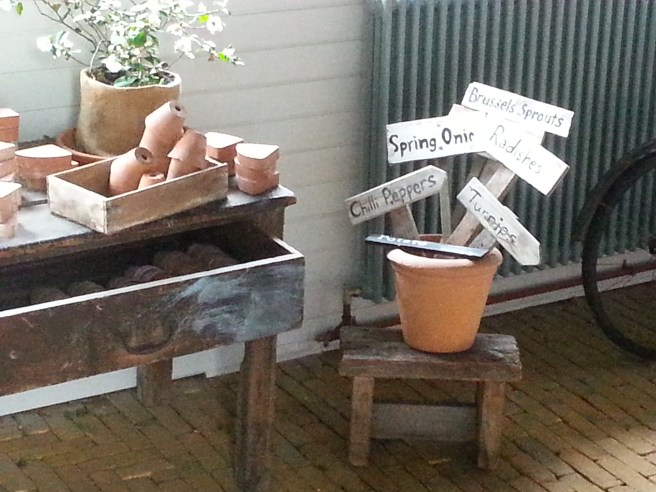 and the grounds worthy of a more extensive exploration on a nicer day…
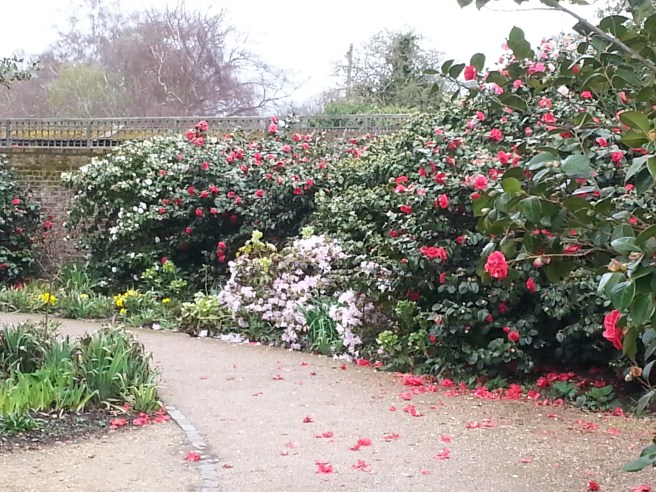 What I find really heart-warming is that the Ministry of Works who restored the building, and now English Heritage, have done so much to trace many of the original contents and restore them to their rightful place. They were helped by the Devonshires of Chatsworth who had taken many things to Chatsworth when they rented out Chiswick from the 1860’s….they have been very helpful in bringing back furniture and paintings. But also people like the V+A who held certain items in store have loaned them to their place of origin. Why oh why is this not done almost as a matter of course when all our big institutions have hundreds of thousands of items in store? Perhaps a lesson to be learned here….I do hope so……
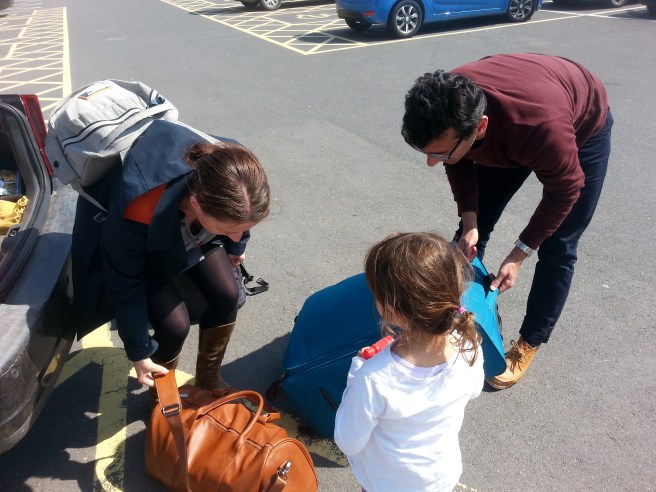
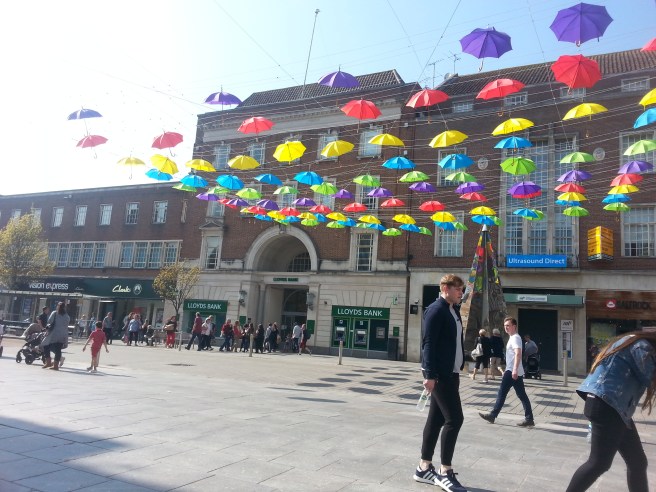
 before dipping into a back street where we examined some old almshouses..preserved after destruction in the Second World War..
 then onto Cathedral Close
 where we admired the many old buildings of different ages…….
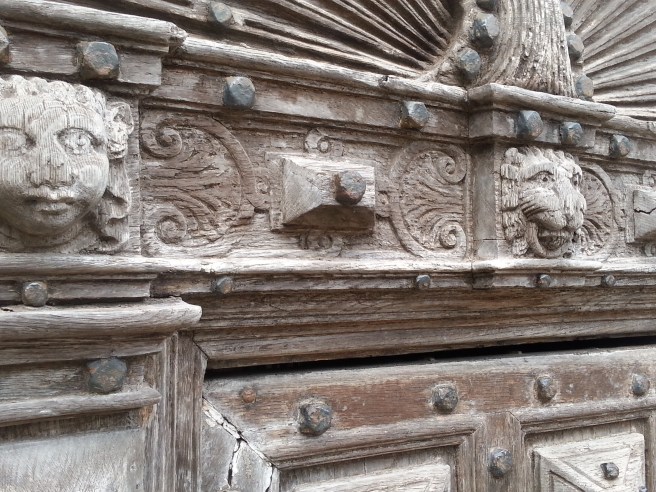
  including the doorway of Number 11 which used to be the residence of the Archdeacon of Barnstable, a medieval house modified during the seventeenth century…..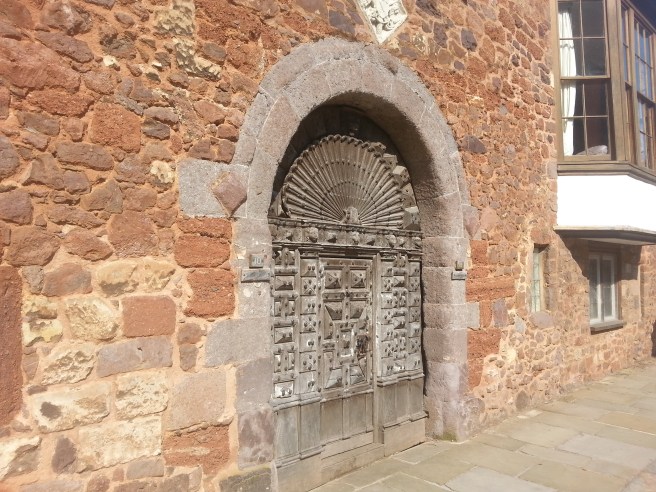
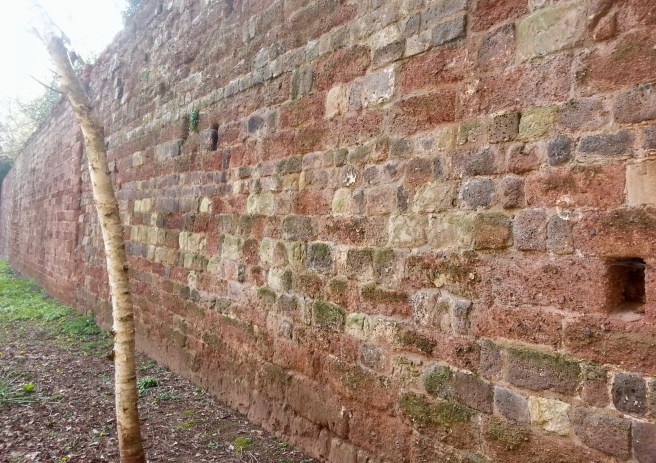
 We then decided to explore the city walls which we had glimpsed on past visits, but reading that around 72 per cent of the circuit still survives, we were keen to compare with York where we used to live….what we found was quite remarkable….
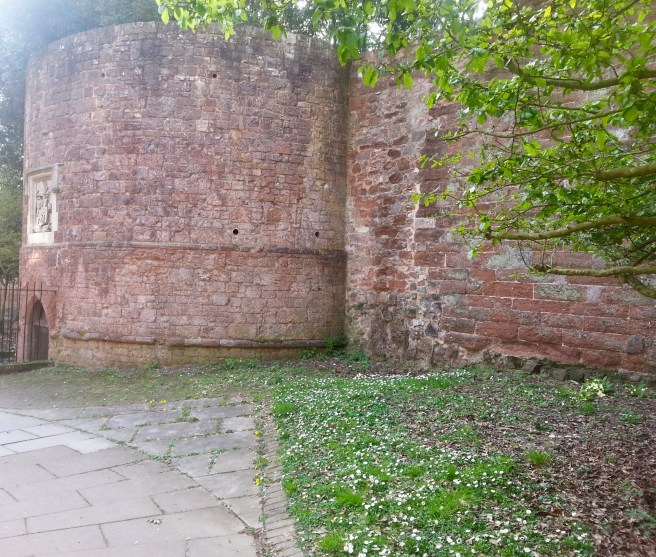 the more we walked the more astonished we were that so much has survived, and a lot of it Roman (generally the purple stones in the fabric, as opposed to the soft red sandstone which was used to repair it in later ages)…..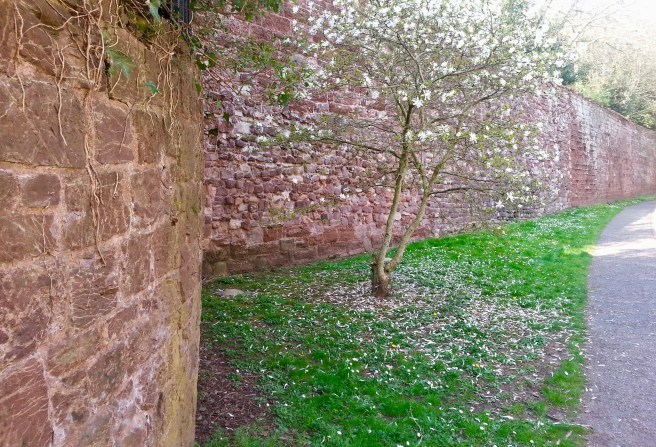
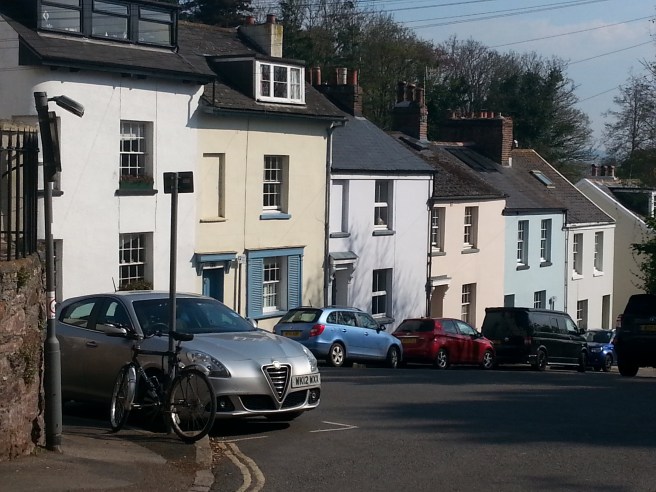
 For a terrific write-up on the walls (and many other things) see Wolfpaw’s blog Whilst walking we came across a nice little group of houses….colour has an important role to play in architecture as our friend Alan pointed out…
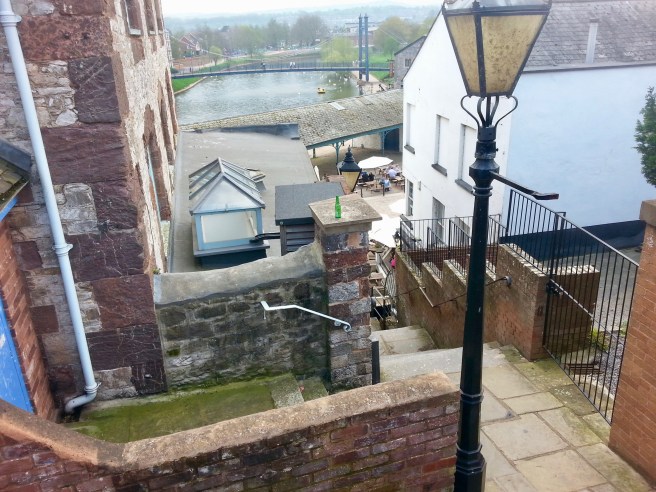
 As we were getting rather warm on this glorious day we decided to call in to the Prospect Inn on the Quayside for a quick pint…much enjoyed!
 We weren’t following a route as such but we saw more wall on the way back and so reckon we must have see the most of it…the only thing to say about the wall which is a bit of a disappointment is that you cannot walk on it unlike Chester or York…
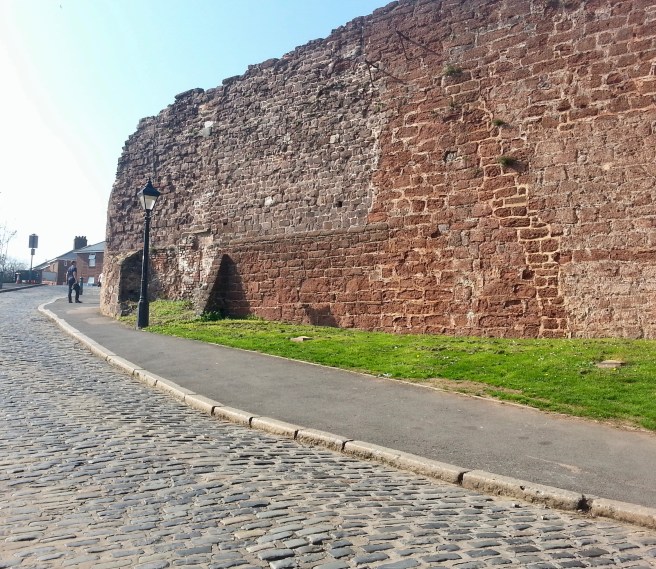 However, it would be nice to have some Roman/Medieval wall as your garden wall!
 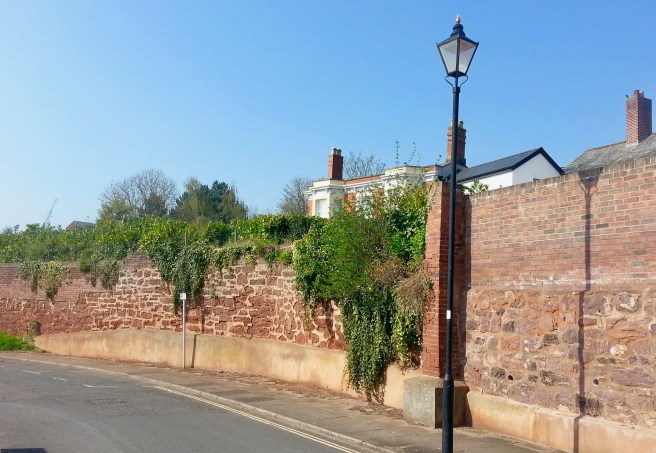 Which reminds me we very nearly bought a house at one time at Cawood in Yorkshire which had a piece of Cawood Castle at the bottom of the garden. Cardinal Wolsey lived there for a while and he is believed to be the inspiration for Humpty Dumpty. A great day out. We like Exeter a lot.
 Always nice when family visit, and much different again when our granddaughter comes, as we tend to revert to childhood, and doing child-oriented things! Despite cold conditions on the first day a trip to our nearest seaside (Looe is 15 minutes away) was in order. Now, a kite and a windmill, this looks interesting…and putting the stunt kite together even more so. Pity the conditions were too windy…….
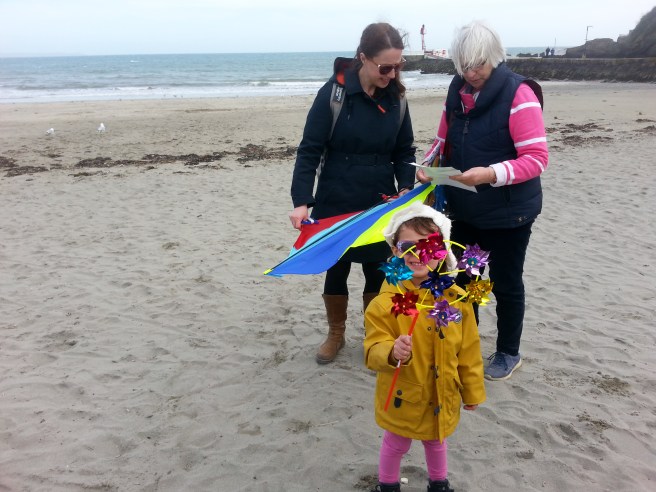 But, even without bucket and spade, we were able to make the semblance of a Norman motte and bailey, and the windmill came in handy.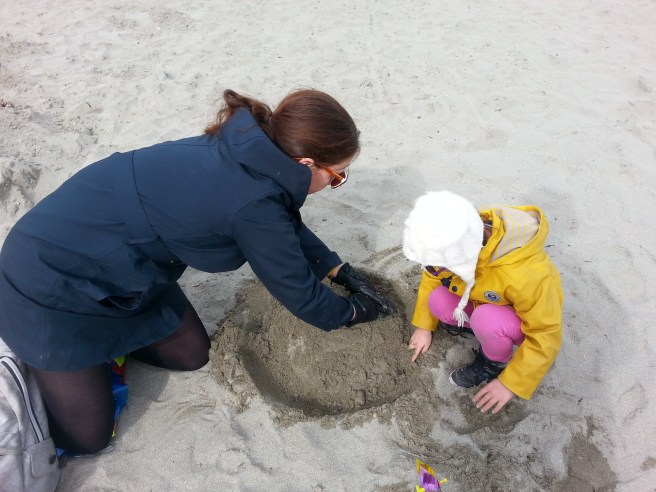
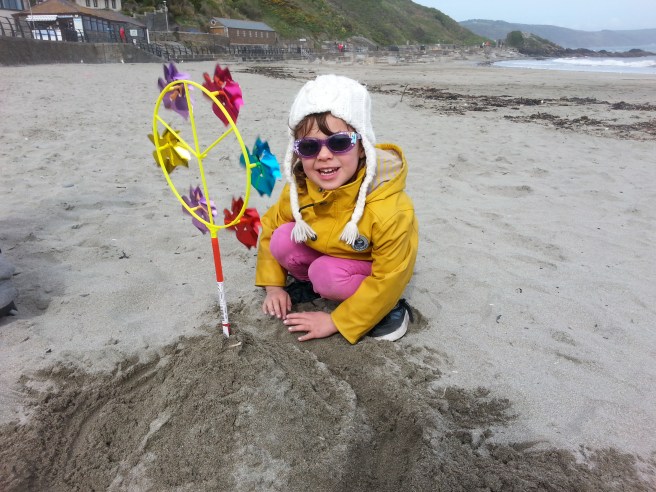 We did see something we haven’t seen here before…an eider. All those feathers needed to keep itself warm.
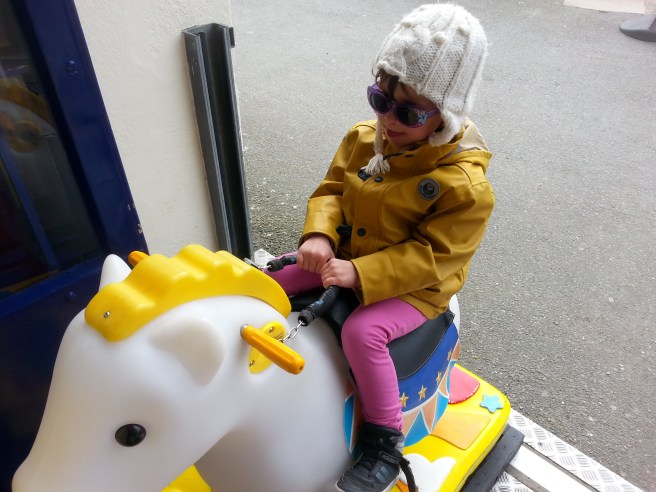
 Still time before the bus for rides…..
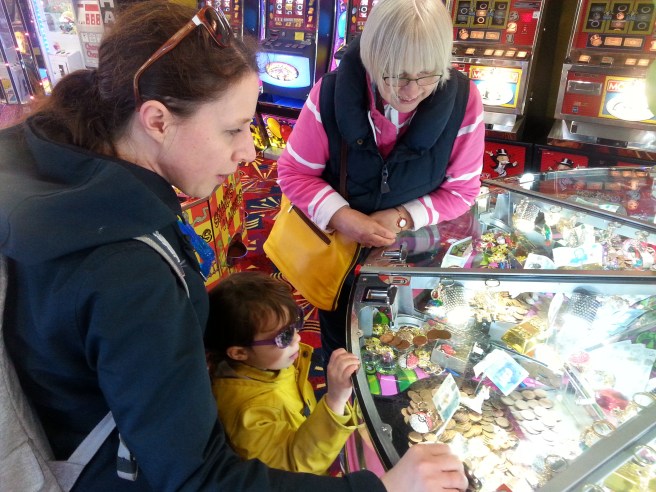
 and arcades….we were all desperate to keep playing the penny drop, and Aiisha won some coins and a unicorn….
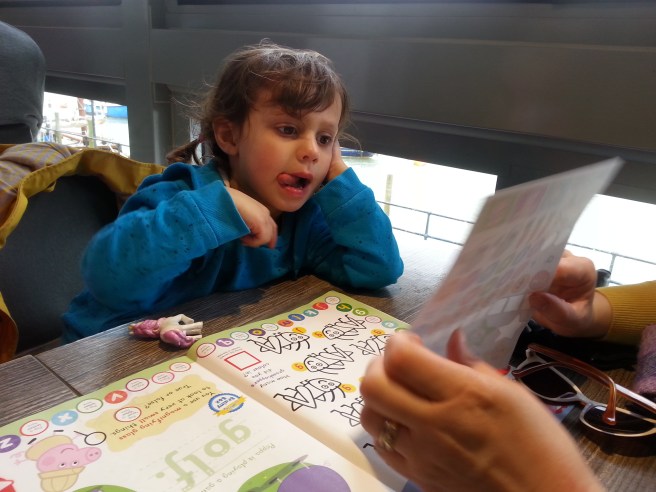
 a hot chocolate in the cafe overlooking the beach was very welcome, and allowed some time for more serious stuff….
 All of this was good preparation for our next day’s jaunt into Devon to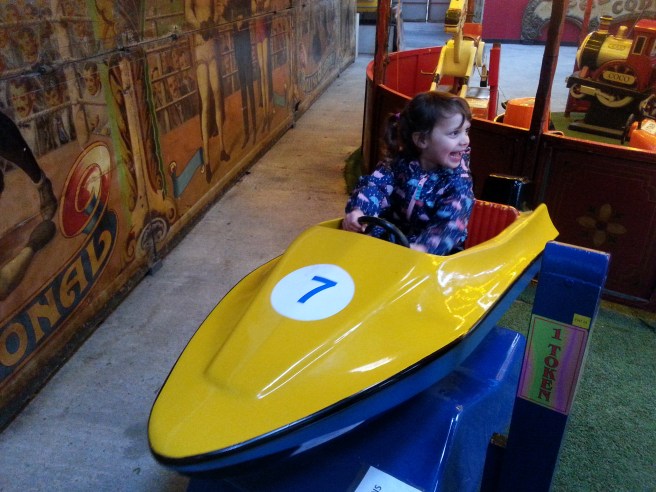

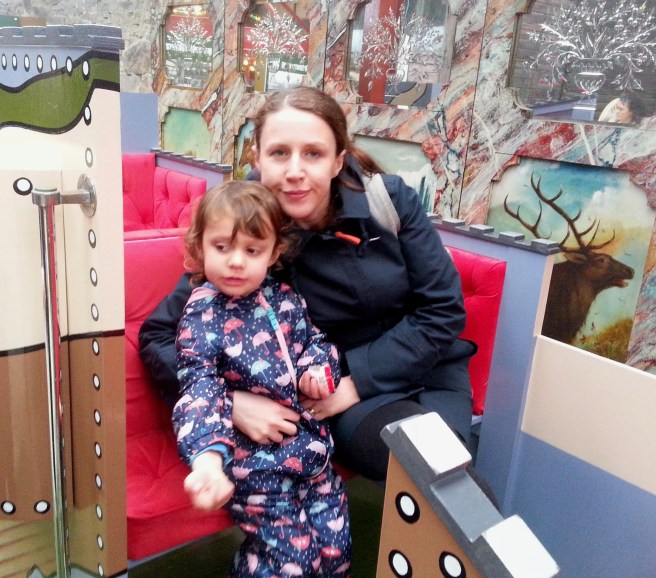 Because it was so quiet (start of season, no school holidays) the punters almost outnumbered the staff. But not quite, and at first we had to wait for a member of staff to turn up to whichever ride we wanted. We soon learned to keep in step with where the operator was, and then he followed us as we got talking and got to know him. So, we had our pick, and he always offered different speeds….although it was soon clear that Aiisha and Katherine always wanted the fastest.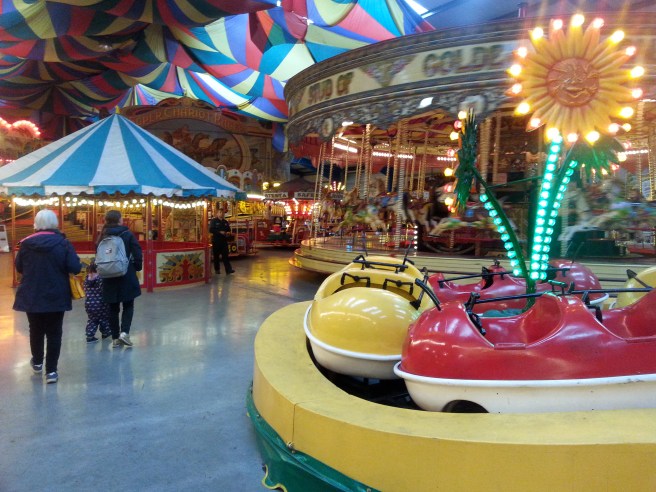
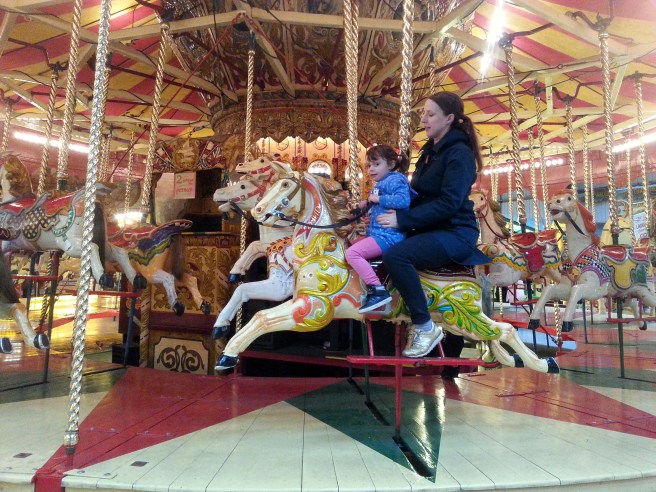
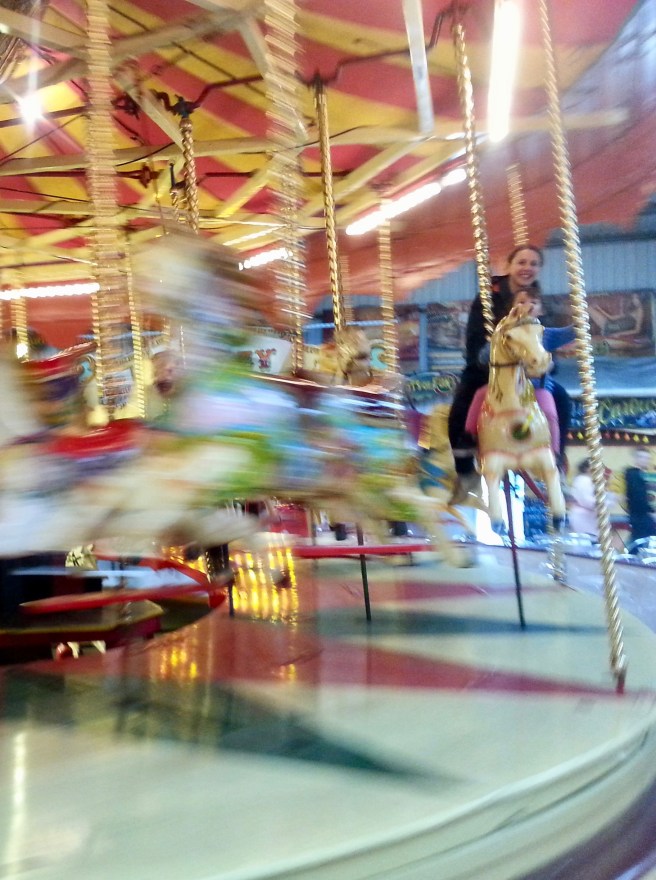
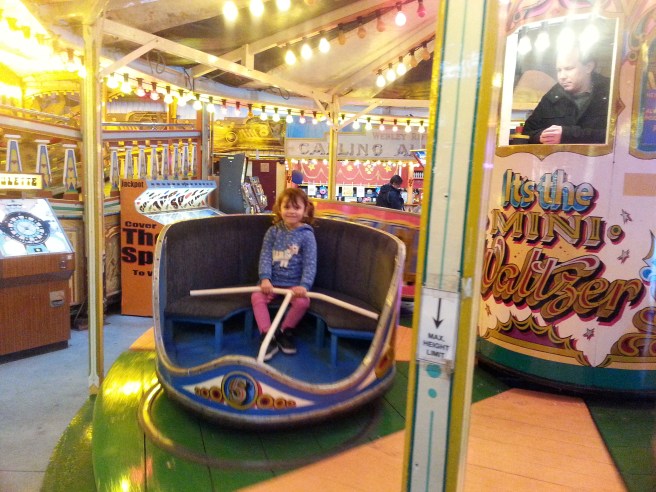
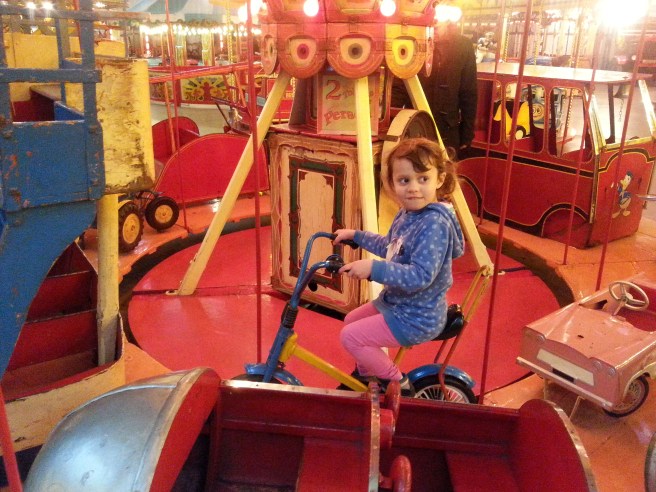
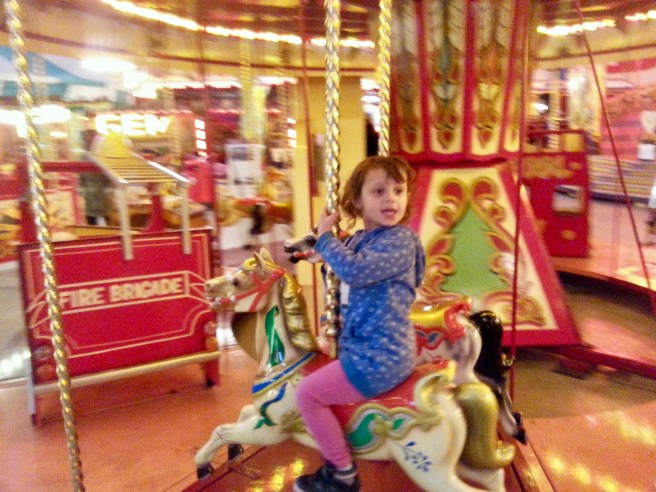 This was the oldest ride and went very fast….
 and it seemed faster as the bit in the middle rotated the other way….an old fairground trick which first of all used the iconic figure of Popeye, which is still preserved here…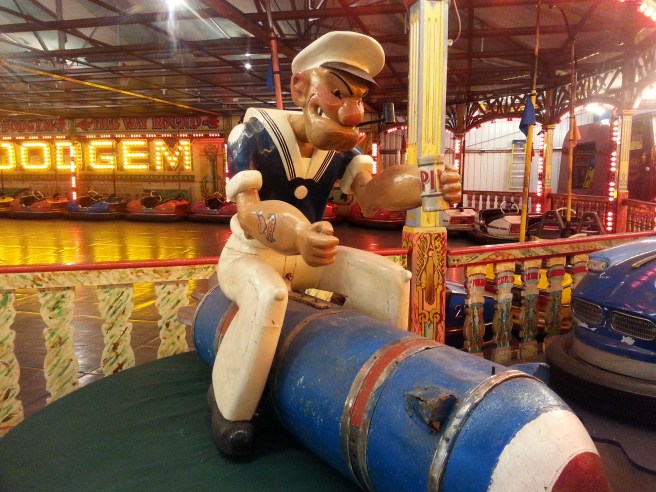
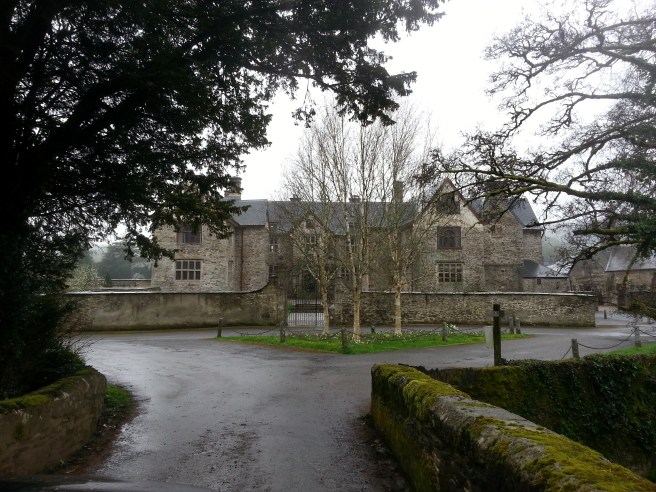
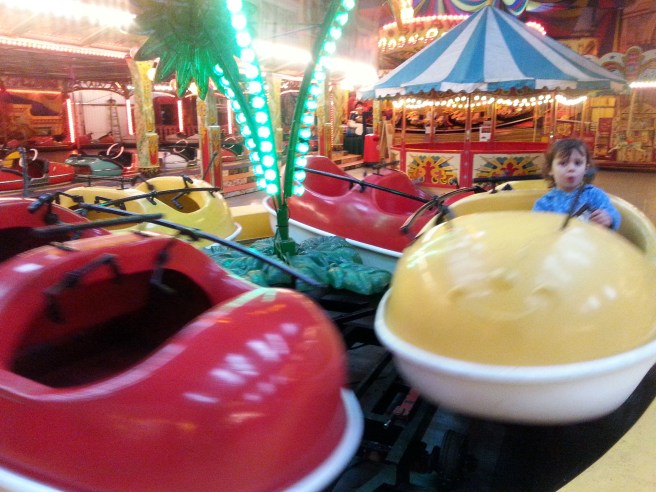 One of my highlights was the old Ghost Train which had come here from Blackpool, and which I had been on when young and gullible…it was pretty frightening for a 3 year-old, but no tears. The weather wasn’t great again, but at least we were inside. Home via Tavistock where we called in to probably our favourite pub in the South West…..the Cornish Arms. We also stopped to take a couple of pics of an old stone bridge and the manor house it was leading towards……must look it up on the OS map.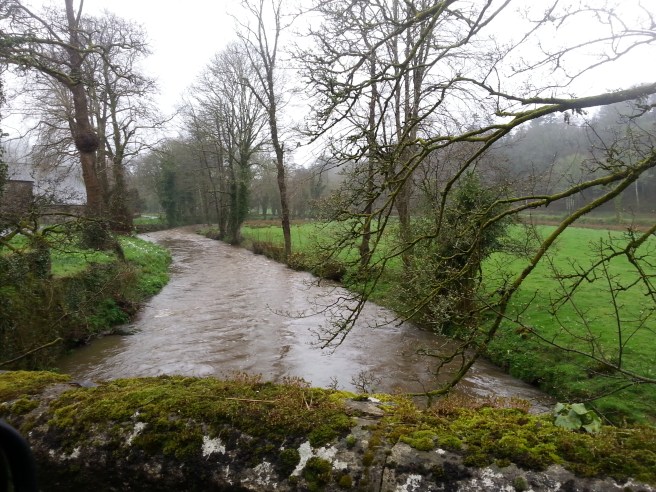
 An unexpectedly great day.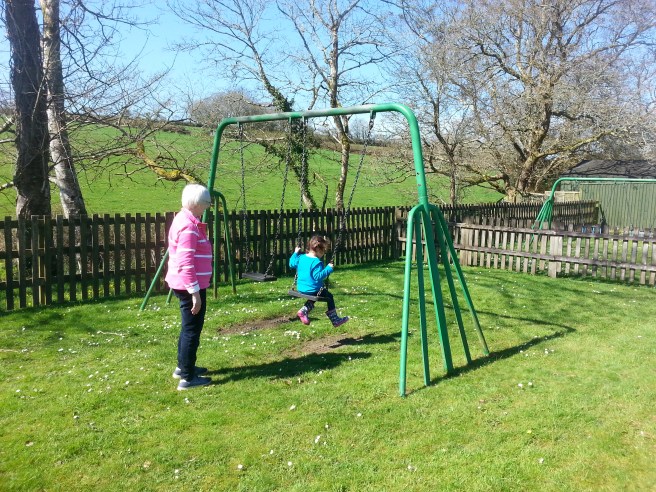
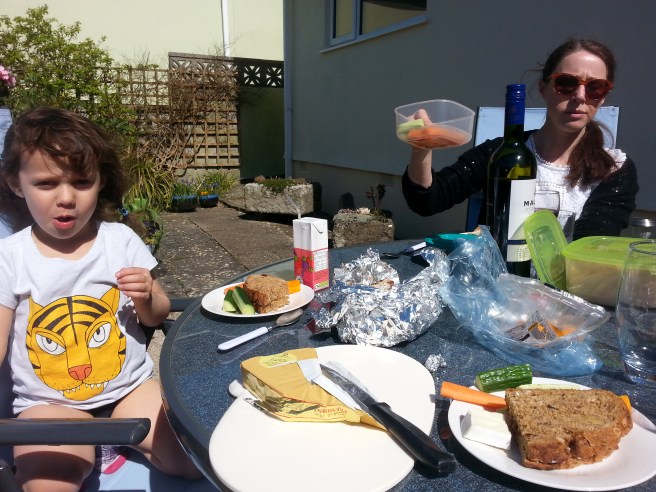
 and, if the weather was nice, eat in our own garden using our brand new table and chairs…salad with my home-made bread, (seeded walnut and raisin wholemeal), and of course a bottle of wine…what could be nicer?
 Buses from our village of St Keyne to Looe are every hour so no problem fitting in the beach whenever we wanted…
 sun glasses and ice-cream de rigeur…
 and the sea in April? almost warm enough to dip a toe….
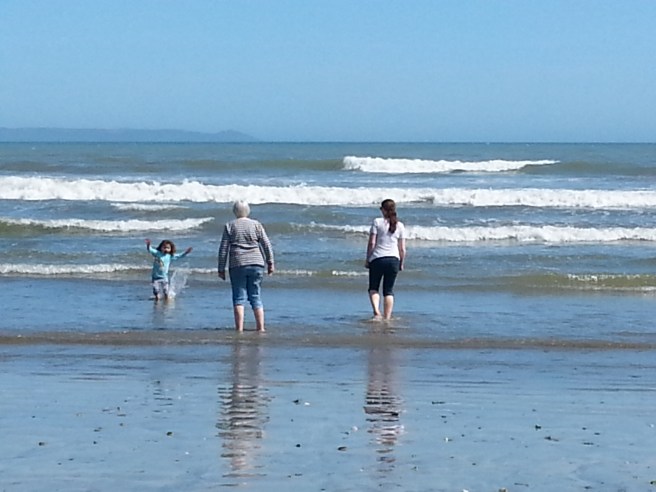
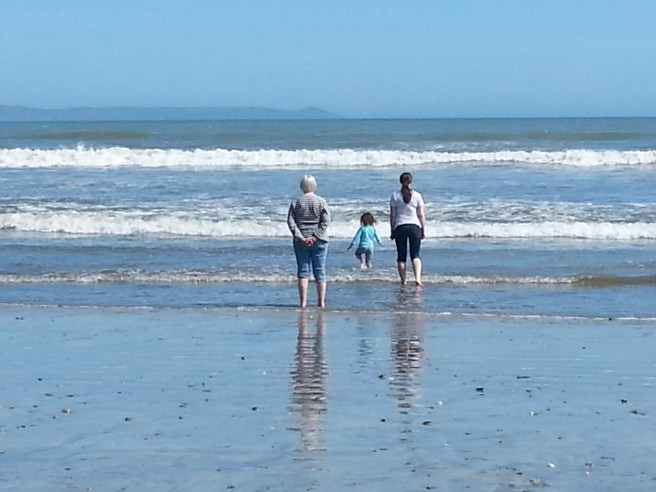
 catching butterflies is an unusual sport at Looe!
 When Nasar arrived to join us, we decided a picnic on the river would be a nice family thing to do, and so we arrived at Mylor with much anticipation despite the grey day….
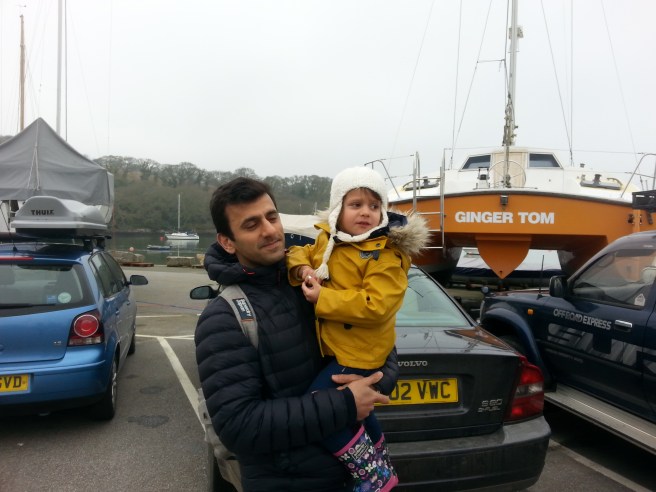 The girls at Mylor Boat Hire were very friendly and helpful and they at least were optimistic that the mist, which was really quite thick, would burn off. It was an adventure taking the little motor boat through the packed harbour and with the help of the map which was provided we headed for Trelissick and the King Harry ferry where we were told there was a mid-river mooring we could tie up to. Here we had our picnic brunch or lunch…
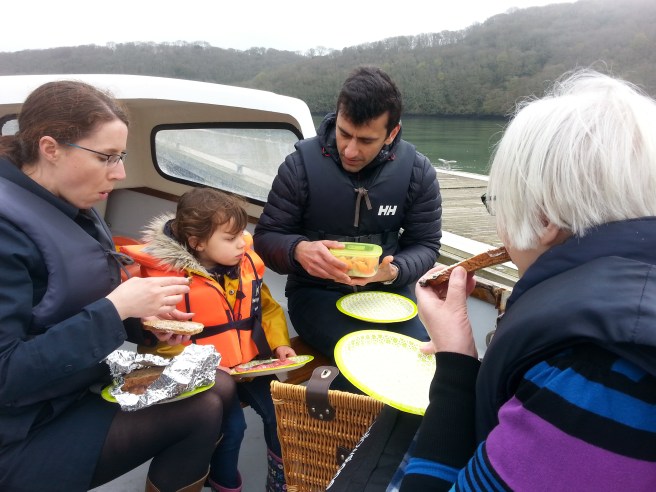 and the weather was indeed changing for the better as we headed off in the other direction towards St Mawes…
 great fun was had by all although sometimes……
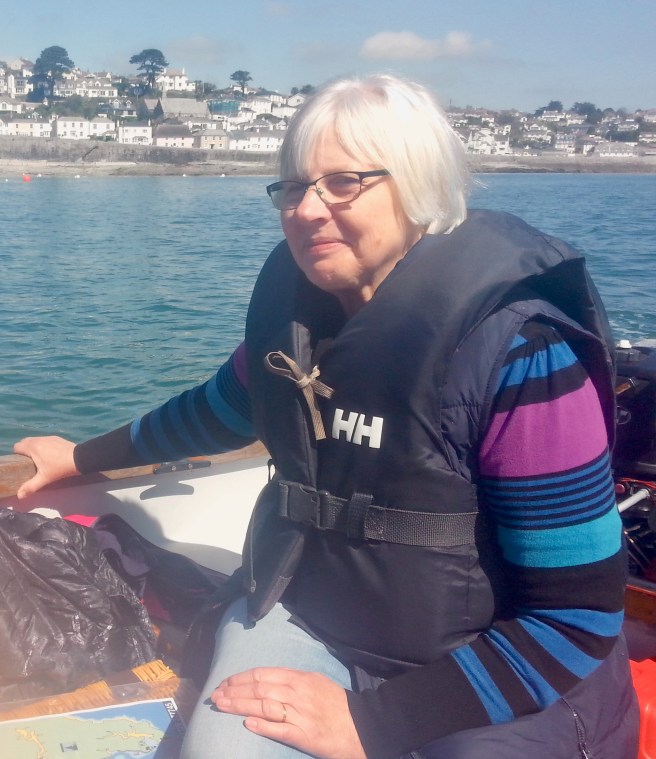 a little concentration was needed…..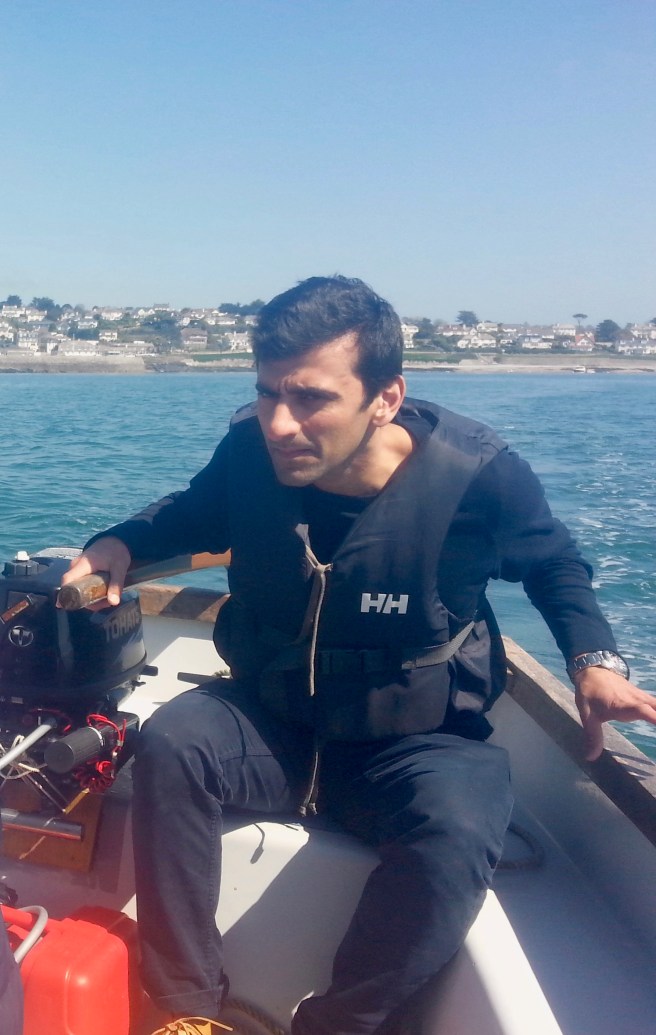
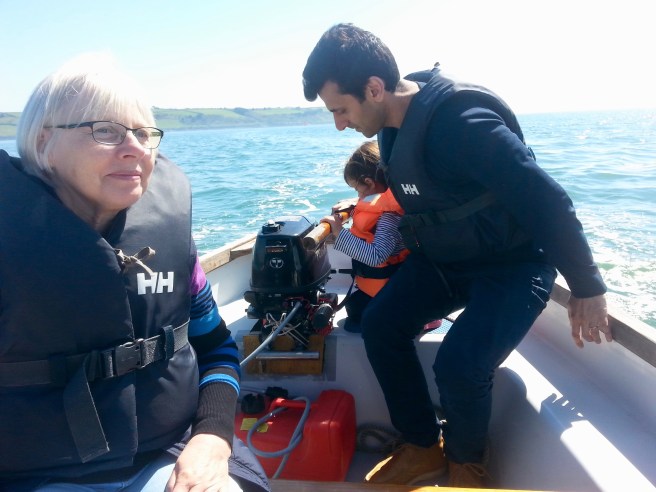
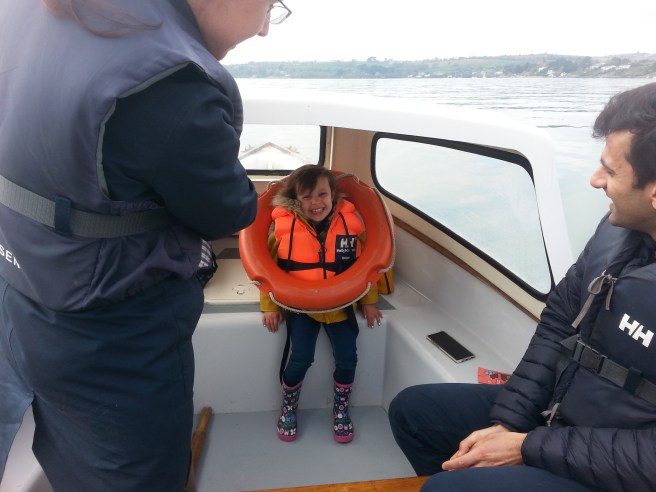 rounding the point at St Mawes we were enveloped in lovely sunshine……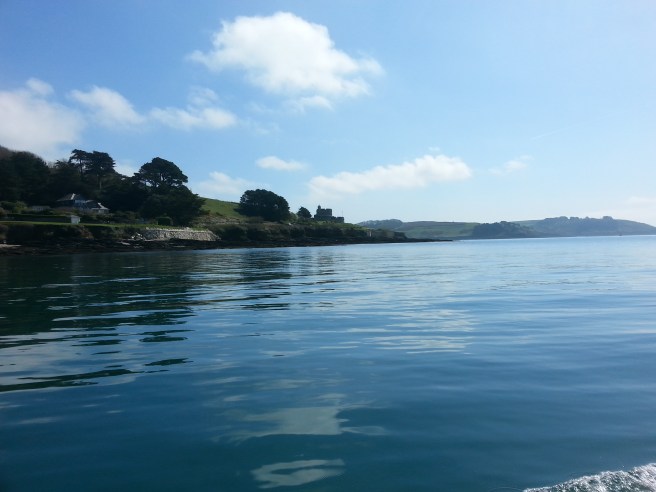
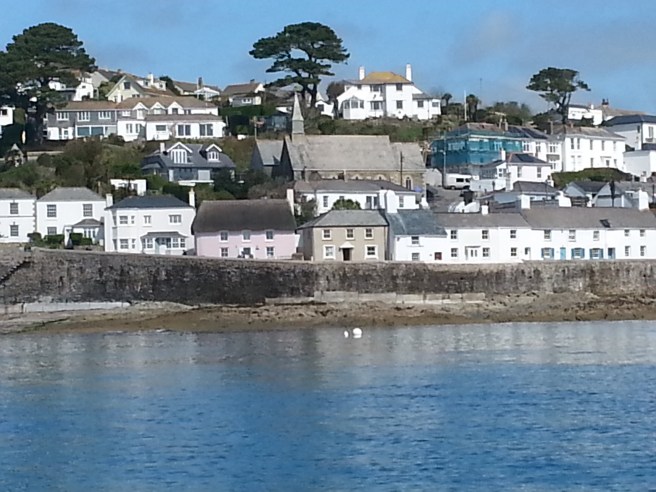 and the castle looked as majestic as ever……
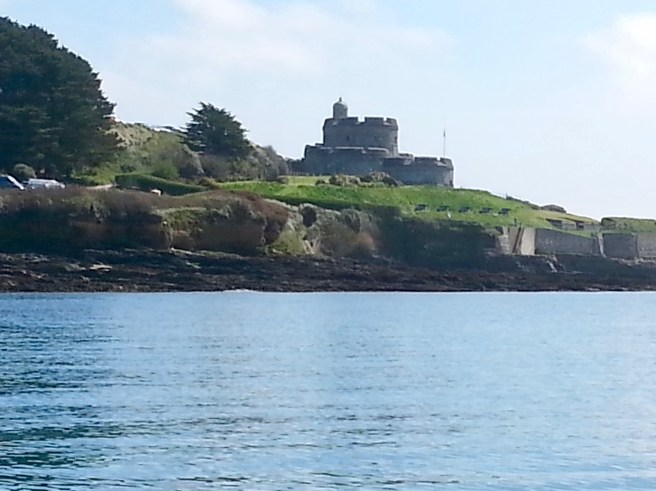 For four and a half people, £70 was excellent value for 4 hours cruising on the wonderful Fal river…we shall do it again when the opportunity arises…..driving into Falmouth afterwards we stopped at the pretty Kimberley Park to run off some energy…..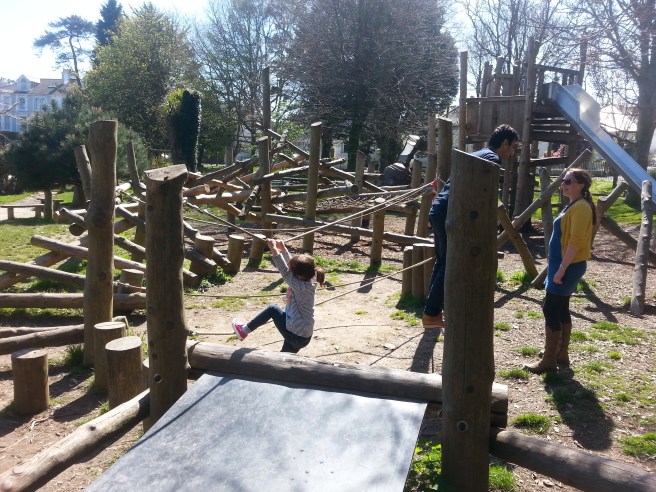
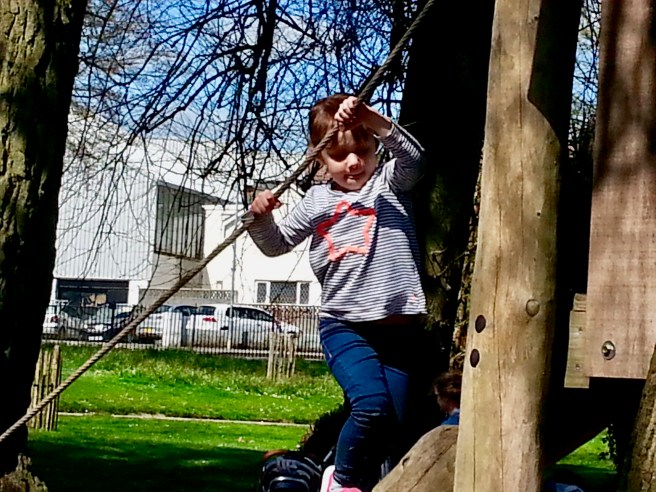
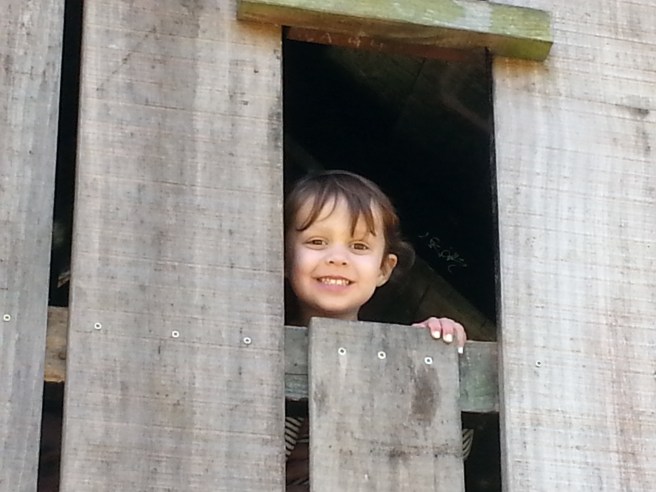 and then did a bit of shopping. Falmouth really has a terrific assortment of independent shops – often with views of the river. As it was Katherine’s birthday, we stopped at
  there were certainly enough goodies to go round and in fact we asked for a doggy bag in the end!
 The last day of the visit we split up. F. and I dropped the others off at
 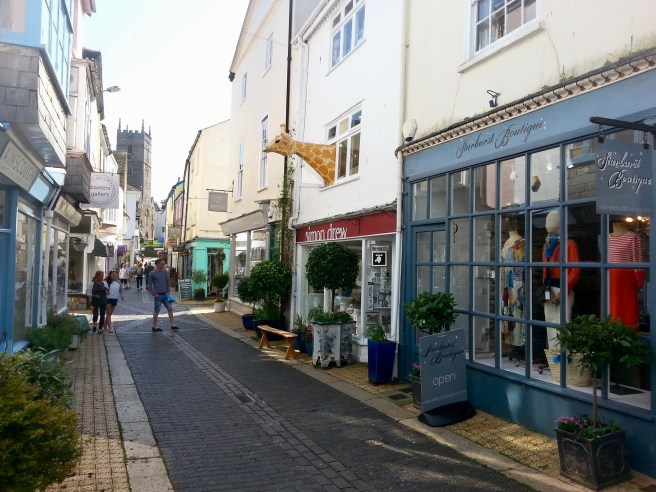 Looking for lunch we hit upon the
 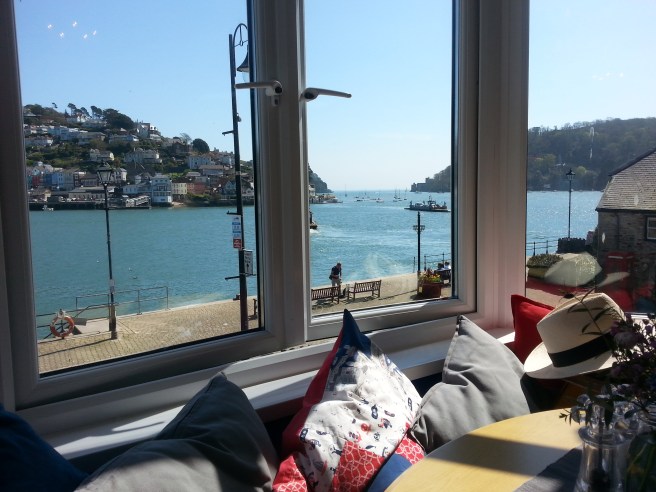 wanting a little liquid refreshment before the journey home we all ended up at Coronation Park with views of the pretty terrace below Dartmouth Naval College…
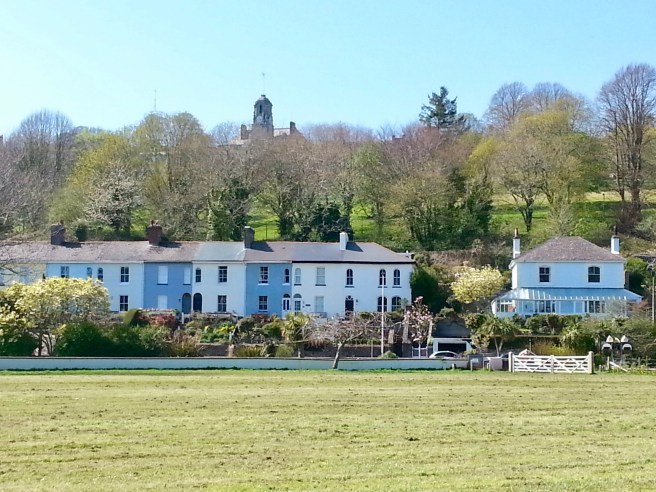 and the river..
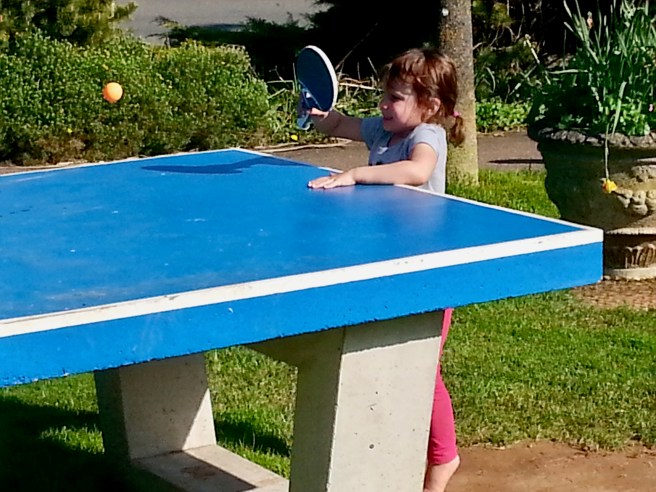
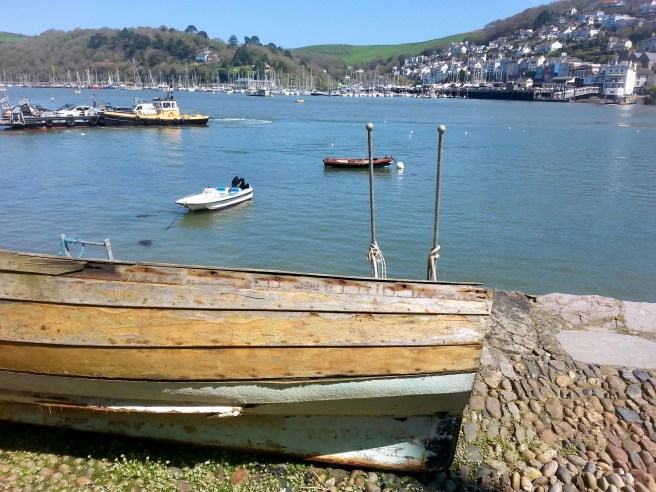 The cafe adjoined the play park which was good and had its own table tennis table…
 Suitably rested we made our way back home…after another wonderful day out.
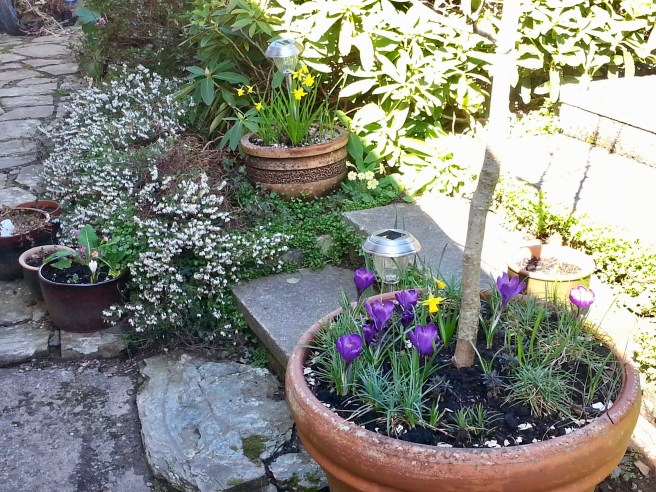 . The star magnolia is starting to come into its own in front of a rather too vivid azalea…..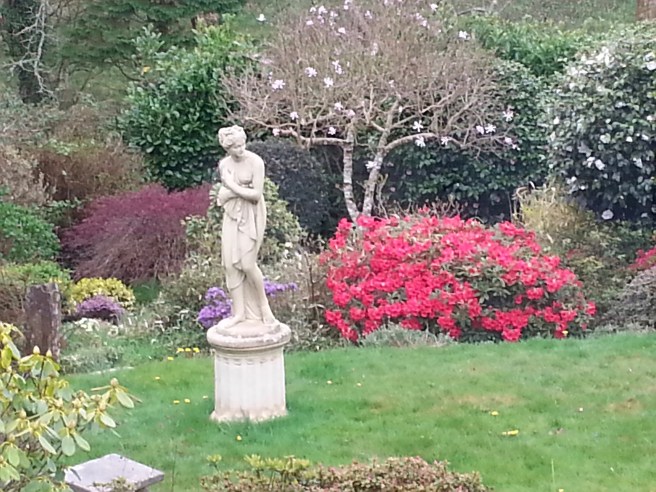
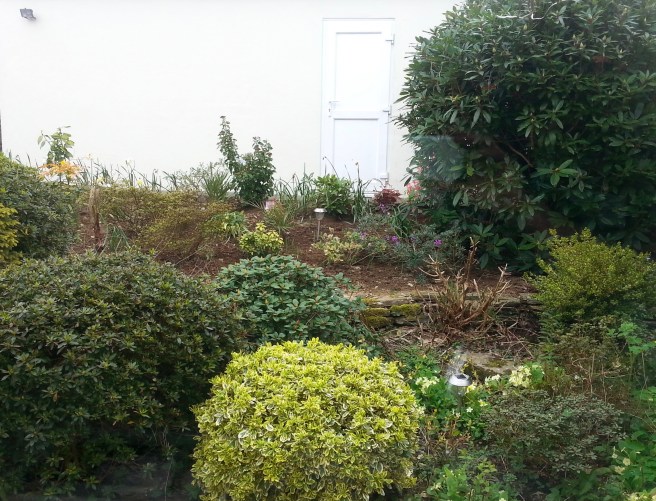
 The view out front, here from the kitchen, is making progress and next year will be much better……
 The pots are cheerful too…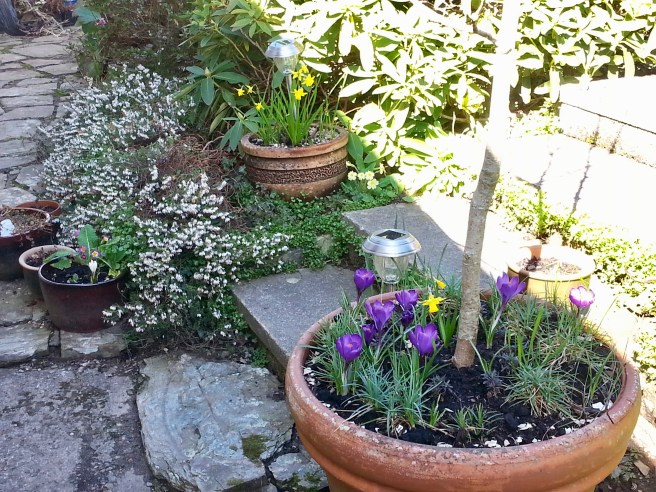

 There are some good individual plants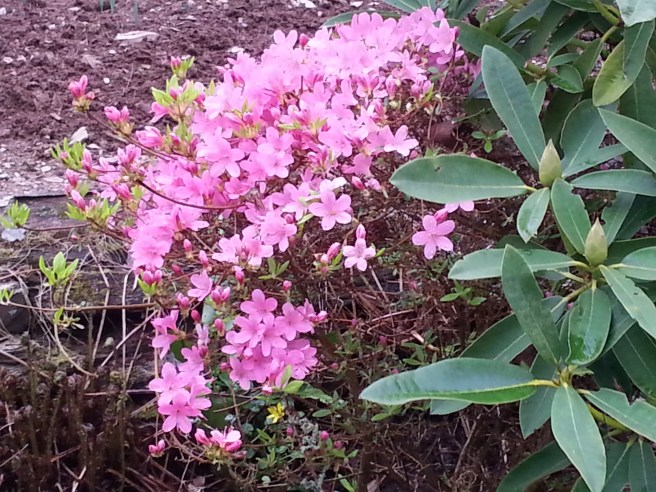
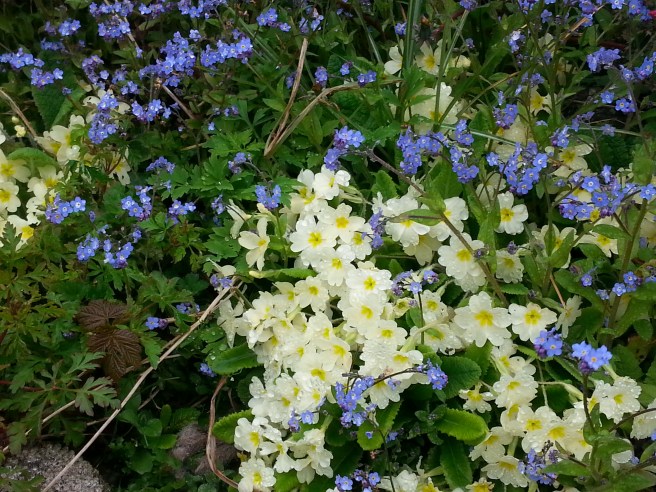
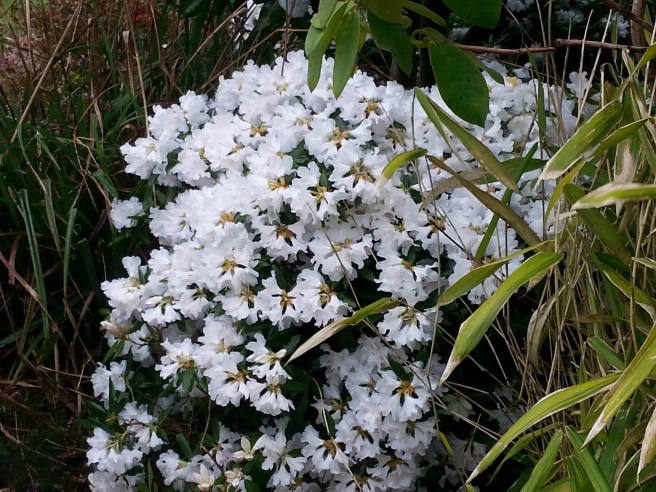 and some pretty juxtapositions, here forget-me-nots with primroses…
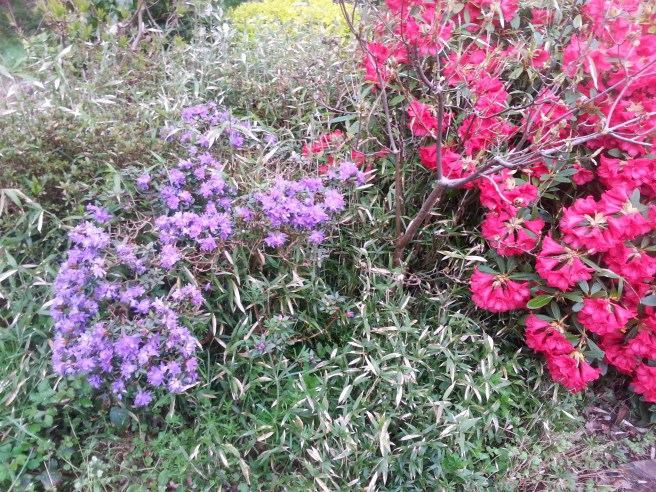
 here two azaleas…
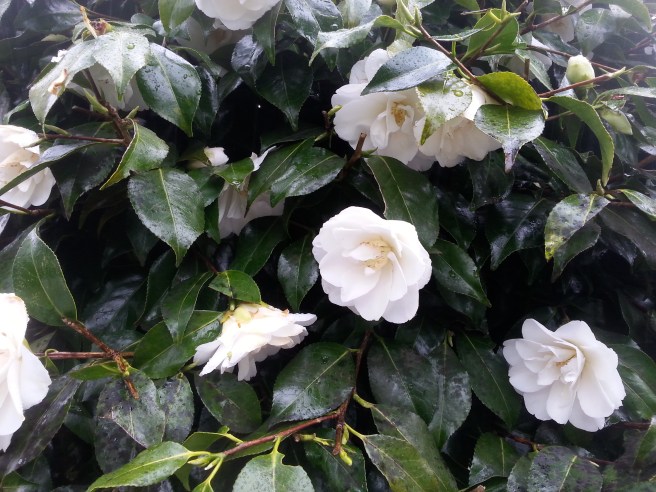
 here red azalea and white camellia….
 and although we don’t often get to the bottom of the garden (tho we keep urging each other to do so), it is worth the effort….
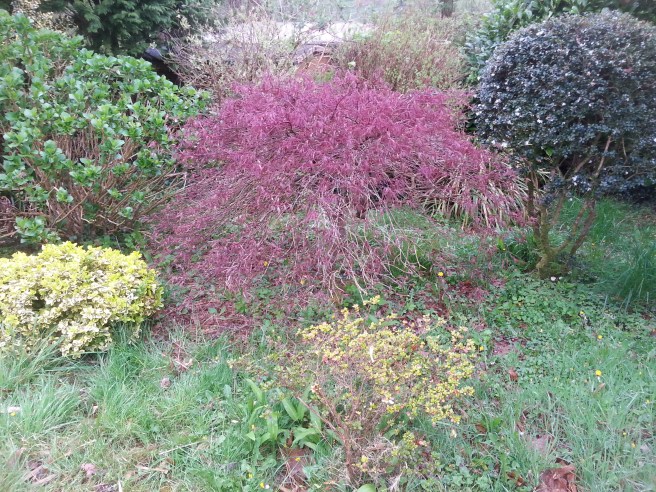
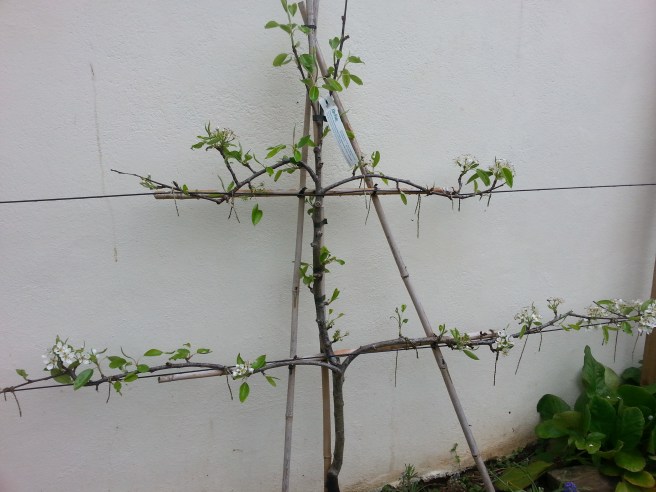
 and our fruit trees are down here too…..here an espalier pear, planted last year…
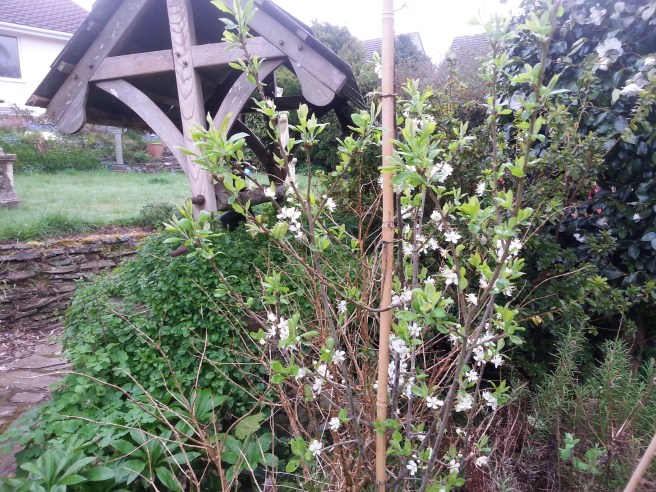
 and a Shropshire prune…blossom’s looking good…
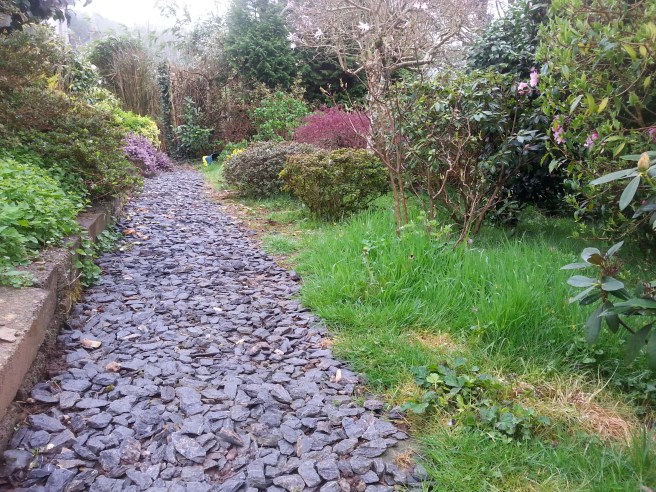
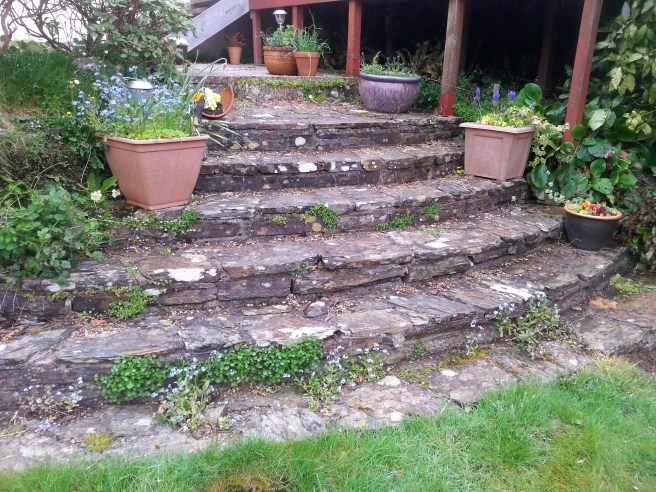
 The slate steps and pathway however are crumbly and lethal in the wet….
 The two ceramic sinks I converted last year with tufa are now looking a little more aged and distinguished….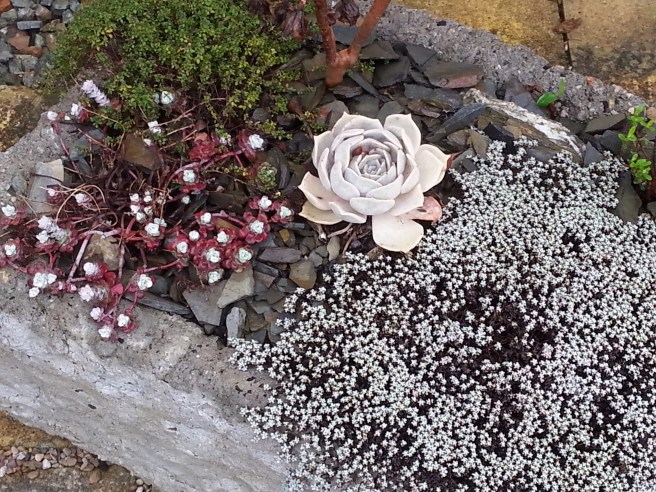
 So, all in all, things are looking rosy, apart from things affected by the slugs and snails of which we have literally hundreds. And the pics from our lanes show that all it needs is a bit of sunshine to bring everything on a treat…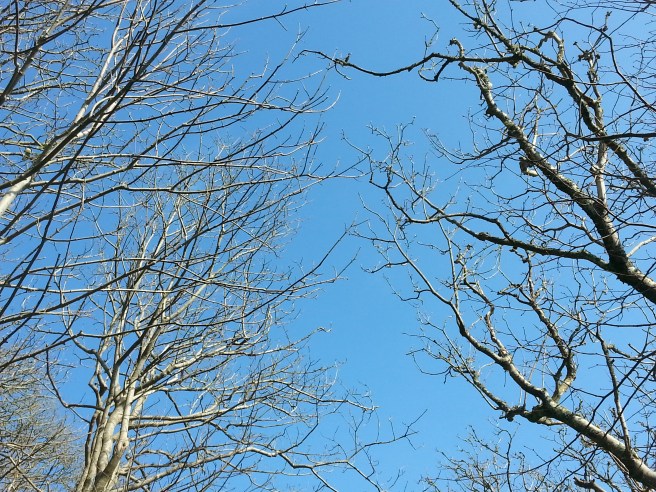
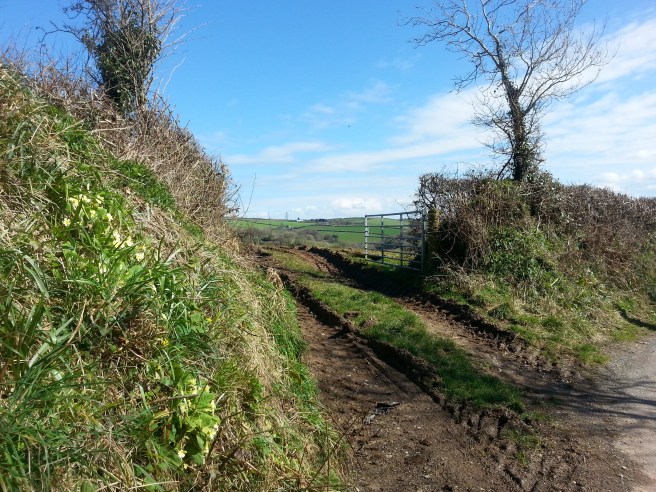
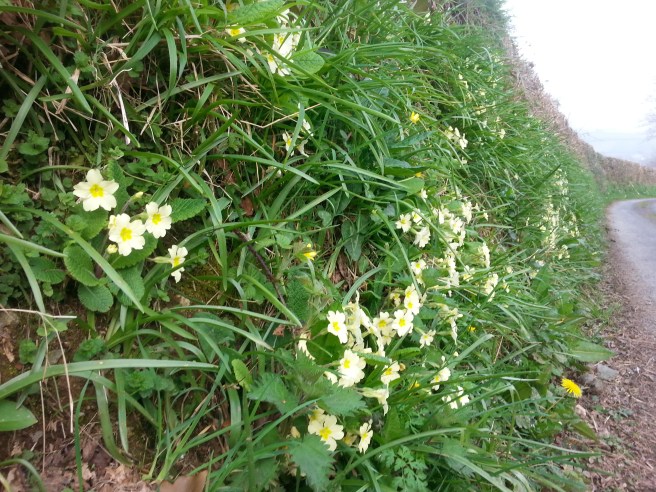 The ransoms are just about to take over from the primroses…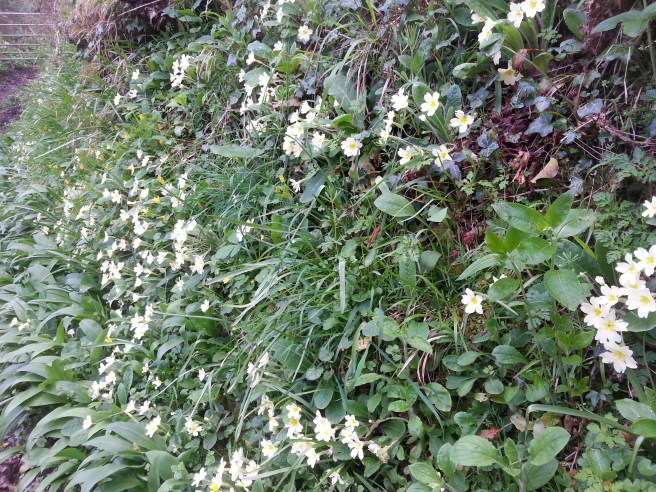
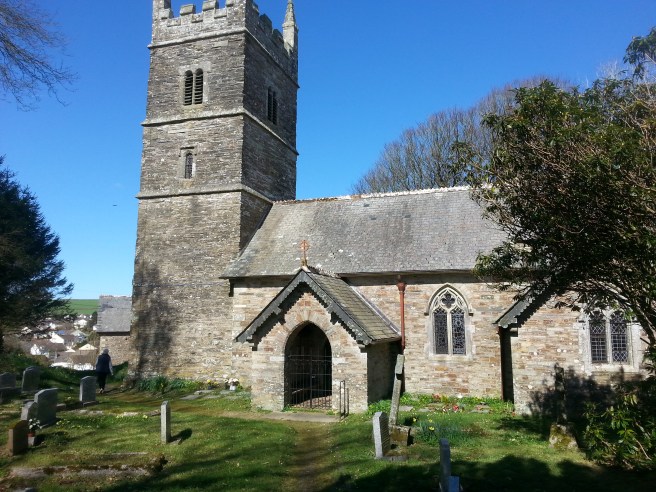


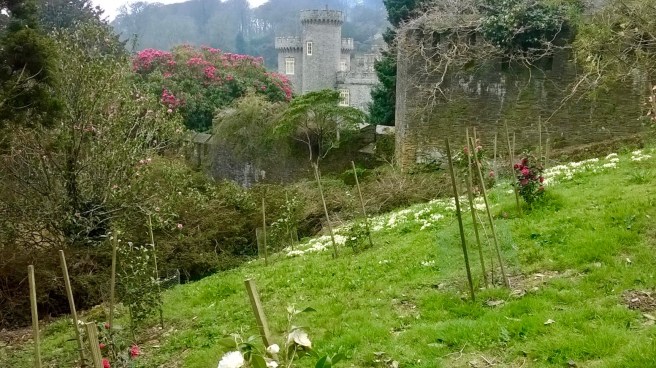
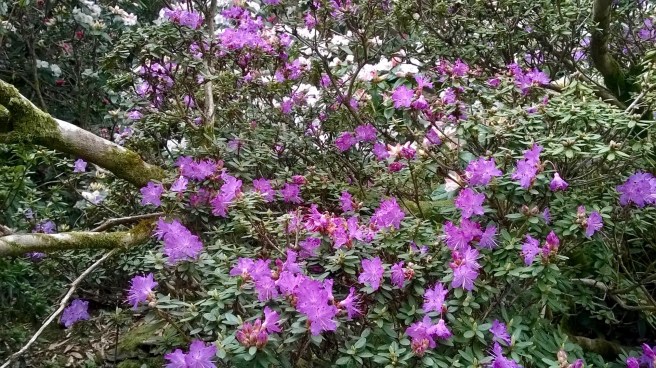
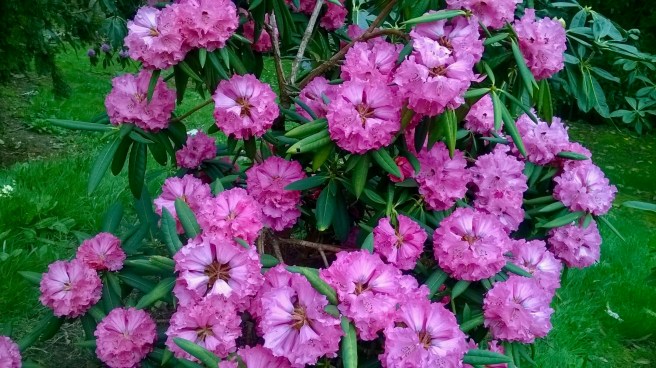
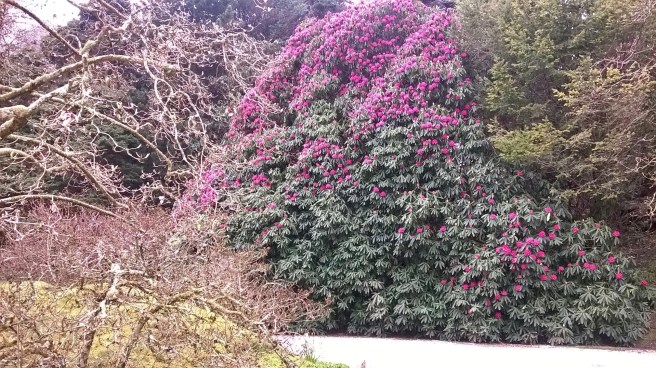

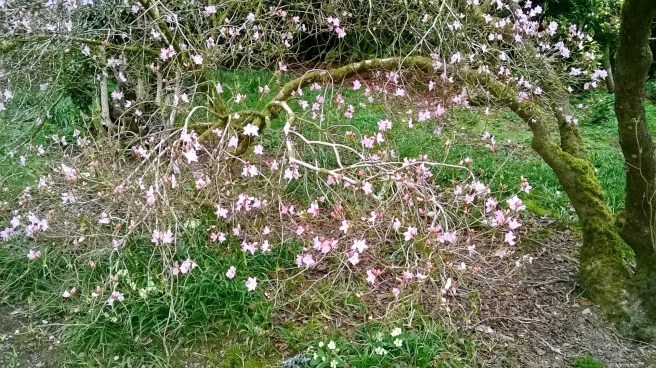
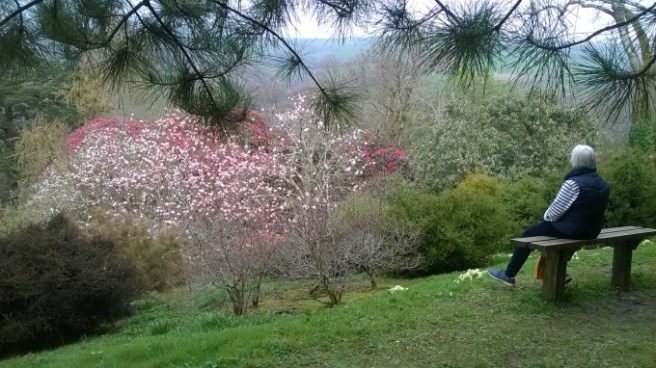
 and there were plenty of benches for you to just sit and take in the views…
 ……which were amazing, because the castle and its grounds behind are set on a hill within a sort of bowl of lovely Cornish countryside, with occasional views of the lake or the sea…




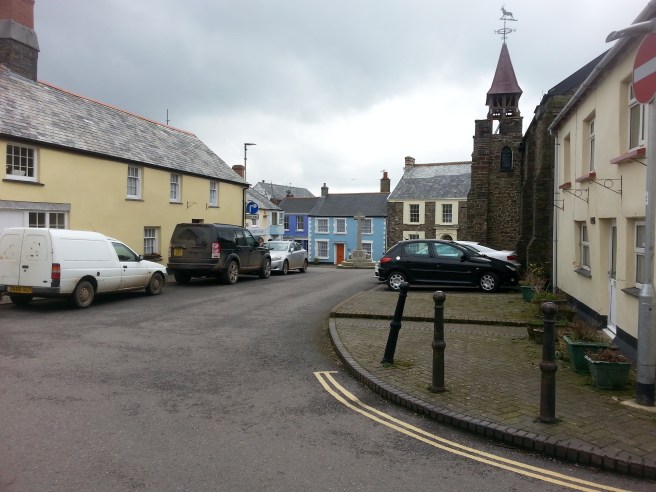 Our first glimpse of the Abbey itself (first pic ) showed an idyllic valley setting, and having parked we explored the outside……
  where we could clearly see the old cloisters incorporated into the fabric…
 The story of the site is very interesting, see
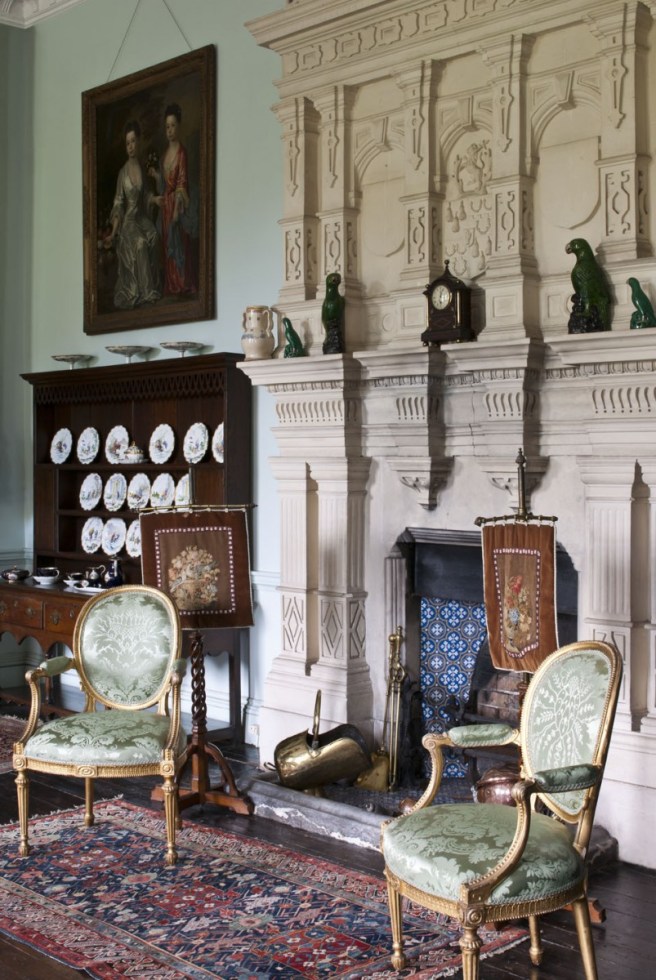
  the influence of Gilbert Scott’s work on the Houses of Parliament can clearly be seen in the panelling and decoration of a couple of the major rooms….
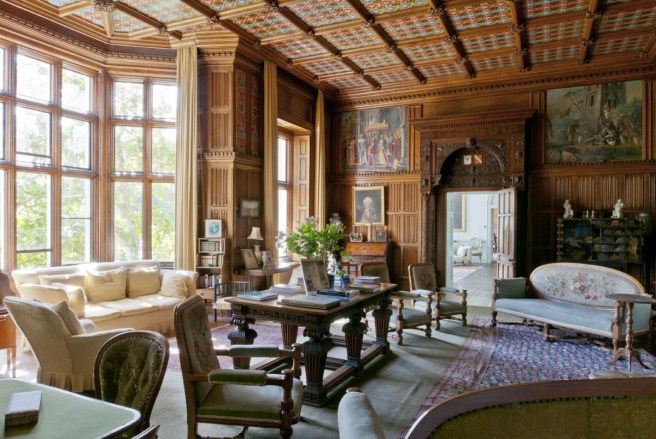 and the round table in the Dining Room is fascinating ..it was purchased for only £10 in 1934 by Sheila, Lady Stucley and can be enlarged by twisting the table around, to sit 10, 16, or 22 people with the insertion of triangular leaves. Its quite an extraordinary piece of clever furniture construction.
 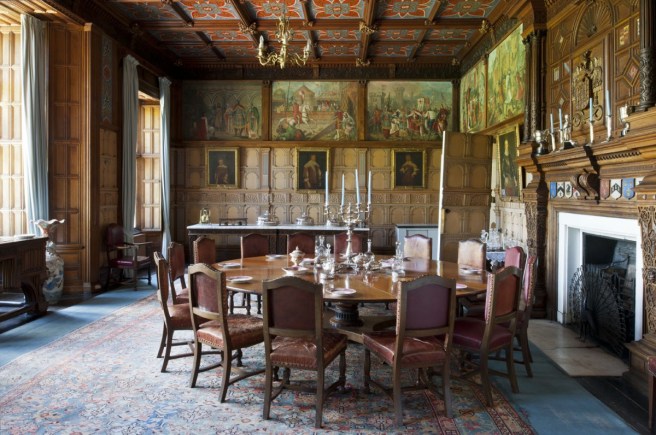 the fireplace in the billiard room is spectacular…
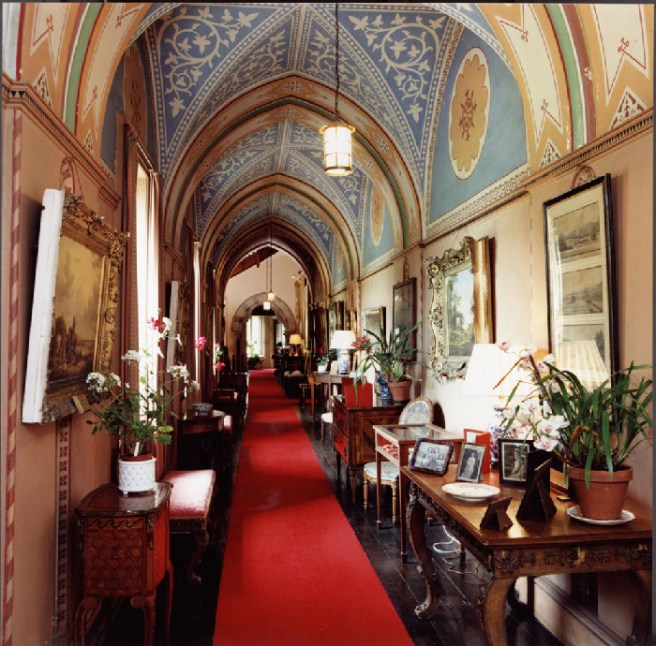
 and, as for Scott’s Alhambra Passage, well…….
 We had a couple of very interesting chats with guides, and they were obviously as enamoured of the house as we were and full of enthusiasm for its history…and there were fascinating exhibitions on the use of the house for many films and TV programs, and on associations of the family for instance, the life and colourful career of perhaps the most most influential member of the Stucley family, antiquarian William Stucley, famed for his studies of Stonehenge and other prehistoric sites. William Stucley is unfairly remembered for his conviction that ancient stone circles were built by the Druids, which he decided must have evolved from a much older Abrahamic tradition (in essence making Druidism a direct ancestor of Christianity).
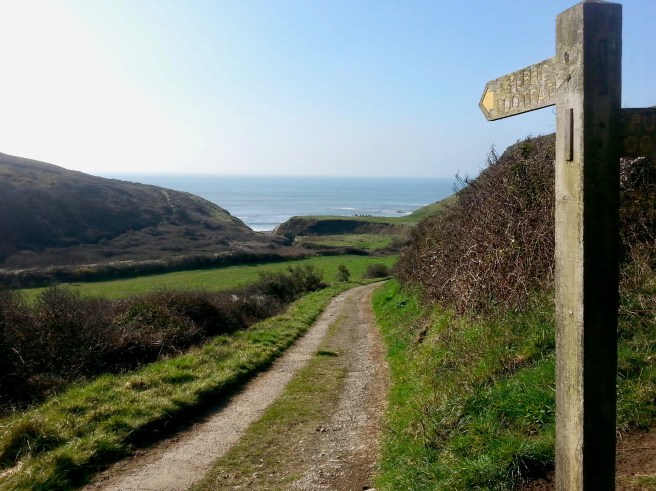
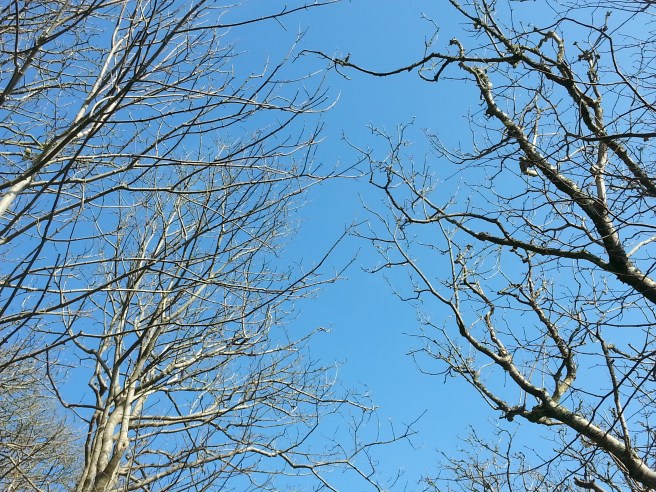 and we decided to do the one-mile walk through the grounds to Hartland Beach…..we were surrounded by wildflowers all the way….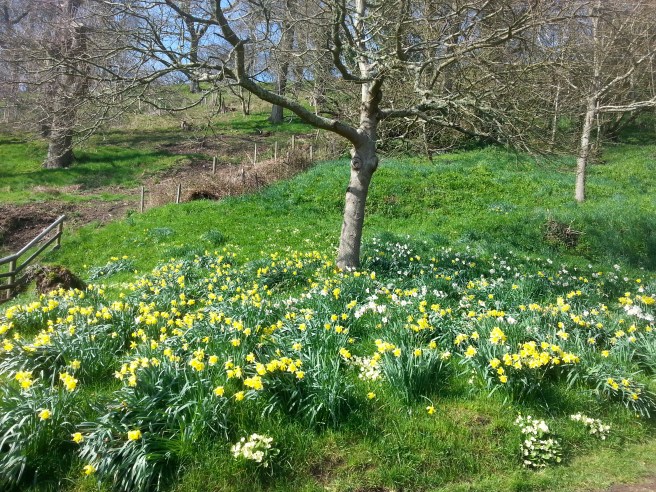

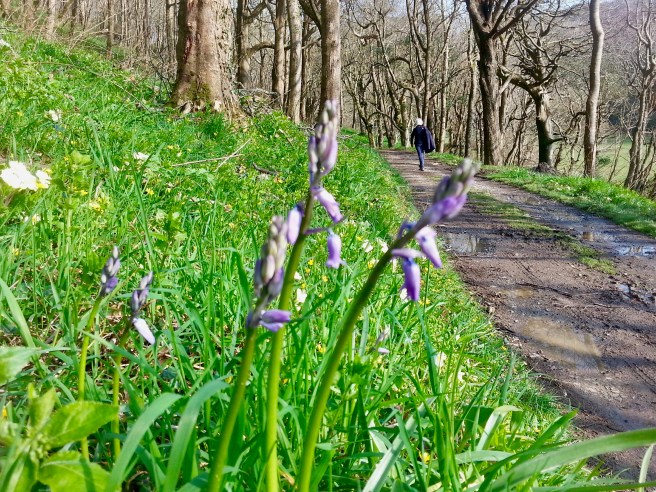
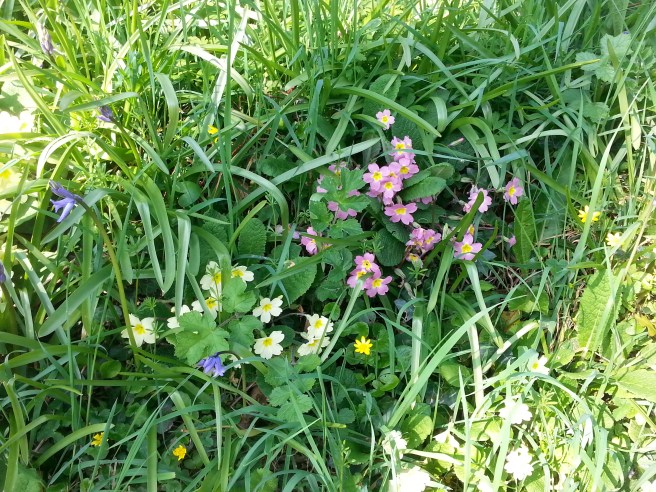 and were really surprised to see even bluebells in bloom at the same time as the primroses, well ahead of our own…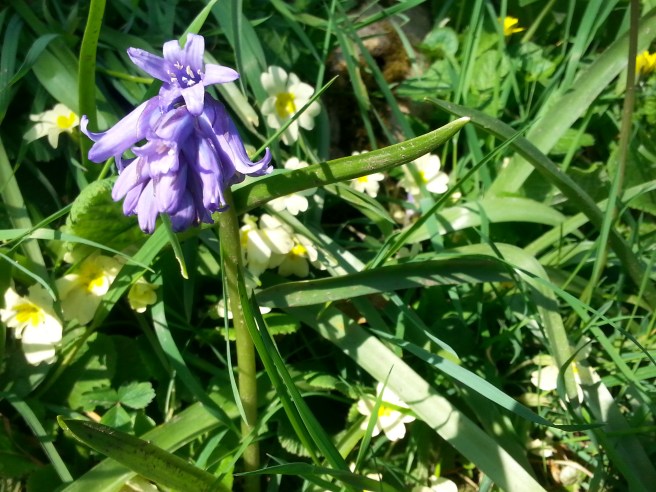
 and we were fascinated by one of the estate houses (used in the BBC’s Sense and Sensibility) which seemed to have a roof reflecting the actions of the sea…..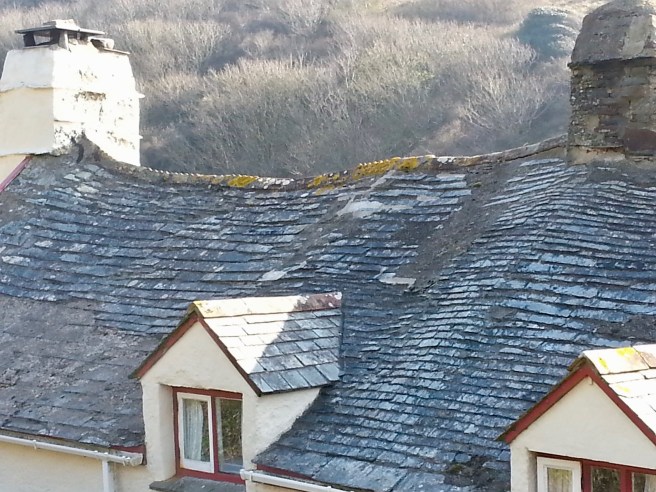
 Hartland Beach was great, we were virtually on our own and the sea was at its best…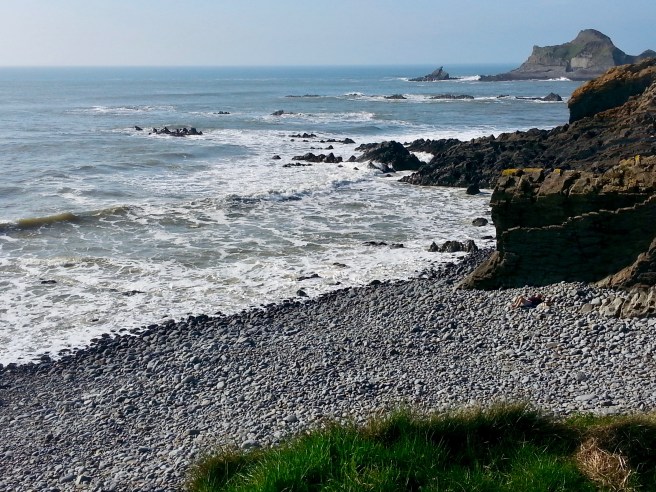
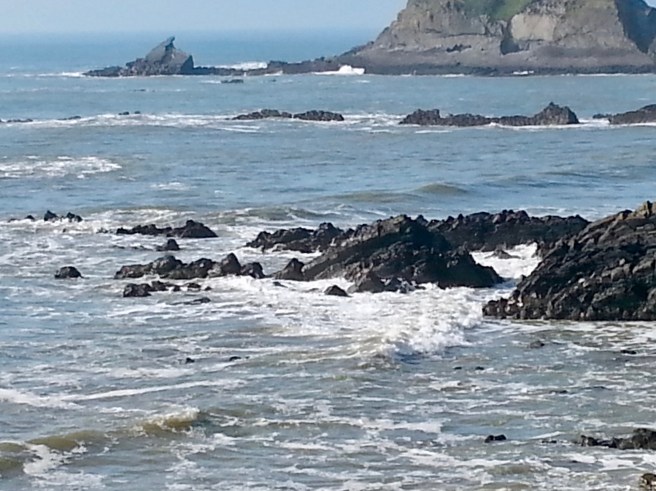
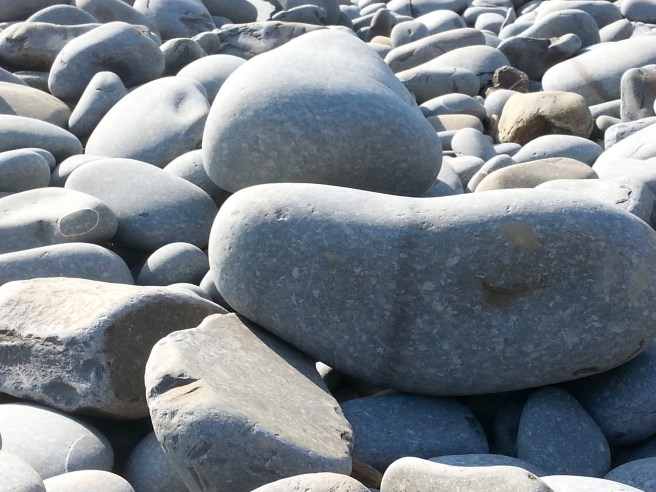

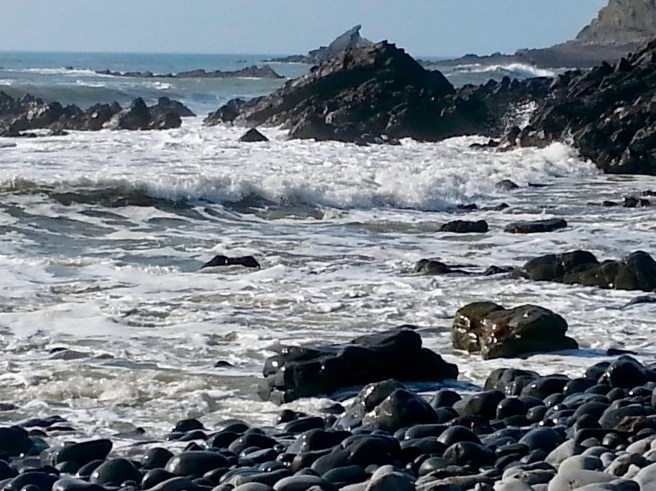
 the walk back wasn’t so bad either….
 We drove back home through Launceston, where we called in for a quick lubrication stop, and were amazed once more at the views of the almost surreal Norman castle…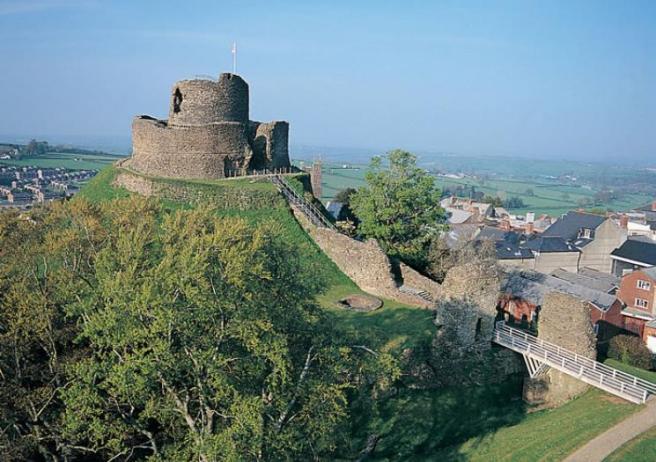
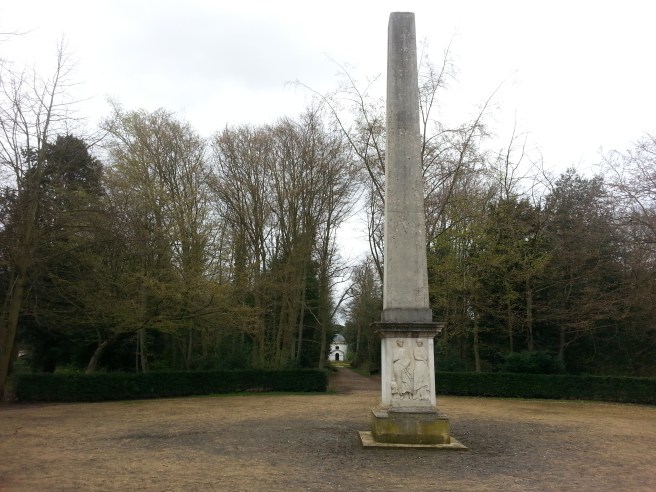

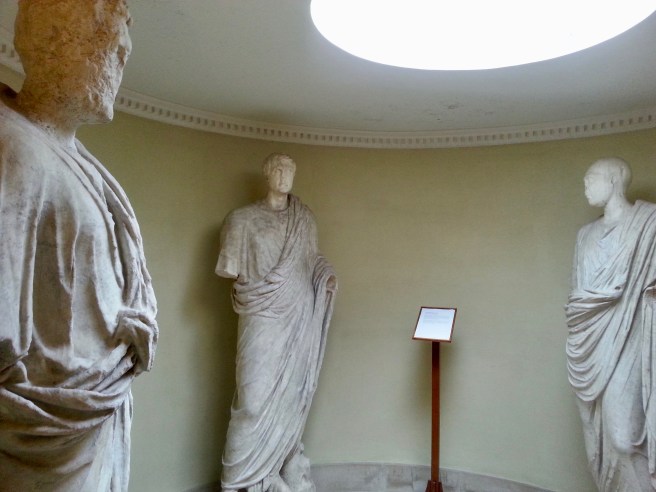
 and Roman statuary…
 elegant rooms beautifully decorated…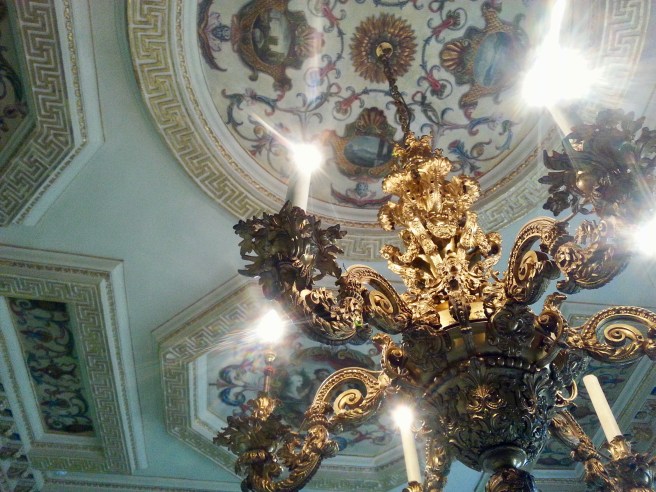
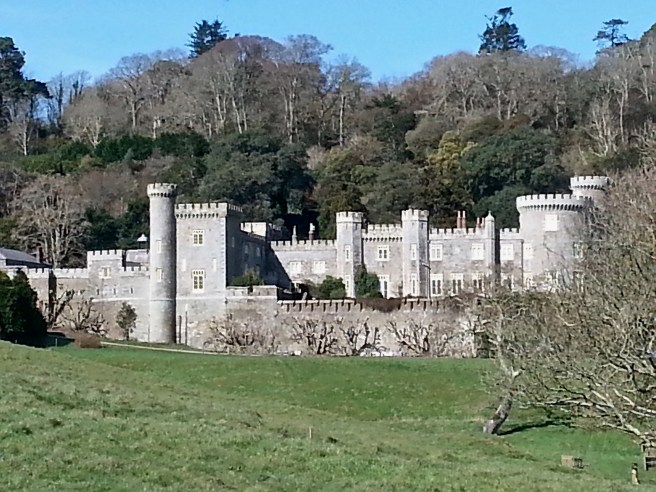
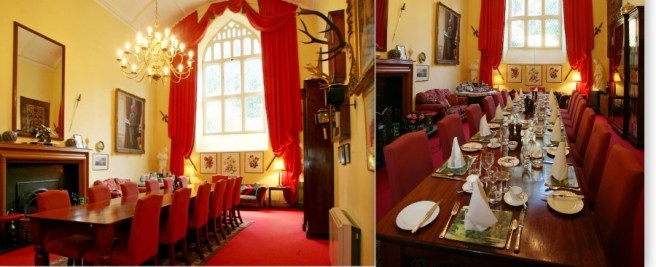
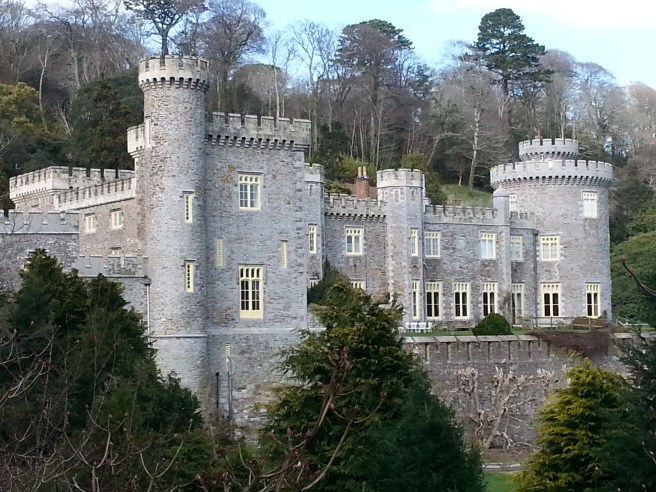 The history of the buildings is not generally reviewed anywhere, but the potted history of the owners is on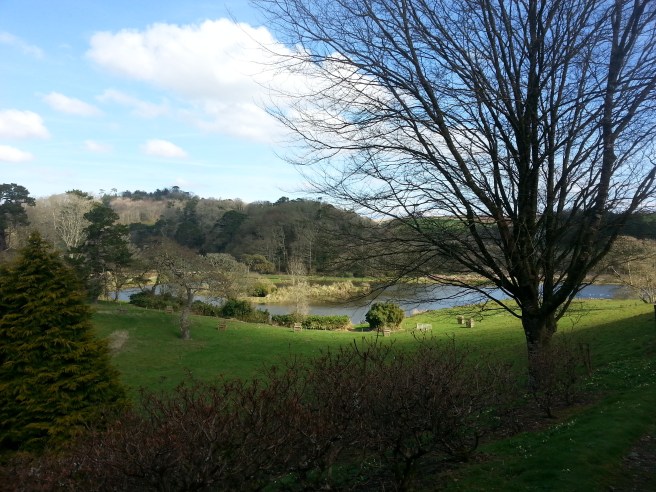


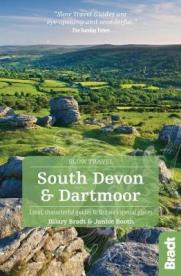 I’ve already talked about the ‘Slow’ series of travel guides by Bradt when I reviewed the edition covering ‘Cornwall’. Since we have visited Devon once or twice recently I found that I also had a copy of ‘South Devon’ on our shelves and so decided to have a browse. In fact these books are so good I had to read the whole thing. What I found was not only that it was pleasure to read, but that there are so many places, still fairly near to us, that we should try and visit over the coming year. I love the way that these guides give you as well as a potted history of places, highlights to visit, diversions nearby, excellent recommendations on food and drink, places to stay, and how to get there by public transport and how to get about, good walks too. All done in a friendly conversational style that draws you in.
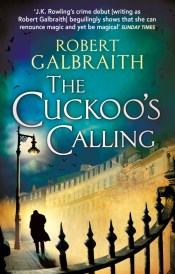 We’ve really enjoyed the Cormoran Strike series on TV, and so last time we were in Truro we bought the three books that formed the basis of the series so far. They are by Robert Galbraith, also known as J K Rowling of course, and on the whole very good they are too. It was interesting that the TV followed the books very closely indeed, which shows you that their plot lines are very strong. The character build-up is also good…as, for many Crime books, it is not. And of course they are page-turners which has led to some very late nights, and the carrying round of the books during the day. They are lengthy
 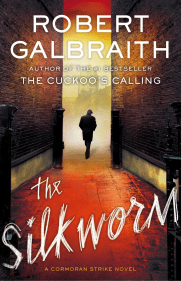 too which is good, as they can certainly sustain it. In fact the only thing I have against these is that after a fairly normal first story, the follow-ons get increasingly way-out and darker. It really isn’t necessary.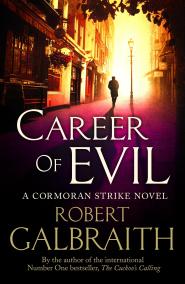
 I am just finishing ‘High Minds : the Victorians and the Birth of Modern Britain’ by Simon Heffer. It’s taken me a while to get round to this as we had Simon along to give a talk at Warwick Books about five years ago, and very good value he was too. But it is a serious book and demands a thoughtful read. I can’t do better in describing what it’s all about than quote from the publisher’s blurb….’Britain in the 1840s was a country wracked by poverty, unrest and uncertainty, where there were attempts to assassinate the Queen and her prime minister, and the ruling class lived in fear of riot and revolution. By the 1880s it was a confident nation of progress and prosperity, transformed not just by industrialisation but by new attitudes to politics, education, women and the working class. That it should have changed so radically was very largely the work of an astonishingly dynamic and high-minded group of people – politicians and philanthropists, writers and thinkers – who in a matter of decades fundamentally remade the country, its institutions and its mindset, and laid the foundations for modern society.’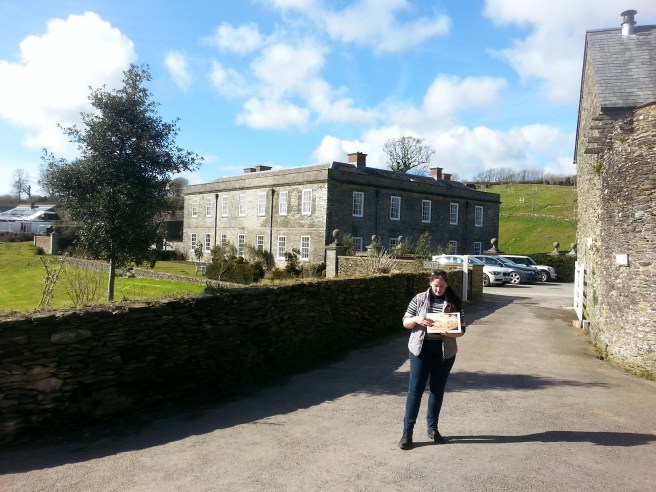


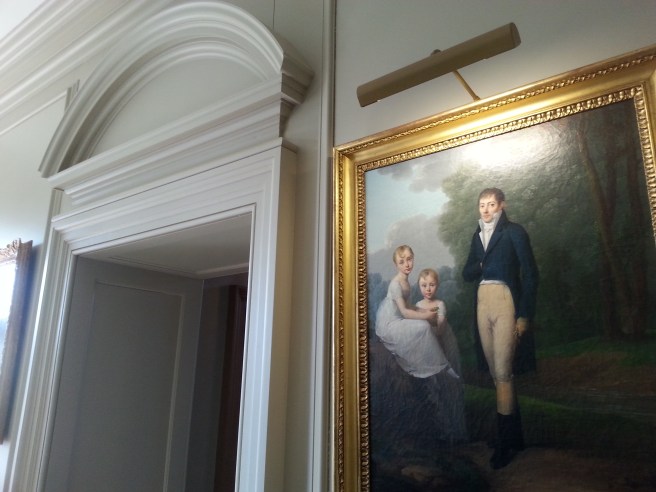
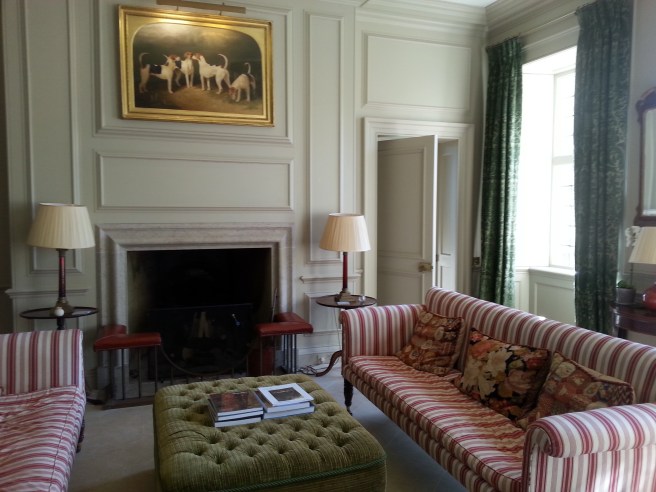
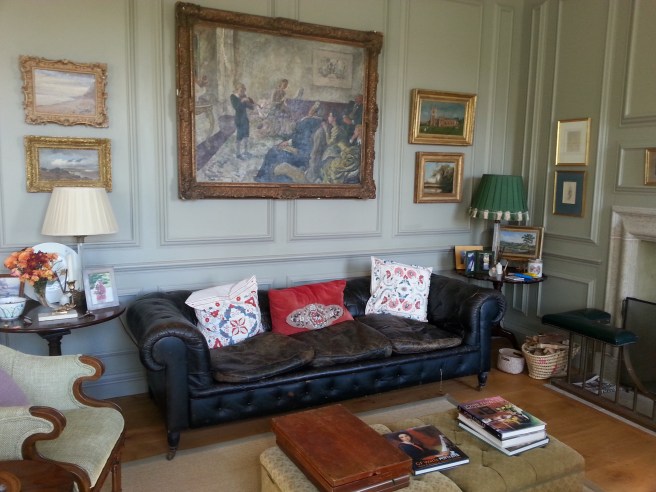

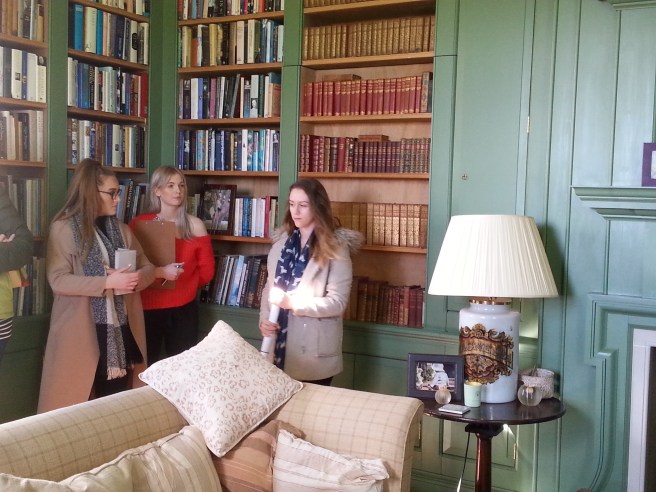
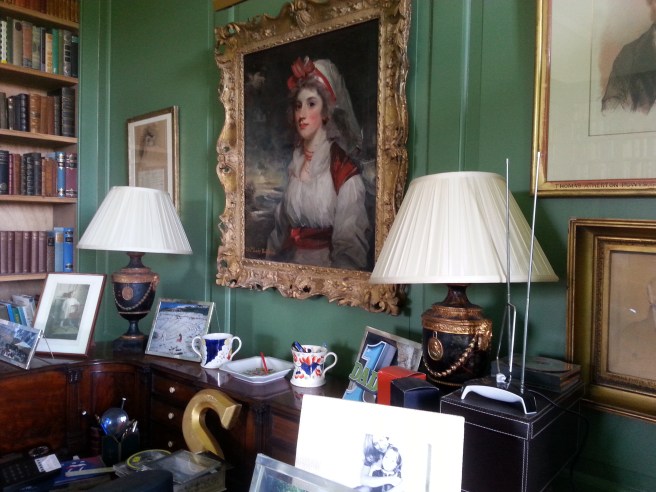
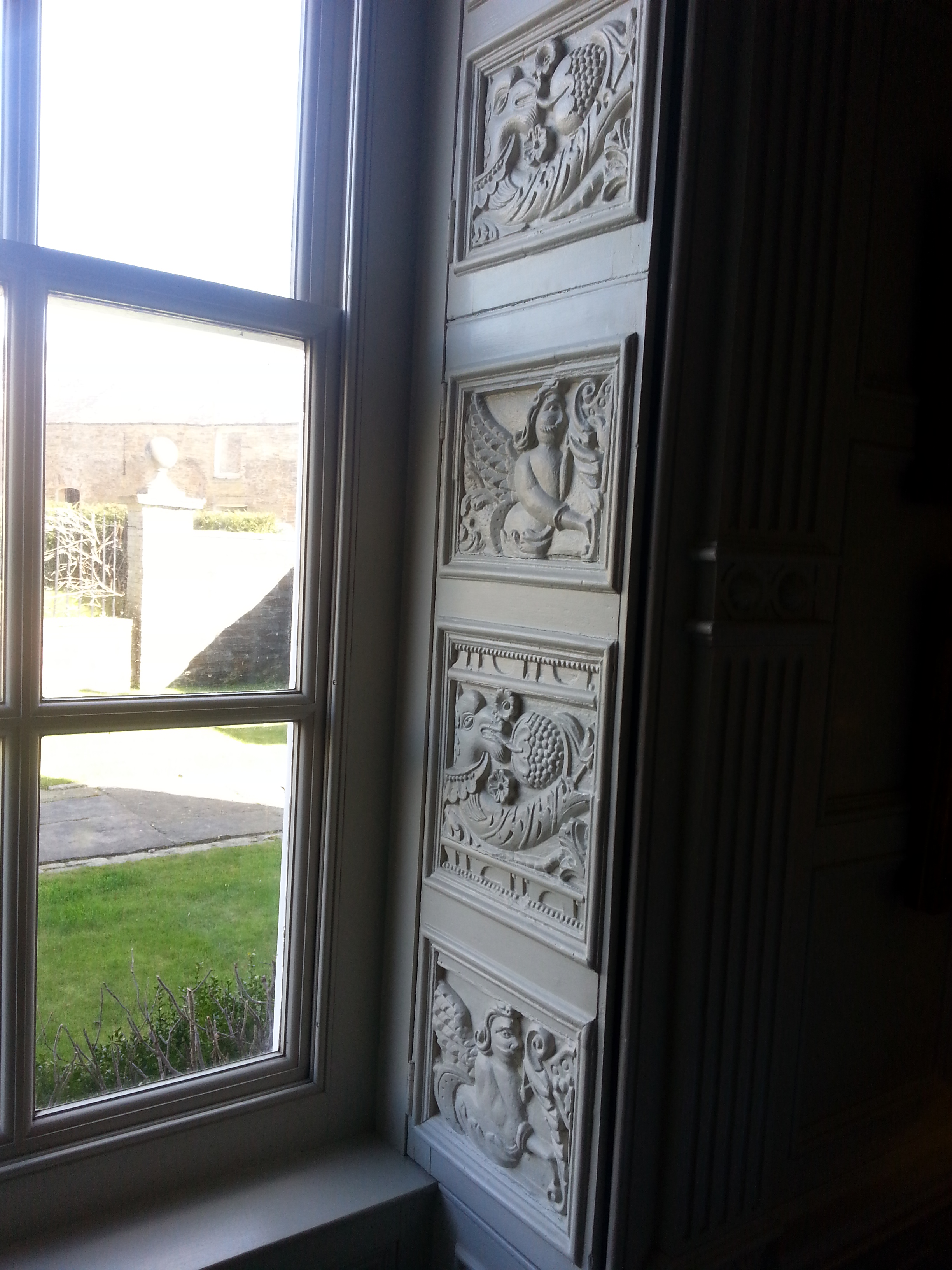
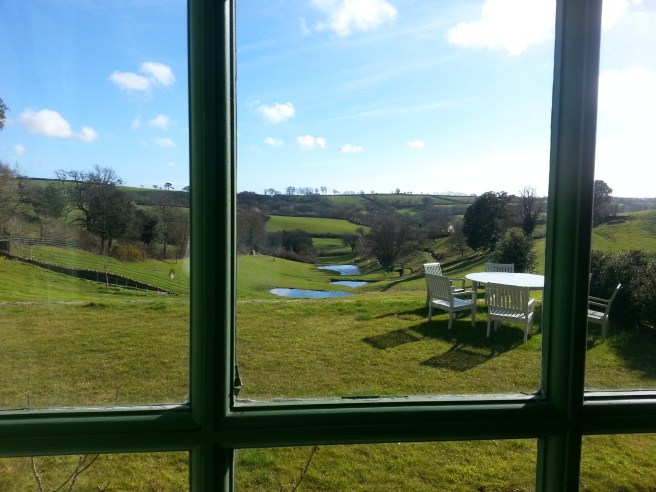
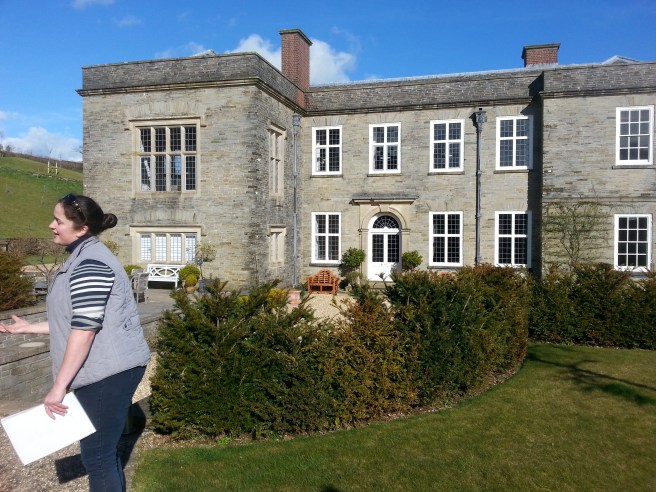
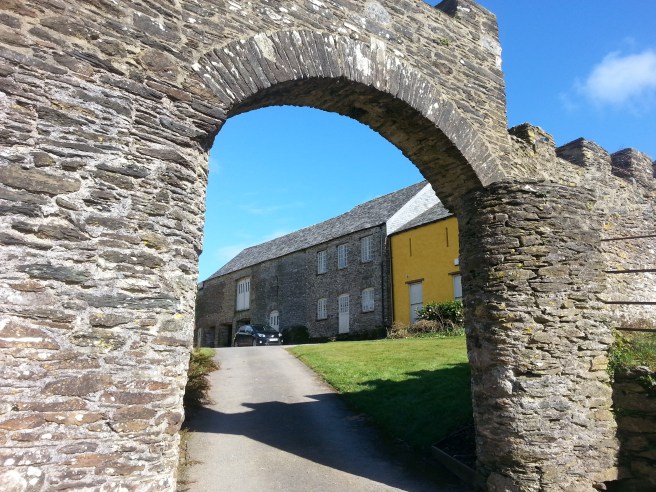
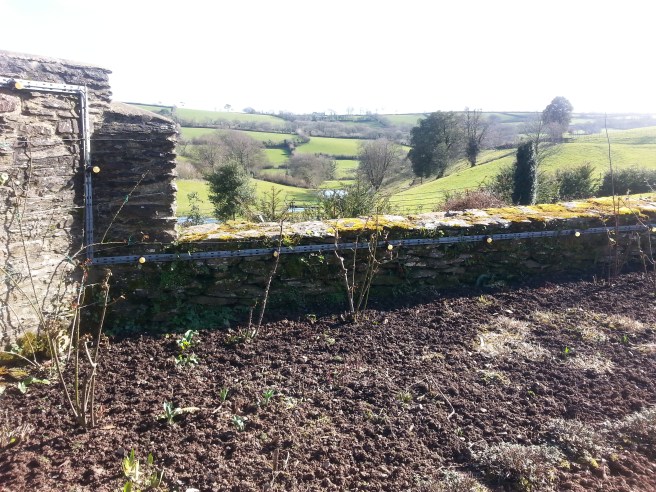


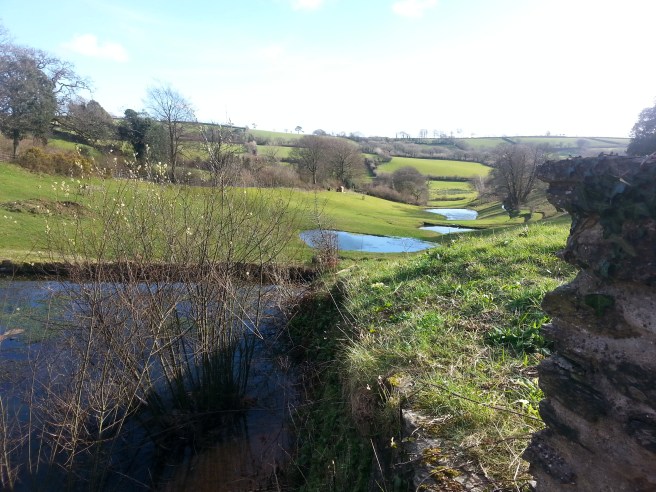

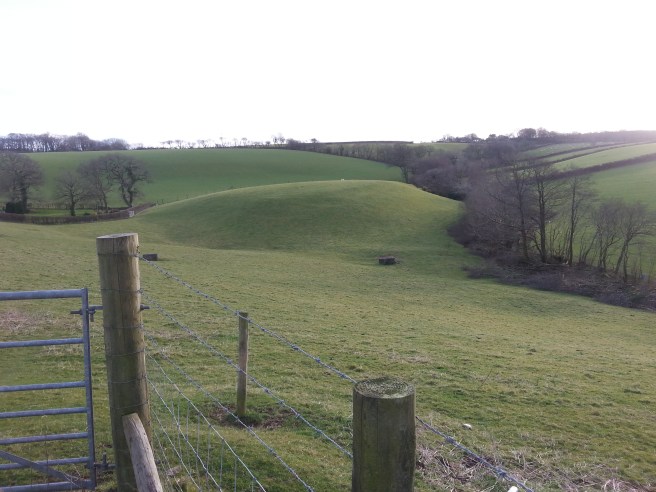
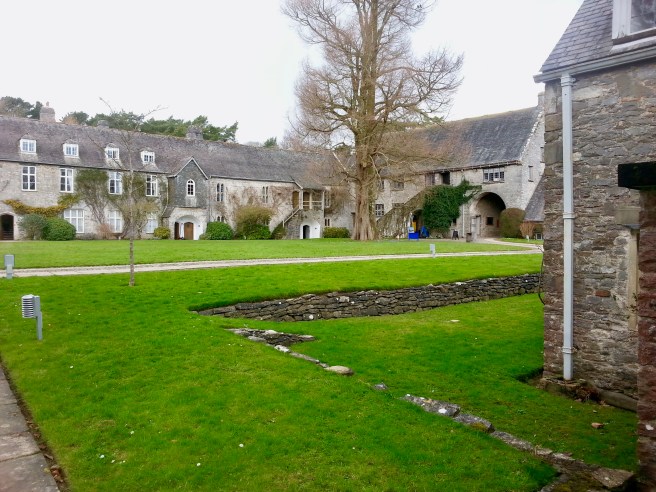
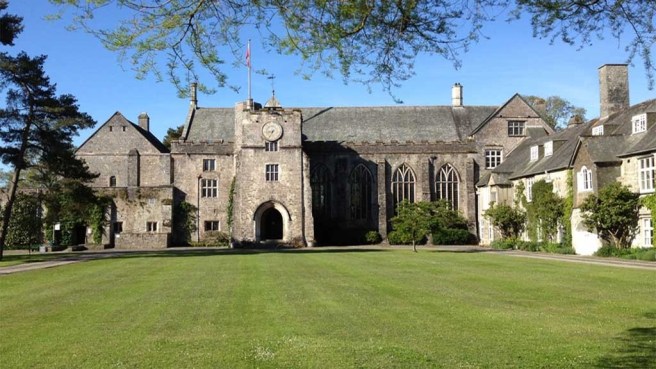
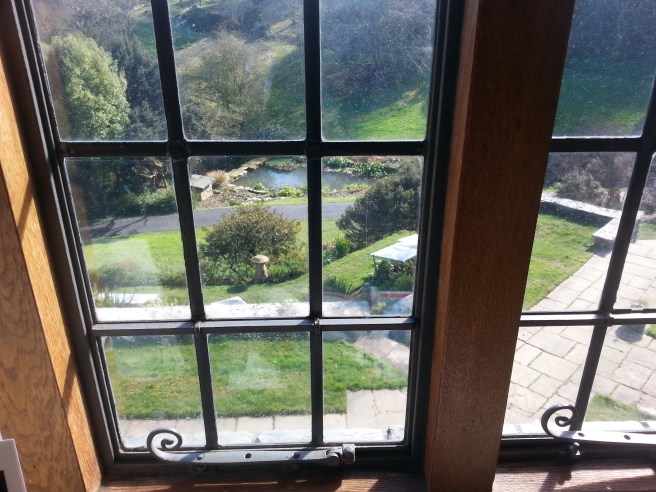
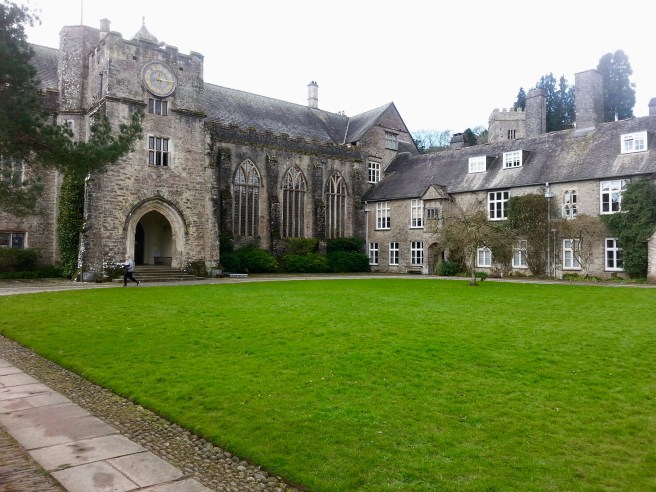 and our bedroom and the view from the window were extremely satisfactory. This was £59 for 2 people….ridiculously cheap, as I told Dartington in my feedback.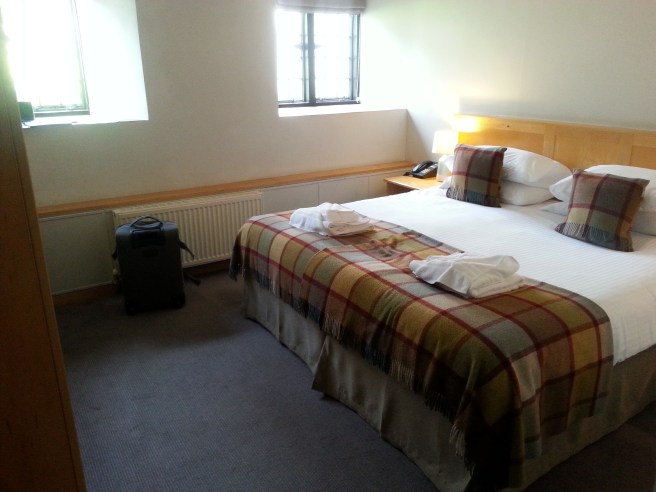

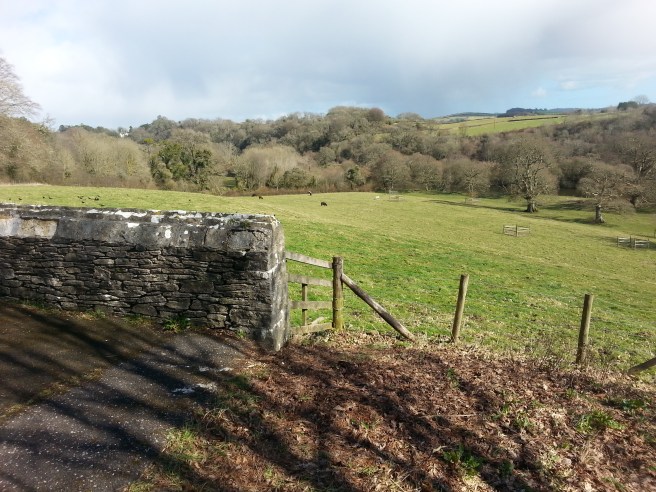
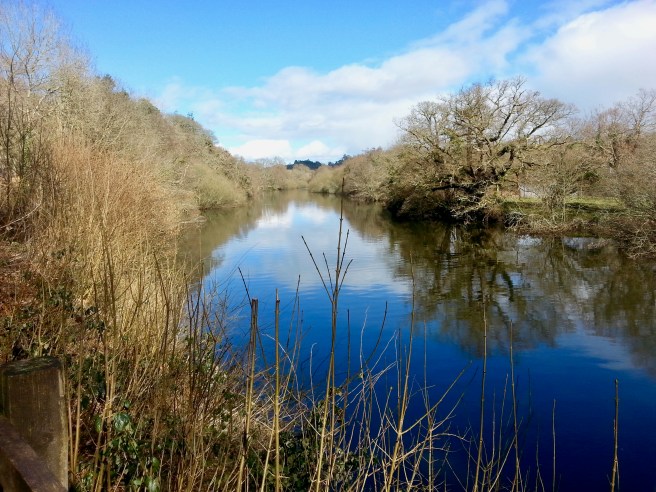
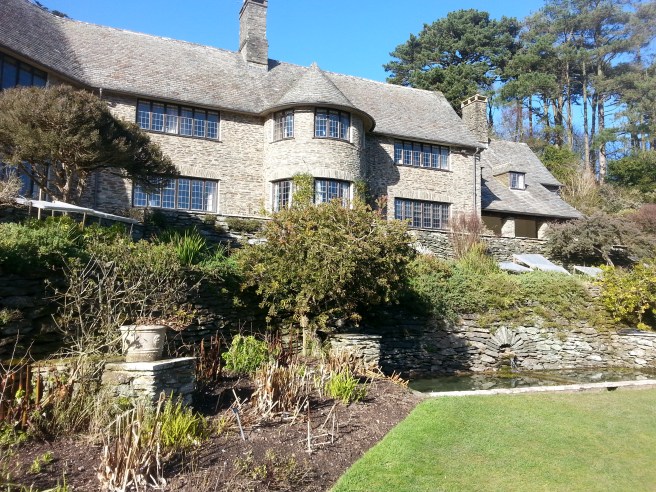
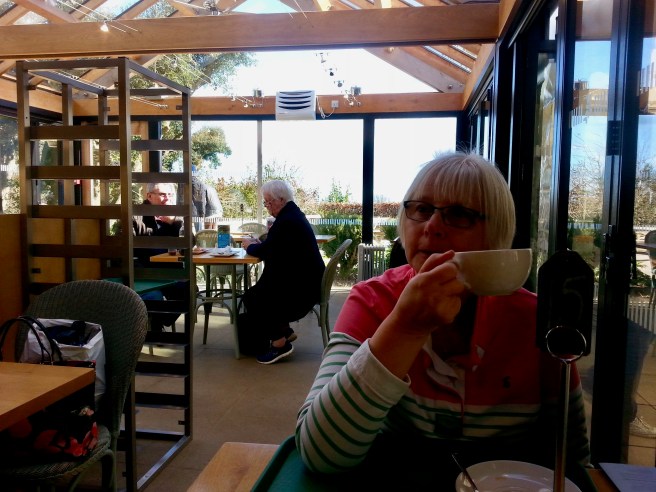
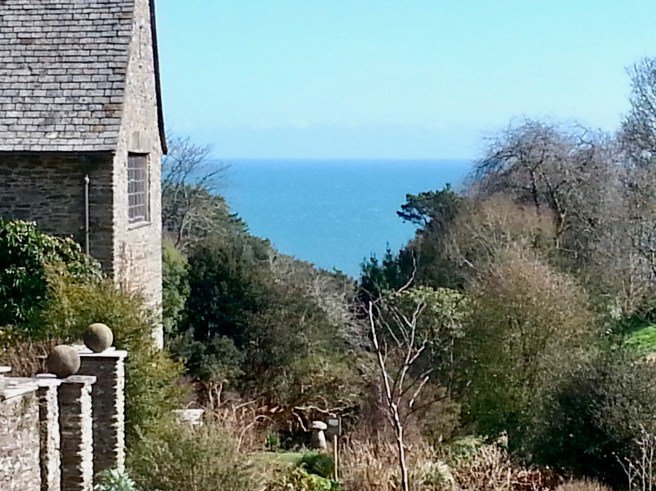

 with fabulous views of the gardens…..
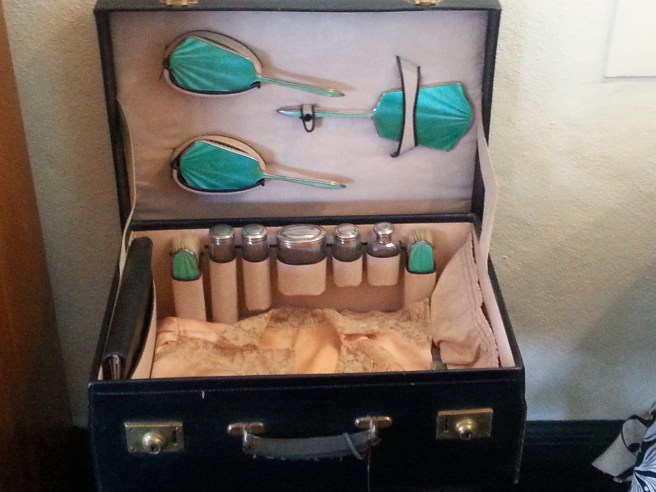
 There was, as is becoming more common, a dressing-up room….this time with 20’s and 30’s bits and pieces (quite fetching)
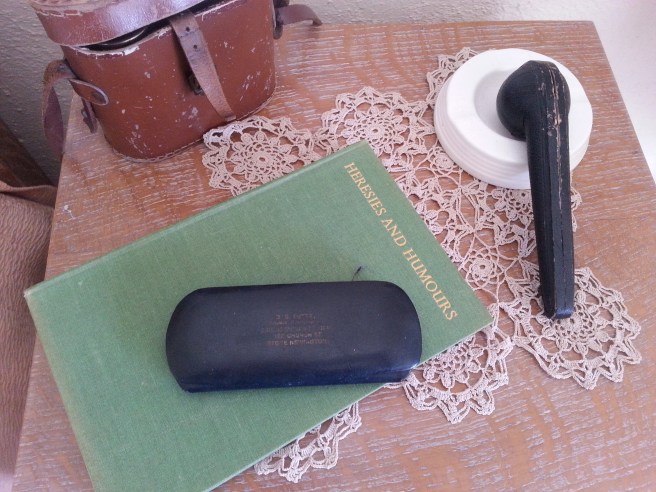
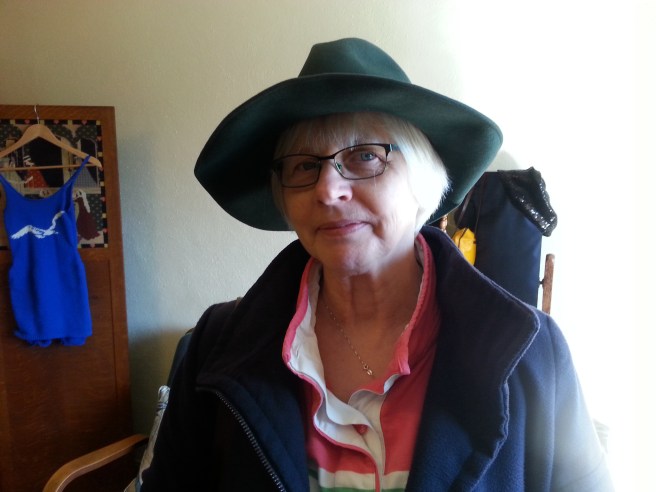 and little personal touches provided a homely feel..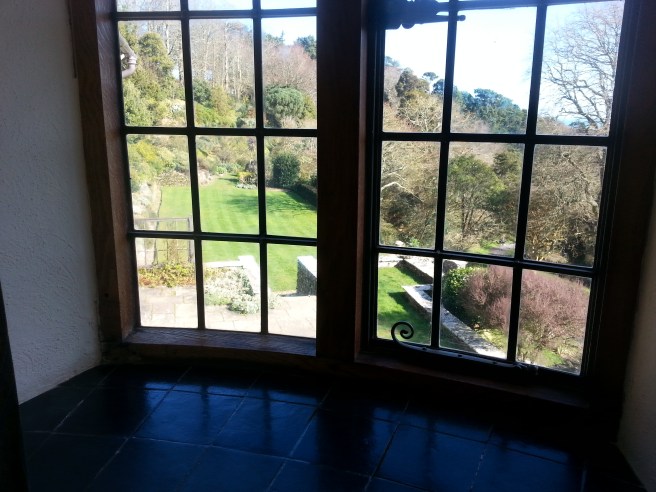
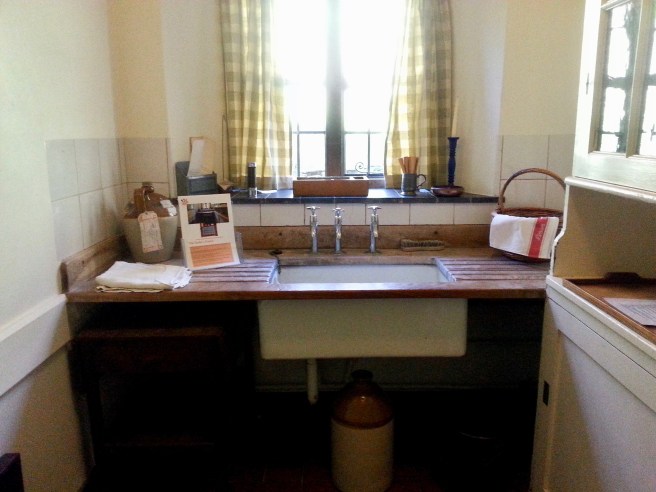
 The ‘downstairs’ operation was not as unprepossessing as at a lot of the grander homes, and indeed the maids and butler’s quarters were very nice..they still had lots of work though…..
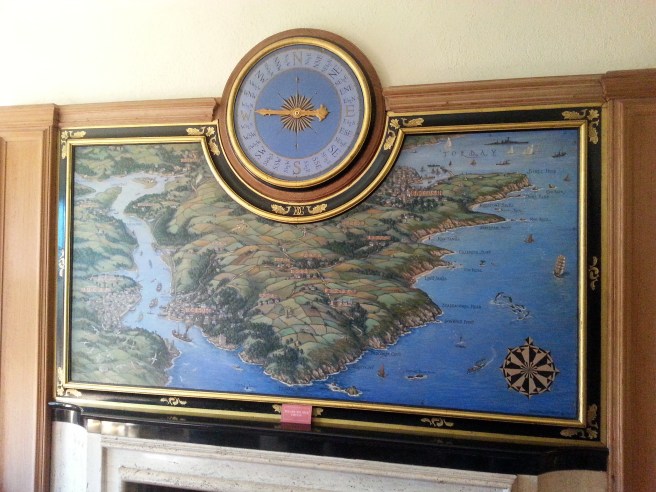
 but towards the end of the tour were my two or three favourite rooms…..the library
 with its very fancy wind dial
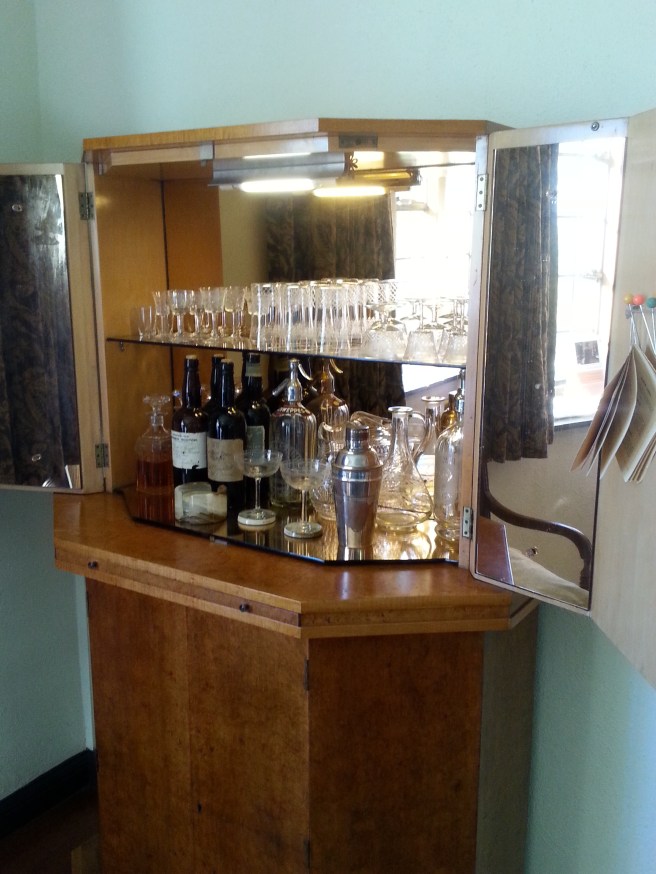
  and the living room where cocktails await, or if you really must…..
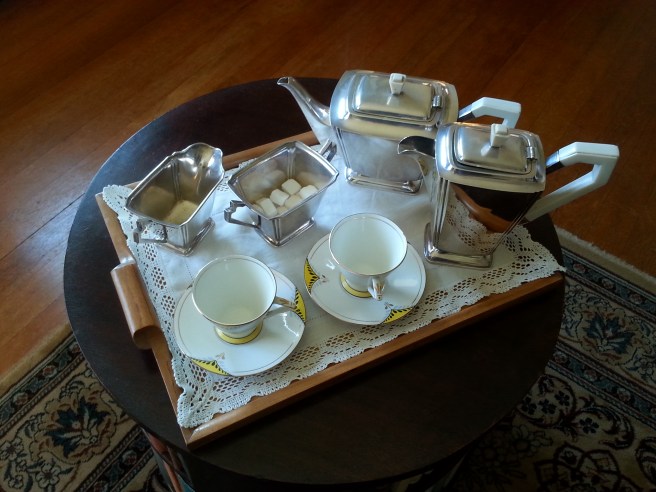
 …….tea
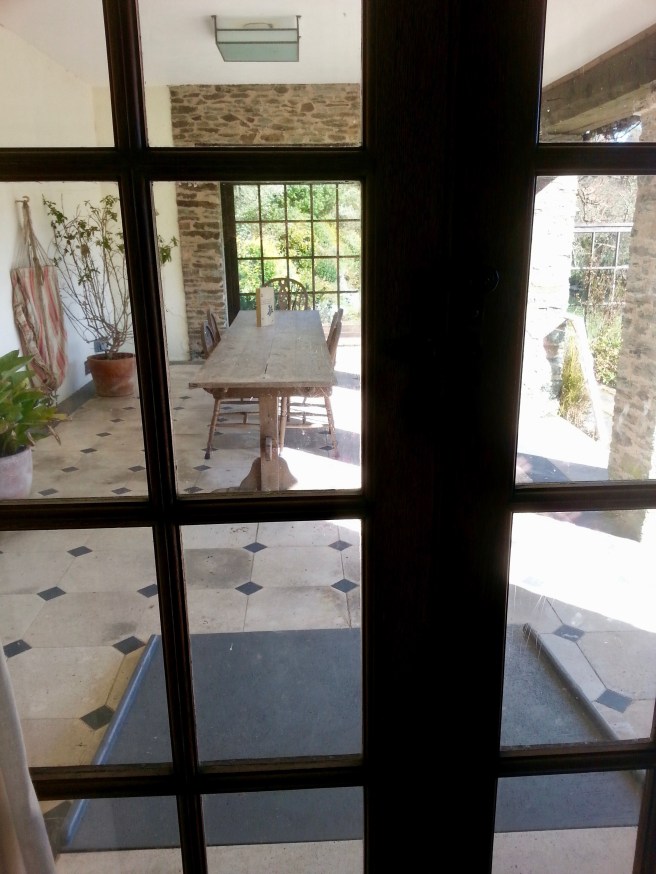
 and immediately off the dining room was the outside loggia where the family preferred to eat whenever possible…sheltered, airy, and with lovely views of the gardens….
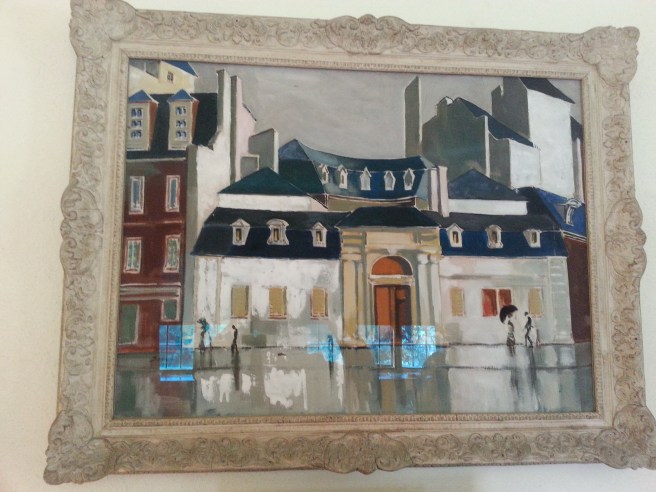
 there were also some handsome paintings…all in all, a terrific experience.
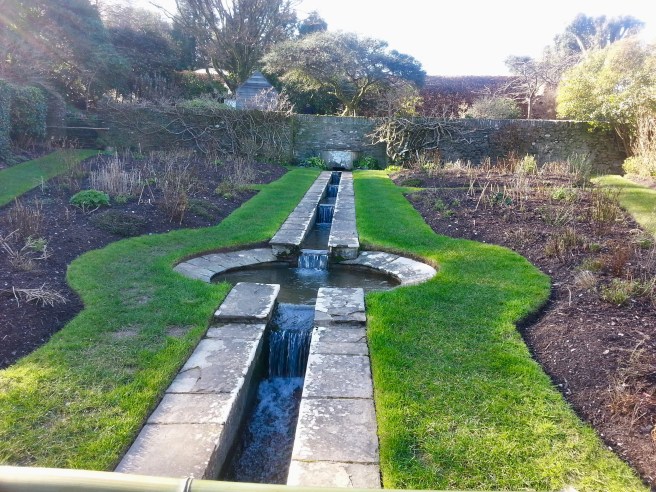
 But as it was such a nice day we had the further delight of a stroll through the gardens, via the Summer House and formal areas…..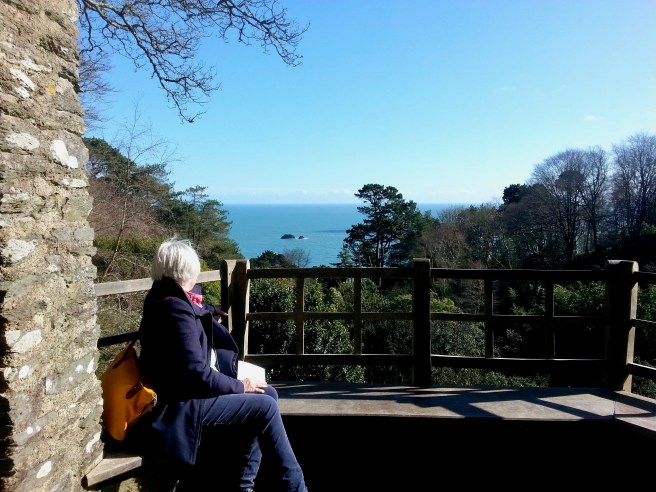
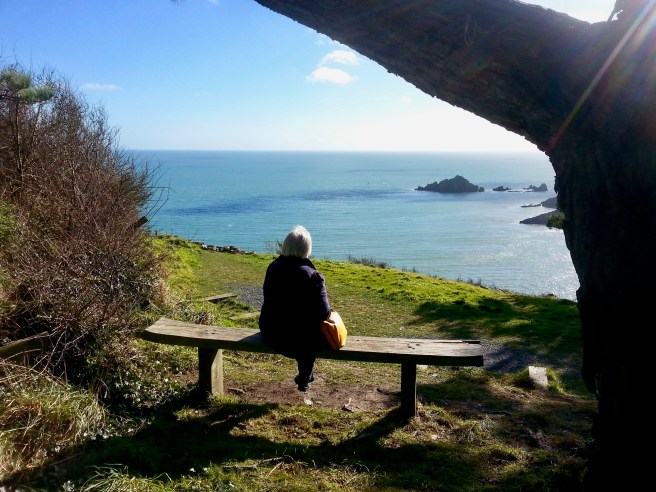
 to the viewpoint at the end of the estate….magnificent.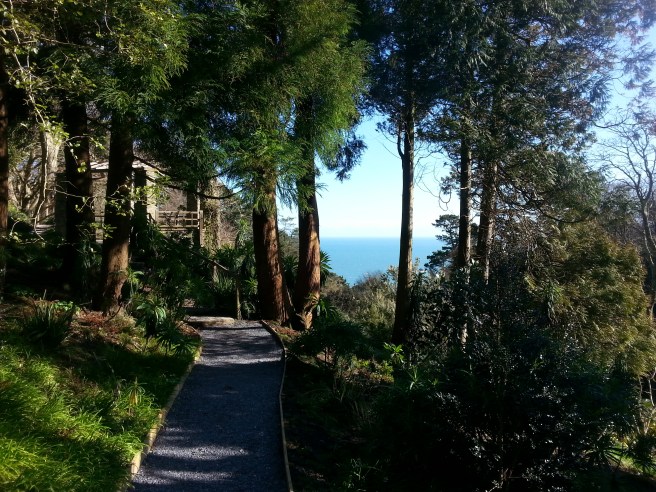
 I really must mention how friendly and helpful all the staff were…this year wherever we have been this has been so. I therefore imagine they have all been on a customer service course, who knows?
 Unfortunately on this occasion the meal wasn’t up to scratch. However, the film afterwards in
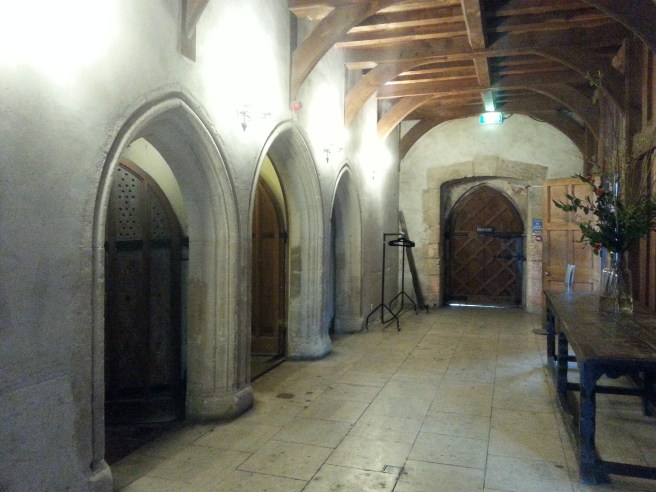
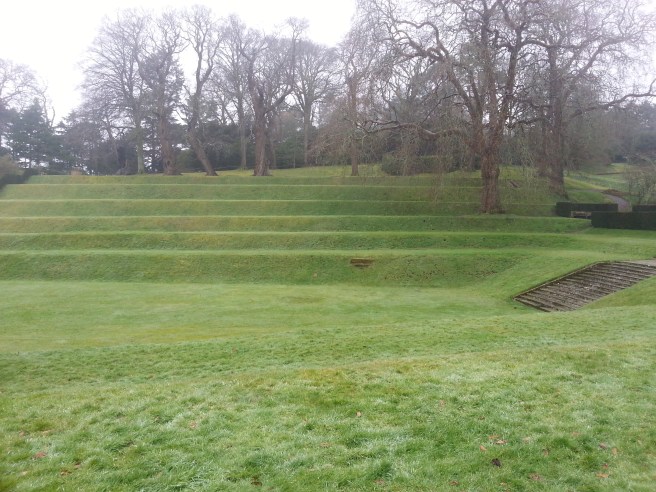

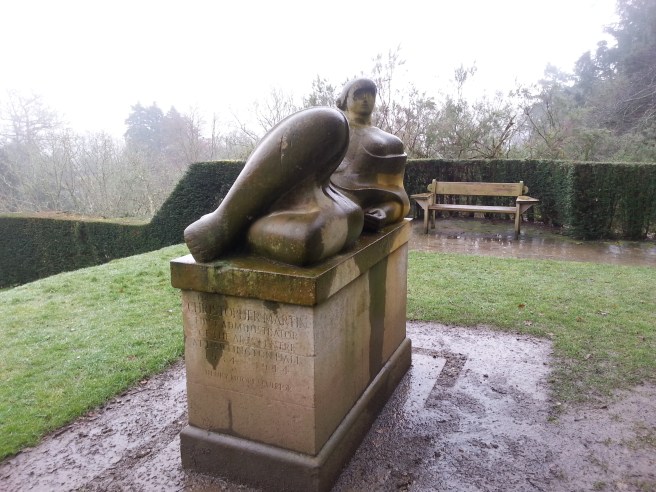
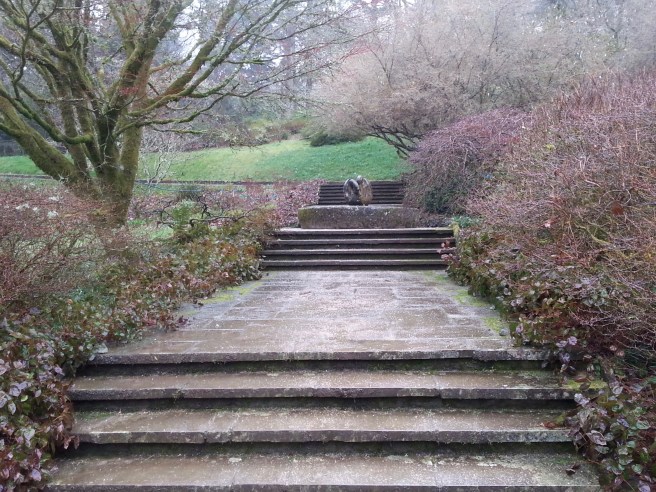 There were some famous statues including this Henry Moore, so we enjoyed our little tour despite the conditions.
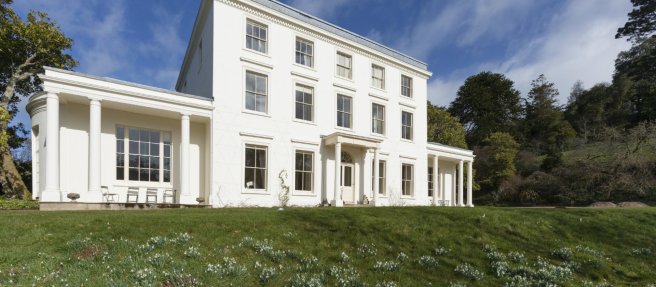
 Next stop was Agatha Christie’s holiday home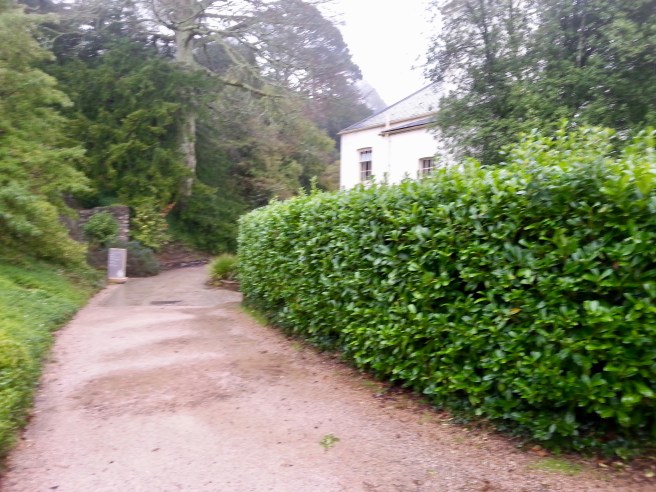
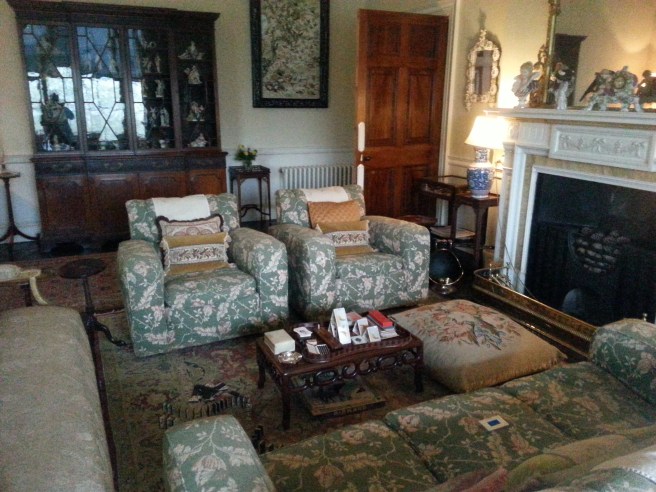
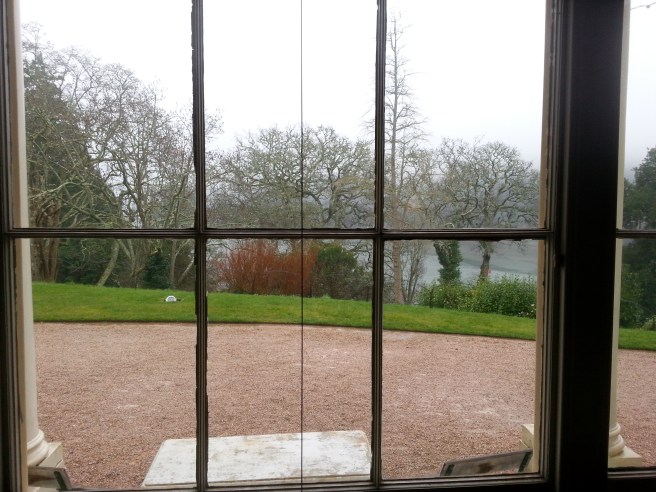 All very interesting, but everywhere gloomy I thought. Mind you I think half of that was down to the weather conditions. Very friendly guides again – must have been on the same course!
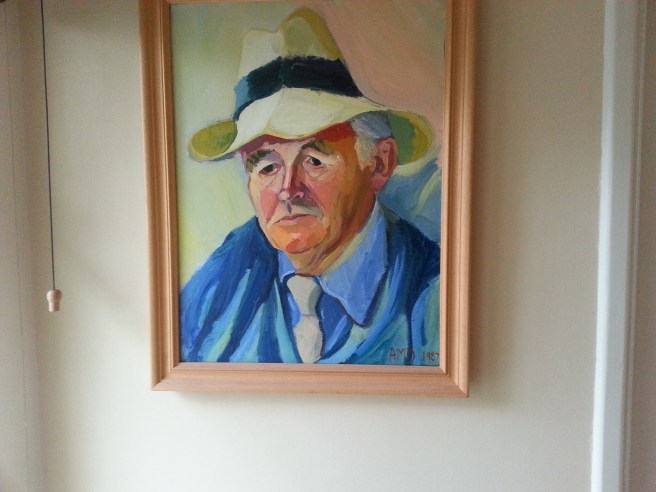
 I particularly liked some of the paintings of Agatha’s husband Max, the archaeologist, which gave a real feel for the man.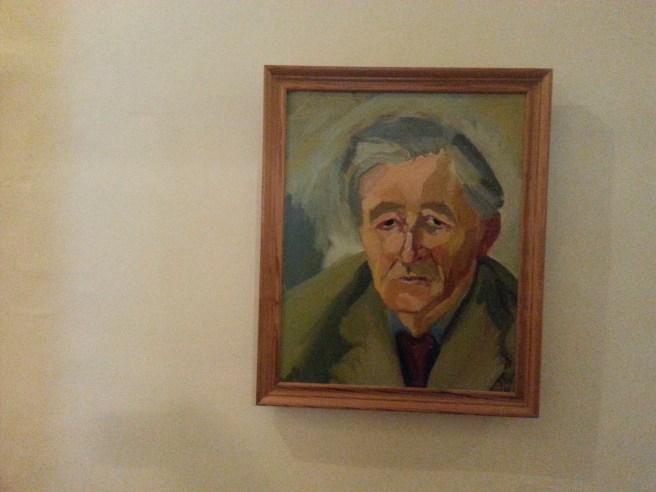
 Enjoying Cornwall...